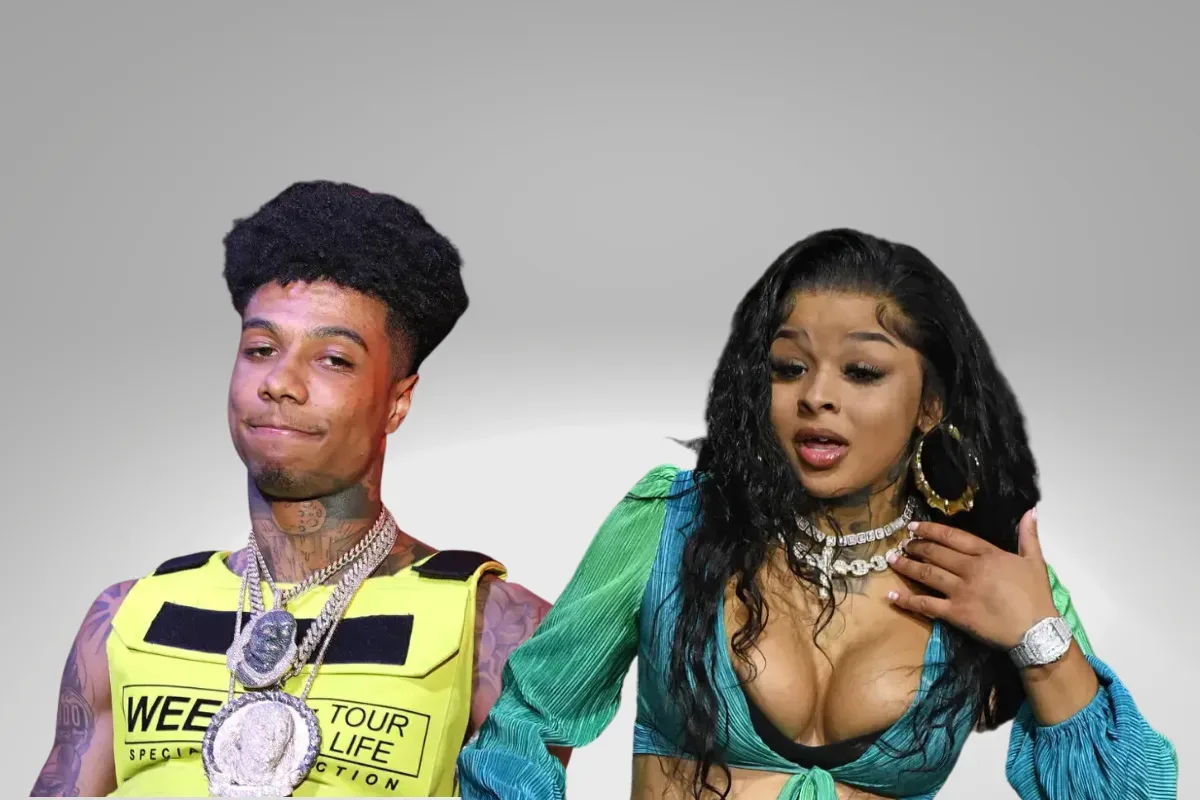
Blueface has responded publicly after Adam22 criticized his parenting during a recent interview with DJ Akademiks, escalating a personal comparison into the kind of livestream dispute that is built to travel quickly across clips, comment sections and competing creator platforms.
The exchange centers on a subject that deserves more care than a standard influencer back-and-forth: parenting. Adam22, who shares a daughter with Lena The Plug, reportedly acknowledged shortcomings in his own parenting while arguing that Blueface set an even lower bar. Blueface answered during a recent Kick livestream, directing harsh criticism at Adam22 and arguing that Adam22’s work in adult content should be weighed against his role as a father.
Neither side’s public argument establishes a useful measure of parenting. Instead, the dispute has become a contest over visibility, judgment and who gets to define the terms of the accusation. That distinction matters, particularly when children and family circumstances are being drawn into content designed for an audience.
What sparked the public response
Adam22’s remarks framed the dispute as a comparison. He reportedly said he has not been the best father to his daughter, but maintained that he was still a better parent than Blueface. The statement was both self-critical and confrontational: it did not simply discuss Adam22’s own household, but used Blueface as the negative end of the comparison.
Blueface’s response shifted the focus. Rather than accept Adam22’s premise, he attacked Adam22’s decisions and public work, saying that adult content takes priority over his child. Blueface also argued that audiences have seen his own children and treated that visibility as evidence that he cares for them. He contrasted that with Adam22’s decision to keep his daughter private, presenting privacy as a negative reflection on Adam22’s fatherhood.
That is a weak equation. A child’s visibility online is not a dependable gauge of parental care, and neither is privacy. Parents can make very different decisions about public exposure for reasons that have nothing to do with affection, attentiveness or responsibility. Public access to family life is simply not the same thing as insight into family life.
A debate that gives audiences very little to actually judge
The clash is occurring against long-running online criticism involving Blueface, Chrisean Rock and their child, Chrisean Jr. Rock has said that Chrisean Jr. does not have a disability, while online commenters have continued to speculate and disagree. That speculation should be treated carefully. A child’s health or development is not something an audience can reliably diagnose from online footage, viral snippets or secondhand discussion.
The available information also does not support treating internet commentary as fact. What is clear is that the scrutiny itself has become part of the environment around Blueface and Rock. A disagreement between two adults about parenting can therefore pull in a much larger audience already primed to interpret every appearance, post and livestream as evidence of something.
For viewers, the practical line is straightforward: criticism of public behavior is one thing; claims about a child’s medical status or private family circumstances require evidence that has not been provided here. Repeating speculation can turn a child into the centerpiece of a feud without adding any meaningful public understanding.
Why platform incentives are part of the story
There is also a clear media-business dimension to the conflict. Blueface’s response played out on Kick, while Adam22’s comments emerged through the No Jumper ecosystem. A livestream feud is not only an argument; it is material that can be replayed, clipped, reposted and debated long after the original broadcast ends.
That does not mean the participants’ feelings are necessarily insincere. It does mean the format rewards escalation. A direct insult offers a sharper clip than a measured clarification. A comparison involving another person’s family invites reactions. And when a disagreement is spread between different channels, each new response can give both sides another reason to keep the subject active.
Livestreaming is particularly suited to this cycle because it combines immediacy with permanence. The conversation happens in real time, where there is pressure to answer quickly, but memorable moments can then circulate as edited fragments. Context often becomes secondary to the most confrontational sentence. In a dispute about family, that structure can make it especially hard to separate a heated performance from a settled position.
Readers who follow entertainment coverage have seen a broader version of this tension: public figures are often expected to turn personal life into constant material, even when the subjects involved did not choose that level of attention. The boundary between public persona and private responsibility remains a recurring issue, including in conversations around celebrity business and public life such as 50 Cent’s comments on business and politics.
Privacy is not proof either way
Blueface’s argument that showing his children publicly demonstrates care, while Adam22’s privacy choices indicate the opposite, is at the heart of this disagreement. But it turns a complicated parental decision into a false binary.
Online visibility can create a sense of familiarity for followers, yet it does not give those followers a full picture of a child’s daily life. Privacy, meanwhile, can limit the amount of material available for an audience to interpret, criticize or circulate. Neither choice independently proves the claims being made in this feud.
The more significant issue is that both approaches can become ammunition once adults are arguing in public. When one person says a child is shown too much and another says a child is hidden too much, the child remains at the center of a debate they did not initiate. That is a consequence worth keeping in view as clips of the dispute continue to move around social platforms.
Scrutiny of Blueface’s livestreams has another serious dimension
Blueface’s Kick streams have also faced scrutiny because he has reportedly been repeatedly swatted. Swatting refers to making a false emergency report intended to bring law-enforcement officers to a person’s location. It is not a joke or a routine form of online trolling; false emergency calls can create dangerous situations for people at the address and for responding authorities.
The reports connected to Blueface’s streams have largely involved calls concerning Chrisean Jr. That detail makes the larger conversation around his broadcasts more serious than an ordinary exchange of insults. Even when public figures earn attention from conflict, false reports involving a child can create real-world pressure and risk beyond the screen.
It is important not to collapse all of these subjects into one verdict. The Adam22 disagreement is a public war of words. Online commentary about Chrisean Jr. includes speculation that should not be elevated into diagnosis. Swatting allegations concern false emergency reporting and the possibility of real harm. They overlap because they all surround Blueface’s online presence, but they are not equivalent issues.
What the exchange actually shows
At its core, this is a dispute in which each participant has used the other’s family choices as a standard of judgment. Adam22’s initial comparison invited a response, and Blueface’s livestream answer expanded the argument by challenging Adam22’s private-life choices and public career.
But the visibility of an argument should not be mistaken for proof of its claims. Viewers can recognize the incentives that keep a feud moving without pretending to know the realities of either family. The most responsible reading is also the simplest: two public figures are exchanging accusations about parenting, while their platforms provide a ready-made audience for the escalation.
For now, the concrete development is Blueface’s response on livestream. Everything beyond that—especially judgments about children, health and private parenting—calls for far more restraint than social-media feuds usually receive.