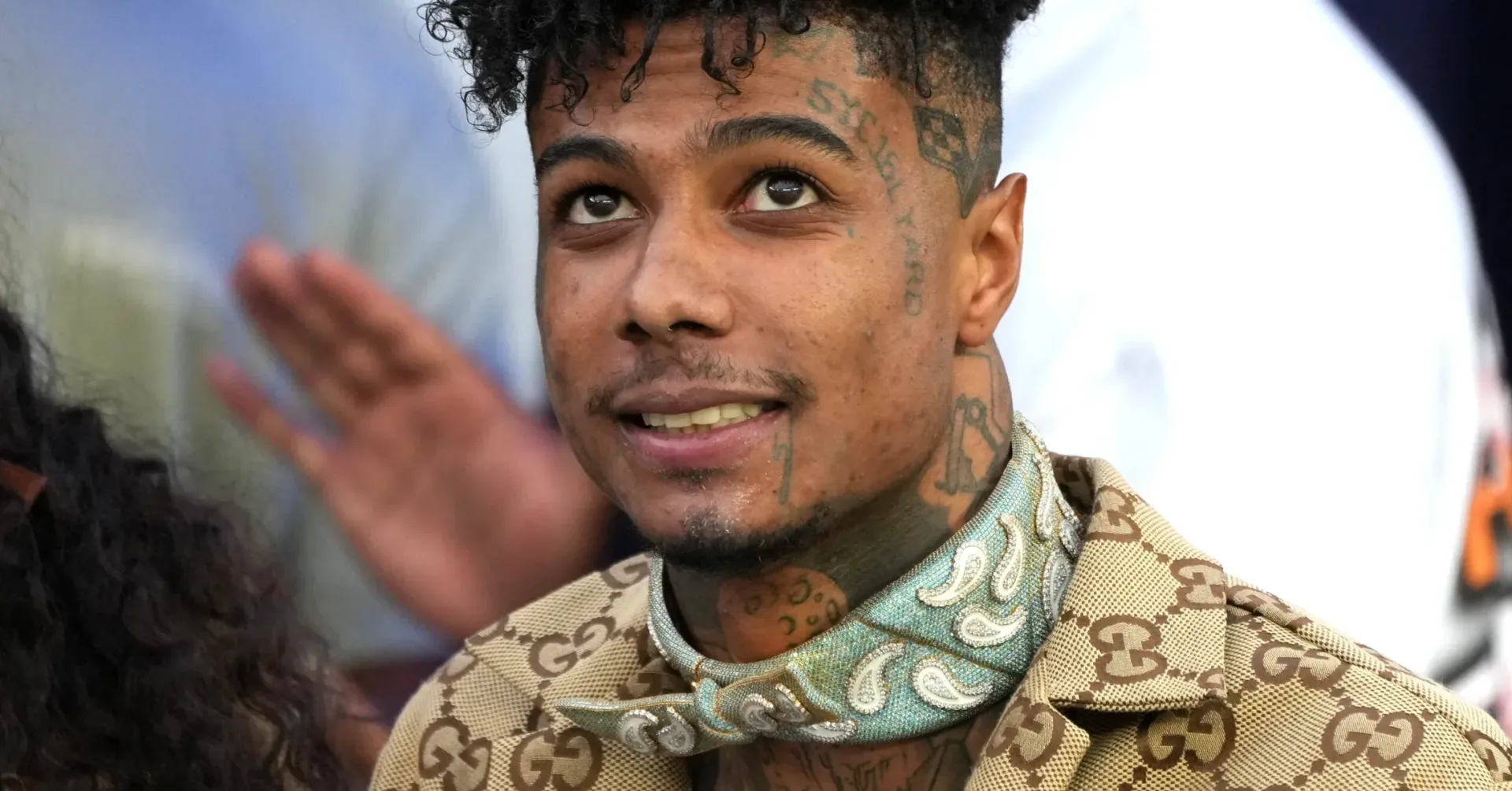
Blueface is facing a federal lawsuit over allegations that he made Chrisean Rock’s professional boxing debut available through a free livestream while the event was being sold as a $29.99 pay-per-view.
The claims concern Rock’s September 19 fight against Ku’Shiyah Williams, staged at the Hyatt Regency Baltimore Inner Harbor and carried exclusively by BLK Prime as part of Skyy Myles Promotions’ The Supper card. Rock, competing under her birth name, Chrisean Malone, won the bout by second-round TKO.
The lawsuit was brought by promoter Skyy Myles and streaming provider BLK Prime. It alleges that Blueface broadcast the fight on his verified Kick channel for more than an hour, allowing viewers to watch without buying access through the official distribution route. The plaintiffs are seeking unspecified damages and legal fees.
What the complaint alleges
The central allegation is not simply that a clip or brief excerpt appeared online. The complaint contends that the pay-per-view fight itself was streamed for an extended period on Blueface’s channel while the authorized presentation remained behind a paid access system.
It further alleges that Wack 100 appeared with Blueface during the broadcast and that the stream reached tens of thousands of viewers. Those figures, as presented in the lawsuit, have not been independently established here. As with any civil filing, they are allegations rather than findings of fact.
The plaintiffs also claim Blueface told viewers not to purchase the official event and instead encouraged them to remain on his stream. The filing links that alleged message to a financial disagreement involving Rock. Blueface had not publicly responded to the lawsuit at the time these claims became public.
That distinction matters. A lawsuit starts an adversarial legal process: it sets out the plaintiffs’ version of events and the relief they want, but it does not itself prove liability. Blueface may respond, challenge the factual allegations, contest damages, seek dismissal, settle, or pursue another defense. None of those next steps are established by the information available so far.
Why a pay-per-view livestream dispute can carry serious stakes
Pay-per-view, often shortened to PPV, is a distribution model in which viewers pay for access to a particular live event rather than receiving it as part of a standard subscription. In this case, the stated price was $29.99. The event’s commercial value depends heavily on its exclusivity during the live window: the promoter and distributor are selling the ability to watch as it happens.
Related coverage includes Blueface Faces Lawsuit Over Alleged Chrisean Rock Fight Livestream.
That makes an alleged simultaneous free restream particularly consequential. The plaintiffs’ theory is presumably that viewers who watched the Kick broadcast were viewers who might otherwise have bought the authorized feed. The complaint alleges lost revenue on that basis.
Still, estimating losses is often more complicated than multiplying an alleged viewer count by the ticket price. Not every person who opens a livestream would necessarily have paid for a PPV; viewing totals can include people who stop by briefly, return repeatedly, or share one screen with others. The plaintiffs are asking for unspecified damages, meaning no definitive dollar figure is described in the available account.
There is also a difference between an audience figure and a paid conversion figure. Tens of thousands of alleged viewers would be important context for the reach of the stream, but it would not automatically settle how much revenue was lost. Those questions are typically part of the dispute in a case centered on an allegedly unauthorized broadcast.
Copyright and broadcast rights, in plain terms
Copyright is a form of legal protection for qualifying original creative material. In a live-event setting, the rights at issue can include the recorded audiovisual production of the broadcast and the right to distribute that production through an authorized platform. A promoter and its distribution partner may contend that they control who can show that production and on what terms.
A “restream” generally means taking a feed from one source and retransmitting it through another service. The lawsuit’s allegation is that a paid BLK Prime presentation was retransmitted through Kick without authorization. The plaintiffs characterize the alleged conduct as a blatant disregard for their rights, particularly because they say the free stream was positioned as an alternative to the paid one.
The case therefore centers on more than celebrity friction. Its basic issue is whether an exclusive live sports product was distributed without permission and, if so, what remedy is appropriate. The high-profile names around the bout may draw attention, but the legal dispute described is about control of a paid broadcast.
Rock’s official pro debut is central to the dispute
The fight was a notable career marker for Rock. Although she had previously fought Zenith Zion in an April crossover bout, that contest did not count toward her professional record. The Williams matchup was promoted as her first sanctioned professional contest, making it her formal entry into pro boxing.
Rock’s second-round TKO of Williams is thus not merely another appearance in the ring. It is the result attached to her professional debut and the featured sporting content the promoters and platform were attempting to monetize through an exclusive broadcast.
That context helps explain why the parties may see an alleged unauthorized livestream as especially harmful. A professional debut carries both immediate pay-per-view value and longer-term importance as a defining early result in a fighter’s record. A live event cannot be recreated once the opening bell has rung, even if highlights or a recording remain available later.
For viewers, the episode is also a reminder that the cheapest-looking live link may carry uncertainty. Official broadcasts identify the service responsible for access and support the event’s stated commercial model. An unofficial feed can disappear, be removed, or become part of a wider dispute without warning.
What is known—and what remains unresolved
The established points in the available report are that Skyy Myles and BLK Prime have filed suit, that the disputed event was Rock’s professional debut against Williams, and that Rock won by second-round TKO. The complaint alleges that Blueface streamed the broadcast, urged people not to purchase the official PPV, and caused lost revenue. Those latter points remain allegations to be tested through the legal process.
There is no reported public response from Blueface addressing the complaint. There is likewise no reported damages total, ruling, settlement, or court determination of wrongdoing. It would be premature to present the lawsuit’s account as settled fact.
For a broader look at how pending legal cases can continue alongside public scrutiny, see our coverage of Lil Durk’s separate federal case.
For now, the key question is narrow but commercially meaningful: whether an exclusive paid boxing broadcast was unlawfully retransmitted for free, and whether the plaintiffs can establish financial harm tied to that alleged stream. The answer will depend on evidence and legal arguments still to come, not on the allegations alone.