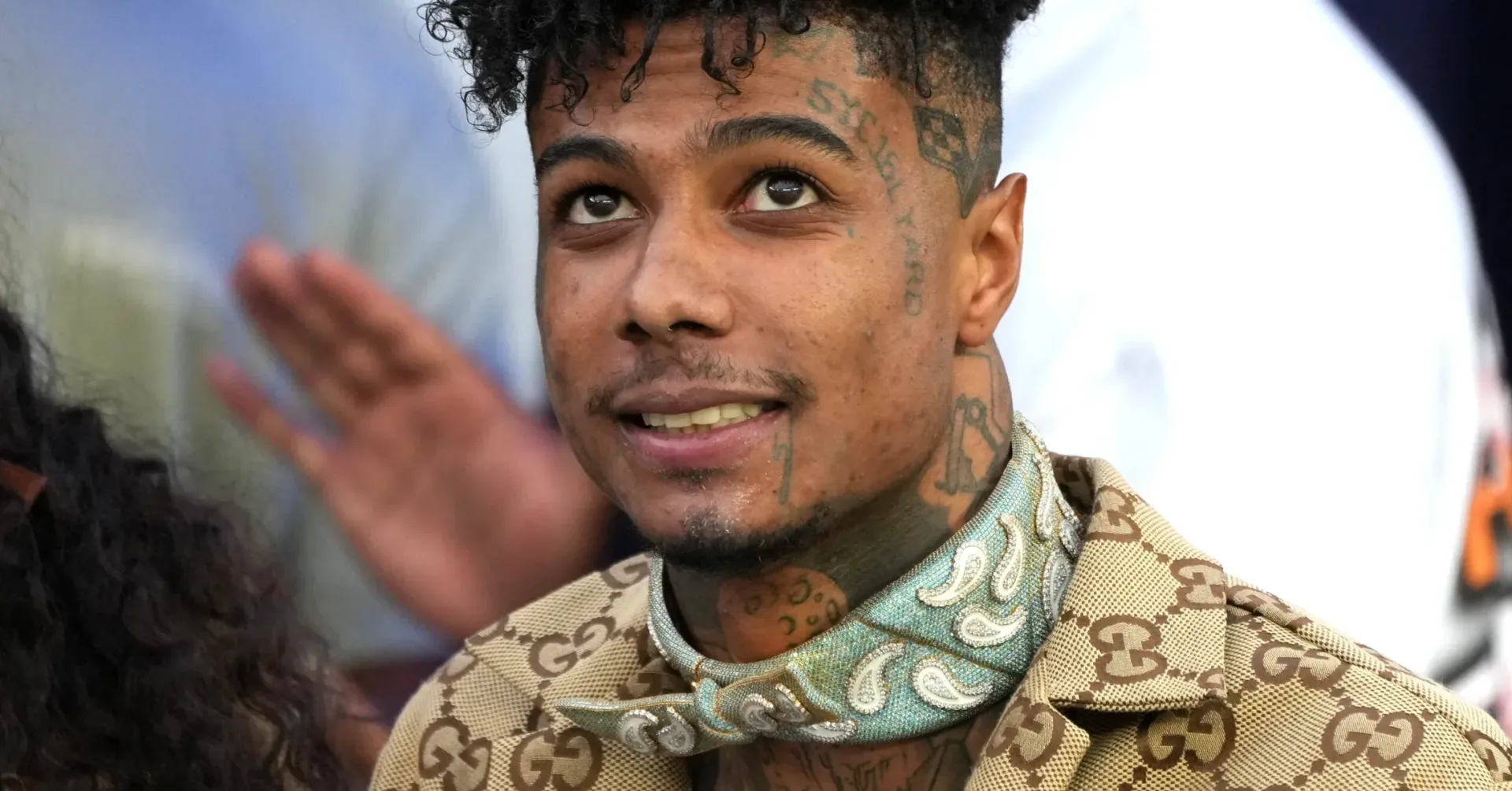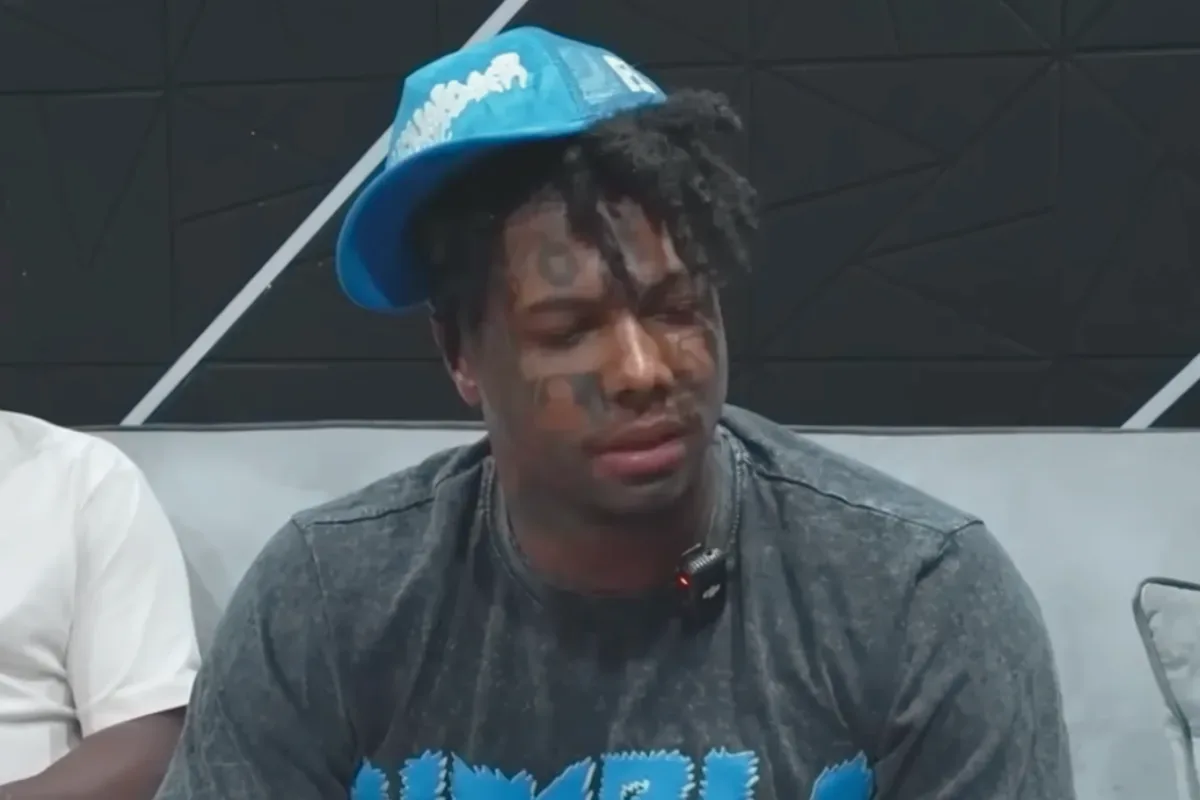
Blueface and Chrisean Rock were visited by emergency responders after a report alleged that their son, Chrisean Jr., was choking during a livestream. Video circulating online appears to show responders arriving at Blueface’s home, while a clip from the stream shows Blueface telling them that nobody was choking as Chrisean stood nearby.
The report concerned the child’s breathing and feeding, with candy cited in circulating accounts of the alleged incident. But important details remain unresolved: Chrisean Jr.’s medical condition has not been independently verified, and authorities have not publicly said whether this particular call was intentionally false.
That distinction matters. A call that produces a police, fire or medical response is not automatically proven to be a swatting incident simply because no emergency is apparent in clips posted online. Still, the episode arrives amid a documented pattern of emergency calls and police visits involving Blueface since July, including reports of shootings, injuries and medical crises that authorities ultimately found did not require the response described by callers.
Why the latest visit is being viewed in the context of swatting
Swatting is the practice of making a false emergency report in an attempt to send police or other responders to a person’s location. The label is especially serious when claims involve weapons, violence or an immediate threat, because responders must treat the information as potentially real until they can establish otherwise.
Blueface has said during a Miami livestream that people watching broadcasts may try to interfere by calling emergency services. He described the conduct as viewers trying to have an effect on what they are watching, and said false reports waste the time of responders and everyone involved.
“Comes with the game,” Blueface said during the Miami broadcast. “You get swatted. That’s what it’s called.”
His remarks describe one practical risk of highly visible livestreaming: an audience can react in real time, while a caller can potentially use publicly visible context to make a report sound urgent. That does not identify who made any call, nor does it establish that every incident shares the same source. Authorities have not publicly named a suspect or determined whether the calls involving Blueface came from one person or multiple people.
The latest allegation is also more sensitive than an ordinary disruption because it involves a young child and a possible choking emergency. Responders cannot reasonably dismiss such a report based on the possibility that it could be malicious. The result is a difficult reality of false-report cases: even an unsubstantiated call can demand an urgent, good-faith response.
A timeline of the reported calls
The recent visit is described as at least the seventh reported incident involving Blueface since July. The available accounts point to a sequence spanning his home, his business and a livestream in Miami.
- July 21: Deputies responded to a shooting claim at Blueface’s Canyon Country home. This was identified as the first reported incident in the current run of calls.
- August 23: Armed deputies surrounded Blueface’s King of Crabs restaurant after a caller reported that a shooting victim was inside. The report was described as false.
- September 13: Police detained Blueface and others at gunpoint during an incident in Miami following another false emergency report.
- September 19: Officers came to Blueface’s residence while he was livestreaming with Nevaeh Akira and their newborn son.
- September 30: Two separate calls brought deputies and firefighters to the home. One caller alleged that a woman threw a young boy to the ground; deputies initially found nobody home. A later caller reported a seizure. Officers subsequently spoke with Blueface and found no emergency.
- Earlier this week: Responders arrived after the report alleging that Chrisean Jr. was choking. The child’s condition has not been independently confirmed, and no public finding has established the call was false.
The September 30 incidents are the clearest example of why the current account needs careful language. In that case, deputies reportedly went to the residence twice in one day after separate claims, then found no emergency after speaking with Blueface. The newest event has not received the same public confirmation, so it should not be presented as a settled false-report finding.
The real-world stakes behind livestream disruption
For online audiences, a police arrival can be treated as content, a rumor or another clip passing through social feeds. For people at the location and the responders called there, it is not a game mechanic. Emergency personnel arrive with limited information and have to assess what is in front of them. Reports involving a shooting, a seizure or a child potentially unable to breathe each demand a fast response because delays can carry consequences if the claim is genuine.
The Miami incident underscores another hazard. A false report can create a situation in which officers approach people who may not know why they are being detained or what information was given to dispatch. The report says Blueface and others were detained at gunpoint there, illustrating why even a caller seeking to interrupt a broadcast can trigger circumstances that are far more dangerous than a screen-level prank.
There is also a public-resource impact. Firefighters, deputies and medical responders sent to an invented emergency are not available for another call during that time. Blueface framed this bluntly in the Miami stream, saying callers were making false reports and wasting everyone’s time. That is not merely a complaint about a disrupted livestream; it reflects the burden placed on services designed for real emergencies.
What is confirmed, and what remains unclear
Several pieces of the broader story are supported by the reported sequence: Blueface has had repeated emergency-service visits since July; some earlier claims were determined to have no emergency behind them; and no suspect has been publicly identified.
The current child-related report requires more restraint. Footage reportedly shows responders at the home, and the stream clip reportedly shows Blueface denying that anyone was choking. Those points do not independently verify the child’s condition before responders arrived, the content of the original call, or the caller’s intent. The available information also does not establish whether the report came from a livestream viewer, even though Blueface has connected prior disruptions to people watching his streams.
In other words, the latest event fits an alarming pattern without yet carrying the same publicly confirmed status as the earlier incidents in which officers found no emergency. That uncertainty is central to the story, particularly when a child’s wellbeing is involved.
A recurring problem with no public suspect
Repeated incidents can invite speculation about a coordinated campaign, but the known facts do not support a firm conclusion on that point. Authorities have not publicly said that the calls came from the same person, identified a motive or announced an arrest.
For Blueface, the pattern has nevertheless become part of the environment around his public livestreams. His own description of viewers trying to influence what happens on screen suggests that live broadcasting can remove distance between public attention and real-world disruption. The latest response, regardless of how its underlying claim is eventually characterized, is another reminder that allegations made through emergency channels do not stay online.
It also lands amid continuing public discussion around Blueface, Rock and parenting that has already spilled into livestream spaces. For related context, see Blueface’s response to parenting criticism during earlier livestream drama.