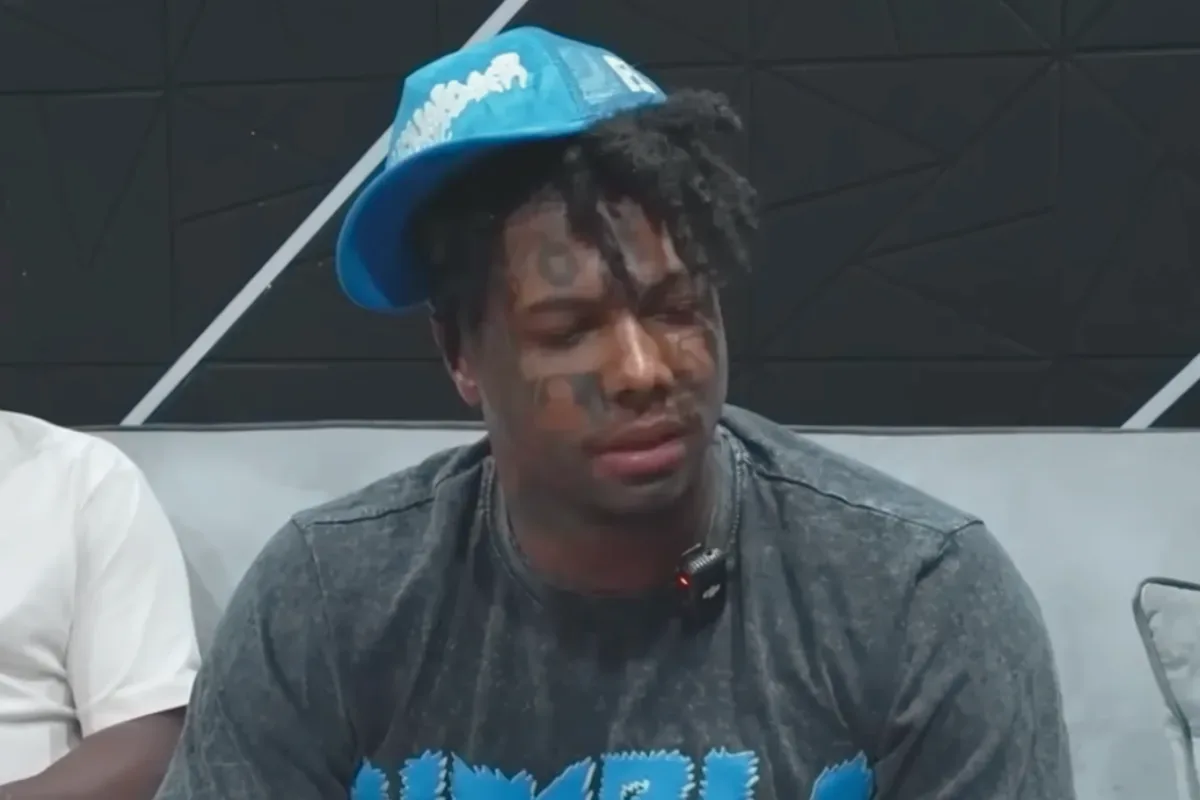
Blueface was reportedly the target of two additional swatting calls at his Los Angeles-area home on September 30, with emergency responders dispatched twice in a little more than two hours over separate claims that proved unfounded.
The first report, placed at roughly 1:30 p.m. Pacific, alleged that a woman had thrown a boy to the ground. A later caller claimed that a person inside the property was experiencing a seizure. That second report brought firefighters and deputies back to the home at approximately 3:42 p.m. Pacific.
Responders spoke with Blueface during the second visit and found no medical emergency. The pair of calls raises the reported total involving the rapper to at least six since July, spanning his home, a restaurant in Santa Clarita and a residence in Miami.
What swatting means—and why false reports carry real risk
Swatting is the use of a fabricated report of an immediate, serious threat to prompt a major police or emergency response at a chosen address. Claims involving weapons, shootings, injuries or medical crises can require responders to act quickly because they initially have no way to know whether the danger is real.
That is what makes the practice especially hazardous. People at the location can be approached by officers who are responding to a potentially violent situation; police, firefighters and medical personnel are pulled away from genuine calls; and a false description can shape the urgency and posture of the initial response. The September 30 reports illustrate that problem from two different angles: one alleged violence involving a child, while the other alleged an acute medical episode.
The available accounts do not identify who made the calls or establish a motive. They do, however, describe a recurring pattern in which claims involving Blueface have led authorities to locations where no reported emergency was ultimately found. It is important to separate that documented outcome from broader speculation about a caller’s identity or intent, neither of which is established here.
A sequence of reported incidents since July
The September 30 visits were not described as isolated events. On July 21, deputies reportedly went to Blueface’s Canyon Country home after a call alleging that a woman had been shot. Authorities determined that report was false.
On August 23, another false allegation sent deputies to King of Crabs, a Santa Clarita restaurant. The caller reportedly said there was a shooting victim inside and described an armed man matching Blueface. Blueface and others were held at gunpoint outside before deputies checked the scene and released those detained. Nevaeh Akira and their newborn were present during that incident.
A later episode in Miami also resulted in a high-risk encounter. Police reportedly removed Blueface and other people from a residence at gunpoint after another false emergency report. Discussing that event, Blueface said the calls were being made to disrupt his broadcasts:
“They call the police. They make false reports. Waste everyone’s time.”
On September 19, officers again visited his home while a broadcast was underway. Footage from that encounter showed Akira taking their infant son outside as officers spoke with her and checked the property. Six days before that, the Miami incident had taken place.
Taken together, the reports show a pattern that reaches beyond one residence or one type of alleged emergency. The alleged calls have involved a claimed shooting, an armed-person description, an assault involving a child, and a seizure. In practice, that variety matters because it can bring different first responders to a scene and makes each dispatch a new safety concern for everyone present.
Why the latest two calls stand out
The latest events occurred on the same afternoon, at the same Los Angeles-area property, with the second dispatch arriving only a little more than two hours after the first. A first response did not prevent a separate caller, or a caller making a separate allegation, from triggering another one later in the day.
The distinction between the two reports is also significant. The first centered on an allegation of physical harm to a boy. The second was a claimed seizure, which ordinarily signals a time-sensitive medical emergency. In either scenario, responders have reason to treat the information seriously until they can assess the circumstances themselves.
For people living at or visiting the home, repeated dispatches can create an environment where routine moments are interrupted by an emergency response. The prior reports also show that family members, including Akira and the couple’s children, have been present during some of the encounters. That turns a campaign of false calls from a nuisance into a recurring safety issue affecting more people than its intended target.
A public-facing life can create more exposure, not less danger
Blueface has connected at least some of the calls to people watching his broadcasts. That claim does not identify any particular individual, and the reported incidents alone do not prove who placed them. But it does point to an important practical issue: public broadcasts can make a person’s surroundings, schedule or presence at a location more visible to outsiders.
Visibility is not evidence of wrongdoing by a creator or performer. Nor does being known publicly make false emergency calls an expected cost of broadcasting. The relevant point is that a repeated pattern of dispatches can affect whether and how someone chooses to share real-time activity from a private home or business.
The same concern applies to the restaurant incident. A false report tied to a public business can place workers, diners and nearby people in the path of a police response, even where the stated target is one recognizable person. The reported August call resulted in deputies confronting Blueface and others outside, underscoring how a fabricated description can rapidly reshape an ordinary setting.
What remains unclear
There is no indication in the available information that anyone has been publicly identified or charged in connection with the reported calls. It is likewise unclear whether authorities have linked the individual incidents to one person or group, whether the callers used the same methods, or whether Blueface’s reported claims about viewers are part of an official determination.
Those gaps matter. Six reported incidents over several months can establish the seriousness of the pattern without resolving who is responsible. The clearest confirmed thread in the accounts is the operational consequence: emergency services were repeatedly sent to locations connected with Blueface, and responders reportedly found the alleged emergencies were not occurring.
For the people caught in those encounters, the central problem is immediate rather than theoretical. A false report can lead to officers and emergency crews arriving under the assumption that they may be needed to address violence, weapons or a medical crisis. The reported September 30 calls are the newest examples of that risk, not simply another unusual interruption in an online celebrity story.
Elsewhere in music coverage, Quavo’s QRÖMELIFE has drawn divided responses around Pharrell’s album-wide production. Blueface’s situation, however, is about something much more immediate: the reported misuse of emergency systems and the danger it can create for a household, a workplace and the responders sent to investigate.