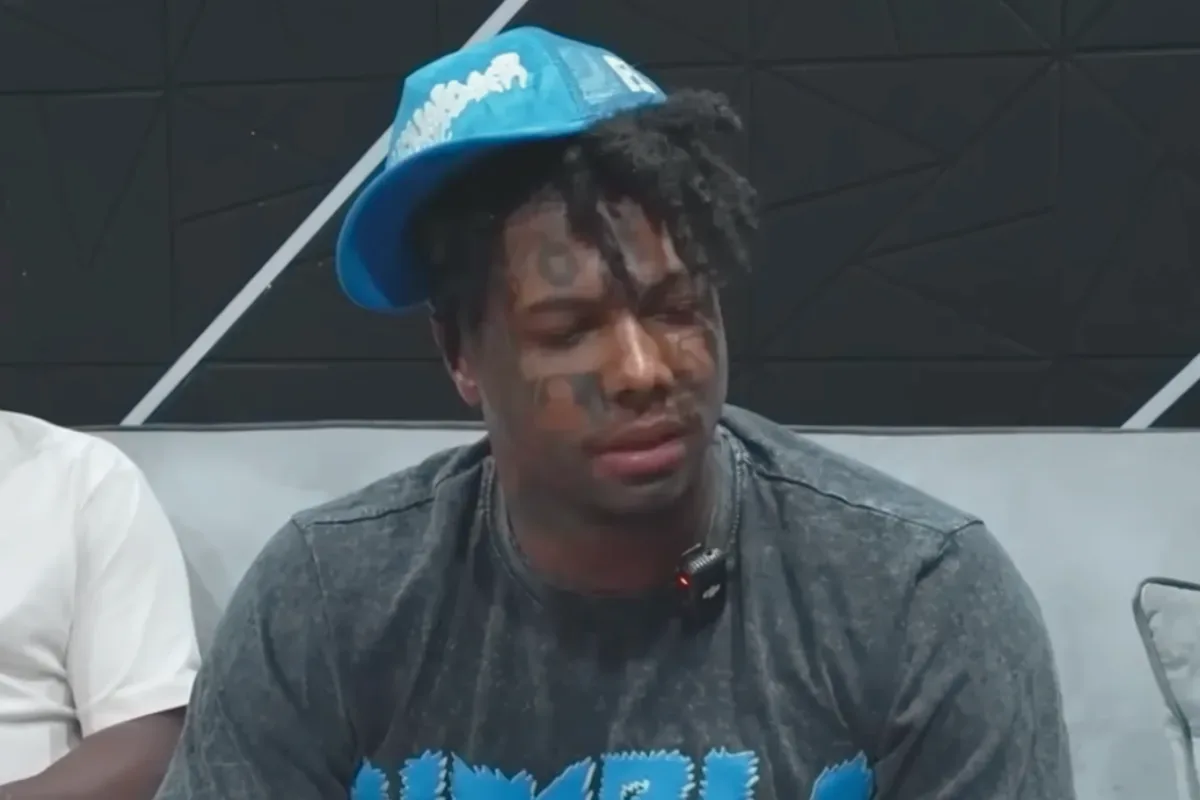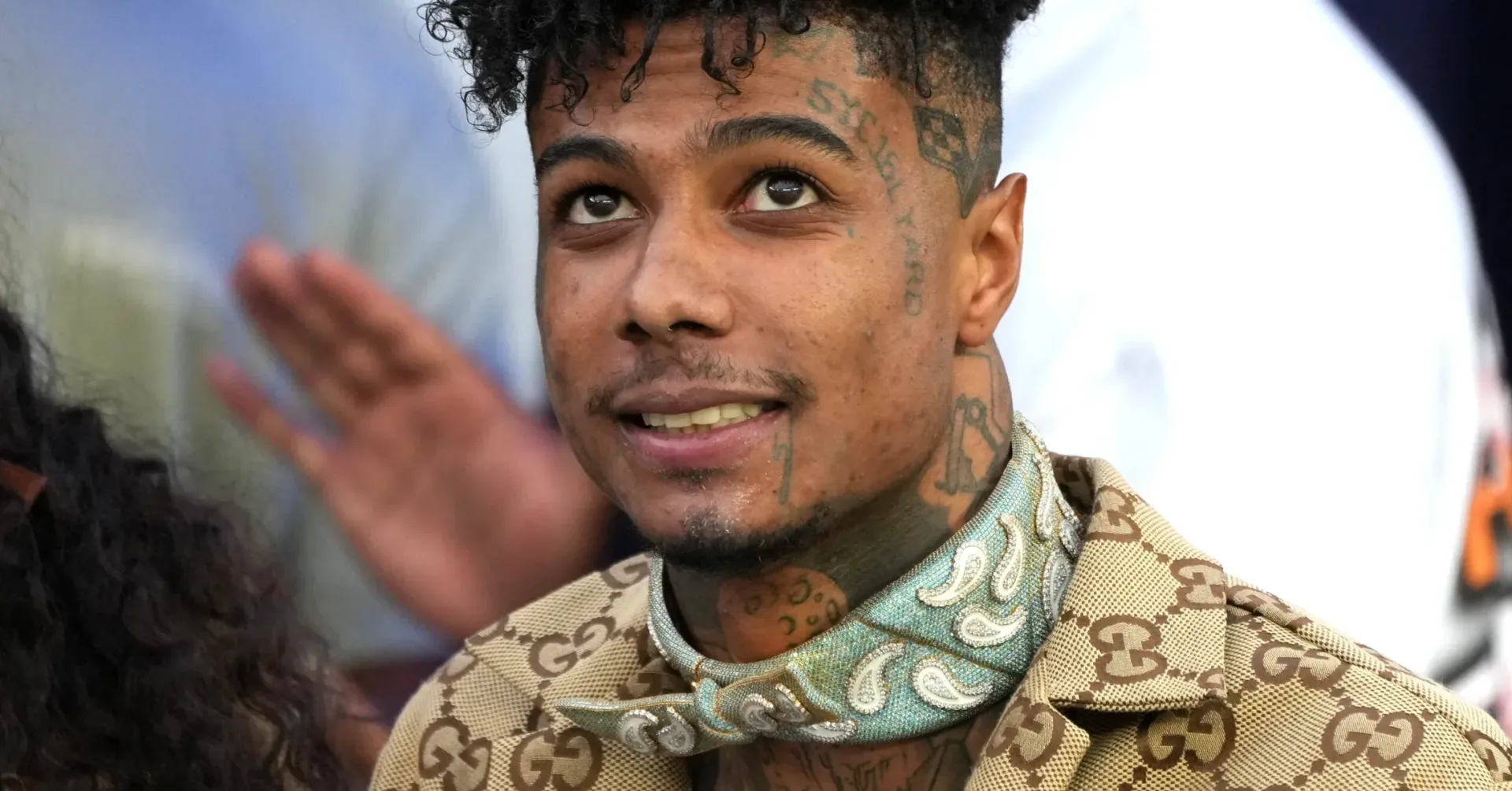
Blueface and Nevaeh Akira appeared together on a recent livestream with their young son, presenting a public picture that was neither a clean reconciliation nor a clean break. Clips from the broadcast showed stretches of cordial interaction and laughter, but also arguments connected to their relationship, past disputes and the prospect of living separately.
The appearance arrives after a very public falling-out between the pair, including online discussion surrounding leaked material and Akira’s disclosure of an NBA YoungBoy tattoo. Social-media clips have led to speculation that the two may be sharing a home while caring for their child, but the footage does not establish the precise nature of their relationship or household arrangements. What it does show is that they remain in contact, with their parenting relationship unfolding under unusually intense public attention.
What the livestream actually suggests
It is tempting to treat any shared stream by a formerly estranged couple as proof of a reunion. That would go further than the available information supports. A livestream is a snapshot: it can show who is present, how people interact in a given moment and what they choose to say in front of an audience. It cannot, on its own, settle whether people have reconciled, whether an argument is resolved, or what agreements exist away from the camera.
In this case, the available clips point to a mixed dynamic. Blueface and Akira were seen together with their son and appeared relaxed at points. At other times, they reportedly clashed over the breakup. Akira indicated that she considered the relationship over if Blueface was committed to that position, while Blueface continued to criticize and mock elements of her past.
That contrast matters. Amicability in one moment does not erase conflict in the next, and conflict does not mean two parents are unable to coordinate around a child. The most cautious reading is simply that they appear to be maintaining some level of contact and shared parenting while unresolved personal friction remains visible.
A move-out discussion adds another layer
One exchange reportedly touched on Akira moving out in November. Blueface appeared conflicted about the idea, while also saying he supported it. The pair were reportedly laughing through parts of the discussion, which makes its emotional meaning hard to pin down from excerpts alone.
That uncertainty is important because livestreamed relationship conversations rarely arrive with the context viewers would need to interpret them confidently. A joke may be an attempt to diffuse a difficult moment; it may also conceal disagreement. A statement of support can coexist with sadness or frustration. Public clips can capture the volatility of an exchange without explaining the private decisions behind it.
Why livestream dynamics make a private issue public
Livestreaming removes the usual delay between an event and its audience. A disagreement that might otherwise take place in private becomes immediate material for viewers, repost accounts and commentators. Small moments can be isolated from a longer broadcast, recirculated without surrounding context and interpreted as evidence of a larger story.
For a couple already associated with public drama, that format can make ordinary ambiguity seem more definitive than it is. Viewers may look for a label—together, broken up, co-parenting, feuding—when the people involved may themselves be dealing with something less tidy. The reported stream appears to fall into that in-between space: there were signs of connection, but there were also plainly visible disputes.
The presence of their child gives the situation added stakes. Public commentary often turns relationship tension into entertainment, but shared parenting is not a plot twist. A stable, respectful arrangement is meaningful whether or not it fits the audience’s appetite for a dramatic answer. It is also reasonable to keep the focus on the adults’ public statements rather than extrapolating from their child’s on-camera appearance.
Blueface also addresses swatting during streams
Separately, Blueface has discussed another risk attached to broadcasting live: swatting. In comments to CBS Miami, he described false emergency reports being made in an apparent attempt to provoke a police response while a stream is underway.
Swatting is the term commonly used for making a false report to emergency services with the aim of sending law enforcement to a target’s location. The name comes from the possibility of a specialized tactical response, though any fabricated emergency call can pull resources away from real needs and create danger for everyone involved. Blueface described it as something streamers encounter when viewers want to affect a live broadcast.
The distinction between an audience participating in a chat and an audience trying to interfere with someone’s offline life is crucial. Livestreams can feel interactive because viewers react in real time, but that access does not make harassment, fabricated reports or attempts to force an emergency response part of the entertainment. Blueface’s comments emphasize the cost of that behavior: it wastes the time of responders and can turn an online spectacle into a real-world safety problem.
It is also a reminder that not every “live” moment is merely content. A public stream may invite instant reactions, but it can expose participants to rapid escalation, especially where personal locations or family situations become part of the viewing experience.
What remains unresolved
The present evidence does not establish that Blueface and Nevaeh Akira have restarted their romantic relationship. It does establish that they appeared together publicly, that their interaction included both friendly and contentious moments, and that their breakup remains a live subject of conversation between them.
For audiences following the story, the clearest boundary is between observation and assumption. It is fair to note a shared livestream, discussion of a potential move and the visible push-and-pull in their exchanges. It is less sound to declare that a reconciliation is complete, that a separation is final, or that a clipped argument explains the full state of their family life.
The broader music-and-streaming conversation continues to blur those boundaries, particularly when artists’ personal lives are played out in front of a chat. For another example of how livestream culture and rap-world speculation can generate attention around an unconfirmed possibility, see this report on PlaqueBoyMax’s account of a Drake studio-stream idea. In Blueface and Akira’s case, the immediate picture is simpler: public contact has resumed, the tension has not disappeared, and the details beyond those moments remain theirs to define.