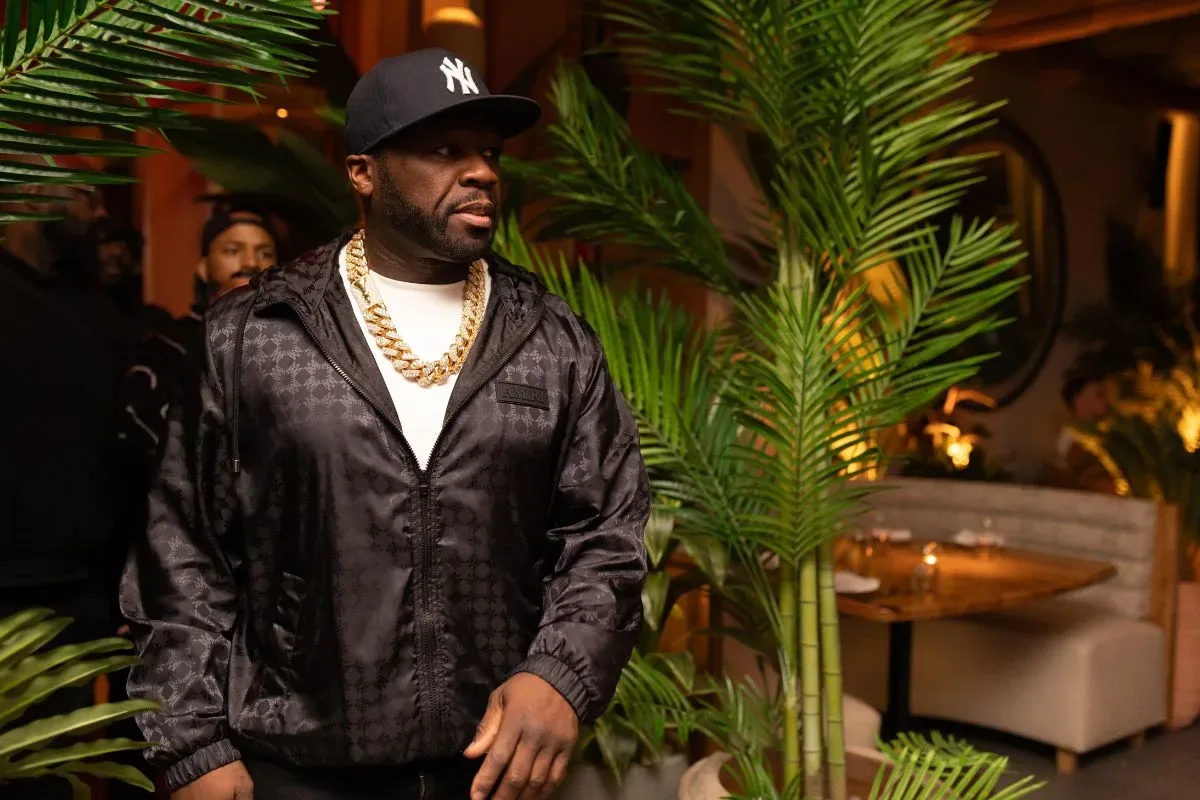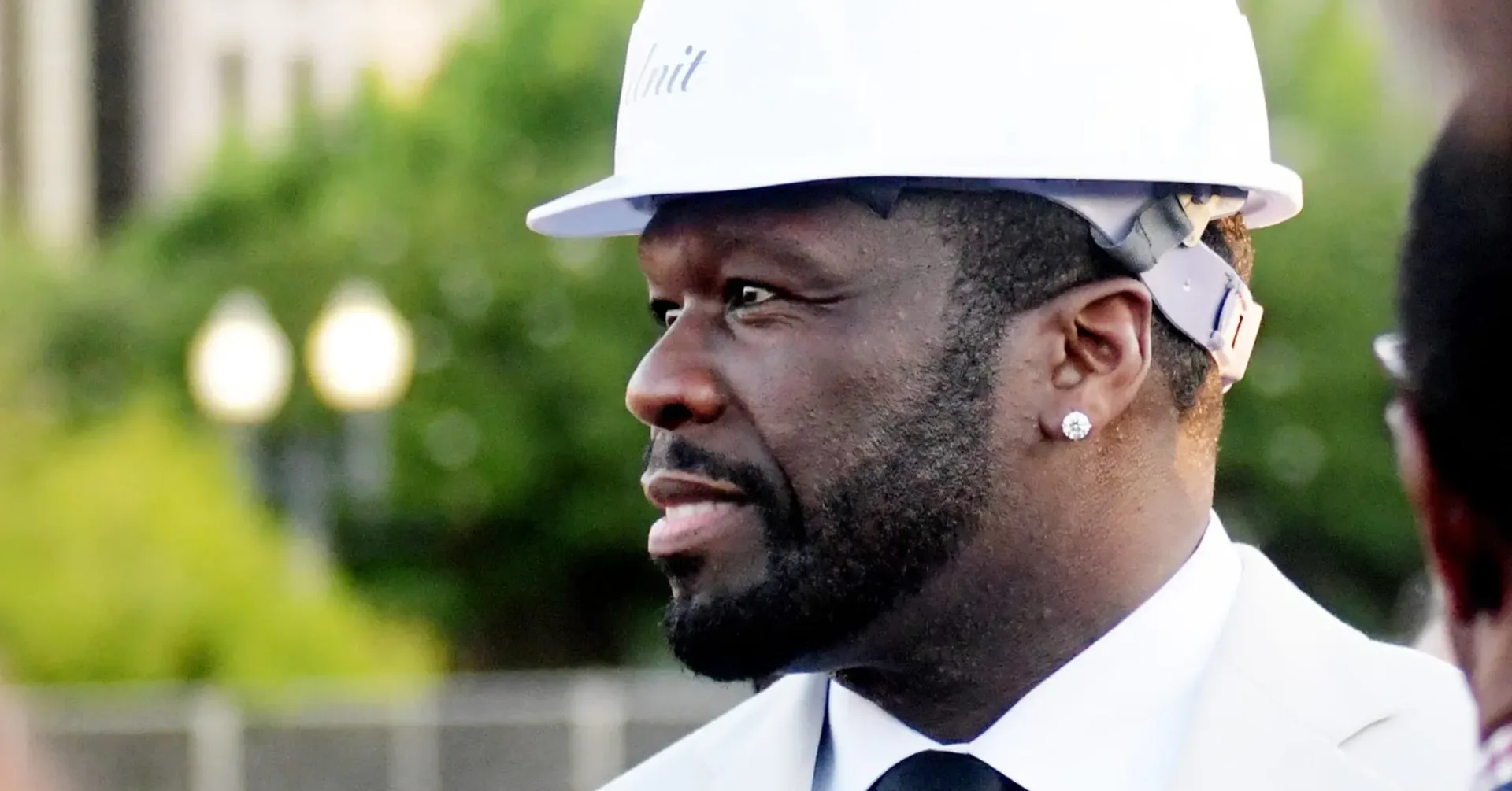
50 Cent says the expansion of his entertainment businesses has pulled him closer to political conversations, even though he has no interest in becoming a politician. Speaking about a multi-million-dollar development project connected to his film and television work in Shreveport, Louisiana, the performer and entrepreneur described politics as a practical consequence of operating at a scale that can affect local employment and the economy.
His position is straightforward: business growth can create a political dimension without turning its owner into a political candidate. “I have no political aspirations,” he said, explaining that creating enough jobs to affect an area’s economy naturally puts a business in contact with public-facing issues. But he drew a line between navigating that reality and wanting a formal role in government.
“When your business gets big, it gets political because you’re creating so many jobs; it actually affects the economy there,” 50 Cent said. “So yeah, it starts to get political, but I don't care about politics or want to be involved in politics at all because I’m an entertainer.”
For a figure known both for music and for building a wider screen-business presence, the distinction matters. Politics in this context does not necessarily mean campaigning, holding office, or publicly attaching oneself to a party. It can mean operating within an environment where projects, jobs, development and local economic activity draw attention from civic leaders and residents. That is the overlap 50 Cent appears to be addressing: the demands surrounding a large business project rather than a plan to pursue elected power.
“Purple” Rather Than Red or Blue
When asked to identify politically, 50 Cent offered a deliberately broad answer: “Are you red or blue? I’m purple. I’m with everybody.” He also said there are elements of both the Democratic and Republican parties that he does not agree with.
That answer should not be read as a detailed policy platform. No list of positions, legislative priorities or electoral plans accompanied it. Instead, it frames his approach as a refusal to select a permanent team identity in a sharply partisan environment. His comments place greater emphasis on staying connected to different people than on making a case for a particular political program.
In everyday political shorthand, “red” and “blue” refer to the Republican and Democratic parties, respectively. “Purple” is often used to suggest a mix of views or a preference not to be neatly sorted into either camp. Here, 50 Cent uses the phrase less as a formal ideological label than as a way to reject the premise that he must choose one side wholesale.
There is an important practical distinction in that framing. Someone can have opinions on public events, disagree with candidates or parties, and still have no wish to turn those opinions into an office-seeking project. That is effectively where 50 Cent places himself. He has spoken about political matters before, but he says he does not want involvement in politics itself beyond what business circumstances make difficult to avoid.
Why an Entertainment Development Project Can Become Political
The word political can easily obscure what is actually being discussed. In the narrowest sense, politics concerns elections, parties, candidates and government office. In a wider civic sense, it also describes decisions and debates that shape a community. A major entertainment development effort can enter that wider territory because it is tied to jobs and a local economy.
50 Cent’s explanation does not claim that his company is a political organization. Rather, it identifies a pressure point: when a project becomes economically meaningful to a city, people beyond the company may take an interest in it. That can include the public conversation around economic activity and employment. The more visible the undertaking, the harder it is for an owner to treat it as existing entirely outside civic life.
That does not erase the boundary he is emphasizing. His stated goal is to remain an entertainer and business operator, not to seek a political identity. In other words, he recognizes that a project’s effects may prompt political attention while rejecting the notion that he must become a political participant by profession.
The comment also speaks to the unusual expectations placed on celebrity entrepreneurs. Public figures are often asked to declare where they stand, particularly when their name is associated with a large business effort. Yet a recognizable name does not automatically indicate an appetite for the role that audiences, commentators or political observers might project onto it. 50 Cent’s remarks amount to a pushback against that assumption.
This Is Not His First Attempt to Keep Distance
50 Cent has previously argued that entertainers should be cautious around both politics and religion. At a film premiere earlier this year, he said he tries to avoid both subjects because people can strongly and passionately disagree. In those remarks, he referenced Kanye West while explaining why he sees the terrain as especially risky for entertainers.
The logic of that earlier statement aligns with his newer comments. He does not portray political discussion as unimportant; instead, he portrays it as an arena where division can be intense and where public figures can quickly become the focus of arguments that eclipse their work. For someone managing entertainment ventures, that can be a meaningful calculation. A political label can shape how every subsequent business move, creative project or public statement is interpreted.
His position is also more complicated than simple silence. He has made political comments in the past. He previously said he would vote for Donald Trump in the 2024 election, then later reversed course. He also exchanged words with New York City Mayor Zohran Mamdani during Mamdani’s mayoral run. Those episodes make clear that avoiding political ambition does not mean avoiding every political conversation.
That difference is central. Political commentary is the act of voicing a view about public affairs. Political ambition is the desire to seek office, exercise governmental authority or build a career inside a party system. 50 Cent is rejecting the second category. His comments leave room for the first, even if he says he would rather not make it a defining feature of his public role.
A Business-First Message, With Limits
The Shreveport project gives this message its clearest context. 50 Cent is not saying business owners can completely sidestep public concerns when their work creates jobs and affects a local economy. He is saying that such contact does not need to become a personal bid for political influence or a declaration of party loyalty.
That is a business-first position, but it has limits. It does not tell audiences how the project will interact with local civic issues, nor does it establish a political agenda. It also does not settle how observers will interpret future statements from him. A public figure who says “I’m with everybody” may be seeking flexibility, but that phrase can still draw scrutiny from people who want a clearer allegiance.
For now, the firmest takeaway is narrower: 50 Cent sees politics as something that can surround a growing enterprise, especially one connected to employment, without becoming his preferred career path. He says he will engage with the reality of a business that has economic consequences, but he does not want to run for office or enroll himself in a red-versus-blue identity.
That leaves him in a familiar space for major entertainers: publicly capable of weighing in, commercially connected to decisions with civic implications, and personally resistant to being remade into a political figure. The approach may invite debate, particularly because his past comments have not always stayed out of the political arena. But on the question of whether he plans to enter it formally, his answer is unambiguous: no.
For more music-world legal and celebrity news, see the latest report involving Offset.