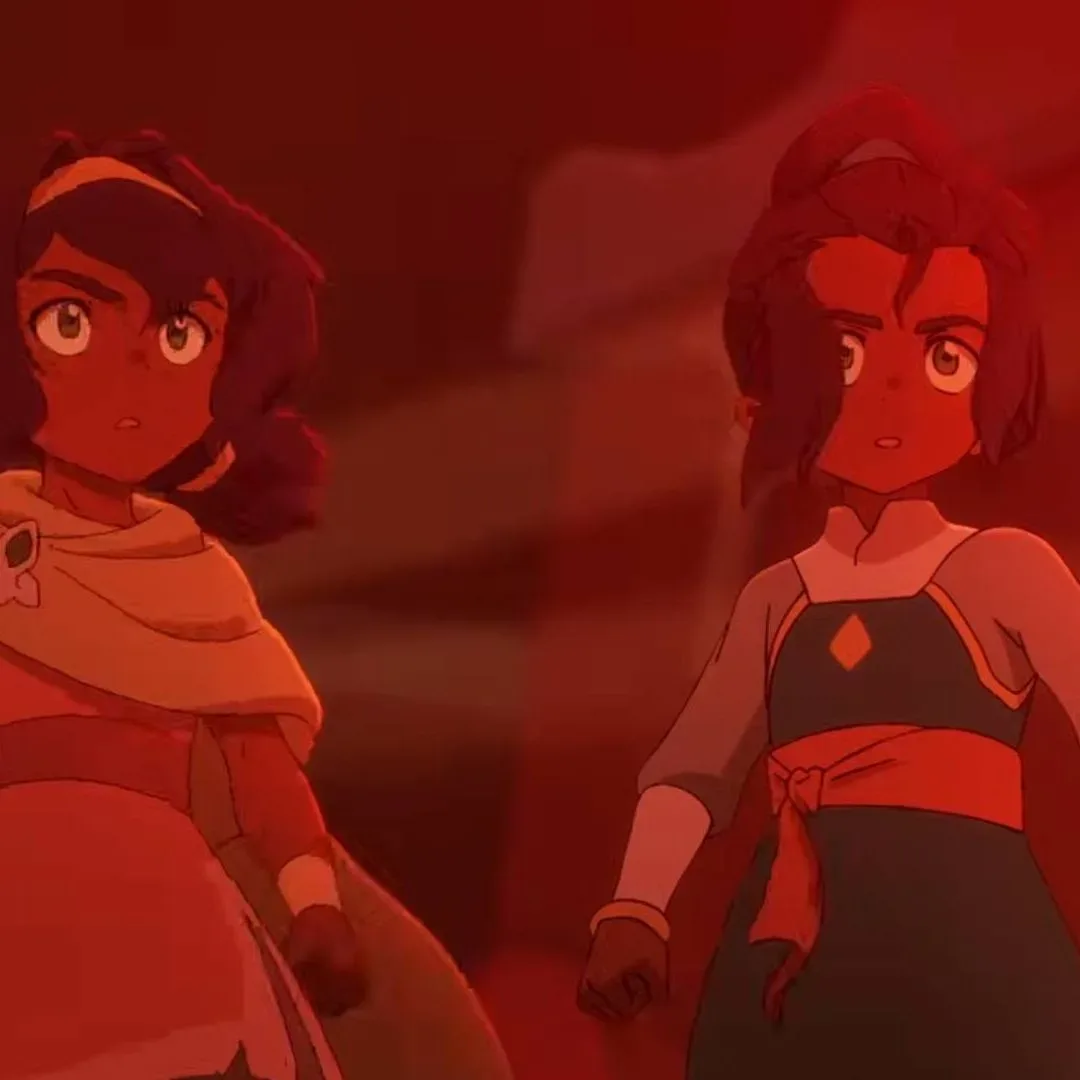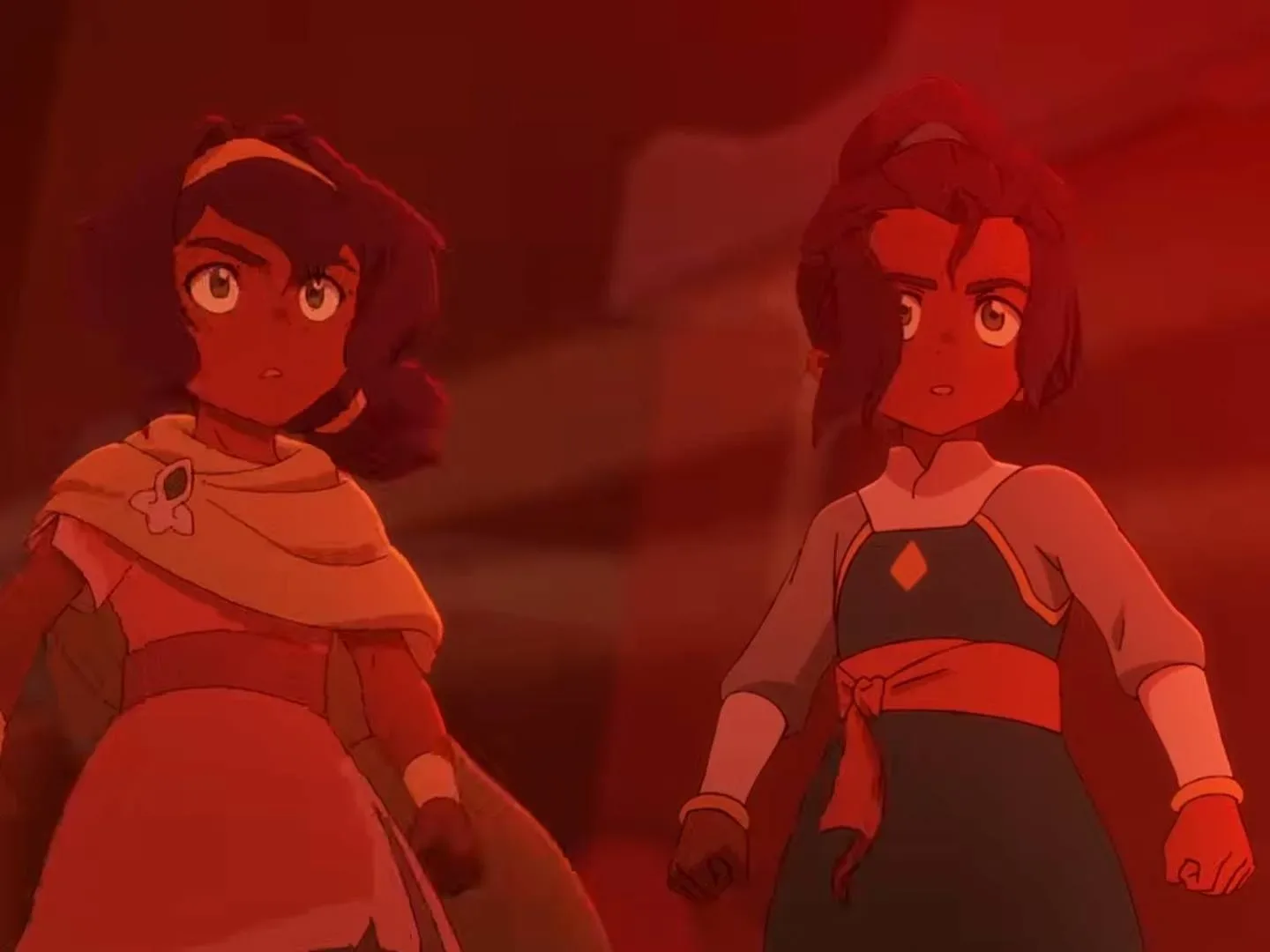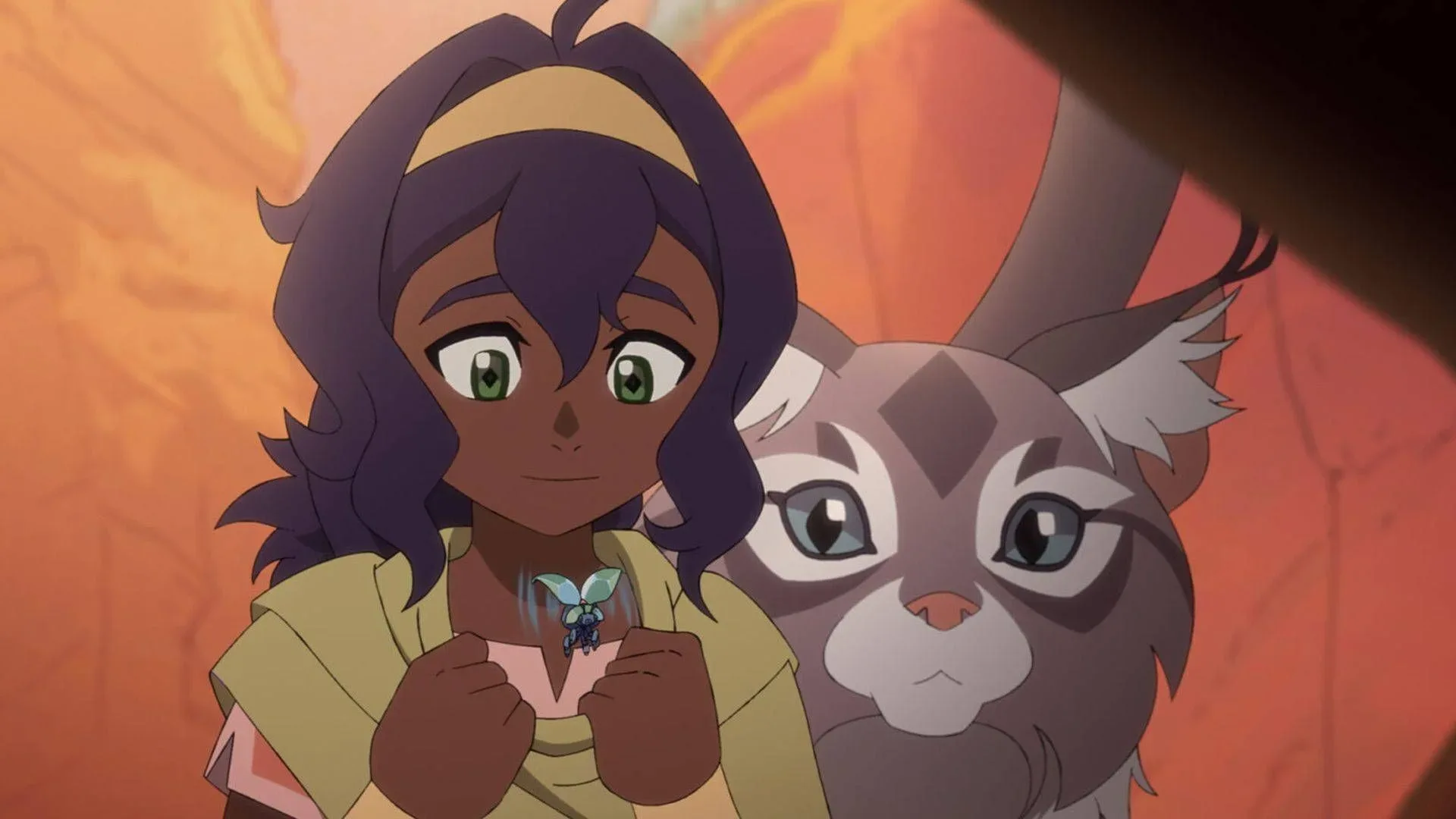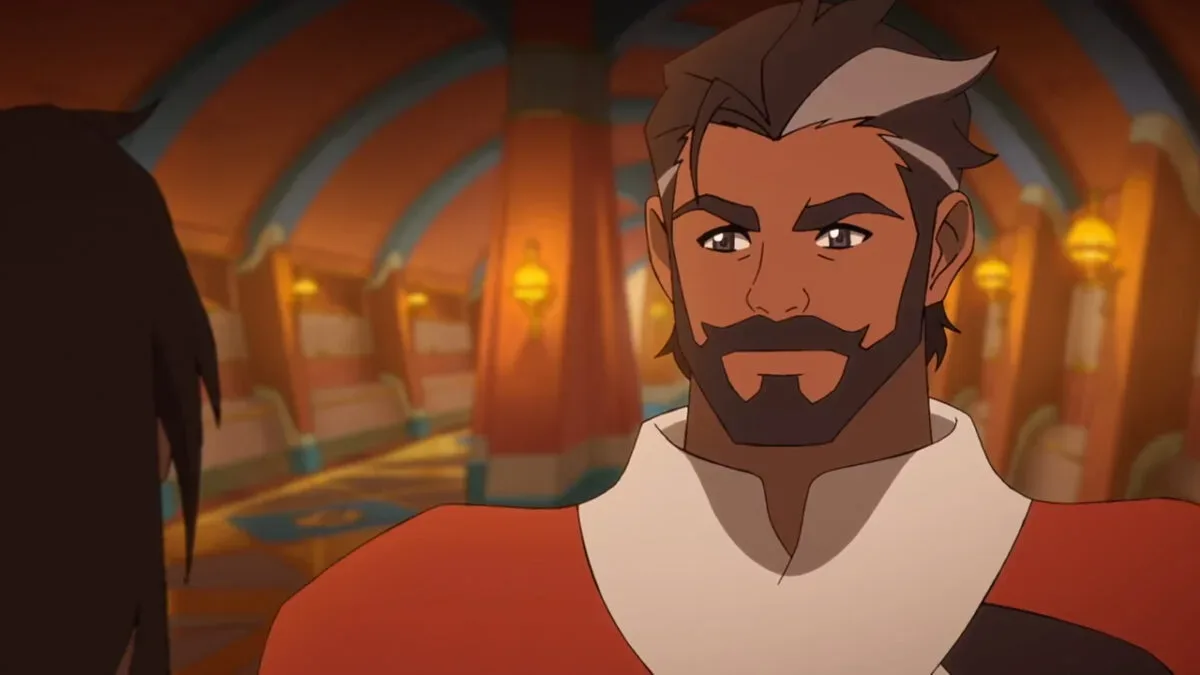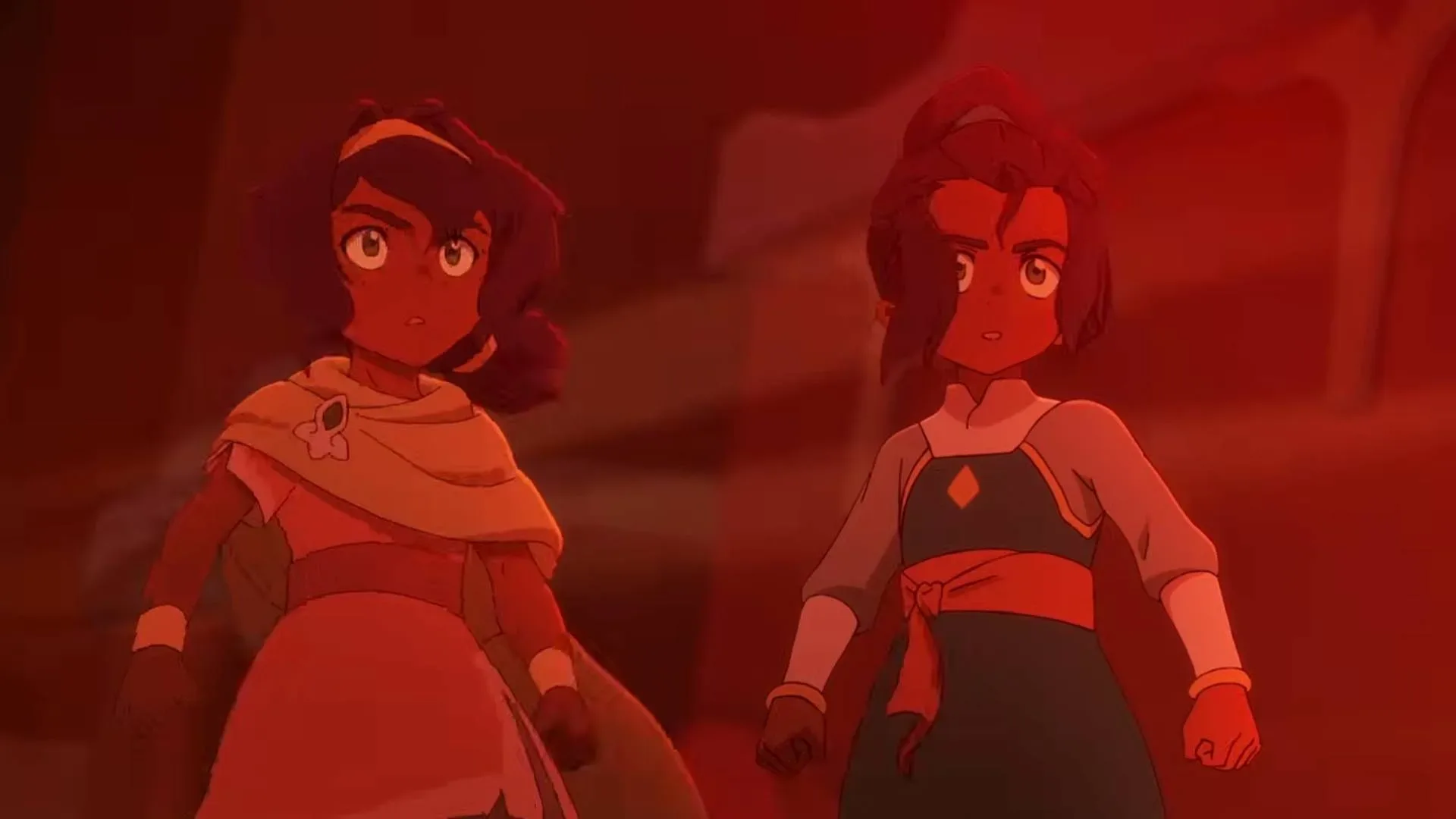
Avatar: Seven Havens has settled one of its biggest continuity questions while making its central mystery even stranger. Co-creator Michael Dante DiMartino has confirmed that Korra was the Avatar immediately preceding Pavi and Nisha. There was no unshown or “secret” Avatar inserted into the roughly 200-year span separating The Legend of Korra and the new series.
That answer shuts down a widely discussed possibility, but it does not tidy up the timeline. Quite the opposite: it turns the interval between Korra and the twin Avatars into a deliberate question the show will need to answer. In the established Avatar cycle, a successor is born when the preceding Avatar dies. If Korra truly leads directly to Pavi and Nisha, viewers are left to consider how that normal succession could apparently accommodate two centuries and, ultimately, two Avatars at once.
DiMartino was direct on the first point: “Korra was the previous Avatar.” He also explicitly dismissed the idea that another Avatar existed between her and the twins. That is a meaningful boundary for fan theorizing. A missing person in the chain is no longer the intended explanation; whatever happened is tied to Korra’s fate, the rules of reincarnation, or both.
No missing Avatar in the succession
The clarification matters because a long time jump naturally invites an assumed succession of generations. But the Avatar setting has a very particular spiritual premise: the Avatar is not merely a title handed from one person to another. It is a reincarnating role, with a new Avatar born upon the prior Avatar’s death. That distinction makes the gap in Seven Havens less like a blank historical record and more like a mystery about the mechanism itself.
With no intermediary Avatar, the story’s known order is Korra, followed by Pavi and Nisha. The twins are presented as the first twin Avatars, another circumstance that does not fit the expected one-successor model. Put together, the two facts create a single larger puzzle rather than two disconnected surprises: why was the normal cycle seemingly delayed, and why did its next known manifestation involve twins?
It is important, though, to separate confirmation from inference. The show’s co-creator has confirmed the absence of a secret Avatar between Korra and the twins. The supplied information does not establish exactly when Korra died, how old she was at that time, whether Pavi and Nisha share the Avatar’s role in the same way, or what event caused the change. Those remain story questions rather than settled lore.
What the 200-year gap could mean — and what remains unconfirmed
The timeframe produces a narrow set of broad possibilities, but viewers should treat them as possibilities rather than answers. One is that Korra lived for an unusually long time. The Avatar universe already contains an example of extraordinary longevity: Kyoshi lived to 230 after extending her life. That precedent means a lifespan reaching far beyond ordinary expectations is not automatically impossible within the setting.
Another possibility raised by the premise is some form of prolonged stasis. The Spirit World is an obvious area for speculation because of its importance to the franchise’s cosmology, but there is no confirmed explanation that Korra was held there. Nor is there confirmation of any other kind of suspension, magical or otherwise. The key point is simpler: if reincarnation begins with death, any explanation for a two-century break has to account for Korra’s status during that period.
The twin element increases the stakes. A mystery series works best when its unknowns seem connected rather than merely piled together, and Seven Havens is plainly framing the unusual succession as part of its core hook. DiMartino and fellow co-creator Bryan Konietzko set out to find a fresh angle for stories in this universe. Twin Avatars offered that angle, while a mystery-led format gave the show room to reveal the reasons gradually.
That framing is useful for managing expectations. The series is not positioning the mystery as a continuity error waiting for a quick patch. It is presenting it as an engine for the plot. The question is not only “how can there be two?” It is also what the existence of Pavi and Nisha says about the world that emerged after Korra, the catastrophe associated with her name, and the spiritual rules audiences thought they understood.
Korra’s legacy is at the center of the new world
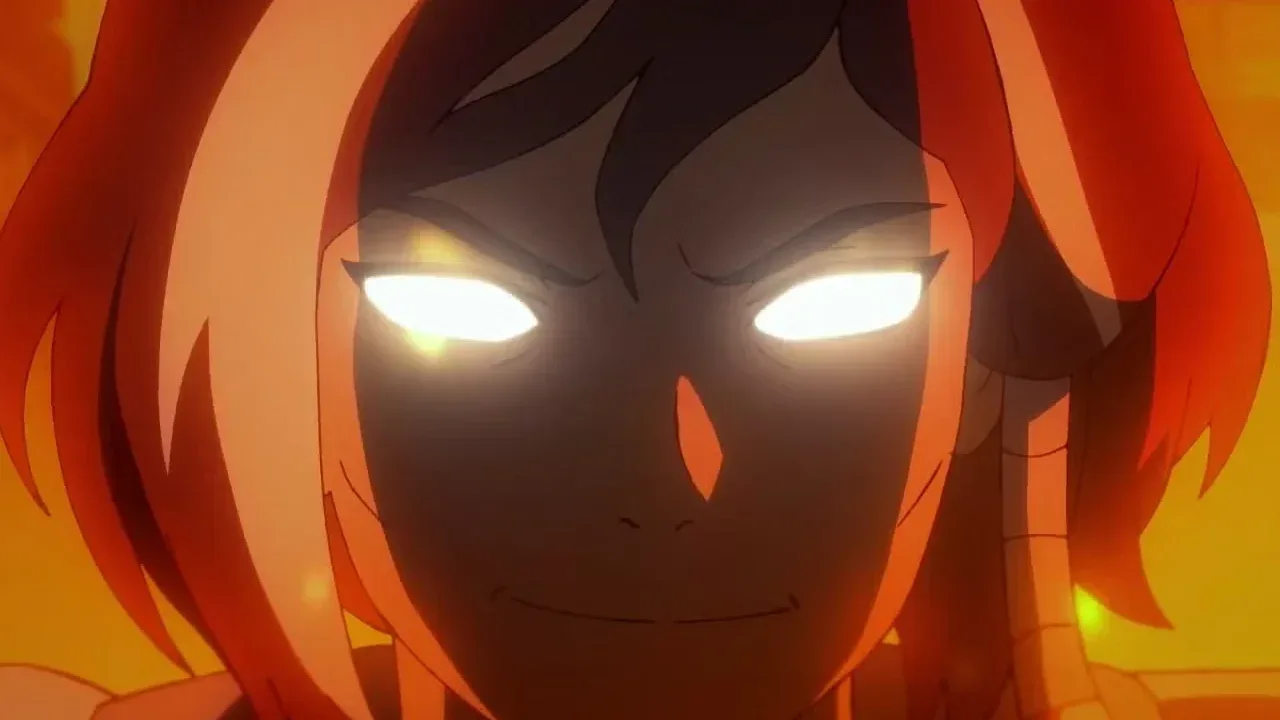
The timeline is also inseparable from Korra’s reputation in Seven Havens. Citizens of Ellora blame her for the cataclysm that devastated their world and celebrate her death. That is a dramatic departure from a simple heroic legacy, and it has understandably become one of the show’s most emotionally charged ideas.
Janet Varney, who voiced Korra, said she “sobbed” upon seeing the character villainized in the new series. Her reaction reflects why the premise lands so heavily: Korra is not only absent from the new era, but is being judged by people living with the consequences of an event they associate with her. The available details leave substantial room for context that Ellora’s citizens may not have, and the series has not resolved the issue in the information provided.
For viewers, that uncertainty is worth preserving. A population’s belief is not automatically the complete historical truth, particularly in a story built around mysteries and a 200-year divide. At the same time, the accusation is clearly important enough to shape the world Pavi and Nisha inherit. The new Avatars are entering a society whose relationship with the Avatar concept may be fractured before either twin can establish what their role means.
That creates a practical storytelling advantage for the show. Rather than treating the earlier series as remote backstory, Seven Havens makes Korra’s legacy an active force in the present. The past affects public memory, political feeling, and the reception awaiting the twins. The eventual explanation for the gap could therefore do more than answer a lore question; it could change how the people of Ellora understand the catastrophe and their reason for resenting Korra.
A mystery designed to unfold over time
DiMartino has indicated that the show will unpack its mysteries as the series goes on. That includes the central question of why there are two Avatars, not merely the absence of an in-between successor. The approach fits the structure already underway: the early episodes are prompting questions about the cataclysm, Korra’s place in its history, the long lapse in the cycle, and Pavi and Nisha’s unprecedented status.
There is time for those answers to arrive. Avatar: Seven Havens has been renewed for seasons 3 and 4, and the broader plan maps a four-book story. That does not reveal when any particular answer will surface, but it signals that the series has room to develop its mysteries rather than resolve every foundational question immediately. For an audience tempted to build detailed theories from the gap, the most productive adjustment is to remove the now-debunked hidden-Avatar premise and watch for evidence connecting Korra’s fate to the twins’ existence.
The first three episodes have already spurred plenty of discussion, in part because the show is asking its audience to question an institution that once seemed straightforward. “Avatar succession” had a familiar pattern: one Avatar’s death, another’s birth. Pavi and Nisha complicate the pattern, while Korra’s direct placement before them removes an easy explanation. The remaining mystery is more focused as a result.
New episodes of Avatar: Seven Havens air Fridays on Paramount Plus. For a broader look at the season’s structure, see Avatar: Seven Havens’ four-book story plan.
What viewers can take as canon right now
- Korra is the Avatar immediately before Pavi and Nisha.
- There was no undisclosed Avatar between Korra and the twins.
- Pavi and Nisha are the first twin Avatars.
- Ellora’s citizens blame Korra for the cataclysm that destroyed their world and celebrate her death.
- The reason for the long gap, the nature of the twins’ Avatar status, and the full truth behind Korra’s legacy remain mysteries the series intends to explore.
In other words, one theory has been conclusively removed, but the central enigma has gained sharper contours. Korra’s place in the succession is not a detour around the story’s mystery. It is one of the mystery’s most important pieces.