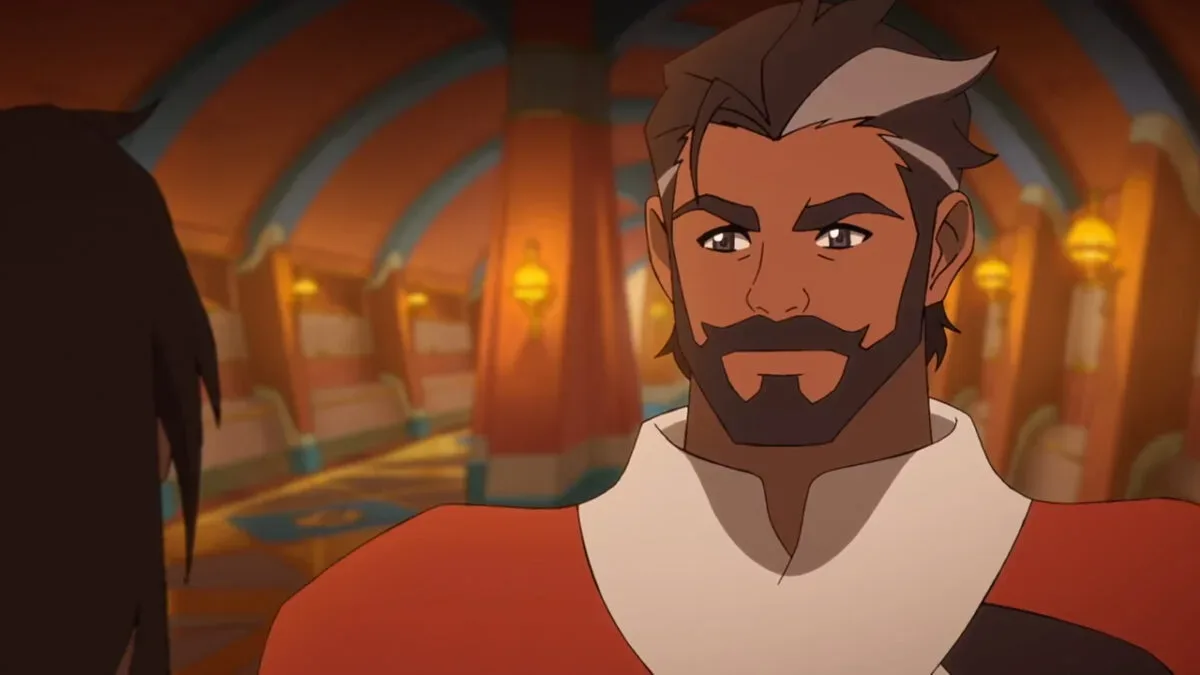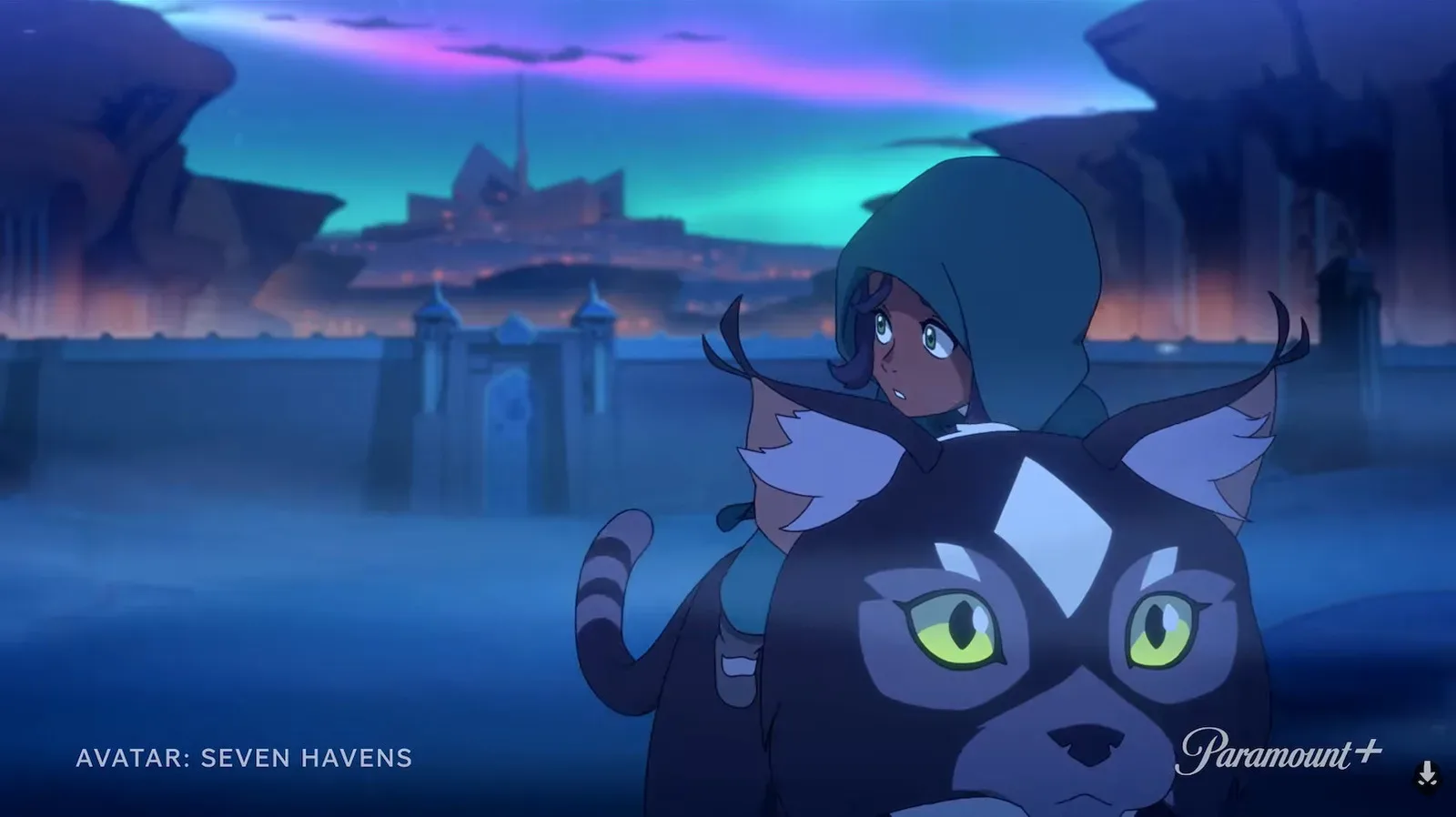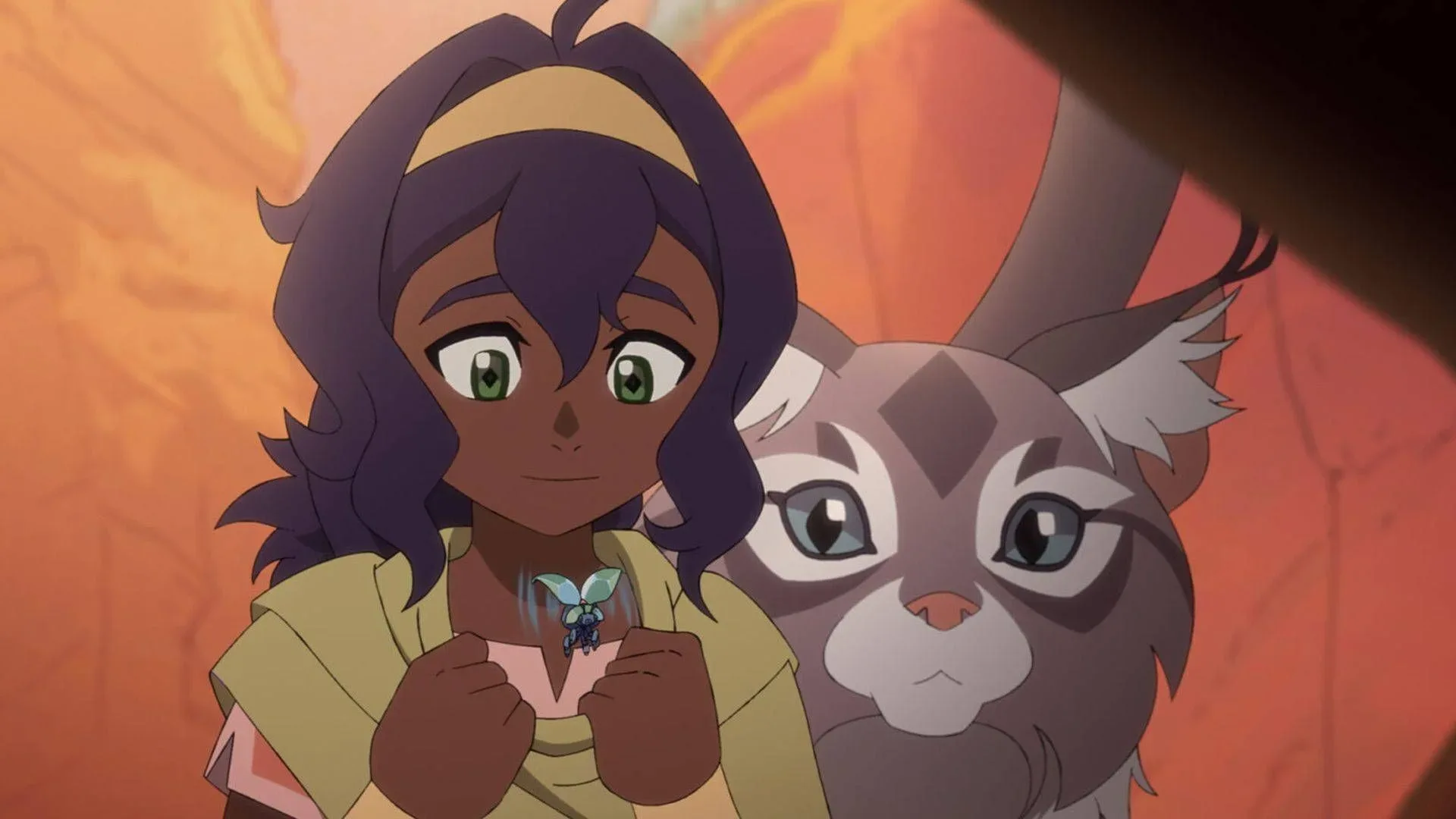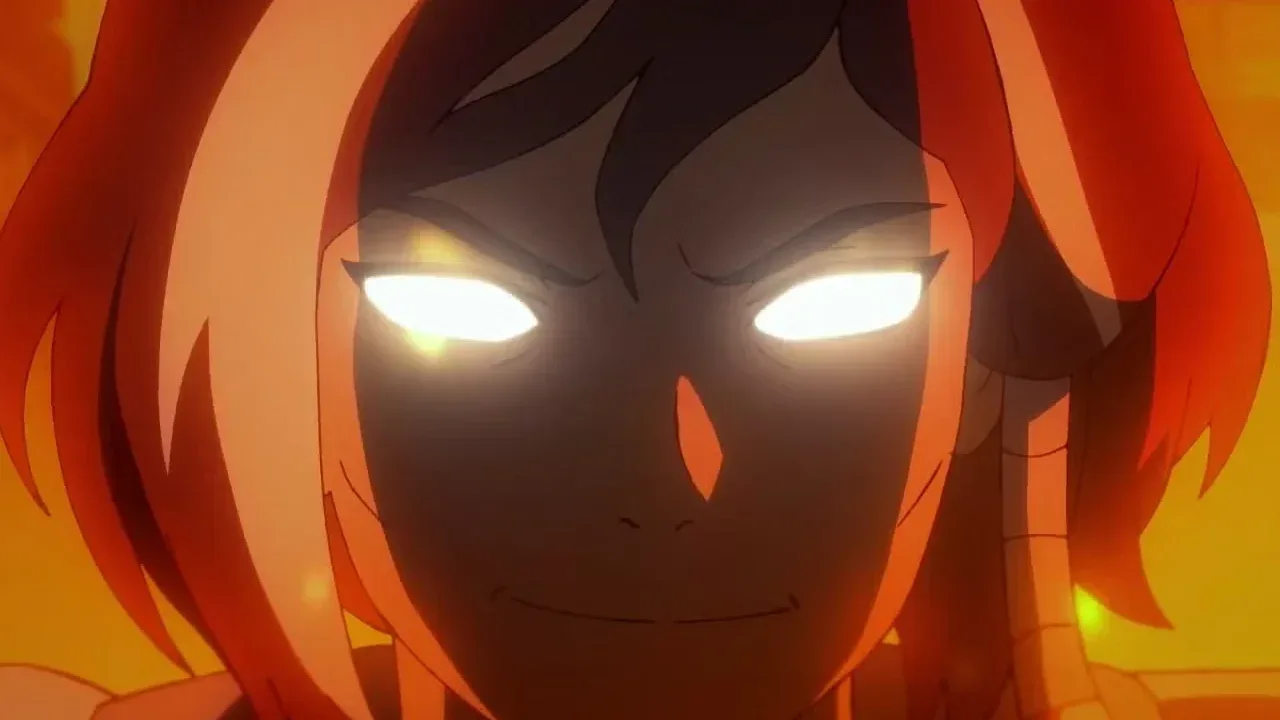
Avatar: Seven Havens has returned audiences to a world shaped by the Avatar’s legacy, but it is doing so through an especially uncomfortable lens for fans of The Legend of Korra. Set more than 200 years after Korra’s story, the animated sequel presents a future in which the former Avatar is remembered by many people not as a savior, but as a destroyer.
That premise is already driving discussion after the first three episodes. Korra is not an active participant in the new story, yet her name and the interpretation of her actions hang over its new leads: twin sisters Pavi and Nisha, the next Avatars. The series has made the consequences of its distant past a key part of the present-day conflict, asking viewers to consider how a heroic figure can be recast when the people who knew the truth are gone.
A shattered world and a damaged reputation
Seven Havens takes place after a devastating Cataclysm that desecrated the world and split it into the seven communities that give the show its name. The disaster occurred during Korra’s era. What exactly happened remains unclear in the episodes released so far, because records and firsthand knowledge have been eroded by the passage of time.
What survives is an official version of history that identifies Korra’s actions as a major factor in the world’s destruction. That distinction matters. The show has not yet supplied viewers with a complete account of the Cataclysm, nor has it established whether the historical account is accurate, incomplete, or deliberately manipulated. It has, however, established that people living centuries later believe it strongly enough to celebrate Korra’s death and ridicule her in public performances.
For more context, explore UGREEN Nexode 65W Three-Port Charger Falls to $28 for Prime Members, With Steam Deck-Friendly USB-C Power.
Those scenes are meant to sting. They turn a familiar franchise hero into an absent, contested figure whose public image has been transformed by historical distance. For Pavi and Nisha, Korra’s reputation is not merely trivia from the past. It is a warning about the role they now occupy and the potential cost of being associated with it.
What the show means by legacy
In this context, a legacy is more than the list of things a character did during her lifetime. It is the story that later generations choose, or are taught, to tell about those actions. A person may have saved lives, made damaging mistakes, faced impossible choices, or all three at once. When eyewitnesses disappear and documents are lost, the version with the most political or cultural usefulness can become the accepted record.
That is why the show’s missing information is significant rather than simply a delayed plot explanation. The Cataclysm is a historical mystery inside the setting, and Korra’s reputation is the evidence Pavi, Nisha, and viewers must learn to evaluate. A crowd cheering the end of Korra’s life tells us what the crowd believes. It does not, on its own, tell us what Korra did.
For a closer look at how the early episodes frame that question, Korra’s legacy has become one of the sequel’s defining mysteries.
Why Korra remains such a charged character
The reception is also inseparable from the real-world conversation that has long followed Korra. She has been a divisive protagonist in parts of the wider Avatar community, with debates ranging from objections to the darker and riskier storytelling in her series to hostility rooted in her status as a queer woman leading a franchise previously centered on a male protagonist.
Those are not identical criticisms and should not be treated as though they are. A viewer can have a substantive disagreement with a story’s direction, tone, or character writing. Prejudice toward a queer woman protagonist is something else entirely. The renewed dispute around Seven Havens has pulled both strands back into view because the premise can be read, at a glance, as a condemnation of Korra herself.
That reading is understandable as an initial emotional response: audiences are seeing a beloved character mocked and blamed by people inside the world she once protected. But it is also premature as a conclusion about what the new series ultimately believes. The first three episodes deliberately withhold the facts of the Cataclysm. Treating a hostile in-universe account as the show’s final moral judgment would erase the mystery the series is actively building.
The creators say to keep watching
Series creators Bryan Konietzko and Michael Dante DiMartino have addressed the idea that Seven Havens is a roundabout attempt to declare Korra a failure. They rejected that interpretation and indicated that viewers should follow the story as it develops.
That response does not reveal what happened during the Cataclysm, and it does not settle the question of Korra’s responsibility. It does clarify that the apparent anti-Korra sentiment expressed by characters in the new setting should not be automatically equated with the creators’ own verdict on her. In storytelling terms, that is the difference between diegetic perspective and authorial perspective. Diegetic perspective means the beliefs held within a fictional world: the street performances, private celebrations, and inherited historical record seen on screen. Authorial perspective is what the work itself eventually communicates through the full shape of its plot.
Those perspectives can overlap, but they need not. A story can depict a false belief, cruel celebration, or biased account without endorsing it. Whether Seven Havens is exposing a scapegoating campaign, uncovering a more complicated tragedy, or heading somewhere else entirely is still unknown. The early episodes have not supplied enough information to resolve that question.
The possibility that Korra has been made into a scapegoat is therefore analysis, not established fact. A scapegoat is a person assigned disproportionate blame for a larger crisis, often because doing so gives a society an easy explanation for complicated harm. The gap between the destruction of the world and the lack of surviving knowledge makes that possibility dramatically plausible, but the series has not yet confirmed it.
What this means for Pavi and Nisha
Korra’s historical burden gives the twin protagonists an unusually difficult starting point. Rather than inheriting an uncomplicated symbol of hope, Pavi and Nisha enter their roles in a society where the Avatar’s name can evoke fear, anger, and celebration of a predecessor’s death. The title characters are not just learning who they are; they are navigating the fallout of a position whose legitimacy appears damaged by centuries of collective memory.
That setup gives the sequel a practical narrative advantage. It allows a new audience to meet Pavi and Nisha without requiring Korra to be physically present, while ensuring that the previous series still meaningfully informs the stakes. It also creates a strong reason for the twins to investigate their world’s past: learning what really occurred during the Cataclysm may be essential to understanding their own place in the Seven Havens.
For returning viewers, the arrangement turns familiar lore into an open question rather than a fixed piece of background. Korra’s accomplishments in The Legend of Korra are part of the franchise’s established story, but the people in this future do not possess the audience’s direct relationship with her. They know a fragmented, hostile inheritance. The tension between what viewers remember and what the setting believes is the engine of the new conflict.
There is time for the mystery to unfold
The first season is planned as 13 episodes, and only three have arrived so far. That is important context for judging the early portrayal of Korra. The show has introduced a provocative historical claim, but it has not yet delivered the account needed to evaluate it.
There is also a longer runway for the new era of the franchise. The series has already been renewed for third and fourth seasons. That does not tell viewers when the Cataclysm’s truth will be revealed, but it does indicate that Pavi and Nisha’s story is not being positioned as a brief one-season detour.
Janet Varney, who voiced Korra in the earlier series, has said she had an emotional reaction to the treatment of the character in the opening episode. That response reflects why the premise is landing so strongly: the fictional hostility is aimed at a protagonist with an established, deeply personal connection for many fans.
For now, the most grounded way to approach Avatar: Seven Havens is to separate what has been shown from what has been inferred. The show has shown a broken future, a population taught to blame Korra, and new Avatars forced to live with that legacy. It has not yet shown the complete truth behind the Cataclysm. Until it does, Korra’s place in the Seven Havens is less a final sentence than the series’ largest unanswered question.