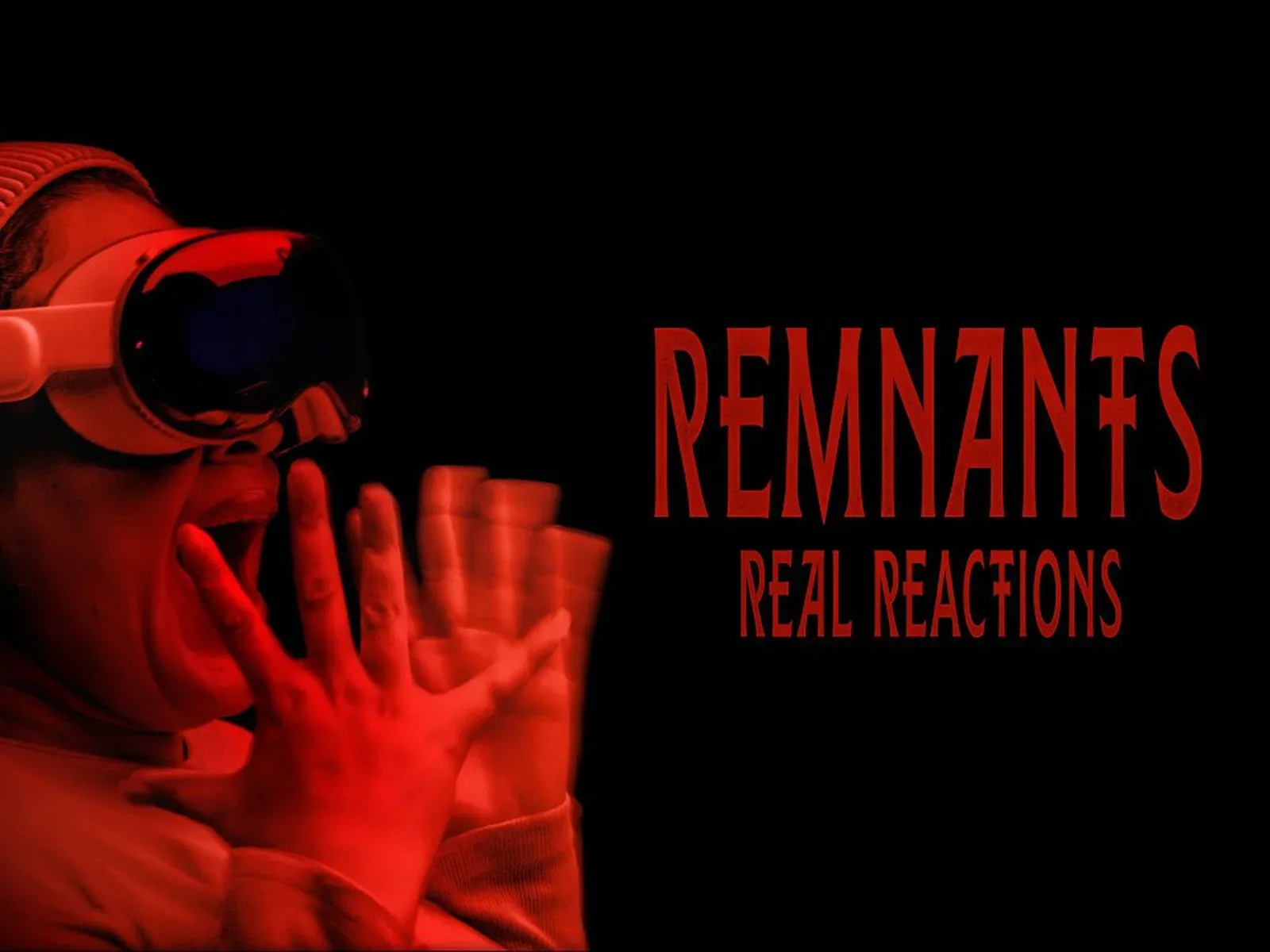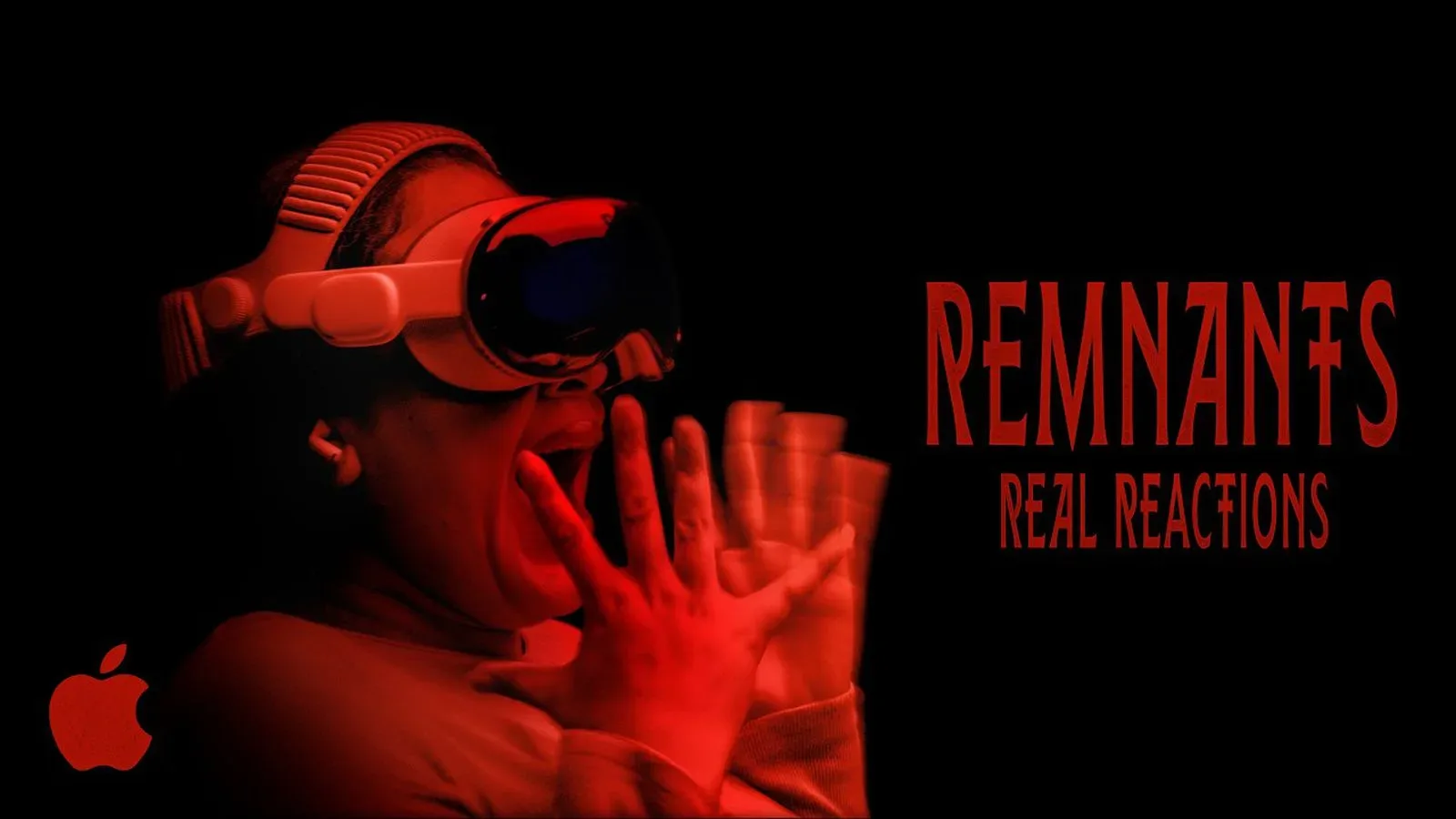
Apple has revealed Remnants, an immersive horror film written and directed by Ti West, for an exclusive release on the Apple Vision Pro on Friday, October 16.
The announcement establishes a few important details but leaves much of the film deliberately under wraps. Remnants is a horror project designed for Apple’s spatial-computing headset rather than a conventional TV, phone, or cinema release. Apple’s description places viewers inside Woldmere Castle, framing the experience as an entry into an unsettling world created by West.
Apple also shared a short video showing people reacting while wearing Vision Pro. That material is a promotional glimpse rather than a review or a detailed preview of the film itself, so it cannot yet answer the practical questions prospective viewers may have: its running time, its story, how much agency viewers have within the presentation, or precisely what visual and sound formats it uses have not been detailed.
What “immersive” means here — and what has not been specified
“Immersive” is the key word in Apple’s announcement, but it needs to be read carefully. In this context, it indicates that Remnants has been made to be experienced through Vision Pro, where a viewer wears a headset instead of watching a flat image on a distant screen. The intended effect is to make the setting feel closer and more encompassing, an especially natural fit for horror’s use of confined spaces, off-screen tension, and uncomfortable proximity.
That does not automatically mean Remnants is a game, an interactive story, or a location viewers can freely explore. Apple has called it a film and has not described player choices, navigation, branching scenes, hand tracking, controller input, or any other interactive systems. Until more information is provided, the clearest description is simply an immersive horror film for Vision Pro.
The distinction matters for audiences arriving from games. Games often use “immersive” to mean agency: the ability to move through a world, manipulate objects, or influence outcomes. A film can instead be immersive through presentation, perspective, imagery, and sound while retaining a fixed narrative path. Apple’s current wording supports the latter category, while not offering enough information to make stronger claims about its form.
Why horror is a logical fit for a headset-first film
Horror depends heavily on point of view. A filmmaker can build suspense by restricting what the audience sees, holding attention on a quiet corner of a room, or making an ordinary environment feel unsafe. A headset can potentially make those choices feel more immediate because the viewer’s field of view is occupied by the work rather than sharing space with a living-room wall, phone, or another screen.
Woldmere Castle gives Remnants an explicitly named setting from the outset. A castle is a useful horror location in broad dramatic terms: it suggests enclosed rooms, distance from ordinary life, and a sense that the architecture may conceal as much as it reveals. Apple’s description does not disclose the castle’s story or confirm the film’s specific scares, characters, or plot, but the setting signals that atmosphere will be central to its pitch.
That promise also explains why a reaction-focused promo is an understandable way to introduce the project. Horror marketing often sells anticipation through audience response without revealing its biggest moments. Here, Apple has shown viewers wearing the headset rather than laying out scenes or story beats from the film. It is an invitation to imagine the sensation of entering West’s setting, not evidence of the film’s final quality.
Ti West brings a filmmaker’s name to the announcement
Apple identifies Ti West as both the writer and director of Remnants. That credit is meaningful because it presents the project as an authored film from a named creative voice, rather than merely a technical demonstration for a device. At the same time, the announcement does not provide a cast list, producer credits, production details, or further information about how the film was made.
For the launch message, West’s role and Woldmere Castle are the two creative anchors. The hardware is important because Vision Pro is the exclusive destination, but Apple’s language keeps the focus on crossing into a designed horror world. That is a smarter framing than treating immersion as a feature list: viewers are being invited into a place, and the technology is the means by which the film intends to make that place more immediate.
Vision Pro exclusivity shapes the audience
The exclusive release means that interest in Remnants and access to it are inseparable. People without a Vision Pro will not have a confirmed alternative platform at launch based on the information announced so far. There is no stated release for televisions, computers, phones, game consoles, other headsets, physical media, or theatrical exhibition.
For Vision Pro owners, the October 16 date gives the headset a new horror-specific work made for its format. For everyone else, it makes Remnants a notable example of a film tied directly to a particular piece of hardware. This kind of exclusivity can make a release feel distinctive, but it also means conversation around the film may initially center on the experience of watching it through the headset as much as the film’s narrative itself.
It is also worth separating exclusivity from permanence. Apple has said Remnants will be released exclusively on Vision Pro; it has not provided any further distribution roadmap. That leaves no factual basis to predict whether the film will later reach another format, remain headset-only, or be handled in any other way.
What viewers can safely expect on October 16
- Format: an immersive horror film, rather than a confirmed game or interactive adventure.
- Platform: Apple Vision Pro exclusively.
- Creative lead: Ti West is credited as writer and director.
- Setting hook: viewers will enter Woldmere Castle.
- Release date: Friday, October 16.
Beyond those points, restraint is warranted. There is no confirmed runtime, age rating, supporting cast, plot synopsis, price, viewing requirement beyond the platform, or release timing beyond the stated date. There is likewise no reason yet to treat promotional reactions as a measure of the film’s reception.
Remnants nevertheless gives Apple a focused use case for immersive filmmaking: horror where the setting is not simply pictured but positioned as the space a viewer enters. Whether that makes Woldmere Castle truly frightening will be a question for Vision Pro viewers once the film arrives. For more on Apple’s broader product activity, see Apple’s recently announced HomeView smart hub.