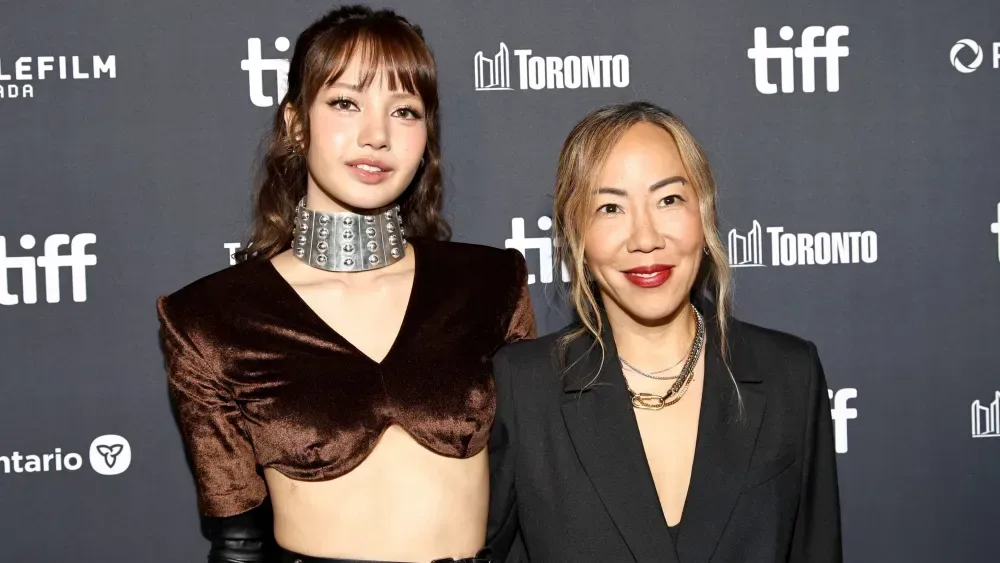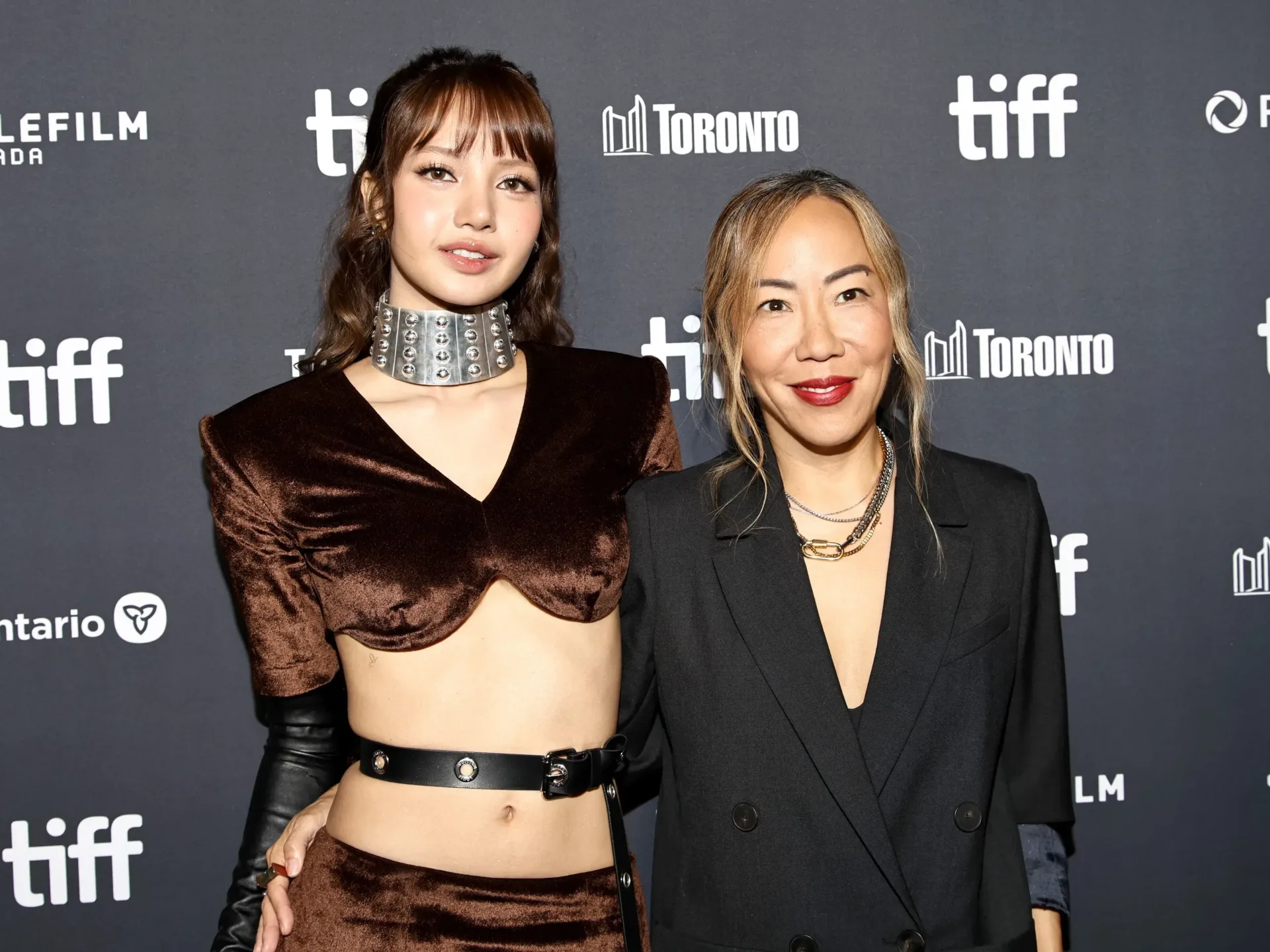
Always Lalisa, the documentary following Blackpink member Lisa through a pivotal solo year, leaves one especially persistent topic outside the frame: her reported romantic life. Director Sue Kim says that was not the result of a filmed request or a deliberate tease. She says she simply did not encounter any boyfriends while the production was with Lisa, and does not claim to know details about the performer’s relationships.
That distinction matters. Frédéric Arnault had been widely rumored to be dating Lisa during the period covered by the film, but Kim does not validate that rumor. Instead, her explanation places the absence of any partner in the context of the film’s broader purpose: it is a portrait of Lisa developing agency after years in a highly structured idol system, not an investigation into tabloid speculation.
For an audience accustomed to celebrity documentaries treating a relationship reveal as the cleanest route to attention, that is a notably restrained choice. Kim’s account is that Lisa likely kept any private relationships separate from filming, while the documentary’s material deals with a different kind of visibility: what it looks like when an enormously recognizable pop star has room to make her own professional and personal decisions.
A solo year built around independence
Always Lalisa opens in theaters on October 12 and tracks Lisa during a year away from Blackpink activities. The film follows several major milestones: forming a management company, releasing her first solo album Alter Ego, performing a Bond theme at the Oscars, making an acting debut in The White Lotus, and playing Coachella.
For more context, explore Teq Sets an Aztec-Ruled Los Angeles Noir for Ignition Press in February 2027.
Those credits alone could make for a conventional career-milestone documentary. Kim’s stated interest, however, was the transition behind them. Lisa entered YG as the label’s first K-pop trainee after competing against 4,000 others at age 13. She later debuted with Blackpink in 2016 as its rapper and dancer. The documentary frames the time away from the group’s usual system as a delayed coming-of-age: an opportunity to determine what she wants when someone is not laying out every next step.
Lisa has described the initial uncertainty of that change in unusually direct terms. When nobody else was directing her, she had to choose her own path, a situation that initially frightened her. As she approached decisions one step at a time, she said, she gained confidence and learned to operate independently.
That is the central arc Kim identifies. In her telling, the film is not built to answer the question of who Lisa might be dating. It is built to observe how a performer with remarkable career accomplishments learns to navigate freedom, make creative choices, and speak with greater ease for herself.
Why a boyfriend does not appear on camera
Kim says the crew spent substantial time around Lisa but did not see any boyfriends. She has said plainly that she does not know anything about Lisa’s dating life. That is the limit of the evidence available from the production; it should not be turned into confirmation or denial of rumors involving any particular person.
The director also suggests that Lisa has practical reasons to protect relationships from public view. The film addresses the intense hostility Lisa has faced, including threats connected to leaked YG trainee videos. In that environment, privacy is not merely a way to preserve celebrity mystique. It can be a basic boundary against intensified scrutiny and abuse.
Kim’s reasoning is also editorial. A relationship appearance might have made easy headlines, but it could have diverted the film toward a familiar gossip narrative. The documentary instead keeps its attention on personal growth. This is a useful reminder that access does not obligate a filmmaker—or a subject—to expose every private dimension of a life.
A celebrity documentary can be intimate without becoming comprehensive. Intimacy means viewers gain a meaningful sense of someone’s perspective and circumstances. Comprehensiveness would mean attempting to capture every consequential relationship, experience, and controversy. Those are not the same thing, and Kim’s comments make clear that Always Lalisa chooses the former.
The rules the film puts in view
Early in the documentary, Lisa describes restrictions imposed under the group’s label system: no drinking, dating, driving, or going out to see friends, with movements monitored. Kim says the film intentionally introduces these rules and then later depicts Lisa doing the very things that had been restricted.
The creative choice gives ordinary actions unusual narrative weight. A drink with friends, the ability to drive, or an unscripted social life would hardly register as a major plot point in most music documentaries. Here, they help illustrate a performer testing the boundaries of adulthood and privacy after years of close management.
Kim has described Lisa as becoming more at ease with freedom over the chronology of filming. The progression is visible, she says, in the subject’s increasing trust in the crew. At the start, Lisa was guarded. With time, a relationship developed in which she understood the filmmakers were not working against her.
That trust was not created through a tightly negotiated on-camera persona, Kim says. Lisa did not give the director creative instructions or shape the film’s approach. Rather, Kim credits consistency and honesty over time. The resulting structure allows the film to present a gradual loosening rather than an instant transformation.
A revealing studio detail
One of the film’s most telling reported moments occurs during solo recording. Lisa is shown uncertain whether she can even speak directly with producers. Kim says Lisa initially avoids eye contact and struggles with the interaction, behaviors the director connects to years of learning how things were supposed to be done within a controlled system.
This is where the documentary’s premise becomes more specific than the broad idea of “going solo.” A solo career is usually understood as an artist releasing work outside a group. In Lisa’s case, the film presents it as an exercise in decision-making, communication, and self-definition as well. The professional change is inseparable from a more personal adjustment: learning that she can participate directly, ask questions, and make choices without waiting for a prescribed chain of instruction.
It also clarifies why a boyfriend rumor would be beside the point. The film’s dramatic question is not whether Lisa can reveal a hidden relationship. It is whether she can become more comfortable directing the course of an already enormous career on her own terms.
Independence does not mean erasing Blackpink
Kim says Lisa cared deeply about doing her work well, protecting Blackpink, and helping fulfill the group’s ambitions. The documentary therefore does not treat her solo period as a rejection of the group. It portrays a period in which the rules governing her life were different and she had new room to experiment with identity.
There were still limitations around the film. Kim says YG did not work with the production, even though the director says she had full creative freedom through Sony Music Vision. The team attempted to license older trainee footage, Blackpink music videos, and songs but was unable to secure permission. That absence matters for viewers expecting a complete archival survey of Lisa’s path from trainee to global star.
Yet the lack of that material also reinforces the film’s narrower focus: this is a document of a particular year, not a label-sanctioned career retrospective. It is concerned with the present-tense experience of Lisa building a new footing.
What viewers should and should not take from the omission
Viewers should not read the absence of a boyfriend as evidence that rumors are true, false, or newly significant. Kim’s comments support only a simple conclusion: no boyfriend was filmed, and the director says she lacks knowledge of Lisa’s private dating life.
They can, however, read that absence as a clear sign of the documentary’s priorities. Always Lalisa apparently draws a line between showing an artist becoming more open and treating access as entitlement. The fact that Lisa can drink tequila on camera or explore a less constrained routine does not mean every part of her personal life becomes public property.
That makes the film’s approach more coherent than a last-minute romance subplot would have been. Rather than asking fans to decode sightings or mine the footage for clues, it offers a more grounded subject: a 28-year-old artist, already extraordinarily accomplished, encountering room to make mistakes, discover comfort zones, and decide what kind of independence she wants.
For more on why the film keeps Lisa’s dating life off camera, see this discussion of the documentary’s privacy boundary.