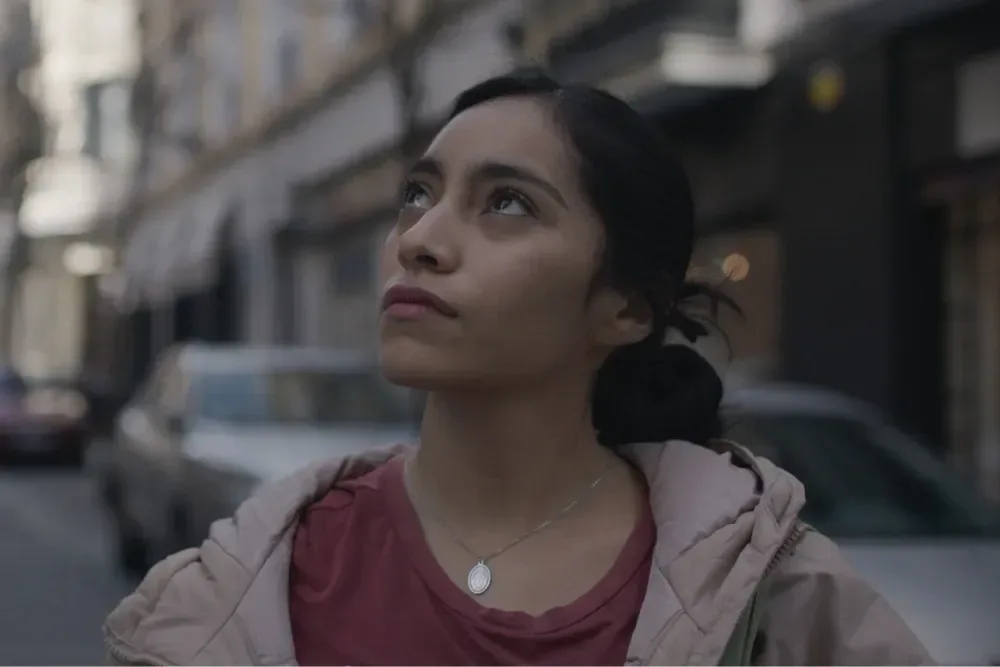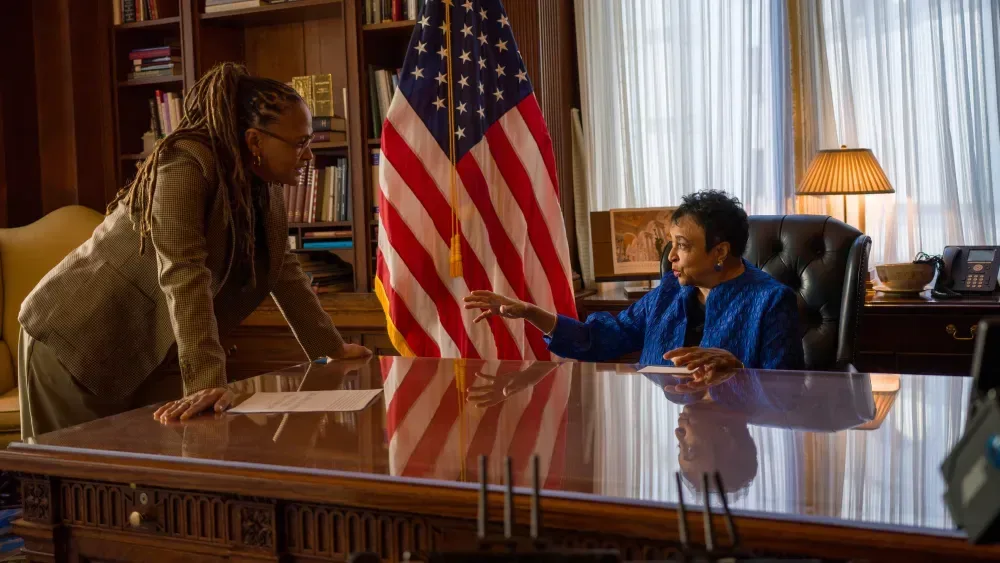
Ava DuVernay’s 14th takes on a formidable task: turning a constitutional amendment—one routinely compressed into a classroom term or a court-case citation—into a story of people, power, backlash and unfinished democratic promises. The 100-minute documentary is positioned as a follow-up to DuVernay’s 2016 film 13th, moving from the amendment that abolished slavery to the amendment ratified in 1868 that established citizenship, equal protection and due-process protections.
The result is not presented as a neutral legal primer. It is an argument about American history and the present: that the post-Civil War amendments represented a profound reconstruction of the country, and that the promises embedded in the 14th Amendment have repeatedly met organized resistance. That focus gives the film a broad scope, ranging from Reconstruction and racial terror to Confederate symbols, public monuments, birthright citizenship, immigration enforcement and the constitutional debate surrounding Jan. 6.
14th premiered at the New York Film Festival on Oct. 7, 2026. It is directed by DuVernay, edited by Spencer Averick, photographed by Michael Cambio Fernandez and Clifford Charles, and scored by Jason Moran. DuVernay, Averick, Tammy Garnes and Paul Garnes are credited as producers. The on-camera group includes civil-rights attorney Sherrilyn Ifill, historians David Blight and Eric Foner, legal scholars Melissa Murray and Amanda Frost, and public figures including Alexandria Ocasio-Cortez, Steve Schmidt, Van Lathan, Hasan Piker, JB Pritzker and Karen Bass.
The amendment at the center of the film
The 14th Amendment has five sections, and the film treats that density as central to its importance rather than as a hurdle to get past. Its best-known language guarantees equal protection under the law and defines national citizenship through birth in the United States. It also contains provisions concerning due process, representation, public debt and disqualification from office for certain people who previously swore an oath to support the Constitution and then engaged in insurrection or rebellion.
For more context, explore X-Men: The Regulators Sends Haven House Back Into Mutant History in 2027.
Those are distinct legal concepts, and 14th appears determined to make their stakes legible outside a courtroom.
- Equal protection concerns whether the law protects people equally.
- Due process is the principle that government must follow fair legal procedures before depriving a person of life, liberty or property.
- Birthright citizenship, as discussed in the film, means citizenship for people born in the United States.
- Insurrection is used in the amendment’s disqualification language concerning rebellion against the U.S. government.
That framework lets DuVernay connect legal wording to everyday realities. The film’s central premise is that law is not remote from ordinary life: a constitutional protection can shape who counts as a citizen, whether people can participate in public institutions, and what recourse exists when government power is used against them.
Reconstruction as a second founding
One of the documentary’s most consequential reframings is its insistence that the 13th, 14th and 15th Amendments should be understood as more than postwar amendments added to an already completed national project. Together, the film characterizes them as a restart of American political and social life following the Civil War.
This perspective shifts attention from the familiar roster of eighteenth-century founders to the people who fought over the country’s reconstruction in the 1860s. Thaddeus Stevens, the Radical Republican member of the House of Representatives, is among the figures elevated in the film’s account. The argument is not that the original founding disappears, but that the era after emancipation created a new constitutional order with its own authors, conflicts and aspirations.
That historical turn matters because the story is not told solely through catastrophe. 14th emphasizes the liberation and possibility of Reconstruction. Four million formerly enslaved people entered civic life after abolition. The documentary depicts Black Americans forming communities and industries, becoming editors, law-enforcement officers and elected officials. It notes that 1,000 Black representatives were newly elected.
Rather than reducing citizenship to a legal status on paper, the film links it to self-determination: the ability to build a life, imagine an individual future and participate in the society that had long denied those possibilities. Its treatment of birthright citizenship places this within a broader rejection of inherited aristocratic status. Under that reading, citizenship by birth was not an incidental clause; it was a major statement about belonging for the children of formerly enslaved people and immigrants alike.
People on screen, not only voices over images
DuVernay does not hide her interview subjects behind archival imagery or treat them as disembodied authorities. The documentary keeps its scholars, lawyers, politicians and commentators visibly present, allowing their delivery, conviction and personalities to become part of the storytelling. Ifill is a particularly prominent voice in the ensemble.
That is a meaningful formal choice for a film about public citizenship. The speakers are not simply there to define clauses. They model history as an active dispute among people with interpretive positions and political commitments. The film’s accessibility seems to come from this combination: it can move through complicated legal material while retaining a sense of human urgency.
The visual and tonal range also extends beyond experts and archival material. DuVernay incorporates comedy from George Carlin and Paul Mooney, using cultural material to expose how racism and its legacy can be normalized, laughed at or disguised. The move is consistent with the documentary’s larger method. It does not isolate constitutional history inside official documents; it follows the ways political meaning travels through entertainment, symbols and public memory.
The Lost Cause and the power of symbols
After establishing Reconstruction’s possibilities, 14th turns to the violent and ideological backlash that followed. The Ku Klux Klan is part of that history, but the film also devotes attention to the Lost Cause: a body of mythology that recast the Confederacy and the Civil War while minimizing or erasing slavery’s central horror.
In the documentary’s account, this was not merely a disagreement about historical interpretation. Recasting the Civil War as a war of “Northern aggression,” and recoding Confederate imagery as heritage or rebellion, helped preserve a cultural order hostile to the equality promised after emancipation. The film follows the Confederate flag’s path through mainstream popular culture, including appearances associated with musicians Tom Petty and ZZ Top and its prominent placement on the General Lee car in The Dukes of Hazzard.
Its point is not that a television prop alone determines politics. Rather, popular culture can detach symbols from their origins and make them appear harmless, stylish or rebellious. That process has consequences when the original symbol is tied to a government that fought to preserve slavery.
The documentary also addresses Confederate monuments, stating that 2,629 were erected across the South. It considers the campaign to remove them, including the Robert E. Lee statue that stood in Virginia’s capital. In the film’s analysis, monuments operate as public signals: they decide whose histories receive honor and whose subjugation can be treated as a background detail. Put plainly, the fight over statues becomes part of the fight over what kind of democracy public space says it serves.
From racial terror to constitutional enforcement
14th links the symbolic work of the Lost Cause to systems of racial violence and legal exclusion. The film describes the Klan’s terror not as a peripheral outbreak, but as an attack on biracial democracy itself. It notes 4,400 lynchings between the Civil War and World War II, and depicts Jim Crow as a system that used law as a vehicle for coercion rather than justice.
This is where the documentary’s title becomes especially sharp. A constitutional guarantee does not enforce itself. The film argues that the 14th Amendment’s force was constrained by backlash and that its authority began to reassert itself with Brown v. Board of Education in 1954. The practical implication is sobering: rights written into law can be narrowed, ignored or undermined when institutions and political movements refuse their underlying premise.
DuVernay’s approach therefore differs from a triumphant march through landmark cases. Progress appears contingent, vulnerable and repeatedly contested. The historical rhythm the film identifies is advance, backlash, conflict and renewed advance—not a settled destination.
Where the film enters the present-day argument
The final stretch brings the amendment’s clauses into current political debates. This is also the documentary’s most openly argumentative territory. 14th contends that the 14th Amendment’s insurrection provision should have prevented Donald Trump from seeking office after Jan. 6, 2021. It also frames challenges to birthright citizenship and concerns around due process and immigration enforcement as evidence that the amendment’s protections are under pressure.
These are the film’s claims and interpretation, not simply uncontested legal conclusions. That distinction is important because constitutional provisions are argued through elected institutions, courts and public debate, often with profound disagreement over their scope and enforcement. DuVernay’s film does not attempt to stand outside that conflict. Its force comes from making its position explicit and from rooting that position in a long account of promises made, evaded and fought over.
The documentary also places diversity, equity and inclusion in this contemporary frame. Its own discussion reportedly recognizes DEI as a cultural shift, even as it seeks to connect the debate to the 14th Amendment’s larger legacy. That is an ambitious extension of the film’s thesis, and one that may prompt disagreement even among viewers who share its broader concern for equal protection.
Why ‘14th’ matters as a documentary
There is a risk inherent in any contemporary-history documentary: the closer it gets to today, the more it can flatten into a familiar compilation of headlines. 14th avoids making the present feel detached from the past by treating the past as unfinished. Reconstruction is not an opening chapter that ended before the “real” national story resumed. It is part of the argument over citizenship and equality that continues now.
That makes the film useful beyond viewers who already arrive with detailed constitutional knowledge. It provides a vocabulary for recognizing why debates over monuments, voting, citizenship, policing, immigration procedure and political disqualification can share a common legal and historical thread. It also insists that culture matters: myths, images and television iconography can prepare the ground on which policy and law are contested.
For a wider look at the project’s focus on equality and the amendment’s continuing relevance, see this overview of 14th’s examination of the amendment.
Above all, DuVernay’s documentary makes a case for attention. The Constitution can seem like a sealed artifact, addressed only in court opinions or political slogans. 14th treats it instead as a living field of struggle, one whose language has shaped actual lives and whose meaning remains subject to collective action. Whether viewers agree with every modern application, the film’s underlying challenge is difficult to dismiss: democratic guarantees have value only when people understand them, claim them and demand that they be honored.