PBS SoCal’s 27th Fine Cut Festival of Films has named its leading student-filmmaker winners, while also laying out a five-week television schedule that gives viewers a practical way to catch a broad cross-section of the competition’s work.
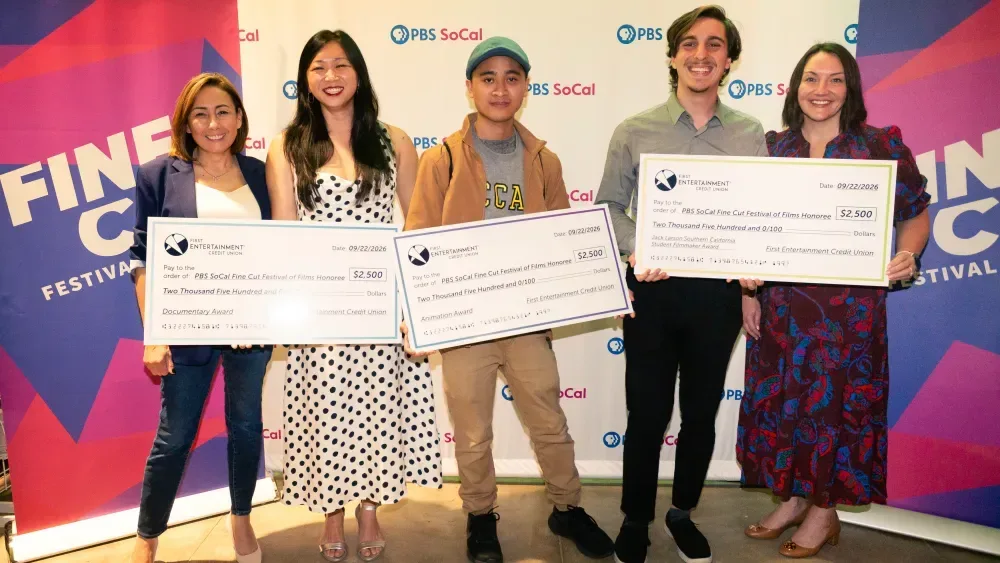
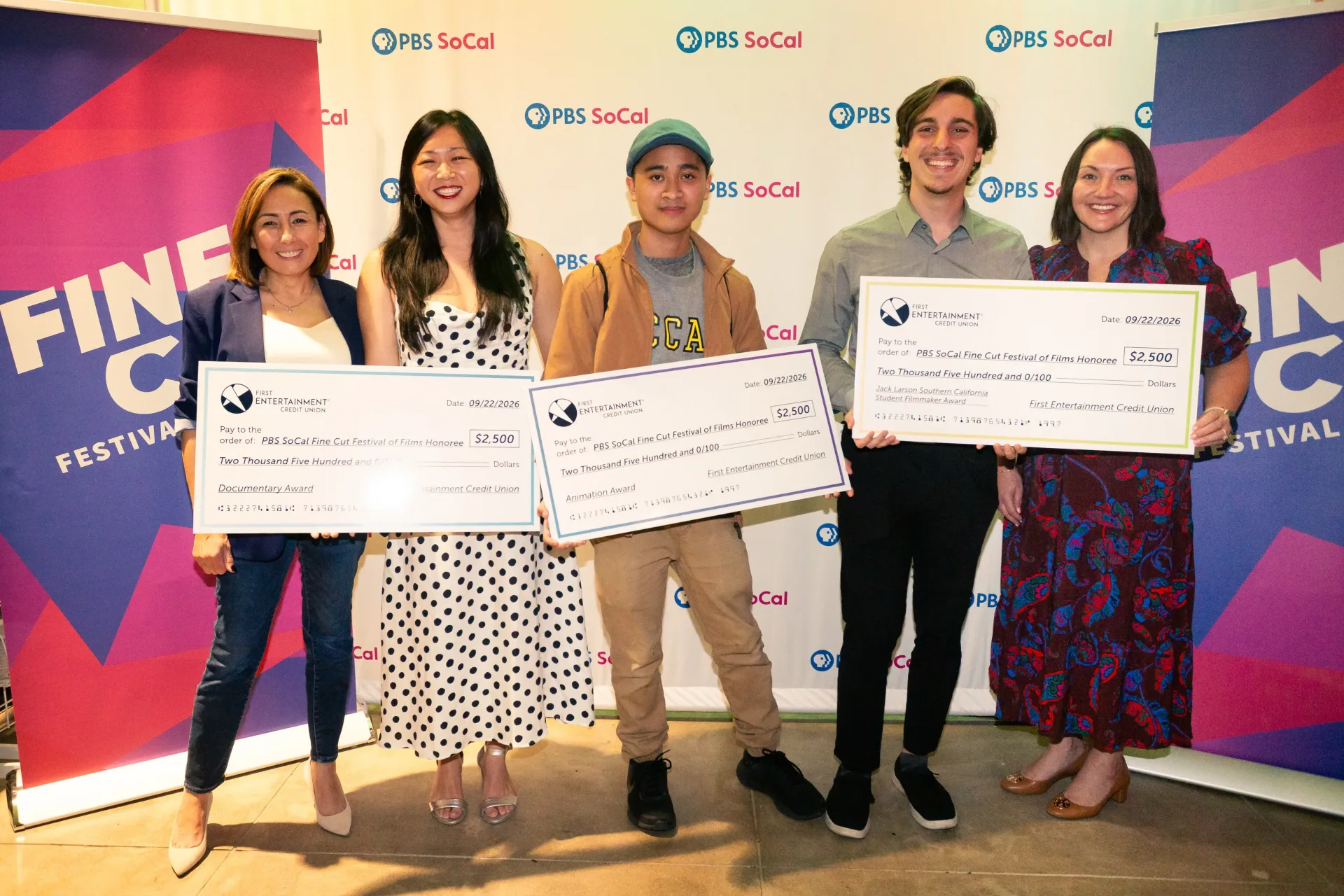
The top prizes were revealed at a screening and awards event held at Vidiots’ Eagle Theater in Eagle Rock. Daniel Simon Zhang of USC won the narrative award for Stop When Your Ancestors Say So. USC’s Mia Hagerty received the documentary award for A Good Death, and John Angelo Serrano of California College of the Arts won in animation for Bigger Picture.
The evening’s biggest honor, the Jack Larson Southern California Student Filmmaker Award, went to Cal State Northridge student Sam Markson for Jewish Moms Scare the Crap Out of Me.
Prize packages shared by the winners were valued at more than $55,000. They included a $2,500 grant from First Entertainment Credit Union as well as donated equipment rentals, production resources and professional software. For emerging filmmakers, that mix matters beyond the trophy: a cash grant can help meet immediate costs, while access to tools and services can lower barriers on a future project.
A long-running local showcase with a wider field
Fine Cut began in 1996 with four local schools and has grown into PBS SoCal’s longest-running series. This year’s competition drew more than 430 submissions from 53 schools, a scale that makes the broadcast slate only one portion of the work considered.
The 2026 selection represents students from a varied collection of California institutions, including USC, Cal State Northridge, California Institute of the Arts, UCLA, UC Santa Barbara, UC Santa Cruz, Cal State Fullerton, Cal State Long Beach, Loyola Marymount University, ArtCenter, Biola University, Woodbury University, San Jose State University, Laguna College of Art and Design and City College of San Francisco. New York Film Academy filmmakers are also represented in the scheduled lineup.
That range is worth noting because Fine Cut is organized around forms rather than one narrow filmmaking lane. The principal honors distinguish narrative, documentary and animation. In simple terms, narrative filmmaking constructs a scripted dramatic or fictional story; documentary centers nonfiction material; and animation builds motion through designed images rather than conventional live-action photography. Those categories demand different crafts, but they meet in the same public showcase.
The award titles alone signal that breadth without supplying a premise for any film. The schedule includes Hydra on the Horizon, Seagull Coffee, Screenagers, The Oceanarium, Silence = Death and Natural Selection, alongside this year’s four top-recognized works. Audiences should avoid treating titles as plot summaries; the available information identifies the films and their creators, not detailed subject matter or genre descriptions.
Where the winners fit into the broadcast schedule
Fine Cut films began airing on PBS SoCal this week, and many are also available through the organization’s website. The winners are spread across the October schedule rather than collected into one awards-only program.
- October 8: Serrano’s animation winner, Bigger Picture, airs alongside The Unlucky Rabbit, Wilbur & Harold, Screenagers, Rebound and Perfectus.
- October 15: Zhang’s narrative winner, Stop When Your Ancestors Say So, airs with From, Farmersville, The Oceanarium, Somang, Heart-But Dim Sum Friends! and La Cadeja.
- October 22: Hagerty’s documentary winner, A Good Death, is scheduled with Silence = Death, Addie and Death Is a Giant Peanut.
- October 29: Markson’s Jack Larson Southern California Student Filmmaker Award recipient, Jewish Moms Scare the Crap Out of Me, airs with Dissent, Creep, El Bar De Hernando and Natural Selection.
The full run begins with five films on September 24: The Successor, directed by Jacob Gambina of CSUN; Dog Brain, directed by Helen Benavidez of CSUF; Hydra on the Horizon, directed by Curran Seth of UCSB; Swimming Lessons, directed by Meloddy Gao of UCSC; and Unikid, directed by Darian Hernandez of CSUF.
On October 1, viewers can find Talk Straight Duda from USC’s Eduardo Maia, Seagull Coffee from CalArts filmmaker Yunqing “Sally” Pan, American Daydream from NYFA’s Ziyu Luo, Sister’s Keeper from Biola University’s Oliver Thrush and The Rat Race from CSULB’s Sarah Jackson.
The October 8 program continues with Shane Hernandez’s The Unlucky Rabbit from LMU, Giovanni Edwards’ CalArts film Wilbur & Harold, UCLA filmmaker Angela Suh-Young Kim’s Screenagers, USC’s Anna O’Donnell’s Rebound, Serrano’s Bigger Picture and San Jose State University filmmaker Regis Iofis’ Perfectus.
October 15 pairs Zhang’s winner with Savannah Gasca’s CSULB film From, Farmersville, Matthew Lei’s CalArts film The Oceanarium, Tim J. Lim’s UCLA film Somang, Veda Lee’s CalArts work Heart-But Dim Sum Friends! and Selene Sanchez’s Woodbury University film La Cadeja.
Following Hagerty’s October 22 documentary winner are USC filmmaker Trace Pope’s Silence = Death, Antonina Bolyaev’s Addie from City College of San Francisco and Amy Boisvert’s CalArts film Death Is a Giant Peanut. The final October 29 block also includes ArtCenter filmmaker Sager Al Nuaimi’s Dissent, Daniela Abarca’s Creep from Laguna College of Art and Design, NYFA filmmakers Andrés Bernal and Maria Gomez’s El Bar De Hernando, and Amanda D’Ambrosio’s CSUF film Natural Selection.
Mentoring, resources and what the program is trying to provide
Fine Cut is supported by the Bridges-Larson Foundation and was created by screenwriter, producer and actor Jack Larson, known to many for playing reporter Jimmy Olsen in the 1950s television version of Superman. Larson’s name now anchors the program’s highest individual honor.
Beyond the festival, Fine Cut’s annual mentoring workshop is scheduled for Sunday at Radford Studio Center. Producers, directors, writers and animators will mentor California students in their selected tracks. A mentoring workshop is distinct from an award: it is structured around guidance and professional exchange, whereas prizes directly provide recognition and resources. Both can be meaningful, especially when students are deciding what skills to develop next or how to navigate a specialized production role.
The program’s approach joins visibility, material support and instruction. A television screening can introduce work to a public audience; a grant or software access can aid production; and mentoring can help filmmakers interpret the industry pathways around them. As a broader point of context, the distinction between mentorship and more active career backing has also been part of the discussion around directing opportunities, as explored in the case for sponsorship alongside mentorship for women directors.
Angela Boisvert, PBS SoCal’s senior director of production, said Fine Cut is intended to give students a wide audience for their voices and creativity. She also pointed to earlier program participants including Ryan Coogler, Ben Proudfoot, Patricia Cordosa and Rashida Jones, and expressed hope that the program’s resources help current participants continue their filmmaking journeys.
Judges brought experience from several production disciplines
This year’s judges reflected the same mix of specialties visible in the festival categories. The panel included animator, writer and director Sofia Alexander; character designer and illustrator Asia Vigil Ellington; cinematographer Jonathan Furmanski; director and producer Yu Gu; producer Jennifer Kobzik; directors Linda Mendoza, Bethany Rooney and Jesús Salvador Treviño; and storyboard artist Victor Sampaio.
Those roles cover several stages of screen production. A cinematographer is responsible for the visual capture of a project, including camera and lighting choices. A storyboard artist plans shots in sequential illustrated form, turning a script or concept into a visual roadmap. Character design concerns how animated characters are developed visually, while producers coordinate the practical processes that enable a production to move forward. The supplied program details do not explain the judges’ specific deliberations, but the breadth of the panel aligns with Fine Cut’s mix of live-action, nonfiction and animated work.
For audiences, the immediate takeaway is straightforward: the festival’s major award recipients are not merely listed as winners, but scheduled for public viewing over the course of October. For student filmmakers, the event combines a competitive platform with a support structure designed to extend past a single screening night.