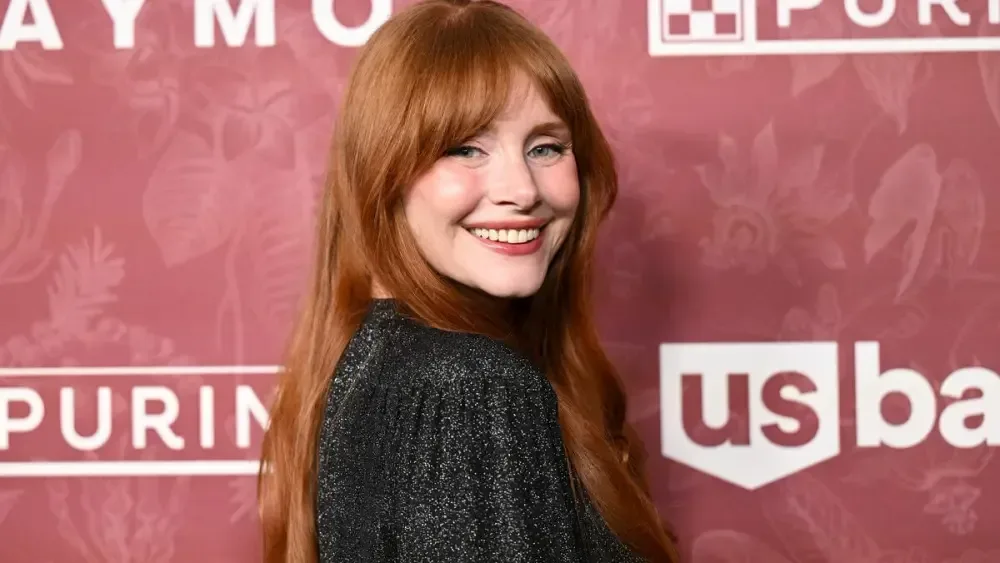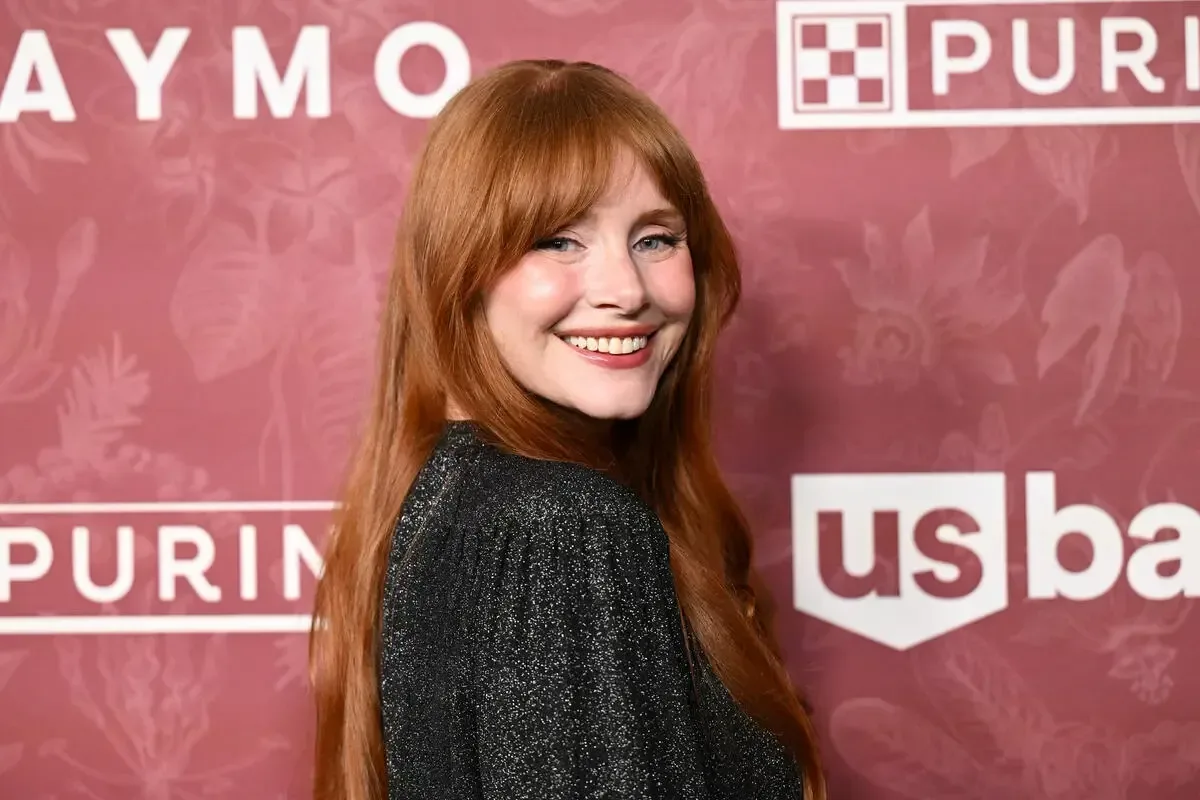
Bryce Dallas Howard is drawing attention to a discouraging measure of who gets to direct Hollywood’s biggest theatrical releases: in 2025, nine women directed films among the 100 top-grossing titles at the U.S. box office. That is 8.1% of the directors counted, or roughly 11.3 men for every woman, following a 13.4% share in 2024.
The actor and filmmaker’s point is not simply that the number is low. It is that the decline is evidence that the industry’s present efforts have not created a dependable path to paid directing work. “The facts are that the numbers are an indication of something real,” Howard said. “Whatever is currently being done is not enough.”
Her proposed distinction is important: Hollywood often discusses mentorship, but Howard says it must give much more attention to sponsorship. The first can provide advice, feedback and encouragement. The second means materially helping a filmmaker obtain the resources, development time, collaborators and actual jobs needed to make work. They can complement each other, but they do not solve the same problem.
The statistic is narrow, but the signal is serious
The 2025 figure concerns directors of the 100 highest-grossing films in the United States, not every movie made in the country and not every director working across television, documentaries or independent production. It is therefore a specific snapshot of the commercial film tier with the largest box-office performance. That limitation matters when interpreting the number.
But it also explains why the result carries weight. The top 100 is a window onto which filmmakers are entrusted with projects that reach the broadest theatrical audiences and command the industry’s greatest commercial visibility. Moving from 13.4% in 2024 to 8.1% in 2025 represents a notable retreat within that particular group.
A 2025 study characterized the period as a “Great Recession” for women filmmakers. Howard’s remarks place the statistic in a broader employment context: directing cannot be sustained by creative potential alone if the long gaps between paid jobs make the career financially inaccessible.
“It’s really difficult to get paid to do the thing that you want to do in this business,” Howard said.
That observation gets at a practical barrier sometimes obscured by discussions of representation. A person may receive meetings, guidance, festival encouragement or public praise and still lack enough paid work to keep developing projects. If the period between assignments is long, Howard argued, a filmmaker may need independent financial privilege or another flexible job simply to remain available for an opportunity. In that situation, access is shaped not only by talent and preparation, but by who can afford to wait.
What Howard means by sponsorship
Howard’s use of sponsorship is broader than a company writing a check for a completed movie. She described support for the research-and-development side of filmmaking: early workshops, the work required to shape an idea, and assembling artists who can help turn it into a viable production.
Research and development, often shortened to R&D, is the preparatory work that happens before a project is fully made. In Howard’s description, it includes giving creative work enough runway to be tested and strengthened, rather than expecting a filmmaker to arrive with every element already financed and assembled. A workshop can be a setting for developing material; building a team means bringing together the artists needed to realize a project’s creative plan.
That is a consequential framing because it shifts the focus from a one-time opportunity to continuity. A paid directing job is the visible result, but it depends on less visible work beforehand. If emerging or underrepresented filmmakers must fund development alone, coordinate collaborators in unpaid time and bridge lengthy gaps without stable income, the pool of people able to advance naturally gets smaller.
Howard’s argument, then, is not that mentorship has no value. Mentorship can help a filmmaker navigate an opaque business, understand professional expectations and build relationships. Her case is that advice without institutional backing does not reliably lead to employment. Sponsorship puts an organization’s resources and commitment behind a filmmaker at the stage where ideas become projects and projects become paid work.
For companies, studios and other employers, the implication is concrete even if Howard did not prescribe a single program: support cannot stop at introductions or symbolic initiatives. Development financing, workshops and support for creative teams are the kinds of investment she identifies as necessary. The central test is whether filmmakers receive the means to keep working, not merely recognition that they ought to be working.
A filmmaker speaking from franchise experience
Howard has directed episodes across several live-action Star Wars series: Ahsoka, The Mandalorian, The Book of Boba Fett and The Skeleton Crew. Her feature documentary work includes Dads from 2019 and Pets from 2025.
That body of work gives her comments a perspective spanning episodic franchise television and feature-length nonfiction filmmaking. Those are different formats, but both depend on a director being trusted with major creative and logistical responsibility. In television, directing an episode means working within an established series while delivering a distinct installment; documentary filmmaking presents a different kind of feature-length undertaking. Neither credit erases the access problem Howard describes, but her experience makes clear that she is speaking as someone who has directed within large entertainment systems.
Howard was announced in 2021 as the director of a Disney reboot of Flight of the Navigator. The project remains listed as being in pre-production, which is a useful reminder of the distance that can exist between a project announcement and a finished film. Pre-production is the phase before principal production, when a project may be developed and planned; it is not the same as confirmation that filming has begun or that release timing has been set.
There is also a wider lesson for audiences following big-screen and franchise news. Casting, attachments and early development reports are meaningful milestones, but they are not completed work. Readers tracking other major film developments can see that same distinction between announced participation and a finished production in the latest Fred Astaire film casting report.
Two new Ahsoka episodes are next
Howard has directed two episodes of Ahsoka Season 2. She described her time working on the show, led by creator and Lucasfilm president Dave Filoni and starring Rosario Dawson, as one of the best summers of her life.
Her comments suggest that the second season will continue to build on the foundation of its first. Howard highlighted Filoni’s opportunity to pursue ideas he has been waiting decades to explore, while also emphasizing the partnership between Filoni and Dawson. She said he trusts himself and trusts Dawson as much.
There are no further details here about the episodes Howard directed, including their plots, release timing or where they fall in the season. The confirmed takeaway is limited but meaningful: her involvement in the next season continues a directing relationship with the Star Wars television slate, even as she uses her public platform to argue that opportunity across the industry remains uneven.
Why the mentorship-versus-sponsorship distinction matters
Howard’s comments resist an easy narrative in which representation improves automatically once the industry acknowledges a problem. The 2025 top-100 figure, down from the prior year’s percentage, is her evidence that acknowledgement has not been enough.
Her focus on sponsorship identifies the pressure point: careers are built in the intervals between high-profile credits as much as in the credits themselves. Filmmakers need time to develop, people to collaborate with and enough financial stability to accept the next opportunity when it arrives. Those conditions determine who can remain in the field long enough to direct a studio feature or an episode of a major series.
Howard also included herself in the responsibility. “There are so many brilliant artists and so little support,” she said, adding that people in her position are obligated to help make greater support real. “And I constantly fall short. And I will not quit.”
It is a notably unsentimental standard. The goal is not only to identify talented women directors, nor only to praise the ones who have broken through. It is to build support structures sturdy enough that getting a chance does not depend on personal wealth, unusually flexible side work or an extended ability to wait between jobs. If the industry wants the top-tier directing numbers to change, Howard’s argument is that it must pay for the work that makes directing careers possible before the cameras roll.