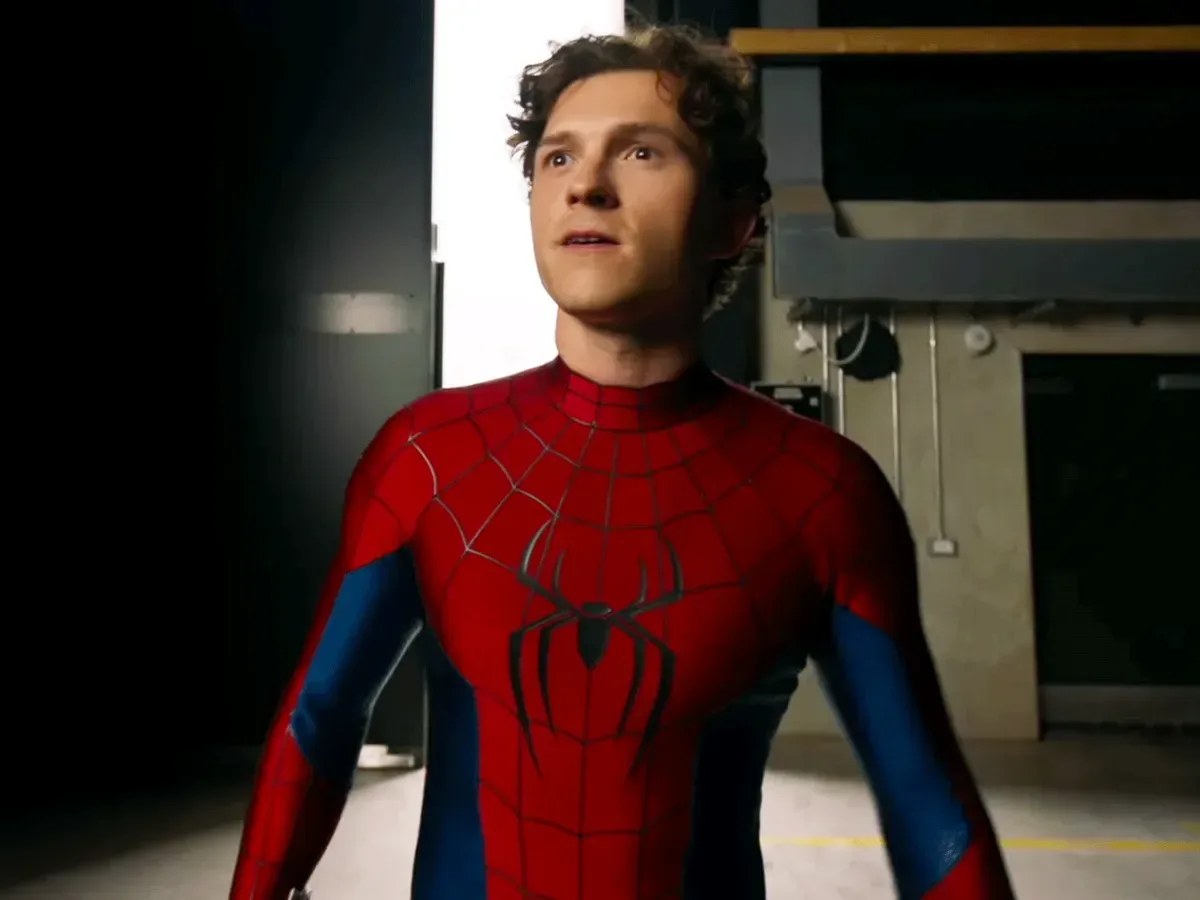
Tom Holland’s Fred Astaire project now has the two performers most essential to defining the dancer’s story on screen. Margaret Qualley has been cast as Adele Astaire, Fred’s elder sister and first major dance partner, while Sabrina Carpenter will play Ginger Rogers, the screen partner with whom Fred Astaire became inseparably associated for many moviegoers.
The Sony film remains untitled and has no release date attached. Paul King is directing, Amy Pascal is producing, and King co-wrote the screenplay with Steven Levenson. The film draws on Kathleen Riley’s book The Astaires: Fred & Adele; Riley is also working with the production as a script and story consultant.
The cast makes the project’s intended scope much clearer. This is not positioned solely as a chronology of Astaire’s best-known Hollywood pairings. With Adele Astaire given a central role alongside Rogers, the film has room to trace the earlier brother-and-sister partnership that established Fred and Adele on Broadway and London’s West End, then follow the route by which Fred became one of film musical history’s defining stars.
A trio built around two very different partnerships
Holland has been attached to play Fred Astaire for five years. His new co-stars represent two distinct, pivotal relationships in Astaire’s career.
Adele was Fred’s original dance partner and, as King noted in remarks released with the casting news, a major star in her own right. Yet the undertaking comes with a serious historical limitation: no surviving film of Adele Astaire dancing is known. That does not erase the record of her career, but it means a modern film cannot simply study screen footage to reproduce her movement in the same direct way that it can engage with Fred Astaire’s work.
That distinction is important. A biopic often has the visual material needed to imitate a subject’s public image. Here, the creative team must interpret Adele’s stage artistry through the available historical foundation rather than through recorded dancing. Qualley’s performance will therefore carry particular weight in making a celebrated but less visually documented artist legible to contemporary audiences.
Carpenter’s Ginger Rogers arrives from the opposite side of the historical equation. Rogers is one half of one of cinema’s most famous musical partnerships, and she appeared with Astaire in films including Swing Time, The Gay Divorcee, and Top Hat. The casting does not establish which periods or individual films will be recreated, nor how much of the narrative will be dedicated to each relationship. It does, however, signal that the Astaire-Rogers legacy will be a meaningful part of the story rather than a brief coda after the sibling act.
In practical storytelling terms, the three leads give the production a structure that follows change rather than treating Astaire as a static icon. The early partnership with Adele and the later screen collaboration with Rogers are not interchangeable chapters: they belong to different stages, venues, and forms of performance. The first is tied to the Astaires’ stage success; the other to the film work that made Fred Astaire a lasting screen presence.
Why the dance sequences are such a large promise
Holland has said he has returned to dance rehearsal for the role, and he has outlined an ambitious preference for the movie’s musical staging: performing the dancing himself, avoiding doubles, and filming dances in a single shot in the manner he associates with Astaire’s own work.
A dance double is a performer who substitutes for an actor in shots that require specialized movement. Using one can allow a production to combine close shots of an actor with technically demanding full-body choreography performed by someone else. Holland’s stated aim of using no doubles is therefore a commitment to being visibly responsible for the movement on camera, should the finished production follow that plan.
A one-shot dance sequence, meanwhile, is choreography captured as an unbroken take rather than assembled from multiple cuts. The appeal is easy to understand: it lets viewers assess the performance in continuous time and see the relationship between the dancers, their footwork, and the space around them. It is also demanding. Timing, camera movement, music, framing, and the performers’ execution all have to align during the same sustained passage.
It is worth separating Holland’s intention from confirmed production detail. He has expressed a desire to use that approach, but the film has not supplied a list of musical numbers, a shooting plan, or an assurance that every dance will be filmed without cuts. Still, the goal indicates that the project is taking the physical craft of Astaire’s work seriously, rather than treating dance only as background decoration in a conventional celebrity biography.
Holland has relevant stage experience. Before his superhero roles, he played the title character in Billy Elliot the Musical on London’s West End between 2008 and 2010. That history does not predetermine how his Astaire will look, because the two roles and their movement demands are different. It does establish that the actor comes to the project with a background in performance built around dance as well as acting.
For readers who know Holland principally through the Marvel films, his Astaire preparation marks a sharp change of genre and performance language. His prior franchise work is part of the context behind why Avengers: Endgame remains a useful MCU rewatch before Doomsday, but the Astaire film’s focus will be rhythm, partnering, musical staging, and a biography spanning stage and screen.
Paul King’s stated focus: Fred, Adele, and an absent archive
King has emphasized that the movie will tell the story of Fred Astaire and Adele Astaire as original partners. His comments also directly acknowledged the lost visual record of Adele’s dancing. That candor matters because it identifies the film’s central challenge without pretending the historical gap does not exist.
Fred Astaire’s career offers much more material for screen reference. He appeared in more than 30 film musicals and worked across Broadway, the West End, and cinema over a seven-decade career. But a project centered only on Fred’s most famous film moments would risk narrowing the subject to the images that survived most readily. Building the film from Riley’s Fred-and-Adele biography, and including Riley as consultant, suggests a foundation intended to keep the sibling partnership visible.
That is not the same as a guarantee of strict documentary reconstruction. A biopic is a dramatized feature, and the supplied information does not reveal scene-by-scene choices, dialogue, timeline adjustments, or the balance between historical record and dramatic invention. What is established is the source book, the participation of its author as consultant, and the filmmakers’ stated attention to both Astaire siblings.
The involvement of the Astaire family adds another link to the performers’ legacy. Ava Astaire McKenzie, Fred Astaire’s daughter, supports the project, while her son Tyler McKenzie is a consultant and co-producer. Ava Astaire McKenzie has described the film as an opportunity to introduce the careers of her father and aunt to another generation, and she highlighted the book and creative team as reasons for that confidence.
The creative and producing team
King directs from the script he wrote with Levenson. Pascal produces, and Holland is also among the producers through Billy17, alongside Pascal and Rachel O’Connor. Ben Holden and Josh Hyams are producing for Lightbulb Pictures.
The executive producers are Harry Holland and Will South for Billy17, Will Clarke and Andy Mayson for Altitude Films, and Levenson. These credits establish a substantial production team, though they do not answer some of the questions naturally raised by a dance-centered period biopic: the title, release timing, supporting cast, choreography team, musical selections, and whether the story will foreground particular productions from the Astaires’ stage years or the Astaire-Rogers filmography.
Those remain open details, not gaps to fill with assumption. No release window, trailer, production-start announcement, or plot synopsis has been provided. Likewise, no further casting has been confirmed beyond Holland, Qualley, and Carpenter.
What the casting asks of each lead
For Holland, the role calls for more than playing a celebrated performer. Astaire’s enduring reputation is bound closely to the clarity and elegance of his dancing, especially on film. Holland’s own public emphasis on rehearsal and performing the dances himself places the movement at the center of his approach.
Qualley’s task is different but no less significant. Adele Astaire’s work was hugely important to the story, yet the absence of surviving dance footage makes her a figure audiences may know less directly. The movie can use that challenge to give a fuller account of the partnership that existed before Fred’s Hollywood stardom—provided its final screenplay and staging make good on the premise King has described.
Carpenter is taking on a role that brings immediate cultural recognition. Ginger Rogers is closely linked to Astaire’s most celebrated movie pairings, so her portrayal will necessarily occupy a space with a well-established screen legacy. The film does not need to be a remake of the Astaire-Rogers classics to engage with that legacy; its stated biographical framework gives it a broader subject. But Rogers is central to explaining how Astaire’s image and career evolved from major stage performer to movie musical icon.
The clearest takeaway is that the project has moved beyond a single-star announcement toward a defined dramatic ensemble. Holland’s Fred Astaire is now framed by the two partners who best illuminate different parts of his professional life: Adele, the sister whose artistry must be newly imagined for film audiences, and Rogers, the screen partner whose work with him helped create a canonical Hollywood pairing. Until Sony reveals more, that contrast is the most informative guide to what this still-untitled biopic intends to explore.