Major spoilers for Star Wars: The Rise of Skywalker follow.
General Armitage Hux spent the Star Wars sequel trilogy barking orders, trading barbs with Kylo Ren and projecting absolute certainty for the First Order. But Domhnall Gleeson sees a more vulnerable and potentially more dangerous character underneath all that ceremony. The actor has said he would have liked the films to spend more time on the bitterness driving Hux—particularly in quieter scenes where the commander was no longer performing authority for an army or for his rivals.
It is an intriguing observation because Hux’s final destination is one of the sequel trilogy’s sharpest pivots. He appears across all three films, initially operating beside Adam Driver’s Kylo Ren within the First Order hierarchy. By The Rise of Skywalker, Hux is revealed as a covert agent helping the Resistance, only to be exposed and killed shortly afterward by General Pryde, played by Richard E. Grant.
Gleeson’s comments do not change that onscreen outcome. They do, however, identify the emotional thread that could have made it feel more fully developed: resentment. In his view, Hux had become the equivalent of a repeatedly mistreated animal likely to lash out. That is a stark description of a man who began as a very public face of authoritarian power, and it points to a version of the character whose menace came as much from internal damage as from volume.
The Hux behind the performance
Hux is often presented through spectacle. His defining early image is a grand speech to First Order troops, a moment Gleeson described as comparatively easy to play because it gave him a clear opportunity to go all-in on the character. The scene is built for certainty, aggression and intimidation. Hux knows what he wants the crowd to see, and the performance has a specific dramatic scale.
That kind of sequence tells viewers what a character does in public. It does not necessarily show what the character believes when nobody is watching.
Gleeson’s interest lies in that gap. He said it would have been valuable to find a few restrained moments in which Hux’s “real danger” came through without the performative side of his personality. In practical story terms, a quiet scene can do work that a major speech cannot: it can clarify motive, expose insecurity or show whether a character’s anger is strategic, personal, fearful or all three at once.
For Hux, the distinction matters. A First Order officer who is merely cruel and power-hungry is straightforward. A commander increasingly humiliated within the institution he serves, and therefore willing to sabotage it out of personal hatred, is more complicated. The latter does not make him sympathetic. It makes his betrayal legible as character-driven behavior rather than simply a late plot turn.
Why the Kylo Ren scenes mattered
Gleeson also singled out Hux’s corridor exchanges with Kylo Ren as scenes that required adjustment in the moment. That tracks with the unusual energy of their relationship: the two men are nominally on the same side, but their scenes are fueled by rivalry, contempt and uneven power.
The “fine line” Gleeson referenced is important. Their hostility cannot simply become open warfare every time they meet, because they remain members of the same regime. Yet if the antagonism is too muted, the scenes lose the volatility that gives them their identity. The actors therefore had to find a balance between broad friction and credible political restraint.
Those conversations also offered one of the sequel trilogy’s clearest windows into Hux’s position. He could command troops and preside over military machinery, but he was continually placed beside someone with a different form of authority: Kylo Ren’s connection to the Force and proximity to the top of the First Order’s power structure. Hux’s posture, sarcasm and outbursts can be read as attempts to retain status in an environment where status is precarious.
That is the foundation for Gleeson’s bitterness reading. It is not merely that Hux has enemies. It is that the organization he represents offers him power while repeatedly demonstrating its limits. His public confidence and private grievance can coexist, and the tension between them is where a more psychologically specific version of the character might have lived.
An abrupt betrayal and an even faster exit
The Rise of Skywalker converts that resentment into action. Hux is disclosed as the Resistance’s inside source. The stated motivation is not a sudden embrace of the Resistance’s values; it is opposition to Kylo Ren. That distinction is essential. Hux’s choice reads as sabotage aimed at a rival, not a moral awakening.
Then the film removes him almost immediately. Pryde discovers his treachery and shoots him in the chest. Gleeson himself acknowledged the blunt finality of that moment with dark humor, but his larger point is serious: the reveal arrives just as the movie might have explored what Hux had become.
A character’s death can be quick and still be effective. The issue is not speed by itself. It is whether the story has established enough of the person’s private logic for the audience to understand the weight of the choice. Hux had appeared in every entry of the trilogy, which made him a recurring thread within a rapidly changing leadership structure. A little more time spent on his resentment could have tied his ending to the tensions already visible in his rivalry with Kylo Ren.
That is analysis, rather than a claim about an alternate cut or any unmade material. Gleeson has not outlined specific missing scenes, and there is no basis here to suggest a particular sequence was filmed or planned. His comments instead illuminate what he, as the performer, believed was dramatically fertile: quieter access to the bitterness beneath Hux’s outward display.
What “performative” danger means here
When Gleeson contrasts a performative Hux with a more genuine threat, he is describing two modes of villainy. Performative, in this context, means behavior designed to be seen: speeches, displays of command and explosive reactions that assert rank. It is theatrical by design, because the character wants followers and rivals to recognize his authority.
A quieter danger would work differently. It might appear in a controlled conversation, a private decision or a moment when Hux does not need to impress anyone. The stakes would come from seeing that the anger is not a show. It is an enduring grievance capable of changing his actions.
That distinction helps explain why Gleeson was interested in the idea. Hux already received memorable material at the highest possible volume. More understated scenes could have supplied contrast and made the larger outbursts feel like symptoms of something deeper, rather than the entirety of the characterization.
It is also a useful reminder that a villain does not need redemption to receive depth. Hux’s anger toward Kylo Ren and the First Order could have been treated as a selfish, destructive impulse. The character’s eventual cooperation with the Resistance already suggests that his priorities had become personal. Exploring the cause would not require presenting him as good; it would require treating his treachery as the endpoint of accumulated humiliation.
Could Hux’s story ever expand elsewhere?
Hux’s movie storyline is decisively over, so any further development would need to take place before his death. The broader Star Wars setting includes stories told beyond the films, including books, comics and video games, making earlier periods of a character’s life a conceivable space for additional detail. But there is no announced Hux project in the information at hand, and fans should not mistake Gleeson’s creative interest for confirmation that one exists.
Still, the appeal of such an approach is easy to understand. A side story set during the First Order’s ascent, or amid Hux’s rivalry with Kylo Ren, could concentrate on the politics behind his public persona. It could examine how an officer devoted to a brutal regime comes to undermine it for reasons of spite. The central hook would not be whether Hux becomes a hero. The existing film resolution argues against that. It would be how a man so committed to power decides that helping his own side lose is preferable to watching his enemy win.
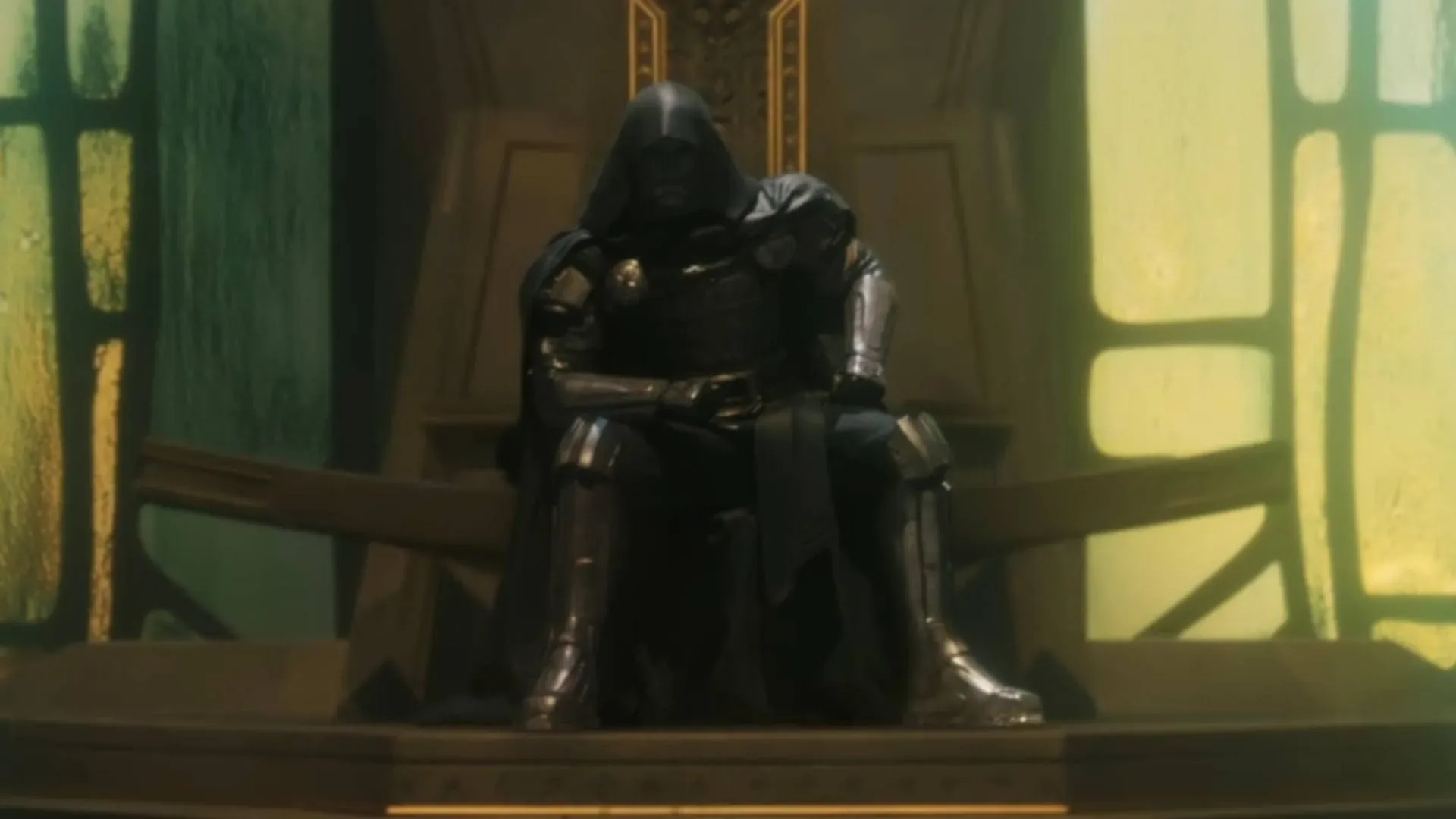
That kind of character-focused expansion is part of what makes large franchises durable: minor or unfinished threads can become focal points when creators have room to slow down. The same appetite for examining familiar genre figures from a different angle is visible across superhero discussion as well, including Robert Downey Jr.’s comments on redefining superhero movies through Doctor Doom. The comparison is about approach, not a shared story: established franchises often depend on whether a recognizable character can reveal something new beneath an iconic surface.
Star Wars moves on, but Hux remains a useful “what if”
The next announced screen steps for Star Wars do not include Hux. Ahsoka is set to return for a second season of Disney+ episodes next year, while Star Wars: Starfighter, starring Ryan Gosling, is headed to theaters in May 2027.
For Gleeson, though, the unresolved point is less about extending a role than recognizing the material that was there. General Hux had bombast, rank, rivalry and a final betrayal, but Gleeson believes the character’s most revealing ingredient was bitterness. A handful of intimate scenes might not have changed his fate. They could, however, have made that fate feel like the inevitable consequence of a deeply wounded man turning his anger in the most destructive direction available.