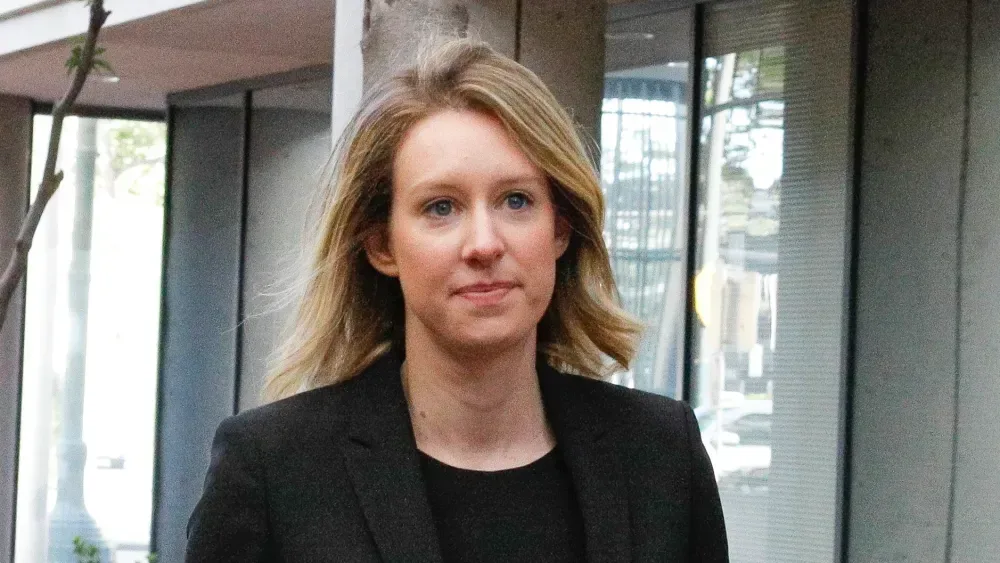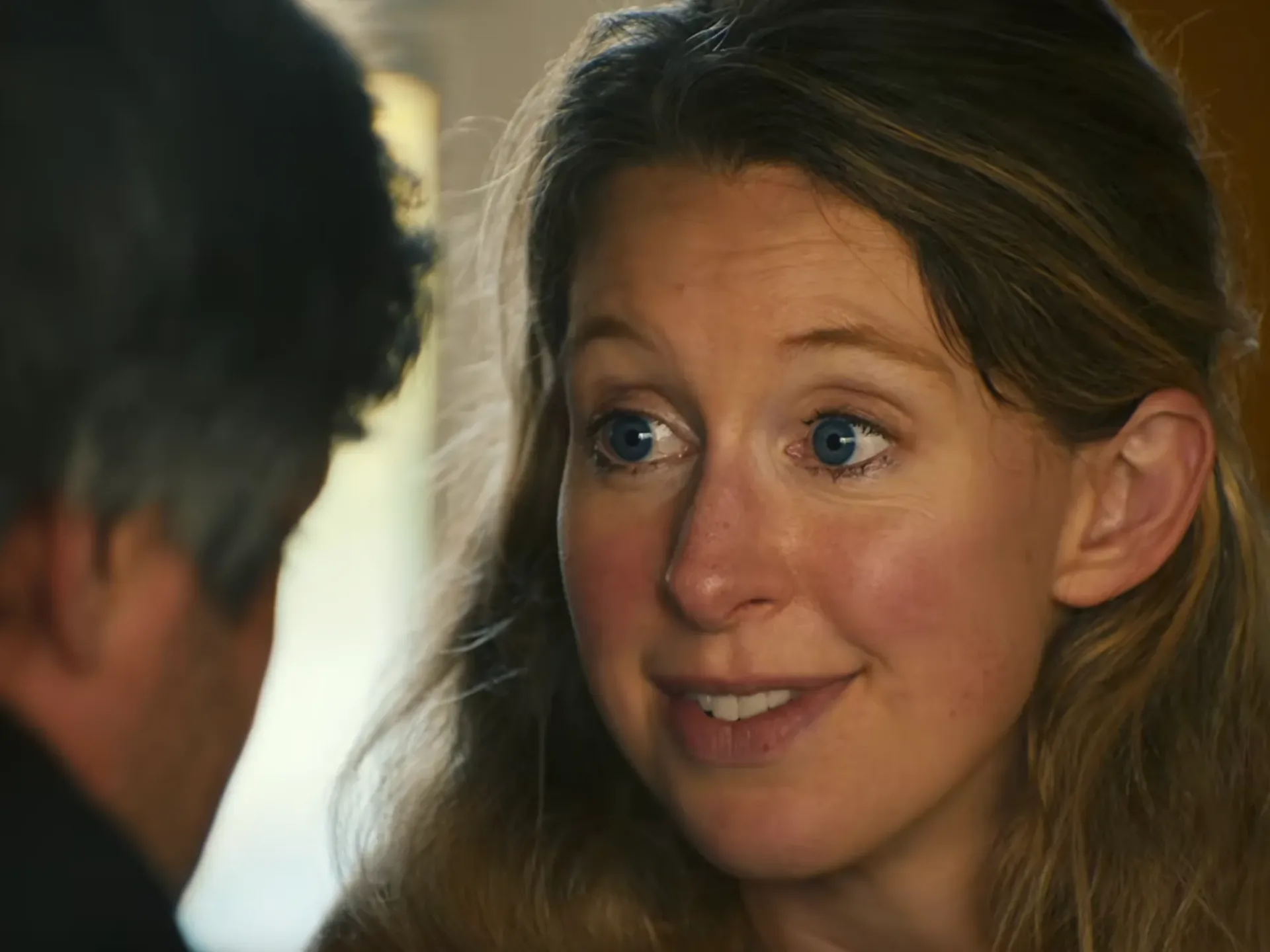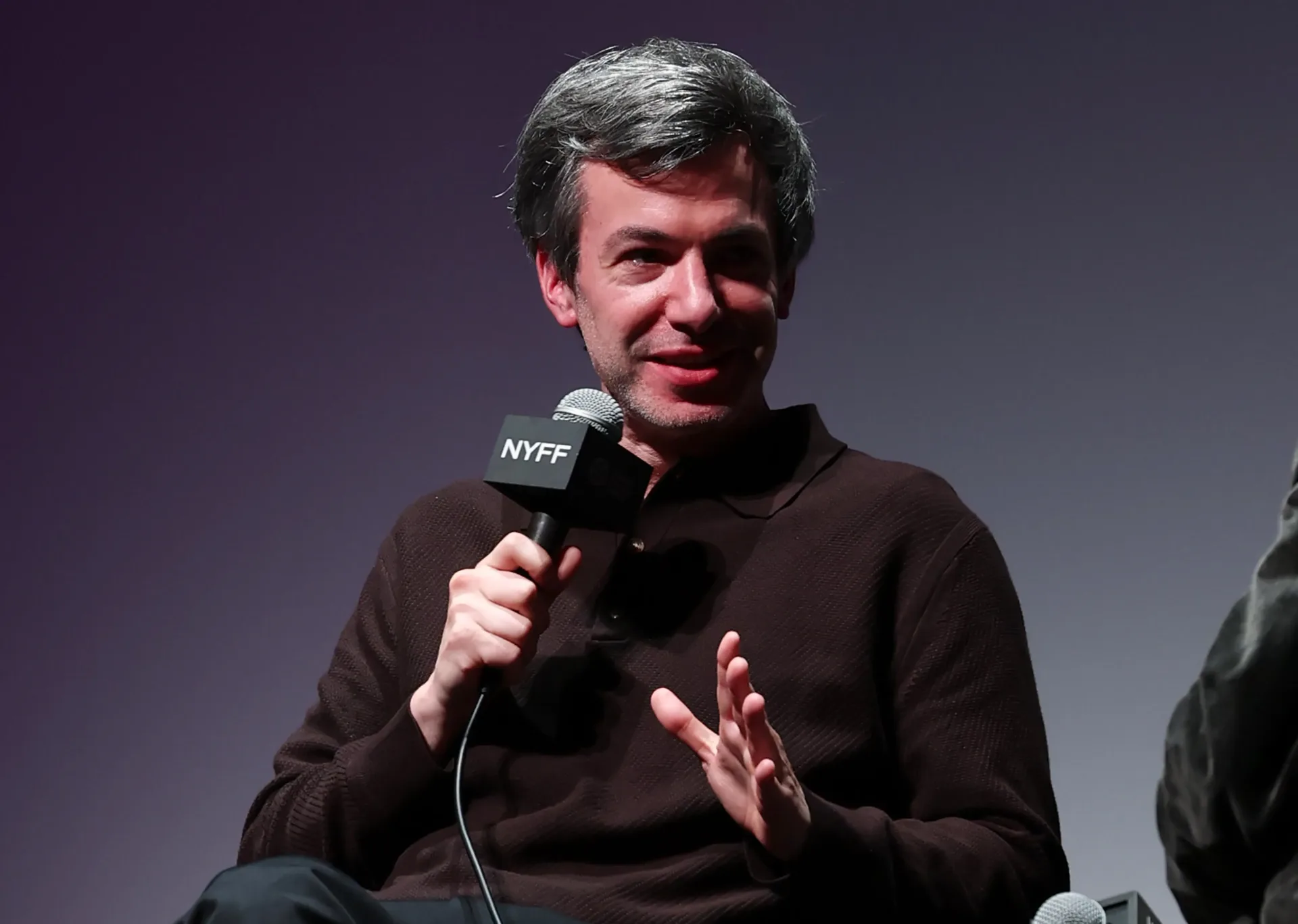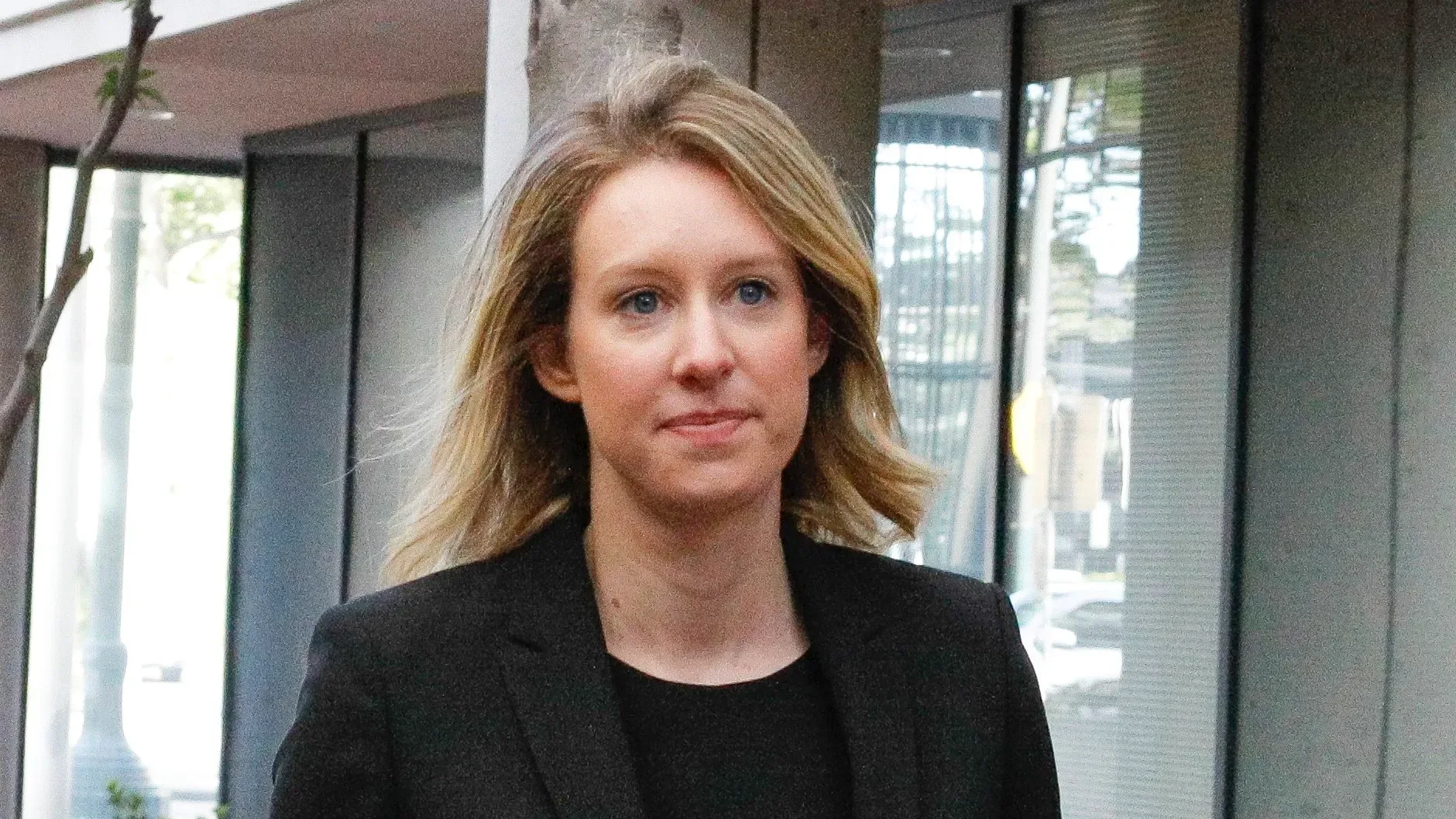
Elizabeth Holmes has drawn a new line between the messages written for her X account and those she says come directly from her. In a post signed “-EAH,” the former Theranos founder said that future posts in her own words will carry those initials, while unsigned posts will come from the people managing the account on her behalf.
The distinction arrives just ahead of You Can See Everything, an A24 documentary from Nathan Fielder and Lance Oppenheim that follows Holmes and her partner, Billy Evans, before she began serving her prison sentence. The film is scheduled to open Oct. 16 after a surprise debut at the Telluride Film Festival, with a New York Film Festival screening also planned this week.
Holmes is serving an 11-year sentence for fraud. Her post says she has been imprisoned for 1,216 days and nights, describes her continued effort to prove her innocence, and thanks supporters who have sent letters. She also shared a photograph of herself with Evans, with whom she has two children.
What Holmes’ “-EAH” signature is meant to clarify
Holmes’ X bio has said that its messages are “mostly my words, posted by others.” Her latest statement creates a more specific attribution system: messages with “-EAH” are presented as text written by Holmes, while posts without it are presented as the work of her account-management team.
That is a meaningful clarification rather than a technical guarantee. A signature can communicate who an account holder says authored a message, but it does not independently verify the writing process, posting process, or any underlying claim in the post. Its immediate practical purpose is simpler: readers are being asked to interpret signed and unsigned messages differently.
Holmes wrote that her loved ones have managed the account during her incarceration and named Evans as one of the people carrying that responsibility. Her statement frames the account as both a personal channel and a channel maintained by others during a period when she cannot operate it normally herself.
“Starting now, all posts in my own words will be marked -EAH. Posts without that signature are from the team managing this account.”
For a figure whose public image is already bound up in questions of credibility, accountability and narrative control, the attribution change is likely to attract as much attention as the posts themselves. It gives followers a visible label for material Holmes characterizes as first-person communication, while making room for continued activity from her family and social-media team.
Related coverage includes Elizabeth Holmes Marks Personal X Posts Ahead of ‘You Can See Everything’ Release.
The timing alongside ‘You Can See Everything’
You Can See Everything places Holmes back in the center of a major public conversation at a notable moment. Fielder and Oppenheim were invited into the home Holmes shared with Evans before she entered prison, making the film a portrait built around the period immediately before her incarceration rather than a project filmed during it.
That setup matters. A documentary is an authored work: even when its subjects grant access, its directors decide how material is organized, juxtaposed and presented. Holmes’ personal account, by contrast, is now being positioned as a direct channel for her own framing of events whenever “-EAH” appears. The two forms may overlap in subject matter, but they are not the same kind of public record.
The documentary’s release follows strong attention after its Telluride debut. Its New York Film Festival screening will add another high-profile stop before the Oct. 16 opening. The project is also an example of the kind of access-driven nonfiction production that centers an intimate perspective on a larger news story, a format increasingly relevant as unscripted production continues to expand.
Holmes’ post does not indicate whether she participated in the new film’s promotion, whether she has seen it, or how extensively her new signed-post convention will be used around its release. What is clear is that the distinction was announced while interest in the documentary is intensifying.
Sentence, halfway-house transfer and release schedule
The post also comes after a judge approved Holmes’ transfer to the Austin Transitional Center in Del Valle, Texas, on Aug. 23, 2027. She is currently housed at Federal Prison Camp, Bryan, a minimum-security facility in Bryan, Texas.
A halfway house, also often described as a residential reentry center, is a transitional setting intended to support a person’s move from incarceration toward life outside prison. Holmes’ approved 2027 transfer date should not be mistaken for her release date. Under the current schedule described in the report, she is set to be released on Feb. 22, 2030, a date that is roughly four years earlier than the full 11-year term because of good behavior.
Those dates provide the operational context for the personal tone of the message. Holmes wrote about wanting to return to her children and Evans, thanked people who have written to her, and said that support has sustained her during difficult days. She also invoked John 8:32, writing, “The truth will set you free.”
Her language about innocence and exposing the truth is her own characterization of her case and ongoing efforts. The sentencing and custody details, meanwhile, remain the concrete milestones around which the next several years are structured: continued incarceration at the current facility, an approved transfer in 2027, and a scheduled release in 2030.
Why the account-labeling move will matter
There is a basic media-literacy takeaway in Holmes’ new convention. Readers encountering a signed post will know it is being represented as Holmes’ own wording. Readers encountering an unsigned post will know the account says it was handled by her team. That is useful context, especially when a public account has continued posting through a prison sentence.
But attribution and verification are different concepts. Attribution answers who is presented as the speaker; verification asks whether a statement is accurate and can be substantiated. The “-EAH” marker addresses the first question, not automatically the second. The distinction is particularly important with legal matters, release timelines, public claims and emotionally charged first-person statements.
For now, the change gives Holmes a recognizable byline of sorts at the precise moment a new documentary will bring renewed scrutiny to her life, family and legal case. The account will remain active through a team, but Holmes says her own messages will now be identifiable in a way they were not before.