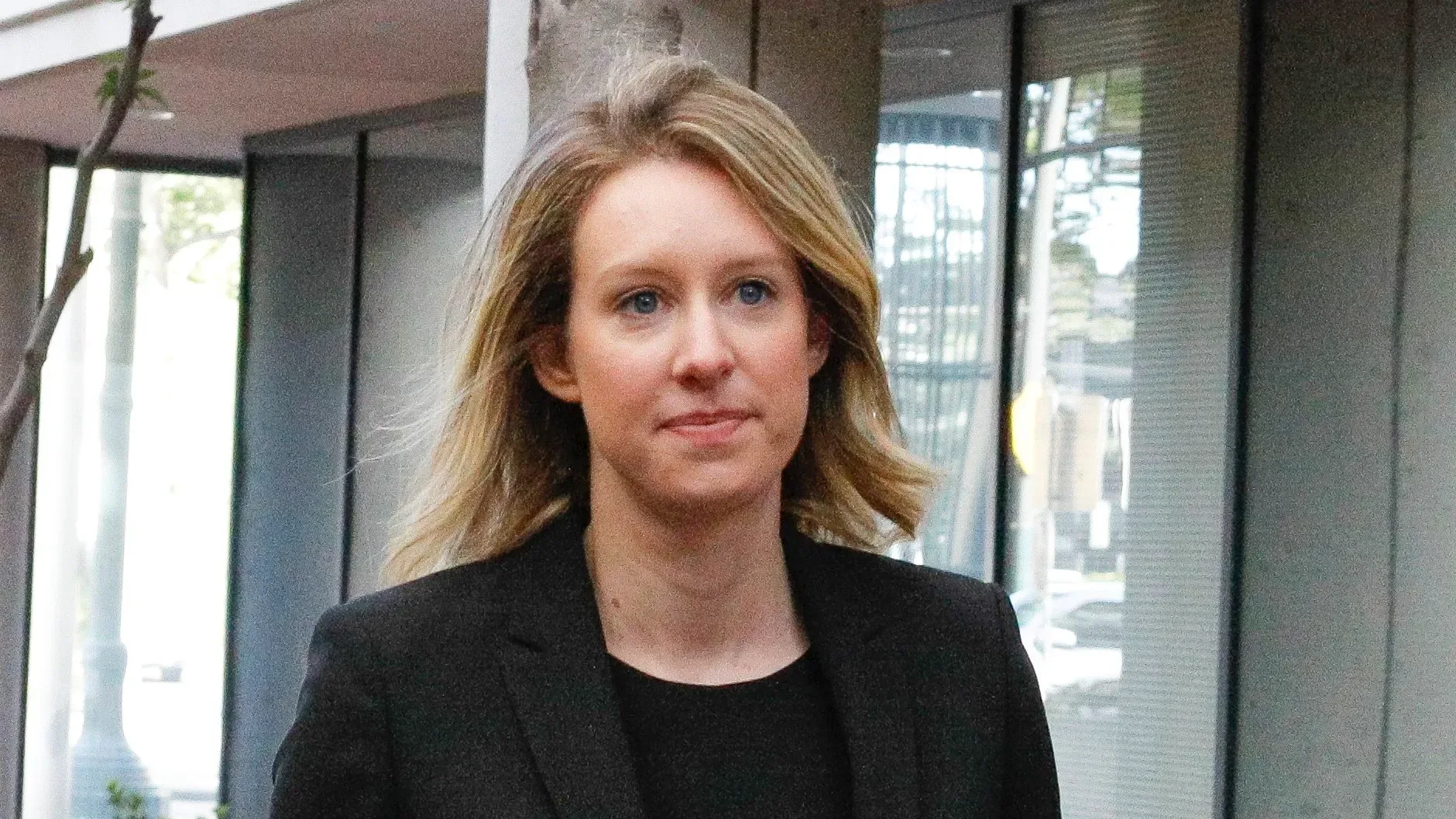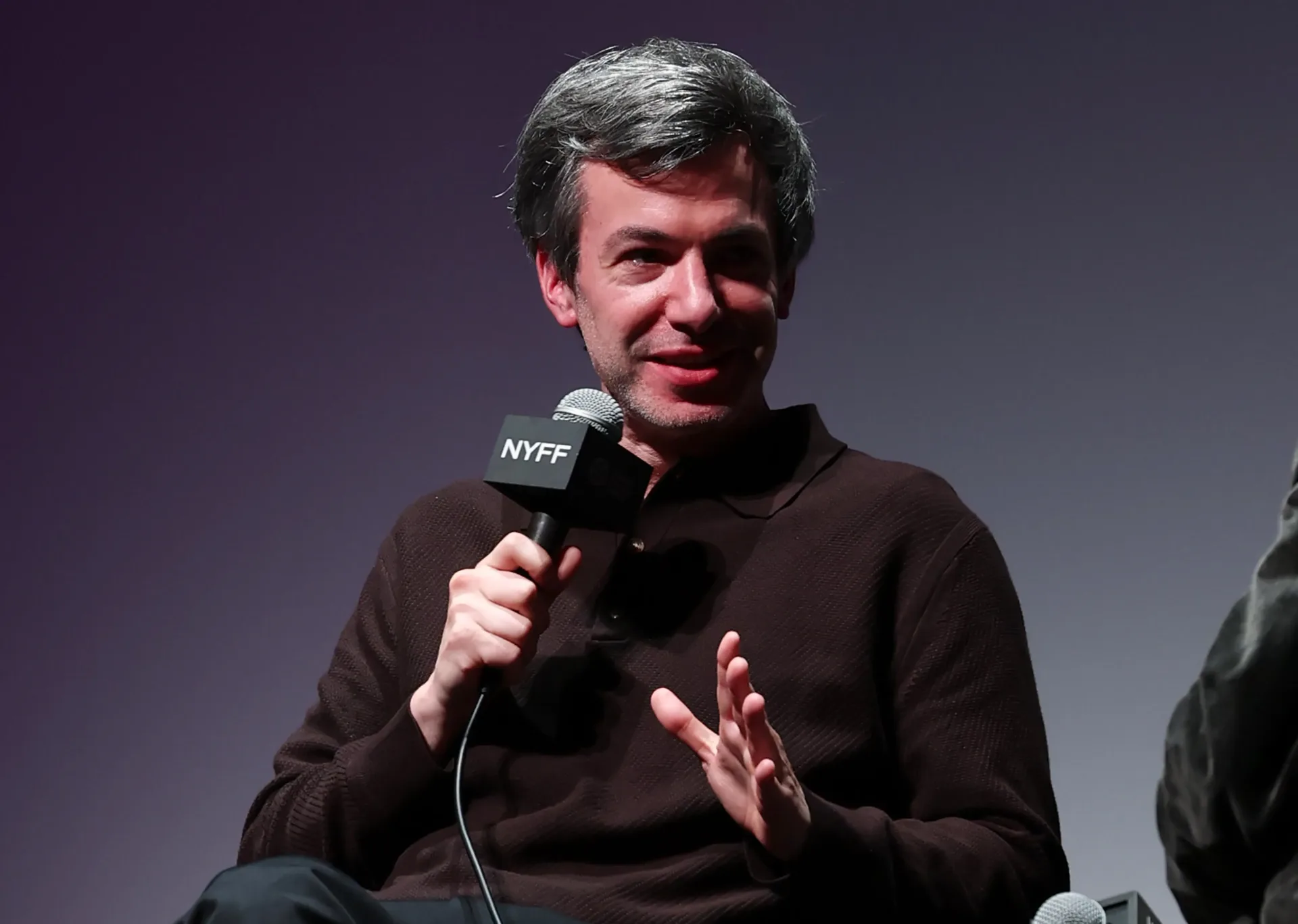
Nathan Fielder’s feature-directing debut, You Can See Everything, arrives in theaters on Oct. 16 after an unusual festival run that has kept much of its substance deliberately under wraps. Co-directed with documentarian Lance Oppenheim, the three-hour film follows Elizabeth Holmes and her partner, Billy Evans, during the 34 days before Holmes began her 11-year prison sentence for fraud.
The premise alone carries a built-in tension that the filmmakers say shaped the entire project. Holmes was convicted of defrauding Theranos investors, yet has continued to maintain her innocence. The documentary is also her first extended public speaking appearance in years. Rather than treating that contradiction as a simple riddle with a tidy answer, Fielder and Oppenheim describe a production in which even the people behind the camera could not consistently agree on what seemingly ordinary exchanges meant.
That uncertainty is central to what makes You Can See Everything more than a standard access-driven documentary. It is a film about access, certainly: Holmes and Evans let the directors and a small crew into their home at an exceptionally consequential moment. But it is also about interpretation. What does a filmmaker do when a subject seems emotionally sincere in one moment, while the known facts surrounding that subject make uncritical trust impossible in the next?
Why the filmmakers saw a story in disagreement
Fielder had already been interested in Theranos’ collapse after reading the 2018 book Bad Blood: Secrets and Lies in a Silicon Valley Startup. The route to Holmes, though, was notably indirect. Oppenheim had contacted Fielder after learning Fielder had watched part of Oppenheim’s documentary Some Kind of Heaven, and the two became friends. During a visit to the Magic Castle, an audience suggestion for a magic trick brought Holmes to mind. Oppenheim recalled that Holmes had approached A24 about having her life documented, and Fielder eventually met her through A24.
Fielder has explained that he experienced an immediate, uncomfortable push and pull in that first meeting: Holmes could come across as genuine, but he also knew her conviction and the public record around Theranos. The question was not whether that conflict could be erased. It was whether cameras inside her life might reveal something meaningful about the experience of trying to assess it.
Holmes and Evans agreed to participate. A24 also gave the crew room to abandon the project if the footage did not lead to a viable film. That arrangement matters because it suggests the production was not guaranteed to become a feature merely because of who its central figure was. The directors had to find a form and a point of view in the material.
They found it, by their account, in their own competing readings of events. Fielder said that he and Oppenheim would talk after filming and reach different conclusions about what had happened in moments that appear in the film. Oppenheim said this response extended beyond the directors: members of the crew processed the same mundane interactions in sharply different ways.
Cognitive dissonance is the term Oppenheim used for that sensation. In plain terms, it describes the psychological discomfort of holding conflicting beliefs or impressions at once. Here, the conflict is unusually concrete. A viewer may be watching an intimate family interaction while also carrying the knowledge that Holmes was convicted of fraud. The filmmakers’ stated aim was not to tell audiences which reaction is correct, but to put them close to the destabilizing experience they had while observing the household.
Related coverage includes Nathan Fielder’s Elizabeth Holmes Documentary Sets Oct. 16 Theatrical Release.
A Fielder project where the cameras are the awkward guests
Fielder’s involvement changes the expectations surrounding any project. His work on Nathan for You made his name through comedy built around real people and highly constructed premises. In HBO’s The Rehearsal, he pushed the collision of documentary observation and elaborate staging even further. He also created, wrote, directed and starred in The Curse.
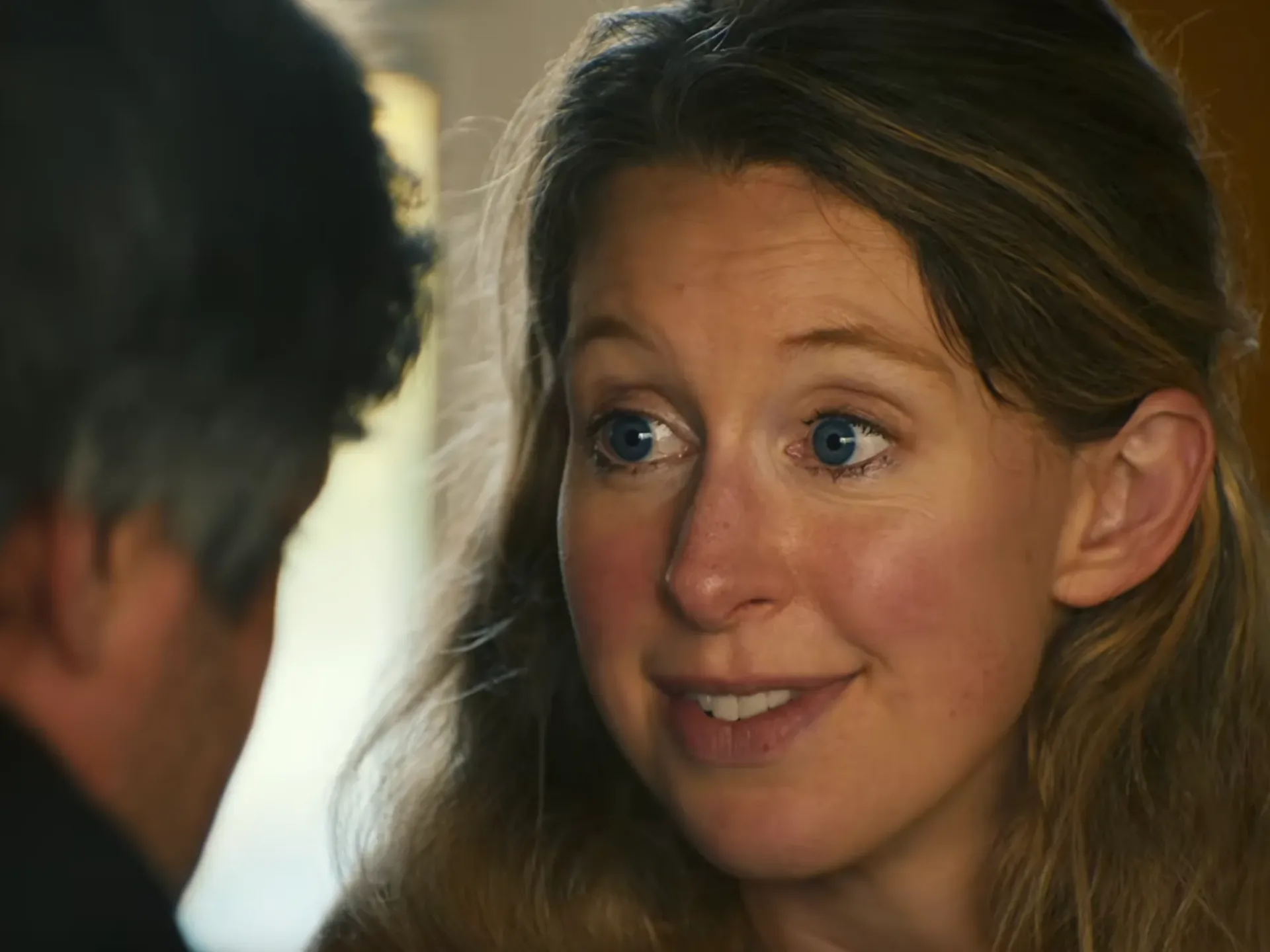
Those projects make Fielder an especially conspicuous person to invite into a life that is already under enormous scrutiny. The available promotional footage leans into that discomfort rather than disguising it. An early teaser holds on Holmes as she insists to Fielder that she has nothing to deceive him about. A later trailer shows Fielder living with Holmes and Evans around the clock, sitting with them on their bed, and interviewing Holmes as she cries.
Fielder himself has acknowledged how strange the arrangement was. He said he does not see himself as a naturally comforting person to have present during a final, life-changing period. Asked why Holmes and Evans wanted him specifically, he did not claim to know. Holmes had framed the undertaking as, first and foremost, a human story, but Fielder said it was difficult to speculate about what the couple expected from the collaboration.
That reluctance to confidently assign motive is important. A documentary can depict a person’s words and behavior; it cannot automatically settle the private reasons that person agreed to be filmed. Fielder and Oppenheim appear to make that limit part of the subject rather than something to conceal in narration.
What “access” can and cannot establish
In documentary terms, access means that filmmakers are allowed into spaces and situations that would ordinarily be private. It can produce scenes of unusual intimacy, but access is not the same thing as verification. A person may be open with a camera in one respect and still control, reshape or misunderstand the account they give of themselves.
That distinction is particularly relevant to a film about Holmes. The production had access to her home life with Evans during the countdown to incarceration, not an unlimited ability to resolve every question raised by Theranos or to independently prove the meaning of every on-camera exchange. The directors’ descriptions make clear that ambiguity, rather than a definitive psychological diagnosis, is part of the film’s method.
Oppenheim compared the atmosphere around the making of the movie to Stalker, the 1979 film in which a mysterious zone seems to bend ordinary rules and confront visitors with their deepest desires. The comparison is not evidence that reality changed around the production. It is a vivid explanation of the directors’ mental state: the usual confidence that everyone in a room has witnessed the same event seemed to collapse.
For audiences, that could make You Can See Everything challenging in a productive way. A conventional true-crime structure often promises clarity: a sequence of evidence, an explanation, and a conclusion. This film’s reported shape instead places viewers near a person whose public history creates a constant pressure on every gesture and statement. The practical viewing implication is simple: expect a film asking audiences to evaluate their own reactions, not merely absorb a finalized account.
Oppenheim’s observational background meets a high-profile subject
Fielder’s reputation may be the immediate attention-getter, but Oppenheim brings his own body of work about distinctive social worlds. His previous documentaries include Spermworld, Ren Faire and Some Kind of Heaven, films centered on communities including sperm donors, renaissance-fair owners and retirement-community residents. He also recently released Primetime, starring Robert Pattinson as television host Chris Hansen.
That background helps explain why the Holmes project is being discussed less as an explanatory Theranos recap than as a close study of people living through an extreme moment. The directors were interested in the friction between external facts and the immediate emotional reality inside the home. That does not replace the seriousness of the fraud conviction. It establishes the perspective of this particular film: the human atmosphere around a person about to enter prison.
The approach also makes the three-hour running time easier to understand. The available details do not identify every sequence or turn in the film, and the filmmakers have asked viewers to protect its surprises. But the extended length gives the premise room to accumulate. When interpretation is the subject, isolated clips can be misleading; patterns, pauses and repeated interactions may matter as much as a single forceful statement.
Festival response and the spoiler-free rollout
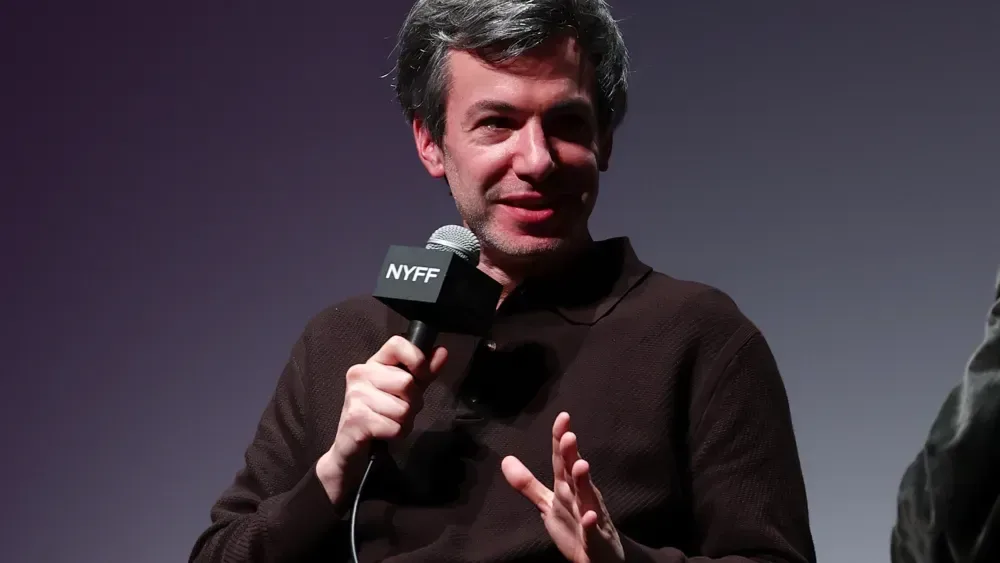
You Can See Everything first appeared as a surprise screening at Telluride, where it drew strong early notices and awards-season discussion. It then screened at the New York Film Festival, where the audience reportedly responded with laughter, gasps and cringes as the story took unexpected directions.
Fielder and Oppenheim avoided discussing the film’s major scenes and turns during their post-screening conversation, and subsequently asked attendees to preserve those discoveries for future audiences. That restraint is sensible for a documentary whose premise already reveals an extraordinary degree of access. The trailers establish the strange intimacy of Fielder’s presence without explaining where the story ultimately goes.
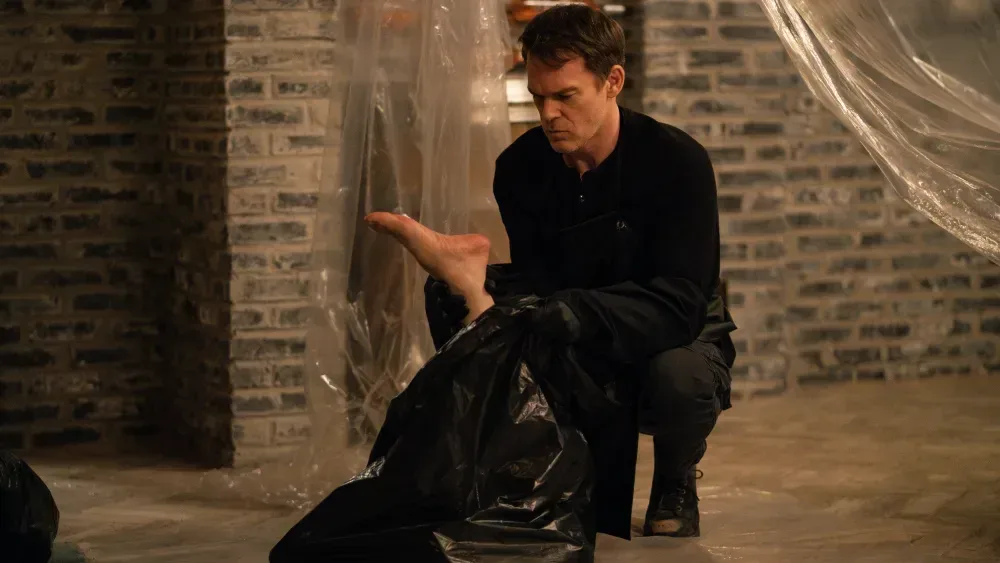
For viewers interested in creator-led screen projects that blur familiar boundaries, Fielder’s debut arrives amid a wider slate of television and film news, including the forthcoming second season of Dexter: Resurrection. But You Can See Everything is distinct in being grounded in a real, highly scrutinized legal and personal situation rather than a scripted serial premise.
When the documentary reaches theaters on Oct. 16, the most useful expectation may be to resist reducing it to either a redemption narrative or a gotcha exercise. Fielder and Oppenheim’s own account of making it suggests a messier proposition: a camera placed close enough to capture apparent candor, yet never close enough to make the question of truth disappear.