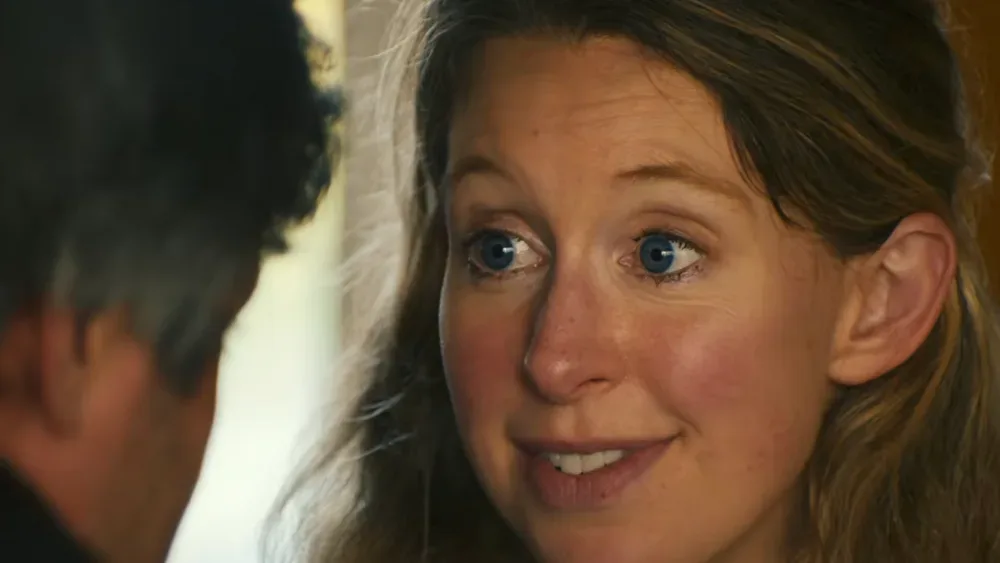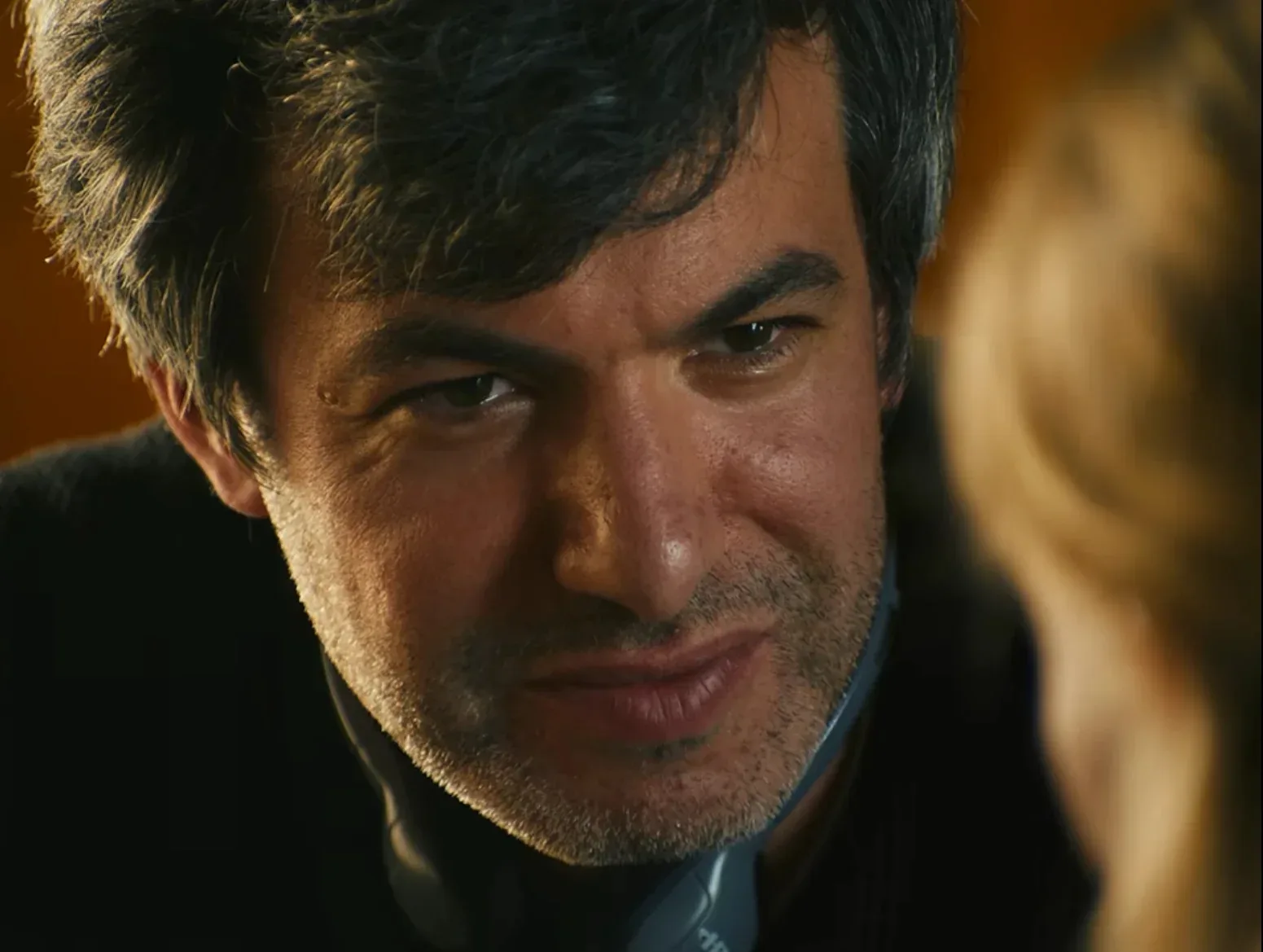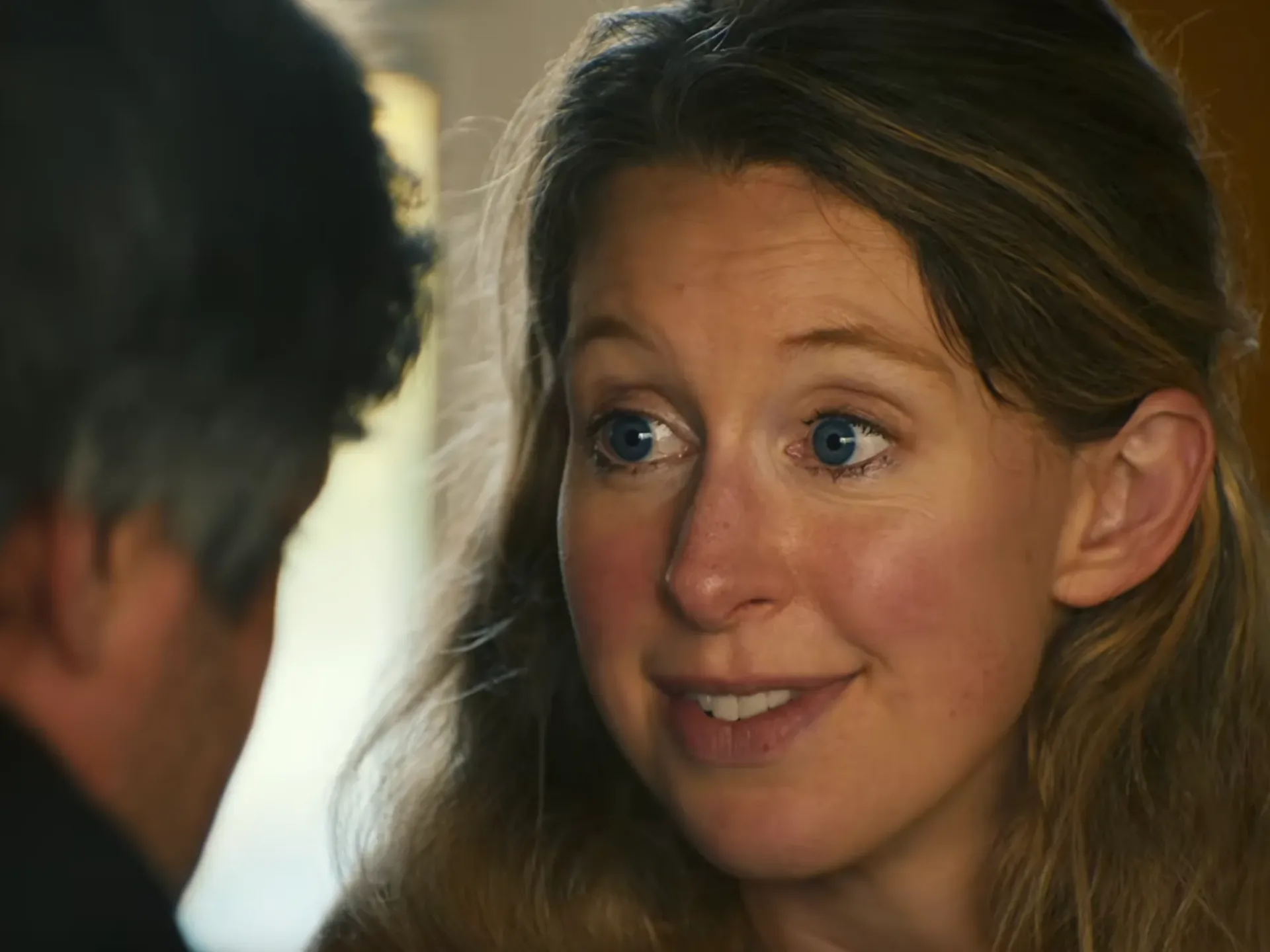
Nathan Fielder’s next project is moving from long-running speculation into public view. You Can See Everything, a documentary co-directed by Fielder and Lance Oppenheim, premiered at the Telluride Film Festival on Sunday night and received a teaser trailer alongside the screening. The A24 film follows Theranos founder Elizabeth Holmes in the stretch before she is sent to prison, beginning 34 days before her incarceration.
The available setup promises a project that is both unusually intimate and structurally unsettling. Holmes invites a film crew to document her daily life while facing the consequences of her conviction. What is introduced as an observational portrait then expands over a three-year period. The film’s official framing describes that extended process as a journey into an abyss—language that suggests the documentary is as interested in the evolving relationship between subject and filmmakers as it is in a straightforward recounting of Theranos.
That premise immediately makes the pairing of Fielder, Holmes, and Oppenheim a strange-but-compelling one. Holmes remains one of the defining figures of Silicon Valley’s spectacular downfall era, while Fielder’s screen work is built around prolonged discomfort, performance, trust, and the unstable boundary between a constructed situation and a supposedly genuine response. The teaser wastes no time putting that tension directly on camera.
A teaser built around one loaded exchange
The trailer centers on Fielder and Holmes sitting across from one another, holding eye contact in a scene that feels less like a conventional promotional clip than a very compressed negotiation over what can be believed.
“I don’t have anything to deceive you on,” Holmes says. “Of course I’m not deceiving you. I’m engaging with you as a human being. Why would I deceive you? There’s no reason for me to do that.”
Fielder’s response is brief, awkwardly polite, and characteristically difficult to read: “OK. Alright. OK, good chat.” He then asks, “You’re being real right now?” Holmes replies, “I’m always being real.”
It is a tiny excerpt, but it efficiently establishes the documentary’s central pressure point. Holmes is not simply a distant figure explained through headlines, court material, punditry, or retrospective narration. She is speaking for herself, directly to a filmmaker whose public persona has often depended on calmly pursuing questions past the point where most people would retreat. The teaser does not tell viewers how to interpret the exchange. It lets the pause, the literal question, and Holmes’ emphatic answer do the work.
That restraint matters for a subject whose public image has been so heavily argued over. The footage does not promise an easy confession, a redemption story, or a tidy final answer about sincerity. Instead, it foregrounds the possibility that the documentary itself may become an examination of self-presentation: what Holmes wants seen, what the crew is able to see, and what remains obscured even when cameras are present.
Related coverage includes Nathan Fielder and Elizabeth Holmes Face Off in ‘You Can See Everything’ Trailer.
Why Fielder and Oppenheim are an unusual directing team
Fielder is best known for Nathan For You and The Rehearsal, series that turned elaborate plans, real participants, and escalating social unease into a distinct comic form. His work regularly asks people to commit to an artificial framework while leaving viewers to puzzle over intention, honesty, and control. Even when the result is funny, the humor frequently sits beside real vulnerability.
Bringing that sensibility to a documentary involving Holmes is an attention-grabbing prospect, but You Can See Everything is not presented merely as a Fielder project. Oppenheim is a documentary filmmaker whose previous work includes Some Kind of Heaven and Primetime, the latter a Chris Hansen film starring Robert Pattinson that recently premiered in Venice. The co-directing credit is therefore important: this is not simply television-style provocation transported to a feature documentary, but a collaboration between filmmakers associated with very different approaches to observation and constructed reality.
The title itself feels pointed. “You Can See Everything” suggests access, transparency, and total visibility—the exact qualities audiences might assume a camera can provide. But a film can record actions, conversations, routines, and reactions without settling the meaning of any of them. In the Holmes teaser, the phrase gains an almost ironic edge. Seeing someone speak does not automatically resolve whether they are being candid, evasive, strategic, or all three at once.
The Theranos context is unavoidable
Holmes founded Theranos, the health technology company that became synonymous with a major Silicon Valley scandal. Any documentary focused on her life at this stage necessarily arrives with years of public knowledge, legal proceedings, media scrutiny, and sharply held opinions already surrounding her. The film’s stated starting point—just over a month before prison—puts it at a moment when the corporate rise and collapse were no longer abstract business history, but part of an immediate personal reckoning.
That backdrop gives an intimate approach real dramatic stakes. A film crew with access to Holmes is not entering a neutral space. Every conversation carries the weight of a public story involving ambition, fraud, accountability, and reputation. It also raises questions that the teaser seems designed to activate rather than settle: What does access mean when the person granting it has strong reasons to shape the narrative? How does skepticism operate when it becomes part of the film onscreen? And how much can a documentary reveal if its subject is aware, from the beginning, that every gesture may be scrutinized?
Those questions are not exclusive to Holmes. They sit at the heart of celebrity and true-story documentaries generally, especially projects about public figures attempting to address scandal. A recent discussion around another documentary subject can be found in Mr. T’s concerns about what a documentary leaves out of a legacy. In Holmes’ case, though, the stakes are especially heightened because the story is so closely tied to competing versions of truth and persuasion.
From secretive rumors to a festival premiere
For years, there had been rumors that Fielder was interviewing Holmes for a confidential documentary project, including reports that he had visited her in prison. The Telluride premiere confirms that a feature has indeed emerged from that period of interest and access. Still, the teaser reveals only a narrow slice of the material, and the description makes clear that the film spans years rather than a single pre-prison window.
That three-year scope may be the key detail for viewers trying to understand what kind of documentary this will be. A brief, deadline-driven film could focus primarily on Holmes’ final days before incarceration. A project that continues across years has room to track change, repetition, consequence, distance, and the shifting dynamics between the people in front of and behind the camera. Whether the film uses that span to challenge Holmes, understand her, frustrate viewers, or move among all of those modes remains unknown.
Telluride’s screening was kept secret until the reveal, an appropriate launch method for a project surrounded by persistent speculation. Now that the film has a title, directors, studio, trailer, and festival debut, the conversation can move beyond whether it exists and toward the more interesting question of what Fielder and Oppenheim made of their extraordinary access.
What is confirmed about release
A24 plans to bring You Can See Everything to theaters sometime in October. No specific theatrical date is included with the teaser information, and no platform details beyond that theatrical plan have been established here. Viewers should also be careful not to mistake the teaser’s concentrated confrontation for a full outline of the movie. Its purpose is to set a mood and introduce a central relationship, not to disclose the documentary’s full arc.
For now, the strongest indication is in the trailer’s plainly uncomfortable question: is Holmes being real? Fielder asks it with disarming directness; Holmes answers without hesitation. A documentary about that exchange, made over three years and arriving after years of secrecy, has positioned itself around the most difficult part of watching a person under pressure—not merely hearing what they say, but deciding what it means to believe them.