Major spoilers for You Can See Everything follow.
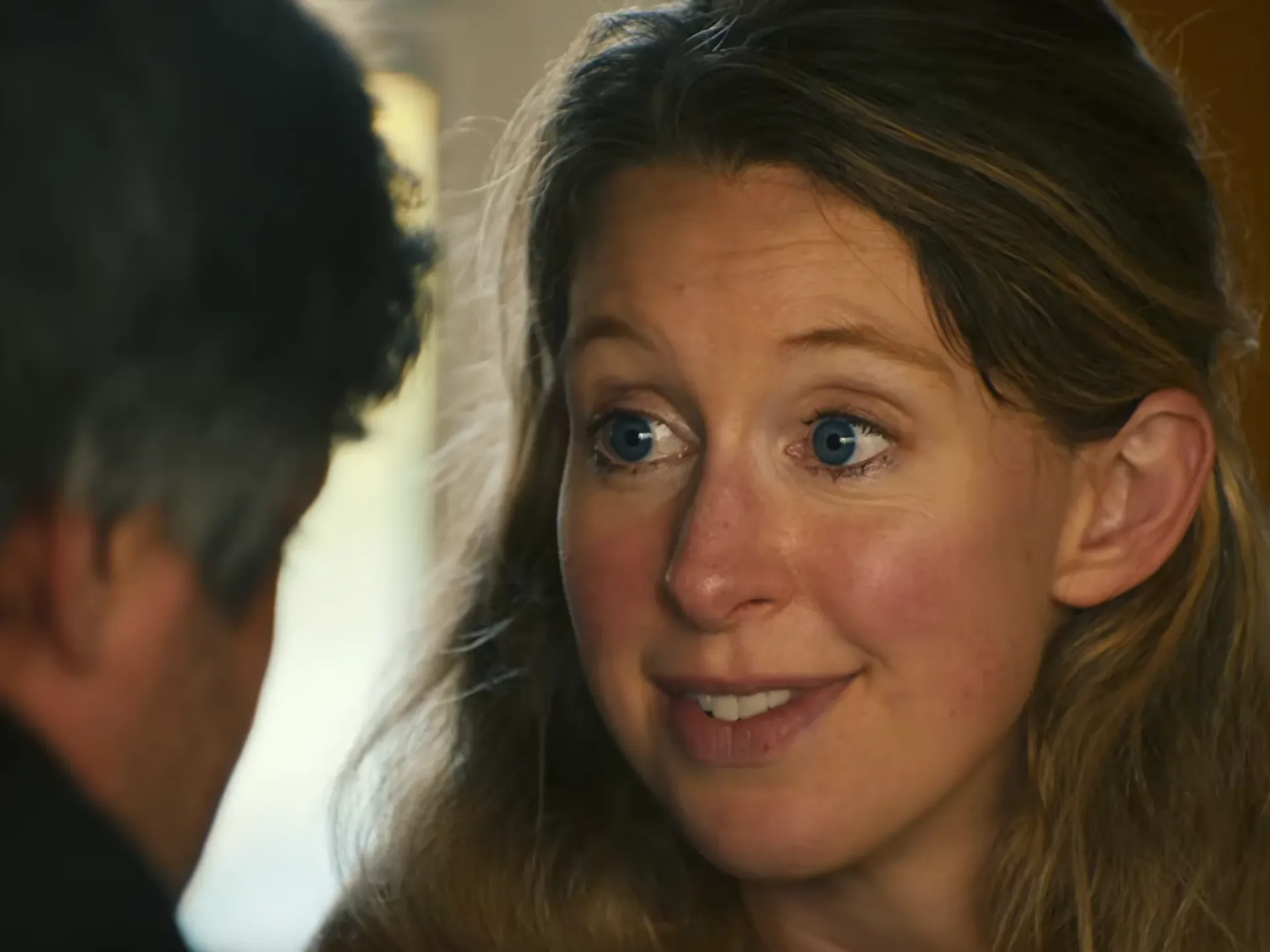
You Can See Everything is not content to be a conventional documentary about Elizabeth Holmes. The film follows the 34 days before the former Theranos founder begins an 11-year prison sentence, but its most unusual device arrives after Holmes has been incarcerated: Amanda Seyfried, who played Holmes in the 2022 drama series The Dropout, enters the story as both herself and a performer asked to inhabit Holmes once more.
That decision gives the film a second subject beyond Holmes’ case. It becomes a movie about the strange overlap among a real person, a screen version of that person, a documentary’s claim to authenticity and the audience’s willingness to treat a convincing portrayal as evidence. Seyfried is not merely returning to a familiar role. She is made to confront what that role meant, what it cannot possibly know and why it still carries enormous cultural weight.
Christopher Abbott also appears in reenactments as Billy Evans, Holmes’ boyfriend. Yet Seyfried becomes the more significant presence in the latter half, because her own history with Holmes is central to the film’s argument. She once portrayed Holmes in a researched scripted drama; now she is asked to perform scenes based on interactions that were not filmed for this documentary. The result intentionally blurs the lines that most nonfiction films try to maintain.
For more context, explore Daniel Dubois vs. Fabio Wardley 2: London Rematch Schedule, Card and DAZN Viewing Details.
What Seyfried is doing in the film
Fielder brings Seyfried in partly because she has already played Holmes to award-winning effect. She had prepared for The Dropout with extensive research, including roughly 10 hours of deposition recordings. But Seyfried is clear that a dramatic series remains “fiction-land,” even when its cast and crew work from substantial research. That distinction matters throughout You Can See Everything.
In practical terms, Seyfried and Abbott recreate private moments that the filmmakers did not capture with cameras. One pivotal sequence depicts an early negotiation involving Fielder, Lance Oppenheim, the couple and A24 before production got underway. In the reenactment, Holmes leaves to care for her child. Evans then requests payment for taking part in the documentary.
Fielder and Oppenheim resist the request, arguing that compensating Holmes and Evans would badly undermine the documentary’s credibility. A24 ultimately agrees to pay them. Later, Holmes says she did not know about the request, while the film reveals that Evans eventually abandoned it without an explanation.
The scene does not settle the core question it introduces. Did Holmes leave the conversation in a way that gave her plausible deniability? Or did Evans make the demand independently? The reenactment can illustrate the competing versions of events, but it cannot independently prove a motive. That is exactly why casting Seyfried is such a charged choice: an actor’s confidence, gestures and timing can make an unresolved scenario feel more determinate than the available account actually is.
Reenactment is not the same thing as documentation
A reenactment is a staged representation of an event that was not recorded, or cannot be shown directly. It can be useful filmmaking. It can make timelines intelligible, recreate an inaccessible setting or let viewers understand what people say occurred. But it is still an interpretation. Even if dialogue is taken from real speech, decisions about pacing, pauses, facial expressions, framing and emotional emphasis shape how the viewer receives it.
You Can See Everything does not appear interested in hiding that constructed quality. Instead, it foregrounds it. Fielder says the recreated material uses Holmes’ real words, while Seyfried is visibly presented reading a script of an actual prison conversation. The audience is allowed to see the apparatus: the actress, the writing and the conversion of reported speech into performed behavior.
That transparency is meaningful, but it does not eliminate the tension. Viewers can know they are watching a reenactment and still feel as though they have witnessed a private exchange. Seyfried’s earlier work as Holmes raises that effect further. Her performance in The Dropout was persuasive enough that she says many people believed she was Holmes. Fielder’s reminder that she is not Holmes lands as a simple factual correction—and as the central problem that the film keeps revisiting.
The documentary is therefore asking viewers to monitor their own reactions. When does a portrayal become emotionally persuasive? When does emotional persuasion get mistaken for factual certainty? And how much does previous cultural familiarity with a dramatized Holmes influence what people believe when they encounter a new version?
The prison conversation turns the camera toward the actress
The sharpest expression of this idea comes in a conversation linked to Fielder’s prison visit with Holmes. In the recreated exchange, Holmes objects to being portrayed again, referencing The Dropout with the statement that she does not want that to happen another time. Holmes also criticizes the women involved with the dramatization and says fellow incarcerated women have taken the series to be entirely factual.
The film cuts between Seyfried playing Holmes and Seyfried herself reading the material. Her reaction is defensive and immediate. She argues that Holmes, not the actress, created the circumstances that shaped public assumptions. She also emphasizes a distinction that is easy to lose once a prestige drama becomes part of public memory: it was television, not a literal record of every event in Holmes’ life.
Fielder presses the issue instead of letting that defense stand untouched. Were Seyfried’s scenes in The Dropout completely accurate? Seyfried acknowledges that she cannot know every detail of Holmes’ life. Her position is not that scripted drama has the same evidentiary standing as a documentary, deposition or direct recording. Rather, she argues that a well-researched performance can reasonably respond to the behavior and information associated with its subject without claiming omniscience.
It is a valuable collision because neither side gets an uncomplicated victory. Holmes’ complaint risks redirecting responsibility away from her own conduct and toward the people who portrayed it. At the same time, Seyfried’s frustration does not erase the real power of a successful screen performance to influence how strangers picture a living person. The documentary preserves that discomfort rather than resolving it.
A performer caught between empathy and skepticism
Seyfried’s response to Holmes is not purely hostile. She expresses empathy over the possibility of a woman being in a relationship with someone she views as manipulative, referring to Evans. But she also cannot determine whether Holmes is once again managing perceptions. That uncertainty becomes the engine of Seyfried’s participation.
Her position is unusual. She is close enough to the story to have spent significant time studying Holmes’ mannerisms and voice for a previous role, but she is still an outsider. She has access to a version of Holmes assembled through research, writing and performance—not a direct claim to the inner truth of Holmes’ life. In the documentary, that proximity and distance coexist.
It also prevents the material from becoming a simple celebrity cameo. Seyfried is not brought in just because an audience may recognize her. She represents the cultural afterlife of Holmes: the point where legal proceedings, public reporting and a scripted dramatization begin to merge in popular memory. The more capable she is at reviving the role, the more unnerving the exercise becomes.
Fielder is part of the uncertainty, too
The film’s ambiguity does not rest solely on Holmes. It also encompasses Fielder’s relationship to her and his own screen persona. Seyfried wonders whether Fielder is treating Holmes more gently in the reenacted material, potentially protecting her through a kinder depiction. Meanwhile, viewers see him develop a degree of warmth toward Holmes.
That creates another unresolved question: is that warmth sincere, or is Fielder performing a heightened version of himself in order to make the audience question Holmes’ intentions? The film offers no clean answer. That lack of certainty may frustrate viewers looking for a definitive account, but it is integral to the project’s structure. You Can See Everything repeatedly asks who is performing, who is being protected and whether the camera can ever fully untangle either issue.
The approach has practical implications for the audience. A documentary can include direct access, testimony and reconstructed scenes without becoming a final authority on a subject’s interior life. Its value may instead be in showing the uncertainty honestly: revealing which moments were unavailable to the camera, which claims are disputed and which impressions arise from storytelling choices.
Why one disputed word matters
The ending returns to the conflict between person and portrayal through a disputed quotation from a New York Times interview about The Dropout. The attributed line is: “They’re not playing me. They’re playing a character I created.” Holmes disputes that wording, maintaining that she said “a character they created” rather than “I.” The reporter has maintained the published wording is correct.
The difference is only one word, but its meaning is substantial. “I” suggests that Holmes sees the screen characterization as an identity she deliberately constructed. “They” shifts the responsibility outward, framing the character as something others assembled and imposed on her. The disagreement condenses the documentary’s entire preoccupation into a tiny grammatical fault line.
In that context, Seyfried’s appearance is more than a clever meta twist. Her return makes visible the chain through which a public figure becomes a character: behavior becomes testimony and reporting; material becomes a script; a script becomes an actor’s performance; and performance becomes, for many viewers, the face they remember. You Can See Everything uses that chain not to declare which version of Elizabeth Holmes is definitive, but to show how quickly certainty can be performed into existence.
For a further discussion of Seyfried’s place in the film’s layered structure, see this examination of her meta role in You Can See Everything.