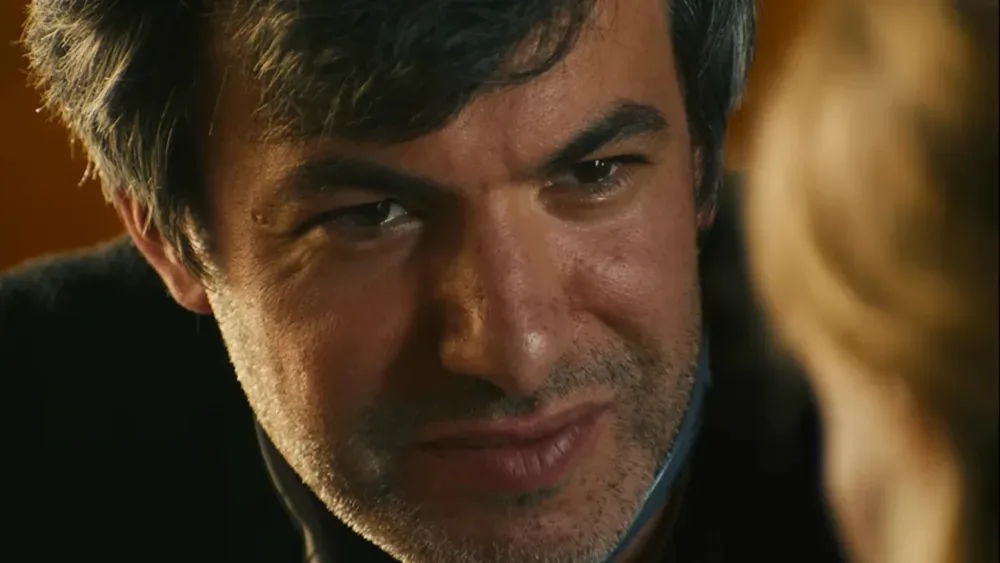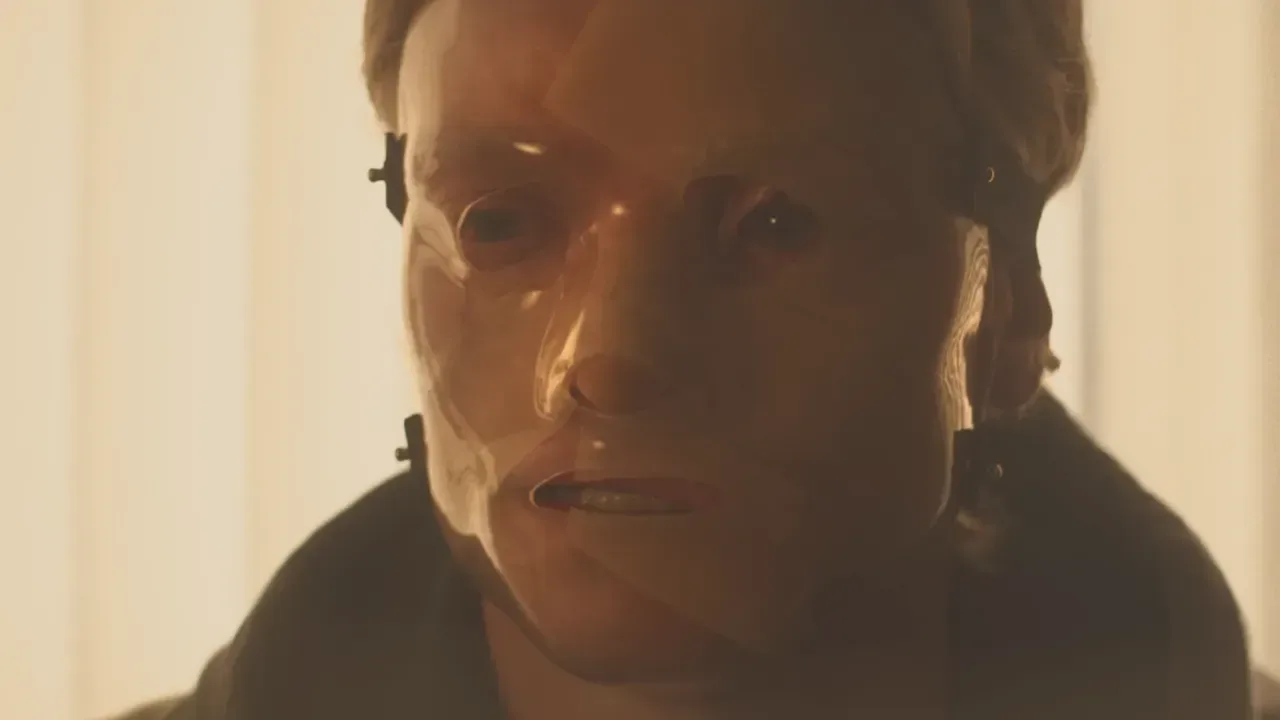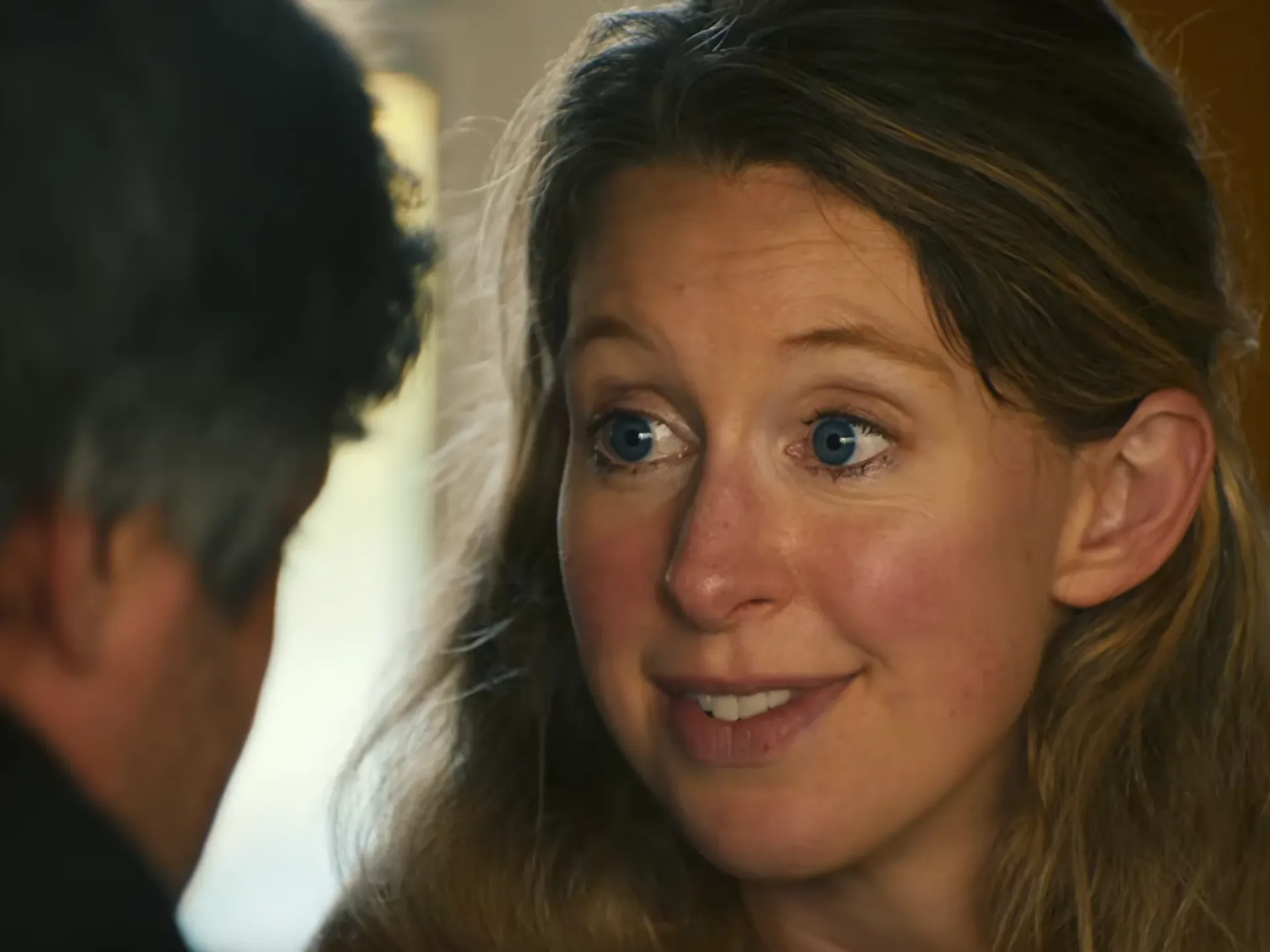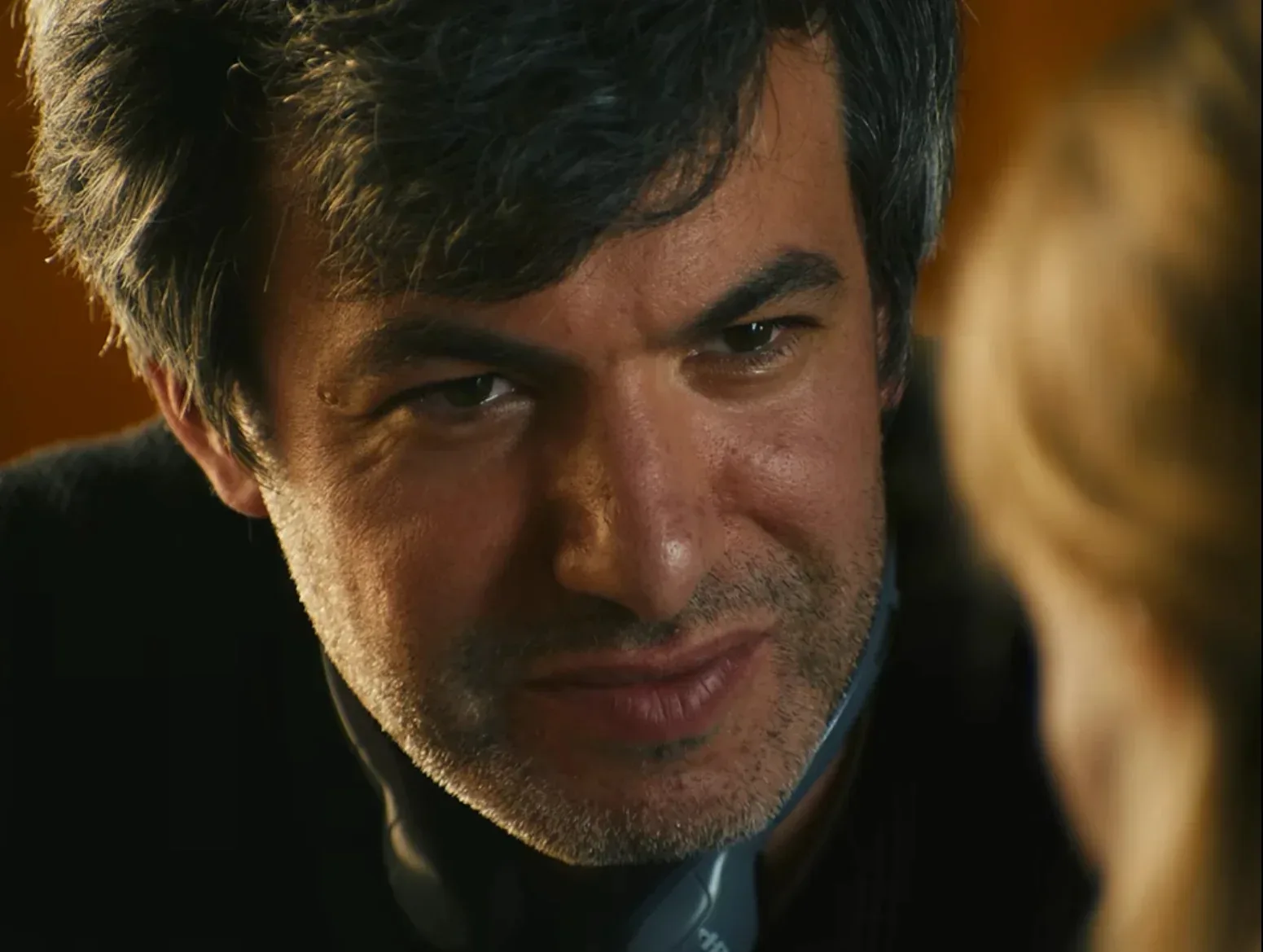
Nathan Fielder’s instinct before making You Can See Everything was not to promise a finished Elizabeth Holmes documentary at all. Alongside co-director Lance Oppenheim, he sought an arrangement that permitted the project to be scrapped if filming failed to reveal a worthwhile and genuinely distinct story.
That arrangement, described by Oppenheim as a “kill switch,” was accepted by A24 before production began. In practical terms, it meant the filmmakers could use the funding to investigate the situation without being locked into delivering a completed film simply because cameras had started rolling.
It is an unusually candid solution to a familiar creative problem: Holmes’ story was already heavily covered. Before this documentary entered production, the scandal had been explored through a popular podcast, a best-selling book, a documentary by Alex Gibney and the scripted Hulu series The Dropout. The central question was therefore not whether there was public interest, but whether Fielder and Oppenheim could find an angle that justified revisiting it.
A documentary built with permission to stop
Oppenheim recalled that Fielder’s proposal to A24 was essentially exploratory. The pair wanted money to go see whether there was a film there, with the ability to discard the work if they found nothing. Rather than treating that outcome as a failure, the arrangement made it an explicitly permitted possibility.
“If we didn’t find something, we could just throw it all away,” Oppenheim recalled Fielder saying in the discussion.
The phrase “kill switch” is not presented as a standardized legal or industry term here. It is a shorthand for a contractual provision that gave the directors an exit. Its importance is less about the colorful label than the change in incentives: the filmmakers were not required to force uncertain early material into a predetermined feature-length narrative.
Fielder’s concern was specific. He felt the story had already been told many times. Repetition is a real risk in documentaries about widely covered subjects, especially when the public already knows the major events. A new production can become a recap of familiar beats unless it has a different viewpoint, access, structure or question. The directors did not claim to know their eventual angle before filming. That uncertainty was the reason for the escape clause.
The deadline made the uncertainty sharper
The project began with only 34 days remaining before Holmes was scheduled to go to prison. That compressed timeline raised the stakes around the exploratory approach. There was limited time to determine whether something meaningful would emerge, and no guarantee that it would.
Fielder explained that something about the situation was “tickling” at his brain even though he could not yet define the angle. He was willing to start filming and see what emerged, but only if the filmmakers could deliver nothing should the material fail to come together. A24 agreed.
That distinction matters. Curiosity alone does not solve the practical demands of filmmaking. A crew, travel, production planning and editorial work all involve commitments. A project with a required delivery date can create pressure to decide what the story is before the evidence supports that decision. The kill-switch provision appears to have reduced that pressure, allowing the directors to begin from a question rather than a conclusion.
Oppenheim said the agreement “changed everything.” He described the freedom as room to explore without someone looking over their shoulders, comparing the process to fishing: you cast, observe and wait to see what is there. It is a useful metaphor for documentary work because the process can involve discovering patterns and tensions that are not visible at the outset. But it also acknowledges uncertainty. Fishing does not guarantee a catch.
What creative freedom meant in this case
Fielder said the provision meant he did not have to hold back with Holmes or the people around the project. That statement should not be read as a description of particular footage or interviews; none is specified here. What it does establish is that the directors felt less constrained by the fear of wasting a conventional, must-deliver production.
In many projects, the need to justify an investment can become a creative force of its own. If everyone assumes a finished work must arrive, then each day of filming can feel like it has to visibly advance a pre-approved plan. An exit option can change the calculation. Material can be pursued because it is potentially revealing, not merely because it fits a pitch document.
That does not mean a kill switch removes every pressure. Fielder plainly described filmmaking as stressful and said that pulling the plug, if necessary, would have been a relief. The arrangement did not eliminate the challenge of making a film; it made the possibility of deciding not to make one less frightening.
For Oppenheim, the value was operating “purely out of curiosity.” That phrase identifies the creative principle behind the deal. Instead of pretending certainty about a familiar subject, the directors protected their ability to investigate whether a fresh reason to tell the story actually existed.
Why the approach stands out amid franchise-minded storytelling
The details also offer a counterpoint to an entertainment environment where projects are often discussed in terms of recognizable intellectual property, built-in audiences and guaranteed pipelines. A high-profile real-life subject can appear safe precisely because viewers already know the name. Yet Fielder’s hesitation suggests that familiarity is not the same as a compelling new film.
The principle has echoes beyond documentary: a work needs to have a reason to stand on its own rather than exist as another extension of something audiences already recognize. That concern also sits behind the argument that DCU stories should stand on their own, not simply build toward crossovers. The two cases concern different forms of filmmaking, but both center a basic question: what makes this particular project necessary on its own terms?
For a documentary involving a subject with extensive prior coverage, the answer cannot just be the subject’s notoriety. The filmmakers needed to find a perspective that arose from their own work. Their contract acknowledged that they might not find one.
An exit clause can protect against forced storytelling
The deal is notable not because abandoning a project is inherently desirable, but because it treats abandonment as a legitimate outcome of honest investigation. In creative work, there is often a temptation to turn every beginning into a completed product. That mindset can encourage teams to shape reality around an expected result, particularly when the topic comes with public attention and a ticking clock.
Fielder and Oppenheim instead began with a deliberately lower-stakes expectation. At minimum, they thought they would have an interesting week or two and a story from the experience. That is a modest threshold for a project that ultimately became a feature documentary, but it may have been central to its development. They were allowed to find out whether the work had a future before deciding it must have one.
There is no indication that this model is easy to reproduce universally. It depends on a financier accepting uncertainty and on filmmakers being candid about what they do not yet know. It also is not a substitute for craft, editorial judgment or a meaningful perspective. An exit option creates room to search; it does not supply the discovery.
Still, the arrangement offers a clear lesson about process. When creators are tackling a story already saturated with books, podcasts, documentaries and dramatizations, confidence is not necessarily the most valuable starting asset. A protected ability to change course can be more useful. In the case of You Can See Everything, Fielder’s skepticism was not a barrier to beginning. It was built into the terms that made beginning possible.