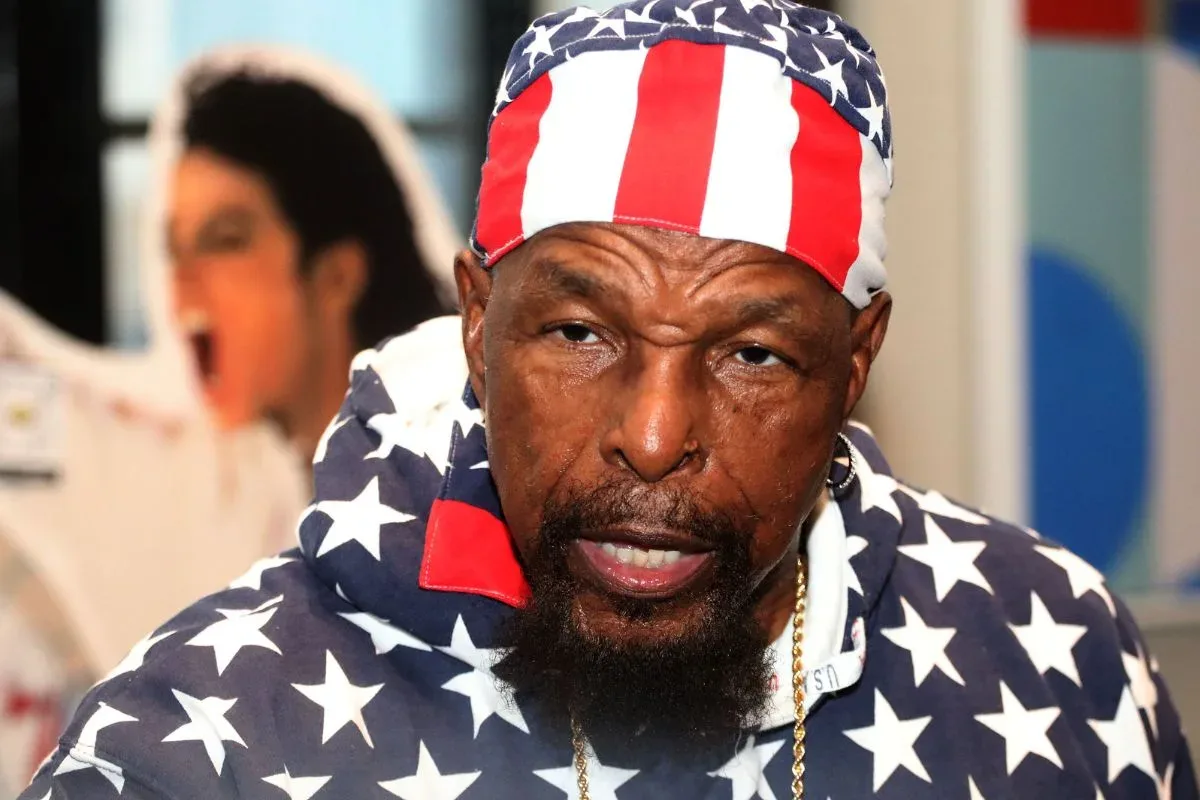
Mr. T has publicly challenged the framing of Untold Mr. T: I Pity the Fool, the Netflix documentary scheduled for September 8. His objection is not simply that a film about his career includes uncomfortable anecdotes or criticism. Instead, the entertainer says the finished documentary puts too much weight on the imposing, demanding persona audiences associate with him and too little on the service, faith and mentoring work that he considers central to his life.
That disagreement turns the documentary into something larger than a retrospective on an unmistakable 1980s star. It raises a familiar question for celebrity documentaries: who gets to define a public figure when the person at the center believes the selection of details has changed the meaning of their story?
For generations of viewers, Mr. T is instantly recognizable as Clubber Lang, the fearsome challenger opposite Sylvester Stallone in 1982’s Rocky III, and as B. A. Baracus on The A-Team, which ran from 1983 through 1987. The gold chains, mohawk, muscular silhouette and catchphrase-driven confidence made him a pop-culture fixture. Those images are powerful shorthand, which is precisely why he says they can eclipse the rest of the man behind them.
Mr. T’s objection is about emphasis, not just old anecdotes
Mr. T said director Scott Weintrob’s film builds up his recognizable hardman image only to knock it down. In comments about the documentary, he argued that the approach risks leaving viewers who do not already know him with an impression of a cruel or monstrous celebrity.
He also framed the conflict as a matter of narrative control, specifically criticizing what he described as a white filmmaker’s ability to reshape a Black man’s story. That is a serious claim about authorship and perspective, and it is important not to blur it into a generic complaint about receiving an unflattering edit. His stated concern is that a familiar entertainment archetype—the loud, intimidating, supposedly difficult star—is being allowed to stand in for an entire life.
The documentary reportedly includes material about preferences Mr. T had concerning white limousines and particular hotel accommodations. He has pushed back on the idea that having preferences should itself be treated as evidence of unreasonable behavior, asking why he should be expected to accept whatever was provided rather than state what he wanted.
Such details can be revealing in any biography, but their meaning depends on proportion and context. A movie star’s eccentricities, demands and backstage conflicts make for quick, memorable documentary scenes. They can also become the easy story: fame changed someone, the image was a mask, or a larger-than-life figure was secretly impossible to work with. Mr. T’s criticism is that these moments have been granted a significance that overwhelms more meaningful parts of his record.
The work he says deserved greater visibility
Mr. T has pointed to years of religious and community-focused work that he believes the documentary largely overlooks. That includes ministry, outreach to people experiencing homelessness through the Midnight Mission and the Fred Jordan Centre, and his involvement with Nancy Reagan’s “Just Say No” anti-drug campaign.
Whether a documentary gives every meaningful aspect of a subject’s life the amount of time that subject would prefer is ultimately an editorial decision. But the difference in emphasis matters. A film that concentrates on celebrity behavior may leave a different historical impression than one that treats outreach, public-service work and religious conviction as core parts of its subject’s identity.
Mr. T has specifically said his pastor is shown only briefly, while his former agent, Peter Young, receives considerably more space to criticize his choices. He also took issue with the attention paid to Freaked, a comedy in which he appeared, believing the film presents it as a humiliation or career misstep.
That does not automatically settle the question of what the documentary proves or whether every critical perspective is unfair. Films are allowed to contain conflicting accounts, and documentaries often become more informative when they do not operate as pure celebration. Still, Mr. T’s response establishes a clear dispute over the balance of the record: he believes people who knew his service and values are comparatively sidelined while voices attached to professional friction receive a more influential platform.
“If you don’t know me, you’re gonna think I’m some monster,” Mr. T said while explaining his reaction to the film.
His reported first reaction after viewing the completed documentary was to pray for restraint rather than erupt in anger. The anecdote fits the tension he sees in the project. The version of Mr. T most audiences expect is a man ready to bark, threaten and thunder into a confrontation. The version he wants better represented is one attempting to govern his response through faith.
From nightclub security to a global television symbol
None of this means the iconic image is fictional. Mr. T’s rise was extraordinary because he knew how to make that image work. Before mainstream stardom, he worked as a bouncer at Dingbats nightclub. His physical presence and direct delivery became integral to the roles that made him famous.
In Rocky III, Clubber Lang is not subtle. He is designed as a brash, formidable obstacle for Rocky Balboa, delivering verbal jabs as sharply as the character’s punches. The performance helped give Mr. T a screen identity that was immediately legible around the world. Then The A-Team turned that identity into weekly television: B. A. Baracus was tough, loyal, loud and inseparable from the show’s visual DNA.
That kind of fame can become a trap for a biography. A performer builds a persona because it is effective, studios and audiences reward it, and then every later story can be filtered through the same persona. Mr. T appears to be arguing that Netflix’s documentary has fallen into that trap, treating the well-known exterior as the definitive interpretation rather than one dimension of a much larger legacy.
The issue will be recognizable to readers following other debates about franchise characters and public identity. Even in fictional universes, the question of which perspective gets foregrounded can reshape the whole story; a forthcoming return to Tony Stark’s death through FRIDAY’s AI perspective is a reminder that point of view can radically alter material audiences thought they already understood.
An often-forgotten connection to hip-hop
Mr. T’s case for a broader portrait also includes music. His relationship to hip-hop is not an incidental footnote to an acting career. In 1984, Ice-T co-wrote “Mr. T’s Commandment,” a track that reached No. 75 on Billboard’s Hot R&B/Hip-Hop Songs chart.
The song was part of an era in which Mr. T’s persona was carried beyond film and television into records and youth-oriented messaging. Other tracks associated with him include “Don’t Talk to Strangers,” “Mr. T, Mr. T (He Was Made for Love),” and “Treat Your Mother Right.” Their subjects were often overtly instructive: respect for parents, caution around strangers and opposition to drugs.
That approach may sound unusually earnest beside the aggressive showmanship of Clubber Lang or B. A. Baracus. Yet the apparent contradiction is exactly the point. The same celebrity marketed as an intimidating powerhouse also used his platform to promote respect, family responsibility and sober decision-making. A retrospective that regards only one side as authentic risks missing how the two sides interacted. The tough persona drew attention; the moral message directed some of that attention toward a purpose.
What audiences can take from the dispute
The September 8 release will give viewers the chance to see how Untold Mr. T: I Pity the Fool presents its case. Until then, Mr. T’s response offers essential context rather than a spoiler to dismiss. He is not describing a small factual correction or an objection to one scene. He is saying the documentary’s underlying portrait is incomplete.
Celebrity documentaries are often judged on access, archival material, emotional candor and willingness to include criticism. Those are meaningful standards, but they are not the only ones. Viewers can also ask what has been omitted, whose testimony carries the greatest weight, and whether entertaining anecdotes become substitutes for understanding the subject’s values and actions.
Mr. T’s screen legacy is secure: Rocky III and The A-Team ensured that. His public objection is a demand that the legacy not end there. He wants the record to include the man who worked with homeless communities, embraced ministry, advocated anti-drug messages and used music to speak directly to young listeners. The result is an unusual pre-release tension: a documentary intended to examine Mr. T now faces scrutiny over whether it has seen enough of him.