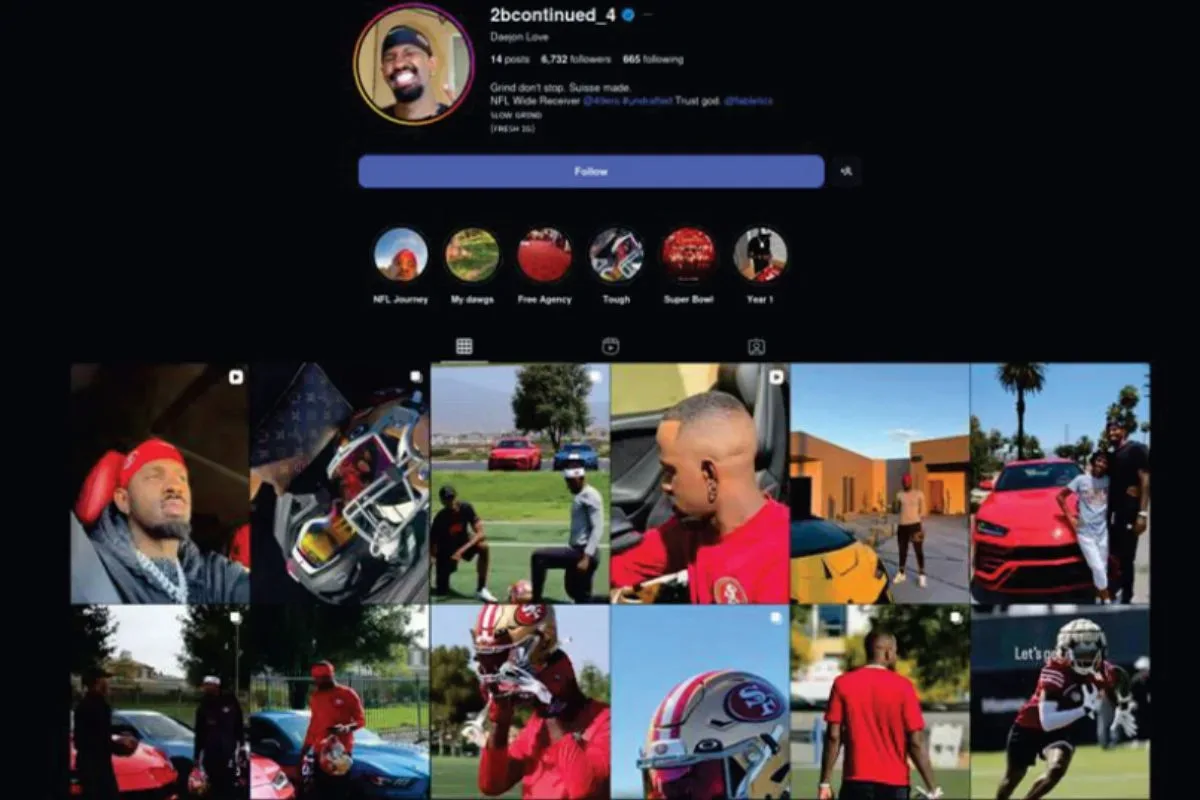
Netflix’s Untold anthology is preparing a new film titled Untold: Wide Deceiver, centered on the women affected by the criminal case involving Daejon Love and Taylor Jamie Chan. The project is expected to tell the story firsthand through people caught up in the alleged scheme, rather than framing it as a conventional tale about a supposed football celebrity.
That distinction matters. Prosecutors allege that Love used a rotating set of highly persuasive identities—including a San Francisco 49ers player and a wealthy real-estate investor—to build romantic trust and persuade women to put money into investment opportunities that did not exist. Chan is accused of supporting that presentation by posing as Love’s financial adviser, communicating with women and taking part in calls intended to make the alleged arrangements appear legitimate.
Both men have been charged with wire fraud and conspiracy to commit wire fraud. Those are allegations, not findings of guilt, and both are presumed innocent unless proven guilty in court. A jury trial is listed on the federal court calendar in Oregon for December 15.
A victim-centered entry in the Untold series
The reported approach for Wide Deceiver puts the experiences of the women at the center of its narrative. That is a significant choice for a project connected to an alleged scam that was amplified by the apparent glamour of pro football, money and romance. The football claim may have been the instantly viral hook, but the alleged harm described in the case is financial and personal.
Untold has a title built for stories where the popular shorthand does not cover the full picture. Here, “wide deceiver” works as a football-inflected play on the allegations while also signaling that the story goes beyond whether someone could successfully impersonate an athlete. The central questions are instead about credibility, emotional manipulation, financial pressure and what happens after people realize the person they trusted may not have been who he claimed to be.
Producers attached to the film include Propagate and Stardust Frames, alongside North of Now and The Cut. The Way brothers, who created Untold, are also involved. A director and the film’s participants have not yet been identified, so it is too early to assume precisely whose stories will appear or how the filmmakers will structure the account.
That absence of confirmed on-camera contributors is worth keeping in mind. A documentary can be announced with a clear subject and creative partners while its interviews, framing and eventual release timing remain unsettled. At this stage, the most solidly reported detail is the intended emphasis: the people affected by the alleged conduct will drive the film.
What prosecutors allege happened
Federal prosecutors say Love met many of the women through dating apps. He allegedly presented himself as either a 49ers player or a well-off real-estate investor, pairing status claims with romantic promises. Prosecutors further allege he showed false bank balances and sold women on financial arrangements that did not exist.
Related coverage includes Netflix’s Untold Sets ‘Wide Deceiver’ Film Around Daejon Love Case.
In the complaint described publicly, the alleged pressure did not end when a person lacked ready cash. Prosecutors say some women were encouraged to take out loans. They also allege that women who became more skeptical, asked too many questions or could no longer provide money were blocked.
The Justice Department said the initial case involved 26 identified victims and approximately $1.3 million. Love and Chan were arrested at Boise Airport on August 24. After the arrests, the FBI said that 35 additional women had come forward; those reports were still being checked at the time. Those later contacts should not be treated as adjudicated victims or folded automatically into the initial total, but they show why a film centered on those affected could have a wider scope than the original complaint alone.
Wire fraud is a federal charge generally associated with using electronic communications as part of a scheme to obtain money or property through deception. In a modern alleged fraud scenario, calls, messages and digital financial materials can be central evidence because they may show how representations were made and how participants communicated. Conspiracy to commit wire fraud alleges an agreement to participate in such a scheme. The charges themselves do not establish that the underlying allegations are true; that is what the legal process is meant to determine.
Why the sports angle should not eclipse the alleged victims
The claimed 49ers connection gives the case a ready-made headline, and it is easy to see why. Sports celebrity has cultural force: it can convey access, wealth and social proof in seconds. But the allegations outlined by prosecutors describe a broader alleged pattern in which football was one credibility tool among several, alongside claims of property wealth, fake financial information and a financial-adviser persona.
A victim-led documentary has the potential to make that clearer. The most consequential part of an alleged romance scam is not the ingenuity of the false identity. It is the way an alleged deceiver gains confidence, turns a relationship into a transaction, and isolates or dismisses a person when questions emerge. Focusing only on the “fake athlete” detail risks making a serious allegation sound like a strange celebrity anecdote. Listening to the women can restore the stakes that the viral label leaves out.
Rachel Anderson, who said she met Love on Bumble in June 2024 when he identified himself as “John Prince,” a Swiss real-estate developer, said she felt that something was off during their first date. After the arrest, she expressed concern for other women and said she hoped sharing her own experience would make it safer for others to come forward. Her account illustrates another important dimension of stories like this: public disclosure can draw hostility even from people who were not involved, adding a second layer of pressure to people deciding whether to speak.
The reported additional contacts to the FBI also underline why care with language is essential. More people coming forward can be meaningful, but every individual account still needs to be evaluated. A responsible documentary can give people space to explain what they experienced without transforming untested claims into final legal conclusions.
The practical warning signs raised by the allegations
The case has not been resolved, so no one should treat its allegations as a substitute for a verdict. Still, the conduct prosecutors describe points to practical red flags that are useful well beyond this specific case:
- A new relationship quickly becomes a financial opportunity. Romance and investment pitches require separate scrutiny, especially when one person insists that trust should replace independent verification.
- Prestige is offered as proof. Claims of sports fame, great wealth or elite business connections are not evidence that a person is safe to send money to or invest alongside.
- Financial claims cannot be independently confirmed. An image or display purporting to show a bank balance is not the same as verification of a legitimate investment or a person’s identity.
- Urgency turns into borrowing pressure. Any request to take out a loan for an opportunity introduced through a romantic connection deserves an immediate pause and outside advice.
- Questions bring punishment. Being blocked, shamed or rushed for seeking clear answers is not proof of wrongdoing by itself, but it is a strong reason to step back rather than send more money.
These are not foolproof rules, nor do they imply that people who encounter deception are responsible for it. Sophisticated manipulation often works because it combines emotional attention with apparently plausible details. The practical value of recognizing patterns is to create time and distance: verify independently, discuss the situation with a trusted person, and do not let a relationship demand secrecy or a rushed financial decision.
A documentary arriving while the court case remains pending
Wide Deceiver is taking shape while the criminal case is still headed toward trial. That timing creates a balancing act for any nonfiction project. Viewers may want definitive answers, but the court process has its own standards, evidence and outcome still to come. The film’s reported victim-first perspective could be compelling without claiming to replace that process.
It also places an extra responsibility on the production to distinguish lived experience from the unresolved allegations against the defendants. Documentary storytelling can convey emotional truth, chronology and the aftermath of an alleged crime, but it should be clear where legal facts are established, where prosecutors are alleging conduct and where participants are recounting their own experiences.
That kind of clarity is especially important for an Untold installment, where a punchy title and a sports-adjacent premise will inevitably attract viewers who first encounter the case as entertainment. The better version of this film will not merely replay the astonishing identity claims. It will examine why they may have worked, what was allegedly lost and how women who spoke up navigated the consequences.
Screen stories have room to revisit familiar figures and identities from a new angle—as another recent television project involving Ultron demonstrates in a very different fictional context—but Wide Deceiver has a more serious obligation: resist letting a sensational hook become the whole story.
For now, Netflix has a title, a producing team and a stated focus, but not a named director, confirmed contributors or release date. The most important development is therefore not the arrival of another true-crime entry on a streaming slate. It is the intention to put the women affected by the alleged scheme at the foreground while the criminal allegations continue through the courts.