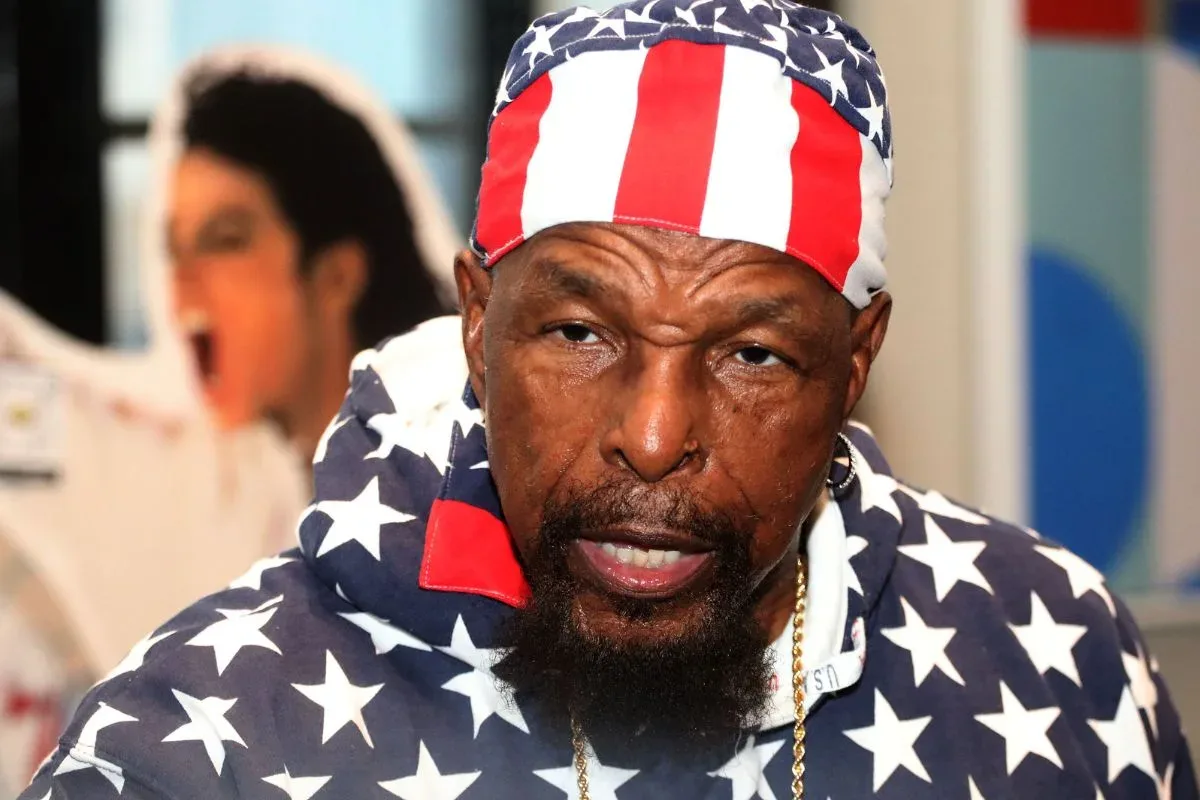
Mr. T has never been a performer built for understatement. The chains, the mohawk, the glare, the booming catchphrase, and the unshakable confidence were always designed to make an immediate impression. Yet Lawrence Tureaud, the actor and cultural icon known worldwide as Mr. T, says Netflix’s Untold: Mr. T: I Pity the Fool does not adequately show the person he believes exists behind that famous image.
Speaking in a recent television interview, the 74-year-old star described the documentary in blunt terms, calling it “garbage” and saying its attention to his hard-edged reputation misses the actual point of his life and career. Mr. T’s objection is not that his past was free of difficulty. He acknowledged that parts of his history are raw, painful, and gritty. His frustration is that the story, in his view, does not sufficiently account for how he moved beyond those experiences or the principles that informed the man audiences came to know.
It is a notable complaint from someone whose public identity has been so thoroughly compressed into a silhouette: gold chains, a powerful build, a signature haircut, and a warning to any fool reckless enough to challenge him. Mr. T is saying that silhouette is real, but incomplete.
A persona built on strength, but not only strength
For generations of movie and television viewers, Mr. T’s persona has been instantly readable. He was an intimidating presence in Rocky III, then became even more embedded in popular culture as B.A. Baracus on The A-Team. “I pity the fool” became one of the era’s most durable lines, a phrase that continues to be quoted long after its original context has faded for many people.
Mr. T said that line was his own creation, and he has explained that it was never simply about humiliating an opponent. In his reading, “pity” means mercy: the fool is someone making a bad choice by confronting him, but also someone receiving a measure of slack. That distinction may sound surprising beside such a famously aggressive slogan, but it helps explain the larger image Mr. T says he wants people to understand.
His version of toughness is meant to include restraint. It is forceful without treating cruelty as a virtue. And it aims to be entertaining without encouraging viewers, particularly younger viewers, to imitate the most destructive aspects of action entertainment.
That conflict between a marketable character and a fuller human story sits at the center of his criticism. Documentaries often need a strong organizing idea, and an unforgettable tough-guy persona is an obvious one for a film about Mr. T. But the person being documented may see that framing as a reduction rather than an interpretation. Mr. T appears to believe the film has favored the symbol over the substance.
Why B.A. Baracus mattered beyond the action
Mr. T pointed to a specific creative decision from The A-Team as evidence of the values he brought to his acting work: he made sure B.A. Baracus did not kill anyone. In a series remembered for explosions, chases, weapons, and near-constant mayhem, that choice is revealing.
Related coverage includes Mr. T Calls Netflix’s ‘Untold’ Documentary “Garbage,” Says It Misses His Full Story.
He has said he did not want children watching the show to develop an attraction to the guns his character carried. Instead, he wanted the show to offer entertainment while still presenting a moral distinction between good and evil, as well as decency and disrespect. The action could be loud and cartoonishly extravagant, but his character did not need to become a model of lethal behavior.
This is also an important reminder that the cultural memory of a television show can flatten its details just as easily as a documentary can flatten a life. People remember B.A.’s van, his fear of flying, his toughness, and his distinctive style. They may not remember the boundaries Mr. T wanted around the character’s conduct. To him, those boundaries were not an incidental production note. They were part of the message.
Mr. T has framed his work as carrying two obligations: entertain the audience and communicate something worthwhile. The priority he describes is not subtle. He favors goodness over evil and kindness over rudeness and disrespect. In an entertainment landscape where a fearsome image frequently gets treated as the entire product, that is a decidedly different account of what his brand was intended to represent.
The bodyguard years and the discipline behind the image
Before global stardom, Mr. T worked as a bodyguard for high-profile clients, including Michael Jackson and prominent fighters. He has described approaching that job with focused professionalism. Being friendly was not the purpose; getting the person under his protection safely from one destination to another was.
That history naturally reinforces the public idea of Mr. T as an imposing protector. But it also adds another layer to the point he is making about the documentary. Protection is not the same thing as aggression. The value in the job, as he has presented it, was in doing the work responsibly and hearing a client’s gratitude after a safe day. The strength was functional. It existed for another person’s security, not merely to project dominance.
That distinction appears repeatedly in Mr. T’s own comments about himself. His career made him an emblem of physical confidence, but he has long associated that confidence with service, discipline, family, and religious faith. His criticism of the documentary suggests he feels those ideas were not given enough room beside the visual iconography that made him famous.
Faith, family, and Mr. T’s “mama boy” label
One of Mr. T’s most recognizable self-descriptions is also one of his warmest. He calls himself a big, overgrown, tough, butt-kicking mama boy. The phrase deliberately joins the intimidating and the affectionate. Rather than treating love for one’s mother as something a macho public figure should hide, he presents it as a source of strength.
Mr. T has argued that more men openly loving their mothers could mean fewer men ending up in prison. Whether taken as a literal social prescription or as an expression of his worldview, the thought is consistent with everything else he has said here: respect and connection matter, and masculinity does not have to depend on contempt, emotional distance, or violence.
His religious life also seems central to the complaint. Mr. T questioned why the documentary did not include him in church with the pastor who, he said, knew him deeply and had seen his transformation into Mr. T. That is not simply a request for a different interview location. It is a complaint about narrative authority. He appears to feel the people who witnessed the personal and spiritual dimensions of his journey should have had a greater role in explaining it.
For a documentary subject, that can be a difficult divide. The filmmakers may seek tension, a clear dramatic shape, or the traits that made the subject famous. The subject may seek recognition of the community and convictions that make the fame meaningful. Mr. T’s public reaction puts him firmly on the latter side of that divide.
He still wants people to watch
Despite his anger, Mr. T has not told audiences to avoid Untold: Mr. T: I Pity the Fool. He has encouraged people to watch it and learn more about his life. That response is significant because it suggests he sees value in viewers engaging with the material even while he disputes its balance.
It also leaves room for audiences to consider the gap between a documentary’s portrait and its subject’s self-understanding. Those are not always identical, and they do not need to be. But when the subject is someone as culturally recognizable as Mr. T, the question becomes especially interesting: how much of the audience’s memory is based on the real person, and how much is based on the character they were sold?
That question has surfaced around other high-profile nonfiction projects, including disputes over participation, ownership, and whose perspective gets centered. The broader debate is visible in a recent documentary credit controversy involving Mark Curry. Mr. T’s dispute is different in its details, but it similarly emphasizes that documentaries can provoke strong reactions from people who feel their role, history, or identity has been narrowed by the finished product.
The enduring challenge of telling a larger story
Mr. T’s statement is ultimately a demand for complexity. He does not reject the tough image that helped make him an icon; he helped create it, and he remains proud of its power. He rejects the idea that it should stand alone as the final explanation of who he is.
In his telling, the complete picture includes a difficult early life, a determined rise to fame, bodyguard discipline, faith, loyalty to family, a protective view of young viewers, and an effort to make popular entertainment carry an ethical message. The mohawk and the catchphrase belong in that story. So do the choices that placed mercy, respect, and nonviolence next to them.
Netflix had not publicly responded to Mr. T’s criticism at the time of his comments. The documentary is currently streaming, and Mr. T’s stance invites viewers to approach it with both appreciation for the legend and awareness that the legend’s own account reaches beyond the familiar tough-guy frame.