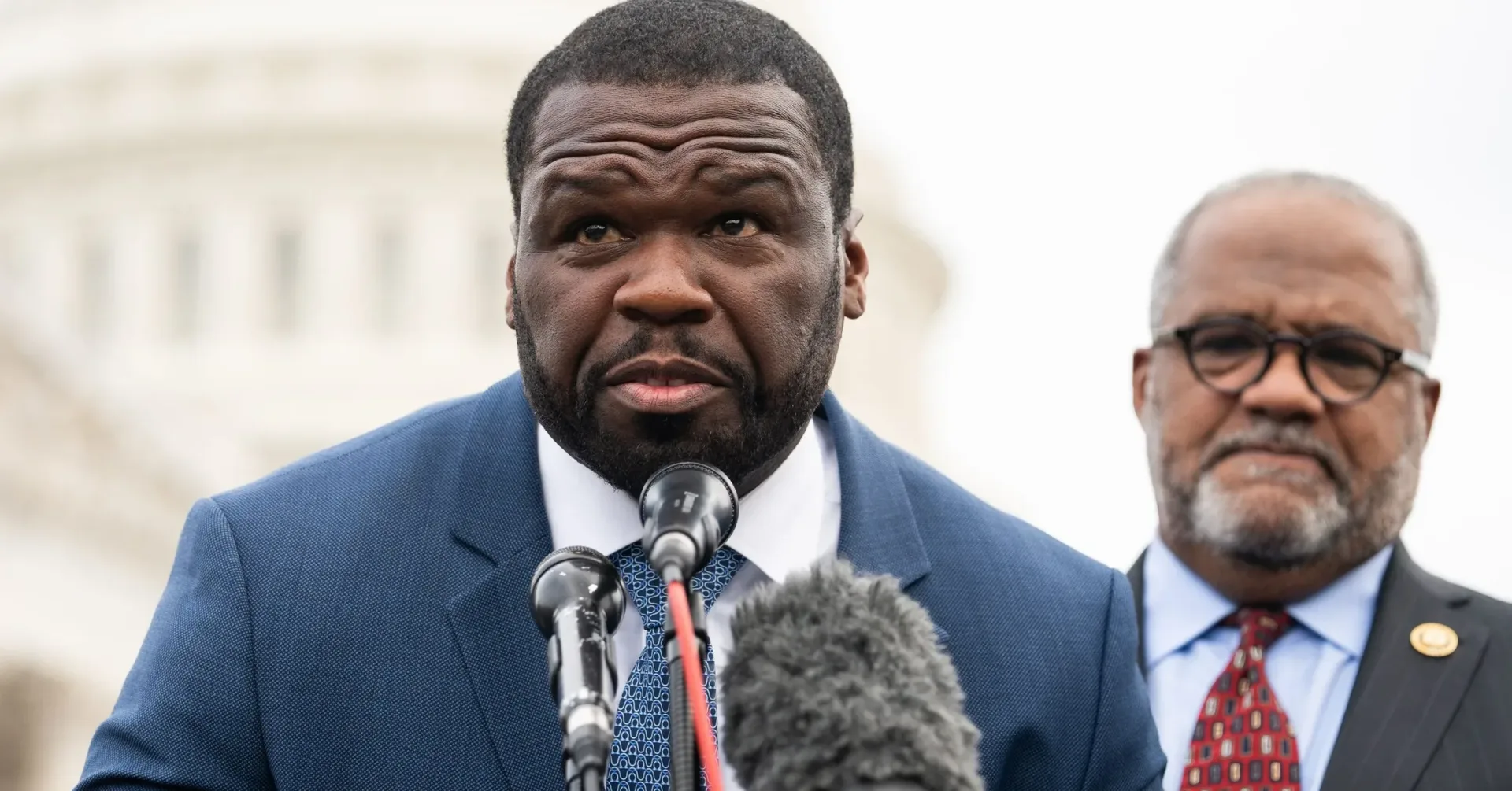
Mark Curry is clarifying the heart of his public dispute over Sean Combs: The Reckoning: he says this is not a request for a payout from 50 Cent, but a fight over a production credit he believes would have helped build his future in documentary work.
Curry has said he was left without a production credit on the Netflix documentary, which was executive produced by 50 Cent and later won the Emmy for Outstanding Picture Editing for a Nonfiction Program. His comments prompted a blunt response online from 50 Cent, and that exchange has shifted the conversation away from the mechanics of screen credits and toward a larger argument about contracts, public mockery, and the value of acknowledgment in a high-profile project.
The available account does not establish the terms of Curry’s agreement or independently verify how work on the project was allocated. What is clear is Curry’s own position: he maintains that the arrangement should have resulted in a production credit, and he rejects the suggestion that he simply failed to understand what he signed.
Curry frames the dispute around professional access
In responding to people who argued that he should have read his contract more carefully, Curry challenged them to examine the document themselves. He said he does not need a handout and does not want money from 50 Cent.
For more context, explore Attack on Titan’s First Battles and Final Catastrophe Are Heading to Japan’s 4DX and ScreenX Theaters.
“When you look at that contract, and you read it and then, you tell me what you ain’t reading right,” Curry said. “I don’t need no handout. I don’t need no money from 50 Cent.”
That distinction is central to Curry’s argument. He has said that a production credit, rather than direct compensation, was the outcome he wanted. In his view, having his name formally attached to an Emmy-recognized nonfiction production could create a tangible professional calling card when approaching film companies and pitching subsequent work.
Credits can look like a small line at the end of a project to viewers who have already reached for the remote, but they carry a very different weight for people trying to work behind the camera. A verifiable title can help establish someone’s role on past productions, make introductions easier, and provide a shorthand for future collaborators evaluating a résumé. Curry’s complaint rests on that practical value: recognition that can open a door, rather than cash that ends a dispute.
He also said he contributed more than 40% of the documentary. That is Curry’s characterization of his involvement, not a contribution figure established by the material available here. Still, it explains why he has approached the matter as more than a bruised ego. He believes his work merited a specific formal acknowledgment and that the missing credit cost him an opportunity to advance his career.
What Curry says he wants now
Curry’s comments suggest he is not seeking an escalating personal feud with 50 Cent. He has said he does not have a real issue with the rapper and entrepreneur, even while arguing that their agreement was not honored as he understood it.
His proposed remedy is framed as a favor connected to a separate documentary idea. If 50 Cent does not want to take on that project, Curry said he would welcome an introduction to someone who could help get it made. The request is consistent with his larger emphasis on opportunity: Curry sees a connection, a referral, or a path toward producing another film as meaningful help after the credit he expected did not materialize.
“If you don’t want to do the documentary, then introduce me to someone who can help me do the documentary,” Curry said.
That does not resolve the underlying disagreement about the original contract or the proper credit on Sean Combs: The Reckoning. But it does narrow Curry’s public ask. He has repeatedly positioned the issue as one of professional validation and forward momentum, not a demand for payment or an attempt to extract a public apology.
50 Cent’s reply changed the tone
After Curry spoke out over the weekend, 50 Cent replied in a post that told him to relax before jokingly asking for his Cash App. The post included a crude reference to alleged victims connected to Sean Combs.
Curry directly addressed that reply in a later video. His objection was not merely that the response dismissed his credit complaint. He said the joke crossed a line because of its reference to people who have alleged harm. In that sense, the conversation moved quickly from a disagreement over documentary labor into a dispute over how public figures should speak about allegations of abuse and the people tied to them.
That tonal turn matters because the documentary’s subject is already emotionally and legally charged in the public sphere. A pointed online comeback can be built for reposts and reactions, but Curry’s response underscores the risk of treating alleged victims as material for a punchline. His position is that the subject deserves more care than that.
An Emmy win makes a credit dispute more consequential
Sean Combs: The Reckoning won the Emmy for Outstanding Picture Editing for a Nonfiction Program. The award specifically recognizes editing, not an across-the-board declaration of every contributor’s role. Even so, an Emmy-winning project carries considerable industry visibility, which helps explain why Curry places such importance on whether his name appears among the production credits.
For an emerging or independent documentarian, association with a prominent Netflix release can be more than a bragging point. It can become part of the basic evidence used when seeking meetings, collaborators, financing, distribution, or a chance to pitch the next idea. Curry’s argument is essentially that the missing credit deprived him of a credential that had long-term professional utility.
There is also a broader lesson in the episode for anyone doing research, producing, interviewing, editing, or coordinating material in nonfiction entertainment: agreements, deliverables, and screen-credit language are not peripheral details. They can shape how a contributor is seen long after a project is released. The practical stakes are especially high when a documentary later earns awards recognition and attracts an audience well beyond its original rollout.
Of course, public claims about contracts cannot substitute for reviewing the document itself, the parties’ negotiations, and the project’s formal credit decisions. None of that documentation is presented here. Curry’s remarks should therefore be understood as his account of what occurred and what he believes he was owed.
The bigger issue is recognition in collaborative media
Documentaries are collaborative by design. Their finished form can involve producers, directors, editors, researchers, interview bookers, archival specialists, fact-checkers, legal teams, and many other contributors. A final credits roll has to classify those roles, but the classification can carry substantial career consequences. The fight over a single title is often really a fight over authorship, opportunity, and whose labor becomes visible once the show is complete.
Curry’s remarks put that familiar industry tension in especially public view. He says he assembled a significant share of the documentary and hoped that the work could lead to more work. His requested production credit was, in his telling, the bridge between having contributed to one major title and being able to build a sustainable next chapter.
For now, the public record in this dispute is limited to Curry’s stated claims and 50 Cent’s social-media response. Curry remains focused on the credit he says should have been provided, while also saying an introduction for a future documentary could help address the lost opportunity. The argument may have begun with a contract, but Curry’s message is simpler: he wants acknowledgment that he believes matches the work he did—and a fair chance to turn that work into what comes next.