Attack on Titan is preparing to trade the safety of the living-room screen for cinema seats that shake, spray, and surround their occupants. As part of Japan’s newly recognized Attack on Titan Day on September 9, the franchise is putting both an early chapter of its anime story and its devastating end back into theaters through premium large-format presentations.
The important detail for international fans is also the frustrating one: these screenings are currently planned only in Japan. On October 23, 2026, Attack on Titan Part 1: Guren no Yumiya, a compilation covering the first half of the anime’s first season, is set to arrive in ScreenX, 4DX, and Ultra 4DX formats. Attack on Titan: The Last Attack, the film compilation of the anime’s conclusion, is also part of the theatrical push. A ScreenX presentation of The Last Attack is slated for 2027, although a precise date has not been announced.
It is a fittingly excessive setup for a series in which cities are breached, rooftops become battlefields, and a bad day can involve a giant humanoid kicking a hole through every assumption anyone has ever held about personal safety. The format itself may be as much of the attraction as the return of the anime to theaters.
What 4DX and Ultra 4DX could add to Attack on Titan
4DX is designed to turn a screening into a physical event rather than a purely visual one. Participating theaters use motion-enabled seats alongside environmental effects that can include wind, water, and seat rumbling. Ultra 4DX combines that style of motion-effects presentation with ScreenX’s expanded visual setup.
That is a particularly dramatic match for the opening stretch of Attack on Titan. The series’ early episodes establish the terror of life within the walls before rapidly moving toward aerial combat using the Scout Regiment’s 3D Maneuver Gear. A conventional theater already supplies scale for those sequences; a motion-format version has the potential to make every fast direction change, collapsing structure, and close call feel much more immediate.
Fans should keep expectations grounded, however. The confirmed information establishes the premium formats and the date, not a beat-by-beat list of synchronized effects. It is reasonable to expect the presentation to lean into the show’s action and enormous set pieces, but the exact use of wind, water, movement, or other effects has not been detailed.
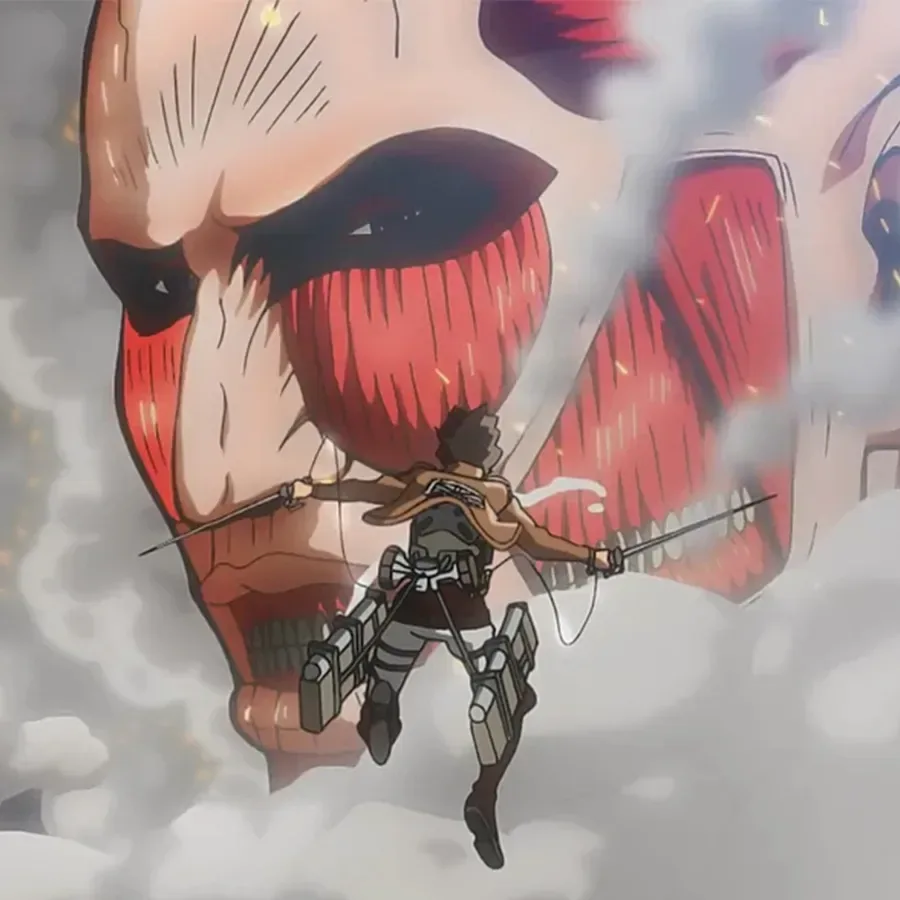
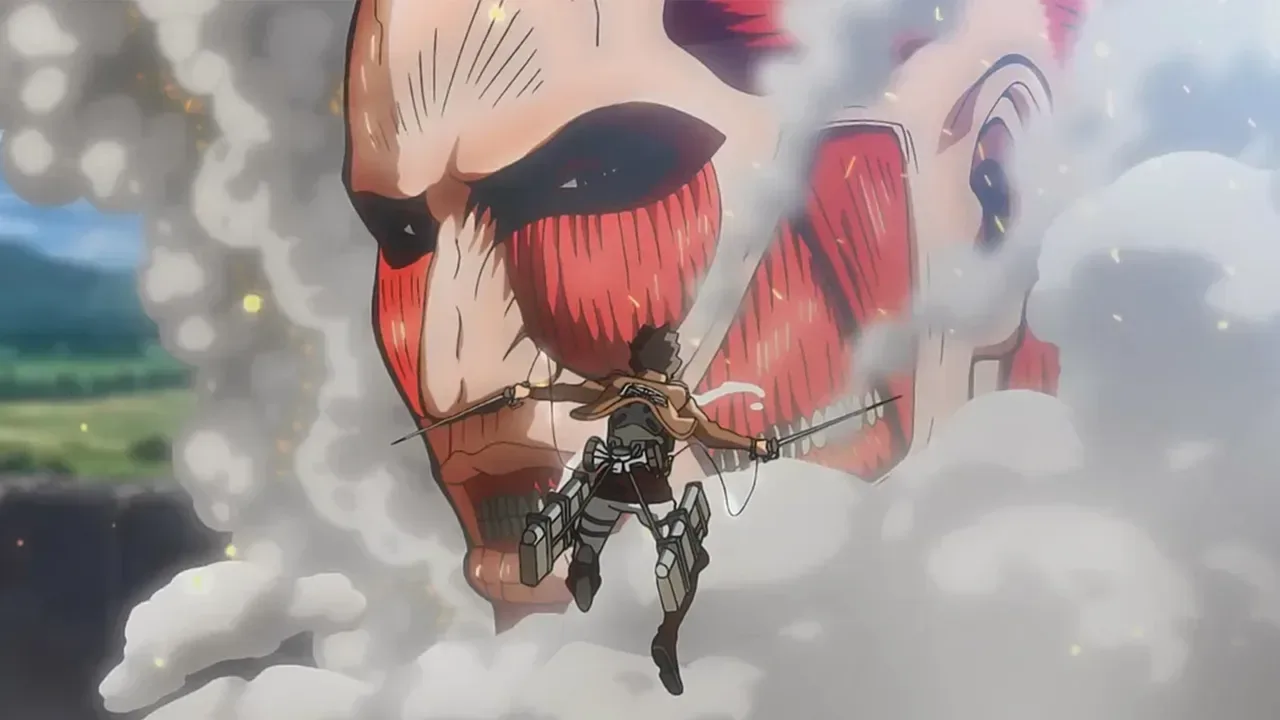
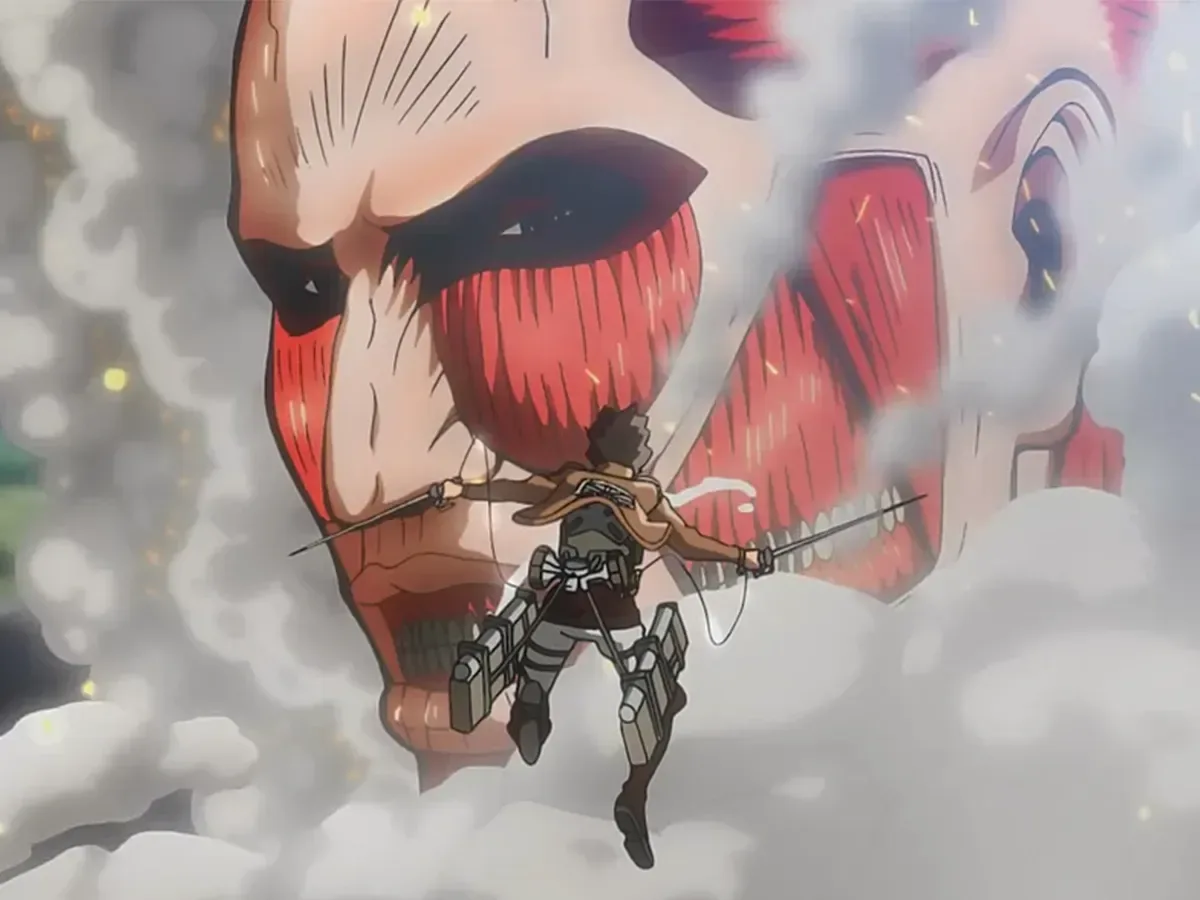
Even so, the appeal is easy to understand. The fall of Shiganshina, including the Colossal Titan’s defining attack on the wall, is one of the anime’s most enduring large-scale scenes. In an effects theater, the steam, chaos, and impact associated with that moment could become something considerably more theatrical than a normal rewatch. For a franchise built around the sensation that danger can arrive from above, behind, or through a supposedly impenetrable barrier, a seat that refuses to stay politely still sounds almost on-brand.
ScreenX brings a different kind of immersion
ScreenX is not the same thing as 4DX. Rather than focusing on moving seats and environmental effects, the format uses three panoramic screens to extend the picture into the viewer’s peripheral vision. The goal is a wider, surrounding field of action.
Related coverage includes Attack on Titan Heads to Japan's 4DX and ScreenX Theaters This Fall.
That distinction matters for Attack on Titan: The Last Attack. The concluding material encompasses Eren’s final transformation and the vast destruction of the Rumbling, events whose horror is tied not just to a single monster or a single city but to the overwhelming scale of what is unfolding. A three-screen presentation is a natural fit for imagery meant to dwarf the people trying to survive it.
There is no specific 2027 date yet for the ScreenX run of The Last Attack, and no broader international ScreenX rollout has been confirmed. Fans outside Japan therefore have a reason to watch for future details, but not a confirmed overseas booking they can make today. The October 23 event is likewise a Japan-only engagement as presently listed.
Attack on Titan Day has more planned than theatrical chaos
The theatrical program is one element of a much larger set of 99 initiatives tied to the franchise and its Nine Titans. Publisher Kodansha is organizing those activities as part of the celebration, giving manga readers and anime viewers several ways to engage with Hajime Isayama’s world beyond premium cinema tickets.
One time-limited promotion makes the first 99 manga chapters available free through the Magapoke app for 99 hours, ending September 13. For newcomers, that is a substantial opening section of the story: enough material to meet the central cast, encounter the mysteries surrounding the Titans, and understand why the property became such a defining anime and manga phenomenon. For returning readers, it is an excuse to revisit a beginning that lands very differently once the full story is known.
Kodansha has also opened an official Attack on Titan YouTube channel intended to host fan-focused material, including limited-time anime streams and special videos. At present, Season 1 episodes are being streamed each Wednesday, though access is limited to viewers in Japan. That regional restriction mirrors the theatrical situation: the franchise activity is substantial, but much of it is presently centered on its home market.
The mix of a free manga campaign, regular anime streaming, special videos, and high-impact theatrical releases makes the anniversary programming feel structured around the whole lifespan of the series. It reaches back to the beginning, returns the finale to cinema, and highlights formats that make the scale of the anime hard to ignore.
The game side of the franchise is also moving toward the Rumbling
There is another reason gaming audiences may want to keep Attack on Titan on their radar. Attack on Titan 3 appeared at Summer Game Fest this year and is scheduled to release in December. Like earlier games based on the series, it will let players create their own character and experience the events of the Rumbling through the adaptation’s game format.
That premise puts the franchise’s most immense conflict into an interactive context, while the theatrical plans put it into a broader visual one. Neither replaces the other. A game can emphasize player-created identity and action within the setting; ScreenX can spread a fixed cinematic image across three screens; 4DX can physically punctuate a scene that viewers already know by heart. Together, they show how adaptable the material remains across formats.
Licensed properties are often asked to work across very different kinds of entertainment, from compact games to enormous theatrical experiences. The broader conversation can get strange fast when established game series bring outside faces into their worlds, as seen in the debate around Fatal Fury: City of the Wolves and its guest characters. Attack on Titan’s current plans take a different route: rather than importing a new spectacle, they are reshaping the series’ own most recognizable moments for new venues.
A return to the beginning—and the end
There is a neat, brutal symmetry to the two films chosen for this event. Guren no Yumiya goes back to the period when Attack on Titan’s immediate question was how humanity could possibly survive the Titans outside the walls. The Last Attack brings audiences to the conclusion, when the scope and moral weight of the conflict have expanded beyond anything those early episodes initially suggested.
That pairing also makes the format choices feel deliberate. The early material offers speed, escapes, towering enemies, and the unforgettable violence of the breached walls. The ending offers apocalyptic scale and the nightmare imagery of the Rumbling. One is ideal material for a seat-rattling pursuit; the other is built to fill every available inch of the audience’s view.
For now, the concrete dates are October 23, 2026, for the Japanese ScreenX, 4DX, and Ultra 4DX screenings of Attack on Titan Part 1: Guren no Yumiya, and sometime in 2027 for the ScreenX showing of Attack on Titan: The Last Attack. The latter has no announced day, and no international expansion has been confirmed for either program. But for fans able to attend in Japan, this is a chance to revisit the story’s opening terror and final catastrophe with considerably more turbulence than the average theater seat can provide.