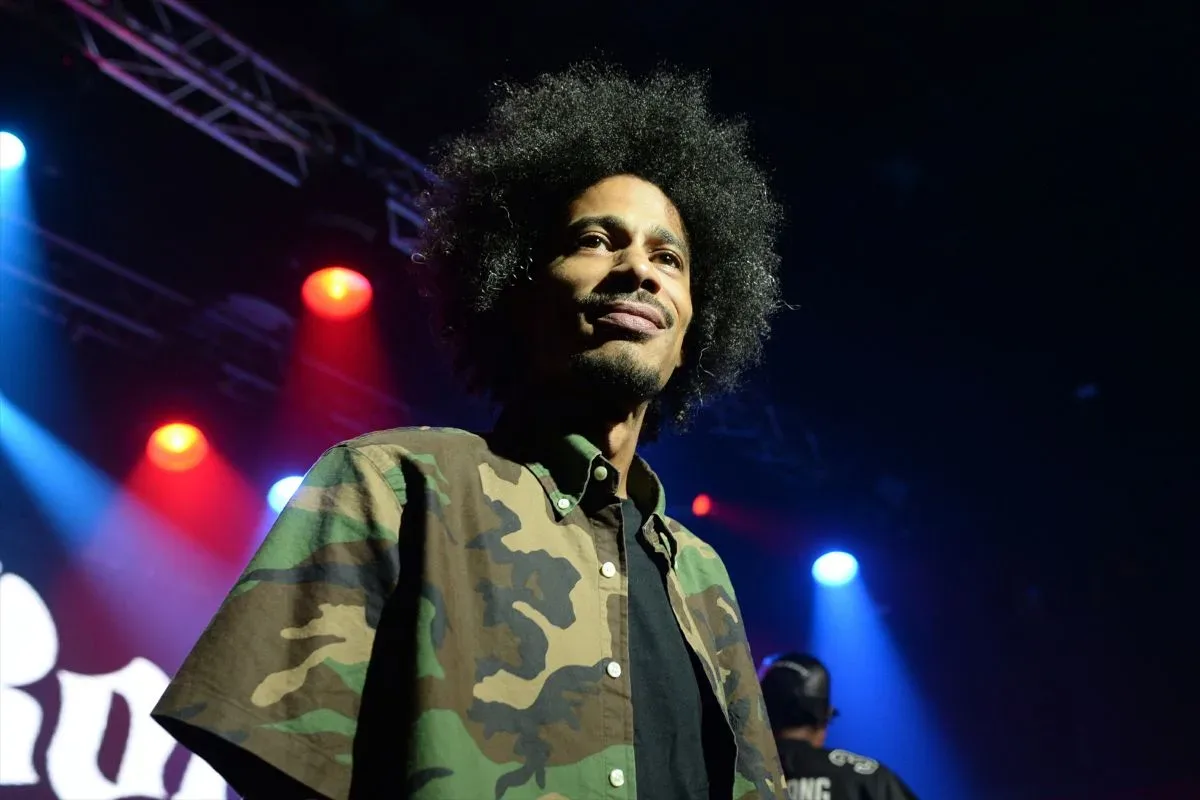
Mark Curry’s public dispute over Sean Combs: The Reckoning has become an uncomfortable counterpoint to the documentary’s awards-season success. The former Bad Boy artist says his contribution to the four-part Netflix series was much larger than a standard on-camera interview, and he alleges that the credit and financial terms he expected never arrived.
At the same time, Curry says the fallout led to a meaningful shift in his own life. In comments posted after the documentary’s release, he described getting a job, developing a steadier everyday routine and remaining free from drinking and smoking for more than six months. It is a complicated personal outcome: Curry remains deeply dissatisfied with the alleged business arrangement, yet credits the circumstances around the release with helping push him toward stability.
An Emmy win, then a renewed complaint
The dispute gained fresh attention after Sean Combs: The Reckoning won an Emmy at the 78th Creative Arts Emmy Awards. The series received the honor for Outstanding Picture Editing for a Nonfiction Program, specifically for the episode “Blink Again.” Charles Divak, Evan Wise, Jack Gravina, Benji Kast, Adam Goldstein, Jonathan Miller and Jeremy Siefer were the credited editors on the winning episode.
The project was also nominated for Outstanding Documentary or Nonfiction Series and Outstanding Directing for a Documentary/Nonfiction Program. 50 Cent was an executive producer alongside director Alexandria Stapleton, Stacy Scripter, David Karabinas, Ariel Brozell and Brad Bernstein.
After celebrating the award online, 50 Cent drew a response from Curry, who argued that awards recognition did not resolve his concerns about authorship, participation and payment. Curry has alleged that he helped organize material and bring participants into the documentary, based in part on relationships and stories he had already developed through his own work.
“It’s crazy how a person can win an award off another man’s story and the man the story is about gets no credit,” Curry wrote.
50 Cent answered with a joking, insulting Cash App remark. That exchange was brief, but Curry expanded on his position in a livestream, saying he believed he was meant to receive a production credit rather than only appear as a former artist from the Bad Boy orbit.
What Curry says he contributed
Curry’s central claim is that he helped put together a substantial portion of the documentary’s interview roster. He said that several people featured in the series were already part of the account he had assembled in his 2009 book, Dancing With the Devil: How Puff Burned the Bad Boys of Hip-Hop.
The 225-page book presented Curry’s account of his Bad Boy years, including his views on contracts, management practices and the treatment of artists. Curry, who appeared with Diddy and Black Rob on “Bad Boy for Life,” has spent years speaking publicly about his experiences at the label. His documentary appearance therefore drew on a history he had long documented, rather than a story that began with the Netflix production.
In the series, Curry discussed Diddy’s ambition as a performer and recalled being present at recording sessions because he would offer direct feedback. His comments also helped frame the documentary’s examination of Bad Boy’s internal dynamics and the struggles Curry says artists faced after helping create value for the company.
Curry now contends that his earlier work was not simply background context. He says it was an important practical route to securing contributors. He has alleged that he was promised a production credit and that the arrangement would preserve his stake if the project was later sold to another company. Those are Curry’s allegations; the supplied information does not establish that a formal credit agreement existed or detail a response from the documentary’s producers to his claims.
He also says he received only $69 in connection with the documentary’s use of “Come With Me,” the 1998 Diddy and Jimmy Page collaboration that Curry helped write. That figure, too, is Curry’s claim, and the available information does not independently explain how any royalty, publishing or licensing payment was calculated.
A harsh comparison to Bad Boy
Curry’s frustration is especially notable because his career has long been tied to criticism of Bad Boy’s business arrangements. He has characterized joining the label as a dream that later became a curse, and his book was an early effort to put his account of that period into a longer form.
Now, Curry says the deal he believes he received around Sean Combs: The Reckoning was worse than the arrangements he experienced while associated with Diddy. It is deliberately provocative language, but it reflects the depth of his disappointment: he believes that he supplied relationships, expertise and narrative groundwork without receiving the formal recognition he expected.
“This right here is worse than any deal I did,” Curry said. “You talk about a deal with Puff? This is a worse deal than the worst deal.”
He has also questioned a 2023 statement from 50 Cent that proceeds from the planned documentary would go toward victims connected with allegations against Diddy. Curry said he had not seen evidence of that outcome. The available information does not document the project’s proceeds, any distributions, or whether that earlier pledge had a defined structure or timetable.
Curry further said that he approached 50 Cent’s team with ideas for other documentary and literary projects, but felt unable to get those concepts moving. His comments paint a picture of someone who saw the documentary as a possible professional opportunity, then felt that the relationship did not develop in the way he anticipated.
The book-sales concern
Another part of Curry’s complaint involves the effect he believes the series had on Dancing With the Devil. Rather than driving viewers toward the book, Curry says the documentary reduced interest because audiences assumed his appearance had already delivered the complete version of his story.
That concern points to a familiar tension surrounding documentaries built from long-running public accounts. A screen project can amplify a contributor’s profile, but it can also compress years of reporting, writing or personal testimony into a version that viewers may treat as definitive. For an author whose work served as a reservoir of names, events and perspectives, that can feel less like exposure and more like replacement.
The broader pop-culture world regularly turns music history, celebrity conflict and personal archives into new commercial narratives. In a separate music-world story, Layzie Bone has also publicly discussed feeling excluded from major career opportunities, underscoring how legacy artists can find themselves contesting who participates in—and benefits from—the next chapter of a group or label’s history.
A personal change Curry did not expect
Despite the anger threaded through Curry’s remarks, his update included a notably different message about his well-being. He said the period after the documentary arrived prompted him to seek work and adopt more structure. Curry wrote that he was waking up each day “like a normal person,” had stopped drinking and smoking, had put weight back on and was able to dream again.
Those are personal statements from Curry, not medical claims or proof of a permanent outcome. Still, he presented the change as a clear break from a more difficult routine. His wording suggests that the release forced a reckoning of a different kind: not only with what he believes happened to his story, but with where he wanted his life to go next.
That does not erase the underlying credit dispute. Curry continues to argue that his work deserved better terms, and the Emmy win has only intensified his sense that others received public recognition from a story he helped build. But his own account also makes room for a quieter result: a disputed documentary experience that, in his view, helped set off a six-month-plus period of sobriety and renewed purpose.
Where the documentary fits in the larger Diddy story
Sean Combs: The Reckoning examined Diddy’s rise, the workings of Bad Boy and accusations concerning his conduct, drawing on figures including Curry whose history with the label goes back decades. Netflix identified Curry as a former Bad Boy artist and author, placing his firsthand perspective at the center of the series’ examination of artist relationships and label culture.
As of September 6, 2026, Diddy was serving a 50-month sentence at FCI Fort Dix following two prostitution-related transportation convictions, with a projected release date of February 5, 2028. Curry’s current criticism, however, is aimed not at relitigating his original Bad Boy experience alone, but at what he says happened after he tried to help document it for a new audience.
The key facts remain contested: Curry alleges an unfulfilled production-credit understanding, insufficient financial recognition and a damaging impact on his book sales. Whatever the eventual response to those claims may be, Curry has made one thing plain—he sees the documentary as both a professional disappointment and the catalyst for a personal reset he does not intend to reverse.