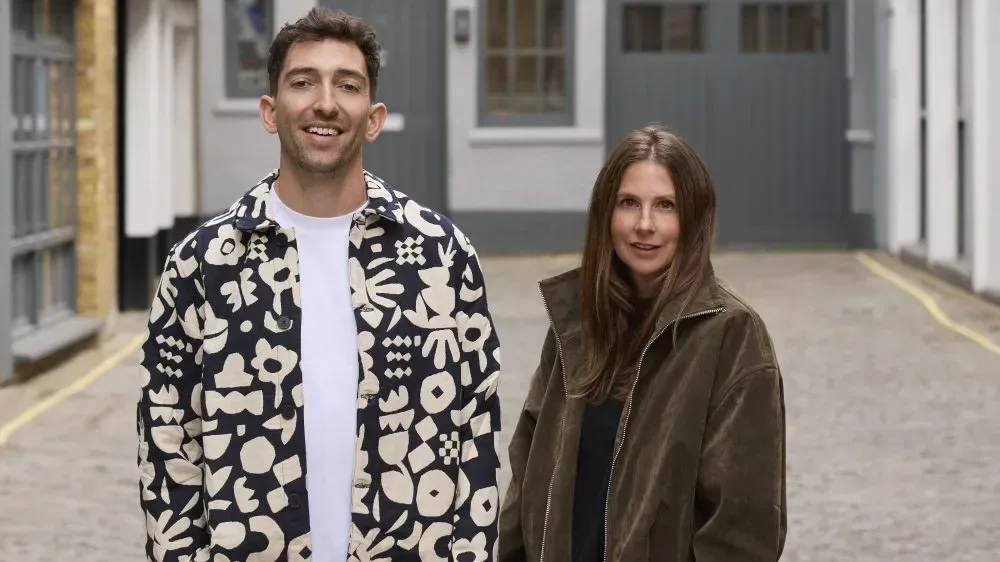
OBB Studios has opened a London office, establishing its first international hub and placing a permanent base in one of the world’s busiest creative and production markets. The new operation, based in Fitzrovia, will work alongside the company’s Los Angeles and New York teams and is intended to support work across the U.K. and Europe.
Daisy Domenghini will lead the new operation as managing director of OBB Bolded London, the company’s branded-content studio. Her remit extends beyond Britain: she will be responsible for building OBB activity across the U.K., Europe, the Middle East and Africa, reporting to OBB Bolded president James Rowe.
For audiences, this is not a new streaming service or a slate announcement with a release calendar attached. It is an infrastructure move. But the work that comes out of such a move can appear in many of the places audiences already spend time: longform documentary programming, social video, creator-led campaigns, livestream shopping programming, sports events, and brand-funded entertainment. OBB’s existing credits and partnerships show why London is being positioned as more than a satellite office.
What OBB London is being built to do
OBB was founded in 2016 by Michael D. Ratner and Scott Ratner. Its work spans branded content, unscripted programming, sports-related production, venture material, advisory work and live events. The London office is designed as a regional hub, not simply a location for individual shoots, with a stated focus on connecting the U.K. and Europe with the company’s established U.S. operations.
One early project set to pass through the London base is Tucci in Great Britain, an unscripted series led by Stanley Tucci for National Geographic TV and Disney+. That detail gives the office a tangible production connection from the outset. It also illustrates the broad territory OBB occupies: a studio that works in commercial partnerships can also be involved with premium, talent-led factual entertainment for major television and streaming brands.
The company says a permanent team in London enables a more continuous operation across markets and time zones. In practical terms, an on-the-ground office can mean earlier contact with regional clients and creators, closer coordination during productions, and a local base for developing ideas intended for international distribution. Those benefits are operational rather than inherently creative, but they can matter when projects rely on fast-moving cultural moments, talent availability, campaign rollouts or live programming.
Branded content, explained
Branded content is entertainment or editorial-style programming funded or commissioned by a brand, rather than a conventional advertisement built around a short sales message. It can include documentaries, social series, events, livestreams, celebrity collaborations and commerce-focused video. The key distinction is that the brand is part of the project’s purpose and financing, even if the work is shaped more like a show, a digital series or a cultural campaign than a traditional commercial.
That does not mean every branded project looks the same. A sports campaign, for example, may focus on athletes, fans or a tournament’s surrounding energy. A beauty or apparel campaign may lean on creators, retail integration or live programming. The format depends on where the audience is and what the advertiser is trying to accomplish. OBB’s recent portfolio spans all of those approaches.
For gaming and pop-culture audiences, the broader relevance is familiar. Publishers, platform holders, hardware companies and entertainment brands increasingly have to communicate across social platforms, livestreams, creator ecosystems and longer-form video, rather than depending on one trailer or one television spot. The expansion of companies built to make that kind of material reflects a media environment where the border between marketing, entertainment and community programming is frequently blurred.
Why Domenghini’s appointment matters
Domenghini arrives from VaynerMedia, where her work included helping develop branded-content business and supporting the company’s European expansion. Her listed partners there included TikTok, Meta, Bose and Indeed. Before that, she spent 11 years at digital consulting firm Engine.
That experience aligns directly with the task facing OBB Bolded London. Building a regional presence requires more than locating production work in a new city. It involves relationships with advertisers, agencies, platforms, talent and production partners, while also understanding how campaigns need to change between markets. A London managing director with experience across digital platforms and European operations is therefore a strategic fit for a studio whose business includes social-first material and brand partnerships.
The appointment also signals that OBB is leading its international push from the branded-content side of the business. That emphasis makes sense based on the company’s recent work, which includes campaigns and commerce-focused programming alongside its documentaries and entertainment productions. It should not be read as a retreat from unscripted storytelling; Tucci in Great Britain is one clear example of the office’s connection to a traditional entertainment production. Rather, the London model appears built around a mix of client work and programming.
A portfolio that moves between entertainment, commerce and sport
OBB’s output provides useful context for the London launch. The company produced the 2023 documentary Mountain Queen: The Summits of Lhakpa Sherpa and Netflix’s 2024 holiday special A Nonsense Christmas with Sabrina Carpenter. Those titles sit at different ends of the unscripted spectrum: one a documentary subject-driven by Lhakpa Sherpa’s mountaineering story, the other a seasonal celebrity entertainment special.
Its brand work is equally varied. OBB has partnered with NBA player Kevin Durant and skincare company CeraVe. More recently, it has worked on Dick’s Sporting Goods’ “Where It All Kicks Off” World Cup campaign, as well as projects for Gap and FILA.
The company has also handled brand and e-commerce material associated with Kim Kardashian, including programming around the energy drink Update and Kimsmas Live, a livestream shopping variety show for Skims. Livestream shopping combines real-time entertainment or demonstrations with ways for viewers to purchase products. It is a format where performance, celebrity presence, retail and audience interaction can operate at once, making it a natural fit for a studio that works across content and commercial partnerships.
One of OBB’s most prominent business collaborations was its work with Hailey Bieber on the launch of Rhode. E.L.F. Beauty acquired the makeup brand in 2025 for $800 million. The acquisition is a business outcome, not proof that any single creative partner caused Rhode’s success. Still, it shows why companies are keenly interested in studios that can help launch consumer brands through cohesive storytelling, celebrity participation and digital-first promotion.
That same logic applies across entertainment more widely. A campaign is no longer necessarily a discrete thing that runs before or between shows. It may itself be an episodic show, a livestream, a creator collaboration or an event. Studios like OBB are organized around that reality, making a regional hub in London potentially significant for global clients that want work shaped for distinct audiences without losing a shared international strategy.
Sports production is another major part of the picture
OBB has also invested in sports and sports-adjacent content through Fanatics Studios, its partnership with digital sports business Fanatics. Fanatics Studios produced this year’s ESPY Awards for ESPN and the Fanatics Flag Football Classic. It has also been selected to produce a documentary about U.S. Olympic gymnast Suni Lee and the official Olympic Film for the Los Angeles Summer Games in 2028.
These projects demonstrate the range of sports storytelling now in play. An awards broadcast, a flag football event, an athlete documentary and an official Olympic film all have different audiences and production needs. Yet each exists where sport overlaps with personality, fandom, advertisers, live programming and cultural attention.
London’s place in OBB’s plan could be particularly useful for this kind of work, given the office’s responsibility across the U.K., Europe, the Middle East and Africa. The supplied information does not identify specific sports projects being developed from the new office, so it would be premature to attach any particular event or rights deal to the move. What is clear is that OBB is entering the region with a business that already has deep ties to sports programming and branded campaigns.
What the move does—and does not—confirm
The launch confirms a permanent London presence, Domenghini’s leadership role, the regional scope of her remit and the company’s plan for close coordination with its U.S. offices. It also identifies Tucci in Great Britain as a production flowing through the new hub.
It does not announce a full slate of London-made programs, a list of additional hires, or a timetable for particular releases. Nor does it establish that every OBB project in Europe, the Middle East or Africa will originate from Fitzrovia. The immediate significance is organizational: OBB is making a durable investment in a market it considers important, with a leader hired to expand both relationships and activity.
For readers following the wider pop-culture business, the announcement fits a larger pattern of entertainment firms building for an always-on media cycle. Traditional production, creators, brands, social platforms, commerce and live events are no longer cleanly separated lanes. OBB’s London base is a bid to manage those lanes from a closer position in the region—and to turn that proximity into new work.
That blended approach is also visible in wider television and brand-event trends, including the way major anniversaries can become programming and partnership opportunities, as seen in NBC’s 100th anniversary special. OBB London enters a business where the production company’s role may encompass not only making a show, but also shaping how it travels through culture, platforms and commercial ecosystems.