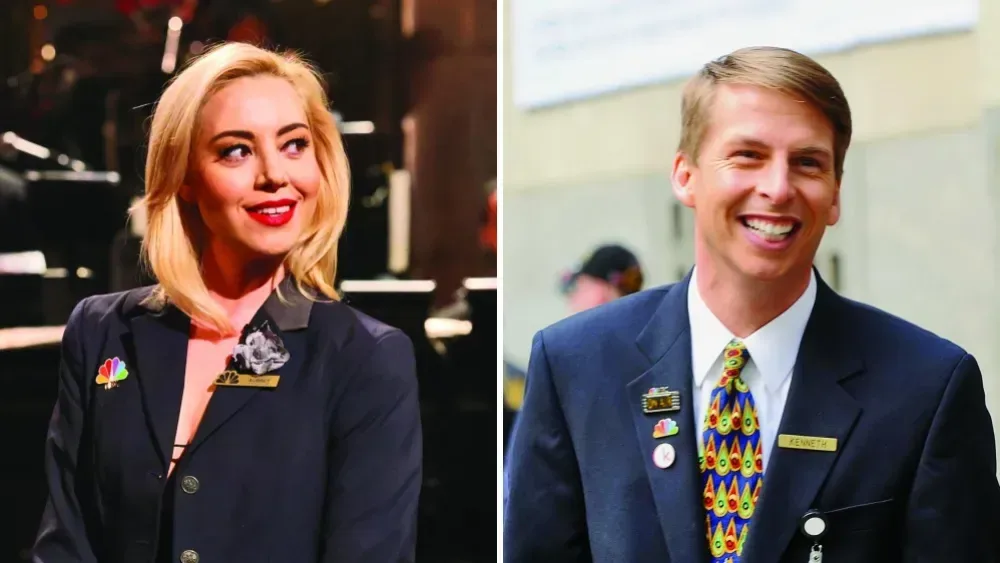
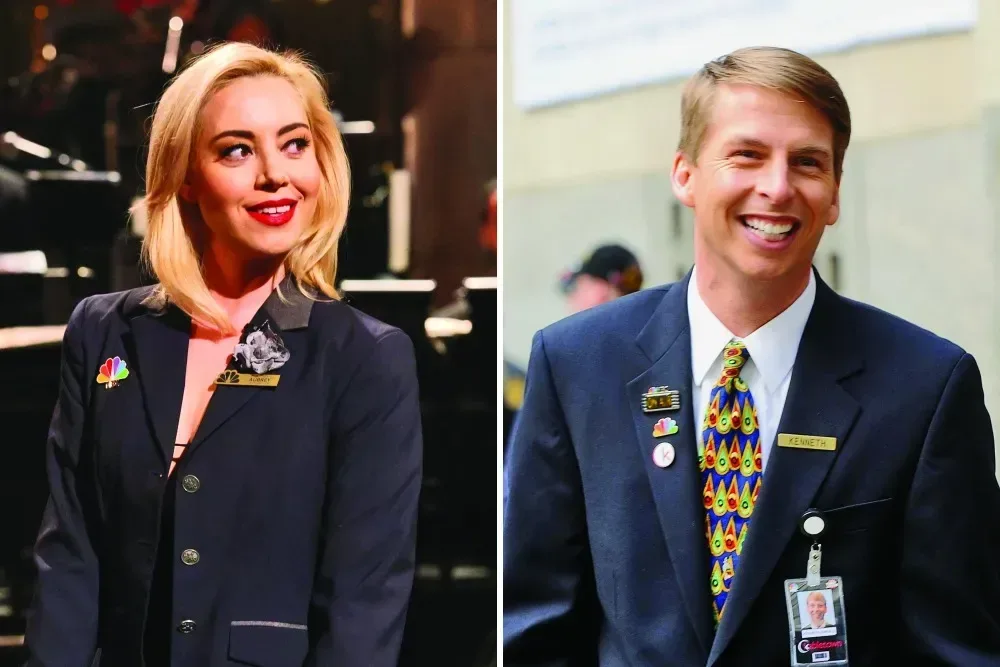
The NBC page uniform may be one of television’s most recognizable entry-level symbols, helped along by 30 Rock and Jack McBrayer’s relentlessly sunny Kenneth the Page. But its real-world counterpart is not simply a nostalgic bit of network iconography. The NBC page program, founded in 1933, has become a structured, highly competitive early-career route through a major media company—one designed to introduce participants to multiple kinds of work before they settle on a direction.
That distinction matters. The public image of a page can lean toward tours, guest assistance and proximity to famous people. Those elements are part of the program’s history. Yet the current model described by its leadership looks more like a paid apprenticeship: a defined period of onboarding, departmental placements, expectations to perform, and an eventual opportunity to pursue jobs within the company. It is a career-development system with a famous uniform rather than a costume with a career attached.
Katie Hockmeyer, now NBC’s executive vice president of late night and the executive overseeing Saturday Night Live, offers an unusually clear example of what that pathway can look like. In 2002, she worked as the desk page at SNL, in an era that included Tina Fey, Maya Rudolph, Jimmy Fallon, Amy Poehler, Fred Armisen and Will Forte. Her work included escorting the weekly guest host through 30 Rockefeller Plaza. One memorable assignment involved taking Mick Jagger from the basement to Lorne Michaels’ office.
It is a story with obvious showbiz sparkle, but the more useful takeaway is professional rather than celebrity-adjacent. Hockmeyer has described being trusted to act professionally from the beginning and discovering that she enjoyed the pace of live comedy. After completing the program, she interviewed for an assistant position with Michaels, got the job, and eventually rose to lead NBC’s late-night department. The page role did not automatically create that outcome; it gave her an early, practical window into the environment where she found a fit and then continued to build a career.
From Rockefeller Plaza service to a defined learning track
The program dates to 1933, when radio was central to NBC’s business and Rockefeller Plaza was new. Its original duties included guest relations, ushering and tour services. Those responsibilities explain why pages became so closely associated with the physical experience of visiting a network building: welcoming guests, helping people navigate the space and representing the organization in public-facing moments.
Over the past decade, however, the role has been broadened into a more deliberate program of workplace exposure. The present structure selects approximately 22 to 25 pages in New York and 12 to 15 in Los Angeles, three times a year. Around 3,000 applicants compete in each cycle, according to Priany Hadiatmodjo, senior director of the NBC page program.
Those numbers provide important context for anyone who imagines the page program as an informal foot in the door. Even using the high end of the stated intake range, fewer than 40 placements are available per cycle across both locations. The applicant pool and limited places make it less like a casual first job and more like a selective pipeline for people who want to begin working in media.
The application process has several stages: every application is reviewed, applicants then complete a video interview, and finalists move to a panel interview. The possibility of applying more than once is also part of the picture. Hadiatmodjo says some successful candidates enter on a second or third attempt. That does not guarantee that persistence produces admission, but it does clarify that one rejection is not necessarily a final judgment on an applicant’s potential.
What a paid apprenticeship means here
An apprenticeship is a practical model of learning through work, usually with defined training and increasing familiarity with real responsibilities. In this case, the term is useful because the NBC page program is not presented as a permanent placement in one role. It has a beginning, a rotation-based middle and a clear point at which participants can pursue their next internal opportunities.
Pages begin with two weeks of immersive onboarding, including meetings and learning sessions with NBCUniversal leadership. They then take departmental assignments lasting 18 weeks at a time. The range of potential placements has expanded over the last decade to encompass all facets of NBCUniversal, and participants can state their interests when assignments are considered.
That rotational design is the program’s central practical advantage. Entertainment work is often discussed as though it were one industry with one set of jobs. In reality, a large company contains numerous functions, teams and working rhythms. A person who knows they want a media career may not yet know whether their interests align most closely with a particular division or kind of daily work. Moving through different departments offers a way to learn that through direct exposure rather than through guesswork alone.
Hadiatmodjo describes the goal as making the program a microcosm of NBCUniversal, with assignments intended to challenge pages and expose them to future-focused areas of the business. That is not the same as promising a specific job at the end. It is a more bounded proposition: participants receive a concentrated year of learning, relationship-building and observation, then use what they have learned to compete for early-career roles.
The one-year milestone is a pivot, not a finish line
After completing a year in the program and three departmental experiences, pages may begin applying for positions inside the company. This structure gives the year a clear purpose. The early phase is not merely about accumulating famous sightings or adding a recognized name to a résumé. It is intended to support what Hadiatmodjo calls self-discovery and experimentation: figuring out what work a participant actually enjoys and where they may contribute.
For early-career applicants, that may be the most valuable part of the model. Career decisions made immediately after college can feel permanent even when they are not. A rotation gives participants multiple workplace reference points. They can compare departments, learn the expectations of professional communication, see how different teams operate and make a more informed choice about where to apply next.
There is a harder side to that opportunity. The program’s leadership makes clear that selection is not the only demanding stage. Once admitted, pages are expected to excel. In practical terms, access creates visibility as well as opportunity. Participants meet people across the building, but they are also being evaluated through everyday conduct: reliability, preparation, communication and the ability to handle responsibilities professionally.
That helps explain why Hockmeyer’s memory of escorting a guest host is more revealing than it may first appear. The point was not simply that a page could be assigned an astonishingly famous person. It was that the assignment required trust and composure. In a live-TV setting especially, small operational duties can carry weight because schedules, guests and production routines are interdependent.
Alumni show the program’s range, not a guaranteed formula
Hockmeyer is far from the only well-known alumna or alumnus. The program’s alumni include former Disney CEO Michael Eisner, broadcaster Ted Koppel, Beef creator Lee Sung Jin, The View co-host Sara Haines, television host Regis Philbin, actor Kate Jackson and actor Aubrey Plaza. Plaza made the program’s visual legacy part of her own SNL appearance when she wore her old NBC page uniform while hosting the show in 2023.
This list demonstrates the breadth of directions a media foundation can support: executive leadership, news, writing, acting and on-camera hosting. It should not be mistaken for proof that the program manufactures star careers. High-profile alumni are examples of where individual careers went, not a standardized outcome. The more defensible conclusion is that the program has repeatedly connected participants with a broad professional network and a wide enough view of the business for very different career paths to emerge.
That same breadth is relevant to people interested in television as a cultural industry, not only as an audience. The work behind entertainment is often invisible until a production goes wrong or a public figure tells an anecdote about it. Programs like this bring participants into the operational world behind the screen: the people who coordinate guests, maintain an institutional welcome, support departments and learn the practical vocabulary of a large media organization.
It also helps explain why the page program has retained such a durable pop-culture afterlife. Its uniform and Rockefeller Center setting make it visually memorable, while its alumni give it a genuine professional mythology. Fiction can turn the page into an instantly legible comic archetype. The real version is more demanding and more interesting: an entry point where a person may be asked to represent a storied institution while learning what part of the business they want to join.
Why the program’s history is still part of its value
Hockmeyer says she could still guide someone around 30 Rock more than two decades after serving as a page, recalling details including the floating studio floor in 8H, where Arturo Toscanini once performed. That institutional memory is not incidental. A program that began with guest-facing work at Rockefeller Plaza still gives participants an unusually direct relationship with a place that carries decades of broadcast history.
For an organization, that kind of orientation can be practical as well as symbolic. Pages learn the environment, meet people across it and understand how a company’s public image intersects with its internal work. For participants, it can make an intimidating industry feel navigable: no longer a distant collection of shows and brands, but a group of departments, people and responsibilities that can be understood one assignment at a time.
The emphasis on developing talent from within also sits within a wider television conversation about who gets the chance to become a creative or executive leader. Recognition programs such as the ATX TV Festival’s forthcoming showrunner award for Elizabeth Meriwether highlight the work seen at the top of television. The page program occupies the opposite end of the career arc: the deliberately structured opportunity to learn how the industry functions before a participant has a title that attracts headlines.
That is ultimately why the NBC page program remains more than a charming relic of radio-era hospitality or a punchline-ready television reference. Its 1933 origin provides the tradition; its current onboarding, rotations and internal-job milestone provide the contemporary substance. For the small number of applicants who earn a place, it offers a demanding year to convert broad ambition into more specific professional knowledge—and, for some, the first chapter of a long career inside television.