Oobah Butler is bringing his particular brand of elaborate social experiment to HBO with Scams for a Better Tomorrow, a new unscripted series produced by A24. The programme is set to examine industries including wine, wellness and royalty through schemes that deliberately exploit the signals people are taught to trust: online reviews, confident branding, invented credentials and the appearance of momentum.
The premise is not simply that Butler will point at dubious marketing from a safe distance. The series is built around him constructing the kind of machinery that can make dubious marketing persuasive in the first place. Its stated approach includes gaming review systems, taking on fabricated personas and creating companies with entirely fictional histories. That makes the show’s central subject broader than any one product category. It is about the systems that can turn a story into perceived legitimacy before a buyer, investor or influencer has much reason to inspect it.
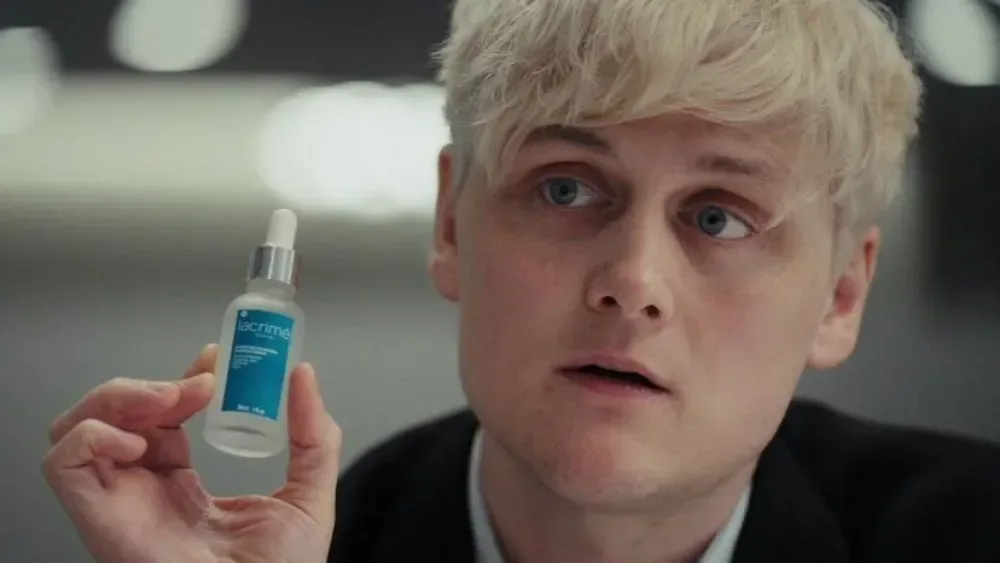
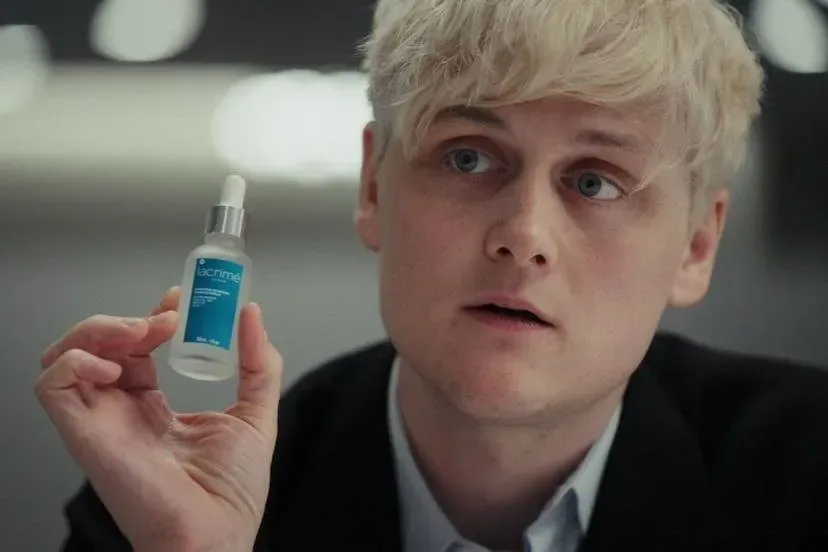
A trailer offers a deliberately extreme illustration. Butler develops a mock skincare company whose serum is said to be made from children’s tears, then tries to bring influencers, consumers and Wall Street investors into its orbit. The absurdity is the point: if a product’s premise is plainly repellent yet its presentation can still attract attention and apparent support, the experiment asks what exactly people are responding to. Is it the product, the promise, the packaging, the crowd around it, or the fear of missing the next big thing?
A show about credibility as performance
Scams for a Better Tomorrow is positioned as an exposé, but its method matters. Rather than treating hype as an abstract cultural flaw, Butler’s setups appear designed to make its operating parts visible. A made-up company needs a backstory. A persona needs signals of authority. A review ranking needs enough activity to look meaningful. An audience needs a reason to believe that somebody else has already decided the thing is important.
That is why online reviews are a particularly useful target. A review platform is supposed to reduce uncertainty: a person cannot try every restaurant, product or service, so ratings and comments stand in for direct experience. But a ranking can also become a recommendation engine in its own right. Once a business appears highly rated, the rating may draw attention; that attention can then reinforce the appearance that the business deserves it. The rating is no longer just a record of popularity. It becomes part of the reason for popularity.
Butler has previous experience demonstrating that loop. He is known for creating a fake restaurant that rose to No. 1 among London dining establishments on TripAdvisor. The stunt is relevant here not merely because it was viral, but because it identified a basic weakness in reputation systems: people often use external signs of trust to judge something they cannot personally verify. A polished listing and an impressive position can carry more weight than a hard-to-test claim.
That same dynamic can travel across industries, even where the stakes differ. A restaurant recommendation may shape one meal. Wellness claims can affect spending habits and personal decisions. A brand narrative pitched to investors can carry financial implications. The supplied material does not specify the individual schemes the series will ultimately pursue, but its range of targets suggests that the show intends to look at how similar persuasion tactics change shape when the audience changes.
The skincare stunt and the logic of “social proof”
The trailer’s fake serum is an intentionally grotesque proposition, yet its attempt to win over influencers, customers and investors speaks to a familiar online-marketplace sequence. First comes a striking idea. Then comes visual identity and a concise story. Next comes visibility, often through people whose attention signals that an item is worth taking seriously. Finally, the accumulated attention itself can be presented as evidence of demand.
Related coverage includes Oobah Butler’s HBO Series ‘Scams for a Better Tomorrow’ Takes Aim at Hype Culture.
This is commonly described as social proof: the tendency to treat other people’s interest, approval or participation as a shortcut for judging quality. Social proof is not inherently deceptive. Recommendations can be useful, and a good product can earn genuine enthusiasm. The problem Butler’s format is suited to exposing is the gap between the look of social proof and the substance behind it. A crowded launch, a flattering review, a slick origin story or a prominent supporter can all be meaningful evidence—or merely a prop in a larger performance.
The phrase hype culture is also useful here, though it can be vague. In practical terms, hype culture is a marketplace of attention in which urgency and visibility can outrun verification. The commodity is not only the product; it is also the sensation that the product is already becoming inevitable. People may be invited to act quickly because others appear to be acting quickly. The trailer’s investor angle points to how this can reach beyond ordinary consumer marketing.
Butler’s apparent interest is not in claiming that every popular thing is fake. It is in showing why popularity alone is an unreliable test. A well-produced stunt can separate visibility from merit, at least temporarily, and force viewers to notice the cues they might otherwise accept automatically.
Why personas and invented histories are potent tools
The series logline also points to assumed personas and bogus company histories. These are especially revealing because they address the human side of trust. People often do not only evaluate a product’s ingredients, function or price. They evaluate who seems to be behind it. Is the founder impressive? Does the brand have a coherent origin? Does the spokesperson sound as if they belong in the room?
A fabricated persona can answer those questions with confidence, which is often enough to buy time and access. An invented corporate backstory can do similar work on a larger scale, supplying a brand with apparent roots and a reason for its existence. Neither tactic needs to withstand deep scrutiny if the audience is encouraged to move quickly, follow a recommendation or assume someone else has already performed the scrutiny.
That makes the series’ use of hoaxes a potentially useful form of media literacy, provided viewers keep the distinction clear. The fake setups are presented as tools for exposing bad incentives and weak verification, not as a consumer playbook. The practical lesson is not that every unfamiliar brand is fraudulent. It is that polished confidence is not verification, a popular ranking is not a guarantee, and an influencer’s involvement does not independently establish a product’s quality or a company’s claims.
Questions worth asking when the hype arrives
- What is being offered as proof? A glossy campaign, a title, an endorsement and a rating are not all the same kind of evidence.
- Who benefits if attention grows quickly? This is particularly important when a product is being positioned as scarce, urgent or culturally unavoidable.
- Can the origin story be checked? A compelling narrative may explain a brand, but it does not automatically validate it.
- Is the enthusiasm independent? Visibility can result from genuine interest, promotion, paid partnerships or coordination; the appearance of a crowd does not explain its cause.
- What remains after the branding is stripped away? The underlying claim should still make sense without the launch language around it.
Those questions apply well beyond Butler’s targets. Online reputation has become part of how audiences sort restaurants, retailers, personalities and entertainment. Even communities built around older games and physical media have to think about how digital visibility shapes demand, condition claims and historical narratives. For a broader look at the preservation and modern-play side of that ecosystem, see Why Retro Gaming Is Rising Again: Collecting, Preservation and Modern Play.
Butler’s background fits the format
Butler is described as a gonzo journalist and professional hoax artist, two labels that help explain why this project takes the shape it does. Gonzo-style work tends to place the creator inside the situation rather than keeping them invisible outside it. In Butler’s case, the act of building the ruse is part of the reporting device. The setup creates a live test of whether a system can distinguish substance from its most convincing imitation.
Before this HBO project, Butler worked for Vice and hosted YouTube videos that accumulated tens of millions of views. He later became a co-host of Catfish UK in 2021. In 2026, he released the Channel 4 film How To Trick Your Way Onto The Property Ladder. Together, those credits indicate a body of work concerned with identity, trust, access and the bizarre incentives that can emerge when institutions reward appearances.
That history also explains the balance the new series will need to strike. A stunt built for television must be entertaining enough to sustain attention, but its value depends on what it reveals once the gag lands. The most substantial version of this format is not “can a fake thing go viral?”—the answer is already suggested by Butler’s earlier work. The more interesting question is which people, gatekeepers and systems make it possible, what incentives they are following, and whether they notice the warning signs at all.
Creative team and HBO’s unscripted slate
Butler created Scams for a Better Tomorrow and executive produces alongside Dave Kneebone and Janel Kranking for Abso Lutely Productions; Eli Bush, Ronald Bronstein and Josh Safdie for Central; A24; Daniel Lucchesi; Tristan Cross; Adam Schwartz; Richie Doyle; and Conor Hannon. Lucchesi directs the series.
The project is A24’s fourth unscripted series with HBO. The earlier group includes Neighbors, which has been renewed for a second season, as well as Born to Bowl and Ben Stiller’s series about the history, culture and legacy of the New York Knicks. In that context, Butler’s programme adds a more interventionist strain of nonfiction: instead of primarily observing a subculture or revisiting a history, it builds scenarios intended to test present-day systems of attention and belief.
The supplied details do not give a release date, episode count or complete list of the industries the series will cover. They do make the core promise unusually clear. Scams for a Better Tomorrow will use fake companies, false backstories and engineered credibility to show how easily real institutions can be drawn toward a persuasive narrative. If the series succeeds, its most uncomfortable finding may be that the mechanisms involved are not hidden at all. They are familiar tools of the modern attention economy, simply pushed far enough to become impossible to ignore.