The 2027 Grammy race has reached the part where certainty becomes a dangerous hobby. First-round ballots are now with Recording Academy members, voting runs through October 22, nominations are due November 16, and the ceremony is scheduled for February 7, 2027. That gives music fans plenty of time to build elaborate nomination grids, abandon them, and then pretend the surprises were obvious all along.
For Record of the Year, the immediate puzzle is less about identifying good records than identifying the eight that can survive a vote spanning thousands of submissions and a large, varied voting body. A strong song can have commercial scale, devoted fans, critical admiration, an instantly identifiable production, or a long-running industry reputation behind it. It cannot necessarily have all of those things. That is why the current field looks unusually deep even before considering the records on the edge of the conversation.
The clearest group of prospective contenders includes Olivia Dean’s “Man I Need,” Ariana Grande’s “Hate That I Made You Love Me,” Noah Kahan’s “The Great Divide,” Ella Langley’s “Choosin’ Texas,” Bruno Mars’ “I Just Might,” Raye’s “Where Is My Husband!,” Olivia Rodrigo’s “The Cure,” Rosalía’s “Berghain” featuring Björk and Yves Tumor, Sienna Spiro’s “Die on This Hill,” and Taylor Swift’s “The Fate of Ophelia.” It is a lineup that crosses pop, country, singer-songwriter music and more adventurous work, with both major established stars and artists whose Grammy narratives are still being written.
Record of the Year is not Song of the Year
The names can be misleadingly similar, but the categories ask voters to consider different things. Record of the Year recognizes the recorded performance and production: the performer, producers, engineers and others involved in turning a song into the finished recording. Song of the Year centers on songwriting, with the award going to the writers. Put less formally, Record of the Year is about the whole sonic object; Song of the Year is about the song as written.
That distinction explains why some campaigns divide their strongest options. Swift has put “The Fate of Ophelia” in the Record of the Year conversation while directing “I Knew It, I Knew You,” her song from a Pixar film, toward Song of the Year. Bruno Mars similarly has “I Just Might” positioned for Record and “Risk It All” for Song. Brandi Carlile’s rockier “Human” is a Record possibility, while the ballad “Returning to Myself” is a leading Song of the Year candidate.
This is not merely paperwork. It is a way of matching a song to what voters may value most about it. A recording with especially prominent rhythmic or production choices may have a clearer Record case, while a lyric-forward ballad may be more naturally framed as a Song contender. Of course, the two categories overlap heavily: Dean, Kahan, Langley, Raye, Rodrigo and Spiro are all in the leading discussion for both. But overlap is not duplication by default, and a nomination in one field does not guarantee a nomination in the other.
Ella Langley has the biggest chart argument
Among the candidates, Langley’s “Choosin’ Texas” brings the most straightforward statistical case. The single has passed 24 weeks at No. 1 on the Billboard Hot 100, an all-time record. Whatever voters ultimately decide about artistic merit, impact or personal taste, that scale places the song at the center of the general-field race.
It also gives country music a rare opportunity in categories where it has struggled to land nominations in recent years. The genre has not had a Record of the Year or Song of the Year winner since Lady Antebellum’s “Need You Now” in 2011. A Langley win would therefore represent more than a successful single converting chart dominance into awards recognition; it would also break a long drought for country in the Grammys’ top song prizes.
Related coverage includes 2027 Grammy Record of the Year Predictions: Taylor Swift, Ella Langley and Olivia Rodrigo Lead a Crowded Field.
There is still a meaningful difference between being unavoidable and winning. Awards voters are not chart formulas, and a long No. 1 run does not settle an all-genre category. But “Choosin’ Texas” has the kind of public footprint that makes excluding it from the final eight difficult to imagine. It is the benchmark against which other contenders’ cultural reach will be measured.
Swift, Rodrigo and Dean bring different kinds of momentum
Swift’s position is unusually interesting because her Grammy history contains a conspicuous gap. She has won Album of the Year, but has never won either Record of the Year or Song of the Year. That does not create an entitlement to either honor—nor should it—but it can shape how voters view an artist who has remained central to pop music for years.
“The Fate of Ophelia” has another advantage beyond Swift’s long-running stature: it became a major social-media phenomenon, with fans recreating dance moves from its video on Instagram. That kind of participatory spread is not the same as a Grammy criterion, but it can make a record feel like part of a shared cultural year rather than simply a highly streamed release. For a category that honors a recording, memorability and identity matter. A track that people can immediately picture, move to, and associate with a particular moment may linger in voters’ minds.
Rodrigo is instead placing a brooding ballad, “The Cure,” at the center of both her Record and Song bids, even with the more upbeat “Drop Dead” and “Stupid Song” also available. That is a focused bet on one song’s emotional weight. It is also a potentially riskier path in a category whose winners are often remembered for broad, immediate impact as much as intensity. Yet the consistency of the campaign clarifies the case: Rodrigo’s team is asking voters to see “The Cure” as her defining work of the eligibility period.
Dean, who won Best New Artist last year, has made the same kind of concentration play with “Man I Need” rather than splitting attention with “So Easy (to Fall in Love).” A previous Best New Artist win can offer helpful context, but it does not automatically propel an artist into the general-field winner’s circle. It does mean Dean enters with recent goodwill and a clear signature record instead of an internal competition between multiple possible submissions.
Raye and Spiro could make the nomination list feel different
Raye’s “Where Is My Husband!” and Sienna Spiro’s “Die on This Hill” represent two of the more compelling newer-artist possibilities. Both are also part of the wider Best New Artist discussion, which makes their potential general-field presence especially notable. A Record of the Year nomination for either would signal that voters were not simply acknowledging an emerging act’s promise; they were treating a specific recording as one of the year’s best.
Spiro’s appeal may be strongest with listeners drawn to a more neo-traditional sensibility, while Raye appears positioned as an artist with substantial goodwill inside the Grammy ecosystem. Those are interpretations, not vote counts, and they underline the uncertainty at this stage. The difference between a nomination and a near miss can come down to whether a record becomes the consensus favorite of a large faction or merely a widely appreciated selection that finishes just outside the top eight.
That is the awkward mathematics of a packed field. With only eight nomination slots, several records can be both excellent and highly regarded while still missing out. Ariana Grande and Rosalía illustrate the point. Grande’s “Hate That I Made You Love Me” is in the front-running group despite her uneven history in Grammy general categories. Rosalía’s “Berghain” is arguably the field’s least conventional recording: it begins with neo-classical symphonic force, moves through German and English vocals, features Björk, and ends in a markedly explicit stretch from Yves Tumor. Its distinctiveness is an asset, but voters may connect more strongly with Rosalía in Album of the Year than in Record.
The challengers waiting beyond the front line
It would be premature to treat the leading 10 as a locked list. Plausible alternatives include Carlile’s “Human,” Zara Larsson’s live version of “Midnight Sun,” Madonna and Sabrina Carpenter’s “Bring Your Love,” Kacey Musgraves’ “Dry Spell,” Sombr’s “Homewrecker,” Malcolm Todd’s live “Earrings,” Slayyyter’s “Brand New Chanel$,” Harry Styles’ “Aperture,” Tame Impala and Jennie’s “Dracula,” and Don Toliver’s “e85.”
The larger dark-horse pool is broader still, with songs from Phoebe Bridgers, Lady Gaga and Doechii, Kehlani, Karol G, Paul McCartney, Charli xcx, Cardi B, Ravyn Lenae, Katseye, Megan Moroney, Tyla, Beyoncé, Shakira and Burna Boy, Justin Bieber, Tinashe, Gracie Abrams and Doechii also mentioned in the wider discussion. The result is a field with very little room for complacency.
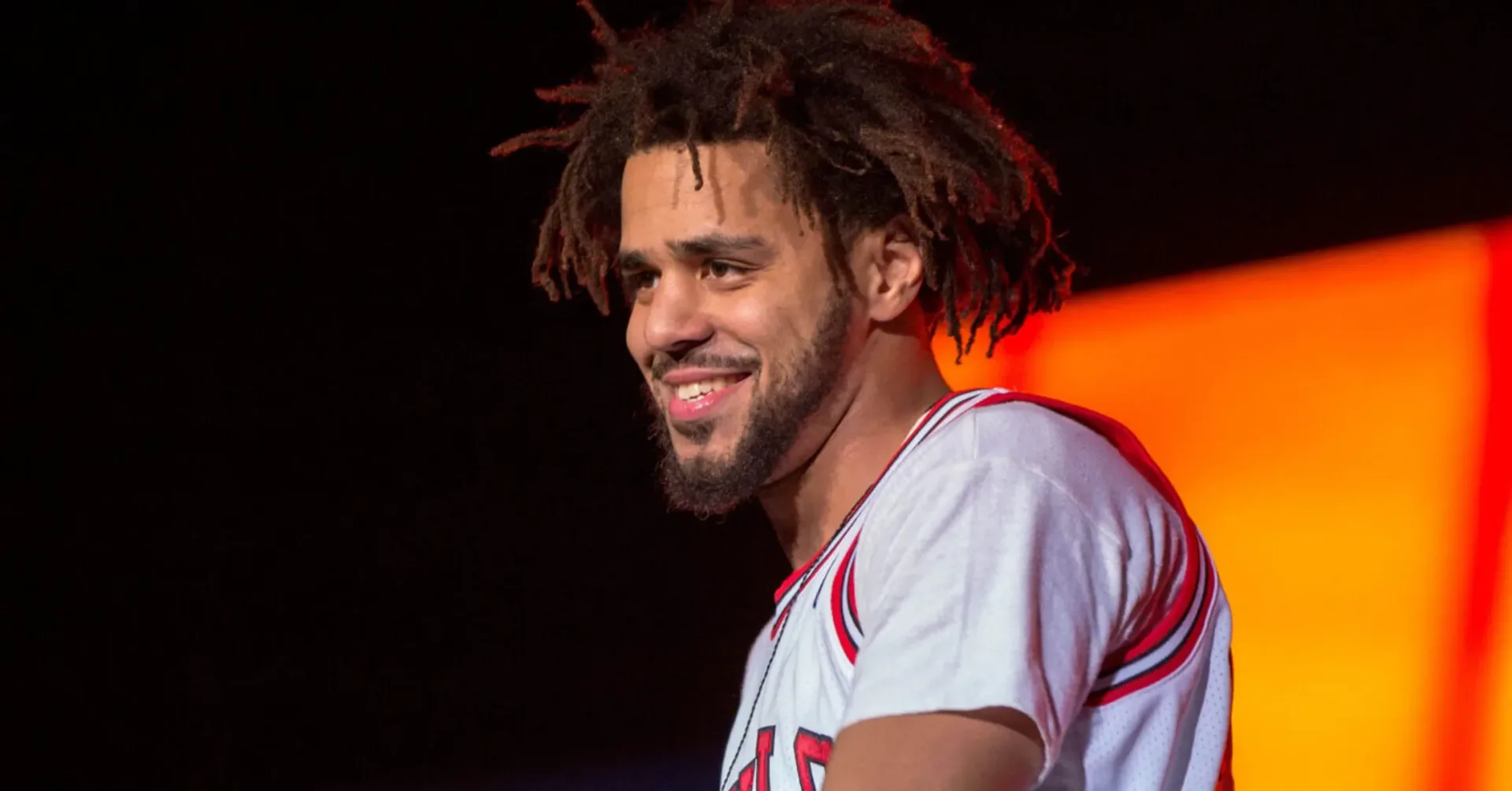
Harry Styles is a useful example of the Record-versus-Song distinction at work. “Aperture” remains viable in major categories, but its atmosphere and production may make it better suited to Record of the Year than Song of the Year. Don Toliver, meanwhile, looks like a key prospect for hip-hop representation in the all-genre fields. Drake and J. Cole did not submit, narrowing the pool of obvious rap contenders; for more on the latter’s absence, see the report on J. Cole’s reported Grammy ballot absence.
Song of the Year has its own notable absences
The leading Song of the Year set includes Carlile’s “Returning to Myself,” Dean’s “Man I Need,” Kahan’s “The Great Divide,” Langley’s “Choosin’ Texas,” Mars’ “Risk It All,” Raye’s “Where Is My Husband!,” Rodrigo’s “The Cure,” Spiro’s “Die on This Hill,” Bruce Springsteen’s “Streets of Minneapolis,” and Swift’s “I Knew It, I Knew You.” Springsteen’s protest song is precisely the kind of lyric-centered, high-profile work that can thrive in Song even without the commercial footprint of a Hot 100 smash.
Several high-profile acts and songs are not in the running because they were not submitted. BTS did not submit in the major categories. PinkPantheress and Zara Larsson’s “Stateside” was also not submitted despite looking, on paper, like a possible Record of the Year candidate. Adéla likewise did not enter material, even though “Ain’t in L.A.” fell inside the eligibility period. Non-submission is not a rejection by voters; it means the music is simply outside this year’s ballot conversation.
For now, the sensible prediction is not a winner but a turbulent nomination morning. Langley’s chart feat makes “Choosin’ Texas” exceptionally hard to dismiss. Swift’s “The Fate of Ophelia,” Rodrigo’s “The Cure,” Dean’s “Man I Need,” and Raye’s “Where Is My Husband!” all bring sharply different cases. And because this is the Grammys, at least one selection that currently seems inevitable—or invisible—may force every forecast back to the drawing board on November 16.