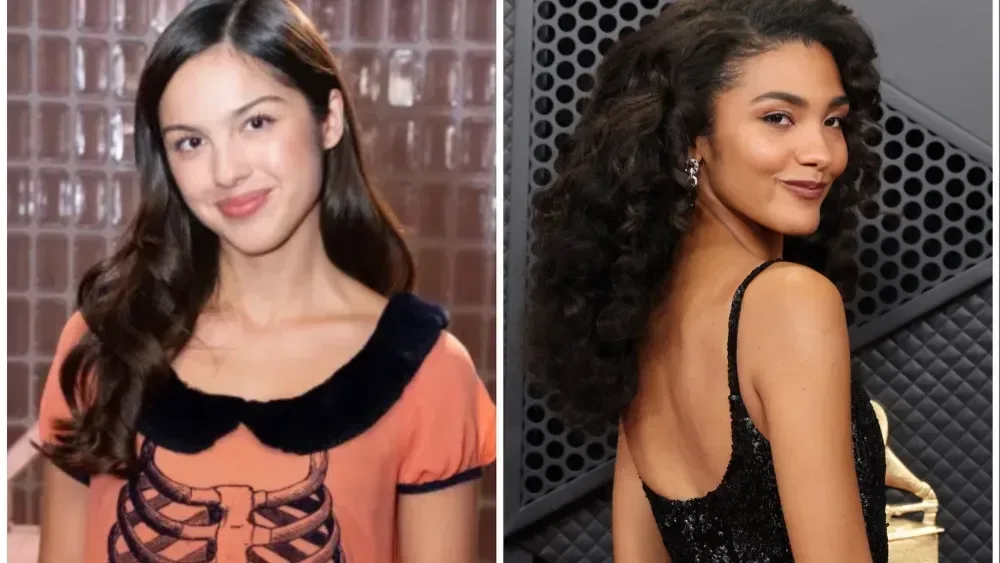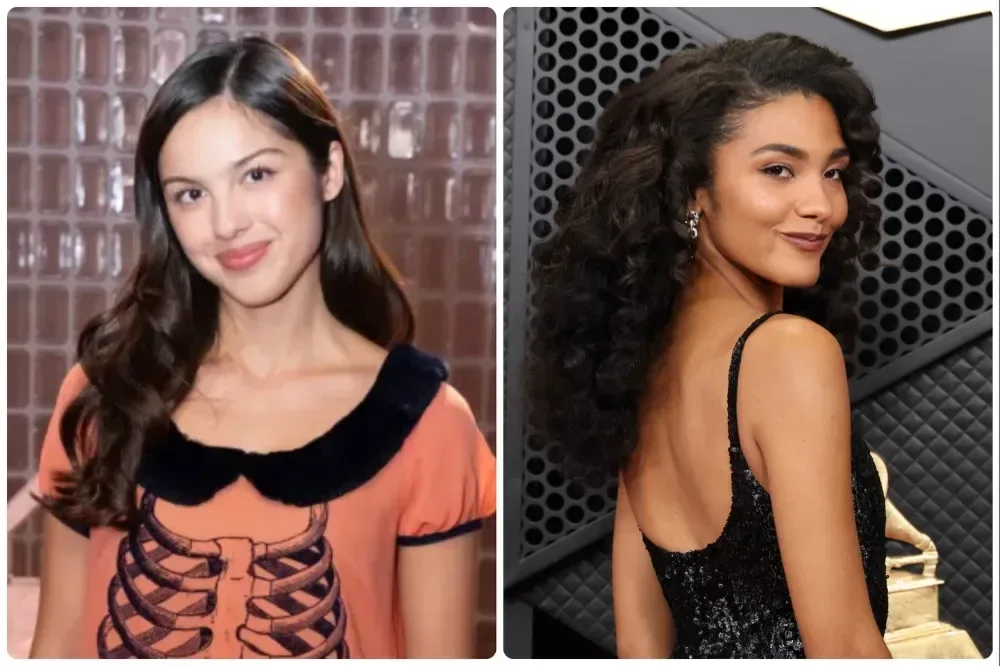
The 2027 Grammy Awards are still months away, but the Album of the Year conversation already has a strikingly crowded center. Olivia Rodrigo’s You Seem Pretty Sad for a Girl So in Love and Olivia Dean’s The Art of Loving have emerged as the early favorites in a race that also includes Taylor Swift, Bruno Mars, Brandi Carlile, Raye, Rosalía, Ella Langley and a deep bench of plausible alternatives.
That is important because Album of the Year has only eight nomination slots. A forecast can comfortably identify 15 or 20 acclaimed, commercially visible or historically Grammy-friendly projects; the actual ballot cannot. The question is not simply whether an album is liked. It is whether it can command enough broad support from voters to survive a crowded field where genre loyalty, career narrative, familiarity and recent momentum can all matter.
Recording Academy voting is set to open October 12 and close 10 days later, with nominations scheduled for November 16. The ceremony is slated for February 7. Until nominations arrive, every ranking is necessarily provisional: a read on the available signals, not a result.
What Album of the Year means—and why the distinction matters
Album of the Year is one of the Grammys’ general-field prizes, often called part of the “Big Four” alongside Record of the Year, Song of the Year and Best New Artist. It honors an album-length body of work rather than a single recording or a song’s composition.
Those labels can be confusing. Record of the Year recognizes a recorded performance and production around a particular track. Song of the Year centers on songwriting. Album of the Year, meanwhile, asks voters to assess the overall project. That makes a big hit helpful but not automatically decisive. An album can be an Album of the Year contender without owning the season’s biggest single, while a dominant song can fail to lift its parent album into this category.
There is also a practical difference between being a leading contender and being a likely nominee. In an eight-album lineup, several projects with strong credentials will be omitted. A contender needs not only passionate supporters but enough recognition outside its immediate lane. This is why a mainstream pop album, a critically embraced album and a genre breakout can all look formidable while competing for the same limited space.
The two Olivias have the clearest early narratives
Rodrigo and Dean arrive with distinct but equally potent cases. Rodrigo’s You Seem Pretty Sad for a Girl So in Love is viewed as her most acclaimed album to date, after her first two solo albums both received Album of the Year nominations. That history does not create an automatic third nomination, but it establishes something valuable in a competitive voting process: Academy members have already shown that they take her albums seriously as full projects.
Her potential story is one of continued ascent. A third album perceived as an artistic step forward can be especially compelling because it combines an established relationship with voters and a sense that the artist has not stood still. The case is not merely that Rodrigo is overdue; it is that a nomination would continue an existing pattern while acknowledging an evolution.
Dean’s path is different. The Art of Loving could represent a rapid elevation from Best New Artist winner to general-field album leader. Her sound’s cross-generational accessibility is a meaningful part of the early case: it suggests an album with appeal beyond a single scene or demographic. If Rodrigo’s argument is built around a proven Grammy track record and apparent growth, Dean’s is closer to a coronation narrative—a newer artist whose momentum could become much larger very quickly.
Neither route guarantees victory. In fact, they may create a difficult choice for voters looking to reward female pop excellence while responding to very different artistic profiles. Yet an Olivia-versus-Olivia framing should not obscure the rest of the field. It is a useful shorthand for the race’s present energy, not a substitute for the ballot.
Swift and Mars bring history, scale and complicated incentives
Taylor Swift’s The Life of a Showgirl is widely expected to be in the nomination conversation. Its scale alone makes it hard to ignore, and Swift already holds the record with four Album of the Year wins. Her prior success, though, cuts in two directions.
On one hand, an artist who has repeatedly prevailed in this category has a demonstrated connection with voters. On the other, voters may decide that a fifth win—or a second consecutive win—would be excessive when several other credible candidates are waiting for their own breakthrough. That is not a rule and should not be treated as one. It is simply the sort of narrative tension that follows a record-setting run.
Swift’s campaign may also have other general-field priorities. She has not won Record of the Year or Song of the Year, giving those categories a separate emotional and historical pull. An artist can be a serious contender across all three prizes without winning all three; Grammy voters often distribute recognition across an unusually strong field.
Bruno Mars brings a similarly unusual résumé. He is one of only two artists in the present contender group with two Album of the Year wins, alongside Swift. The Romantic is described as highly retro, and its support may not be as unanimous as that behind 24K Magic. Still, Mars has the combination of name recognition, an established Grammy relationship and the kind of broad pop profile that tends to matter at nomination time. A nomination looks far easier to imagine than any firm call about a win.
Strong veterans, breakthrough acts and genre questions
Brandi Carlile is another artist whose previous Album of the Year history makes her difficult to dismiss. Like Rodrigo and Swift, Carlile has been nominated for both of her past two solo albums. Returning to Myself therefore enters the conversation with an established reservoir of Academy goodwill. Past nominations are evidence of voter familiarity, not a lifetime appointment, but they can make the difference in a field full of albums fighting to be heard.
Ella Langley’s Dandelion illustrates a separate question: how far can a country breakthrough travel in the general field? Langley’s momentum is tied not only to “Choosin’ Texas,” but also to “Be Her” and the reception for the album itself. Her chances may depend on whether country-oriented Academy voters consolidate behind the project and whether listeners outside that world view it as an essential album rather than a genre-specific success.
Country has often faced an uphill battle in the top Grammys categories, making a Langley nomination meaningful even before the awards are handed out. Sienna Spiro’s Visitor faces a more classic new-artist challenge: whether a breakout can accumulate enough all-around support to compete with major names. Either Langley or Spiro could conceivably contend in Best New Artist and the song categories, but a sweep across every top field would require a rare degree of consensus.
Raye’s This Music May Contain Hope and Rosalía’s Lux are among the most formidable critical-appeal candidates. Their possible obstacle is not a shortage of enthusiasm but the arithmetic of overlap. When voters have multiple ambitious, widely admired albums to choose from, support for one aesthetically minded project can sometimes compete with support for another. That is not a literal vote split that can be observed from the outside; it is an analytical risk in any nomination field with several projects likely to appeal to similar voters.
Phoebe Bridgers’ Lost Weekend belongs in that same discussion. Her earlier Punisher earned an Album of the Year nomination, and her audience has grown substantially since. Lily Allen’s West End Girl, meanwhile, has been singled out as a major confessional work with a strong but uncertain route to a first nomination in the category. Both show why acclaim alone is not an easy forecasting tool: the category rewards broad agreement, and the final eight must represent more than one type of listening community.
The bubble is crowded, not empty
Several substantial names sit just outside the most frequently cited front-runners. Ariana Grande’s Petal, Madonna’s Confessions II, Kacey Musgraves’ Middle of Nowhere, Harry Styles’ Kiss All the Time. Disco, Occasionally, Paul McCartney’s The Boys of Dungeon Lane, Zara Larsson’s Midnight Sun, Tame Impala’s Deadbeat and Don Toliver’s Octane each have a conceivable path.
Those paths are not identical. Madonna’s album reportedly had an intense initial burst but lost chart momentum and did not produce a major hit, while the larger question is whether a perceived artistic comeback can overcome the absence of a recent Album of the Year nomination; her last one in the category came in 1999. Musgraves previously won for Golden Hour in 2019, but a well-received return toward country arrives in a packed year.
Styles has the advantage of having won Album of the Year for Harry’s House, yet “Aperture” has not matched the impact of “As It Was.” Much of the current attention around him has centered on live global residencies, a reminder that live momentum and album-specific momentum are not always the same thing. McCartney’s album has been strongly received, but the crowded contemporary field makes a nomination less certain than a legacy-based reading might suggest.
On the hip-hop side, Don Toliver may be the clearest Album of the Year possibility in a year not overflowing with obvious genre frontrunners. His awards positioning has already raised questions about how the Grammys define a “new” artist; his Best New Artist submission puts that eligibility debate in sharper focus. For Album of the Year, though, the task is less about newness than whether Octane can command enough general-field attention.
Where the men stand in an unusually female-led race
The early forecast is notably dominated by women, with Noah Kahan, Mars, Styles, McCartney and Don Toliver among the major male possibilities. BTS and Drake are not part of the active Grammys competition: BTS reportedly withdrew in protest over the introduction of an Asian pop category, while Drake has continued not to submit his work.
Kahan’s The Great Divide and Mars’ The Romantic are among the strongest male nomination bets. Styles is more uncertain, despite his past victory. That distinction matters: forecasting the field should not be confused with declaring that men have no route to the prize. It means the season’s most visible and persuasive album narratives currently belong largely to women.
Beyond the top tier, additional eligible projects keep the margins unstable. Albums from Geese, Justin Bieber—including Swag II within this eligibility period—Kehlani, Charli xcx, Gracie Abrams, Jill Scott, Steve Lacey, A$AP Rocky, Jacob Collier, J. Cole, Cardi B, PinkPantheress, the Rolling Stones, Ari Lennox, Mitski, Luke Combs, Mumford & Sons, Foo Fighters and Mavis Staples are all part of the broader picture. Charli xcx’s submitted album is Music, Fashion, Film, rather than the also-eligible Wuthering Heights, which matters because voters assess the submitted work, not a generalized impression of an artist’s year.
Early forecast: nomination strength, not a winner call
At this stage, a sensible early eight would put Rodrigo, Dean, Swift, Mars, Carlile, Raye, Rosalía and Kahan in the strongest position. Langley, Spiro, Bridgers, Musgraves, Grande, Styles, Madonna, McCartney and Don Toliver make the cutoff far from safe for anyone.
The key uncertainty is that nomination voting happens before the eventual winner is decided, and the same album does not always lead both stages. A work with a wide but less fervent base can secure a nomination; a work with deeper passion among voters can later win. The field could also shift if supporters coalesce around country, legacy pop, hip-hop, alternative songwriting or a breakout artist with more force than current forecasting detects.
For now, the useful takeaway is simple: the race has two Olivias at its most compelling intersection, but it does not belong to either of them yet. With only eight nomination slots and an abundance of albums carrying real stories, November 16 will be less a formality than the first major upset of Grammy season.