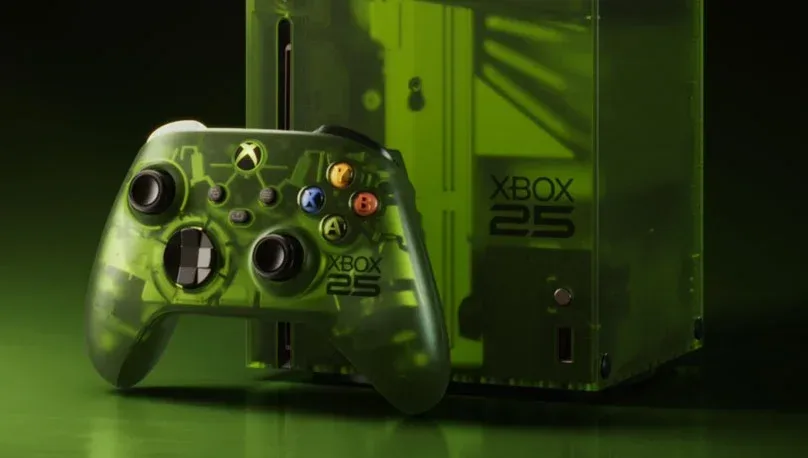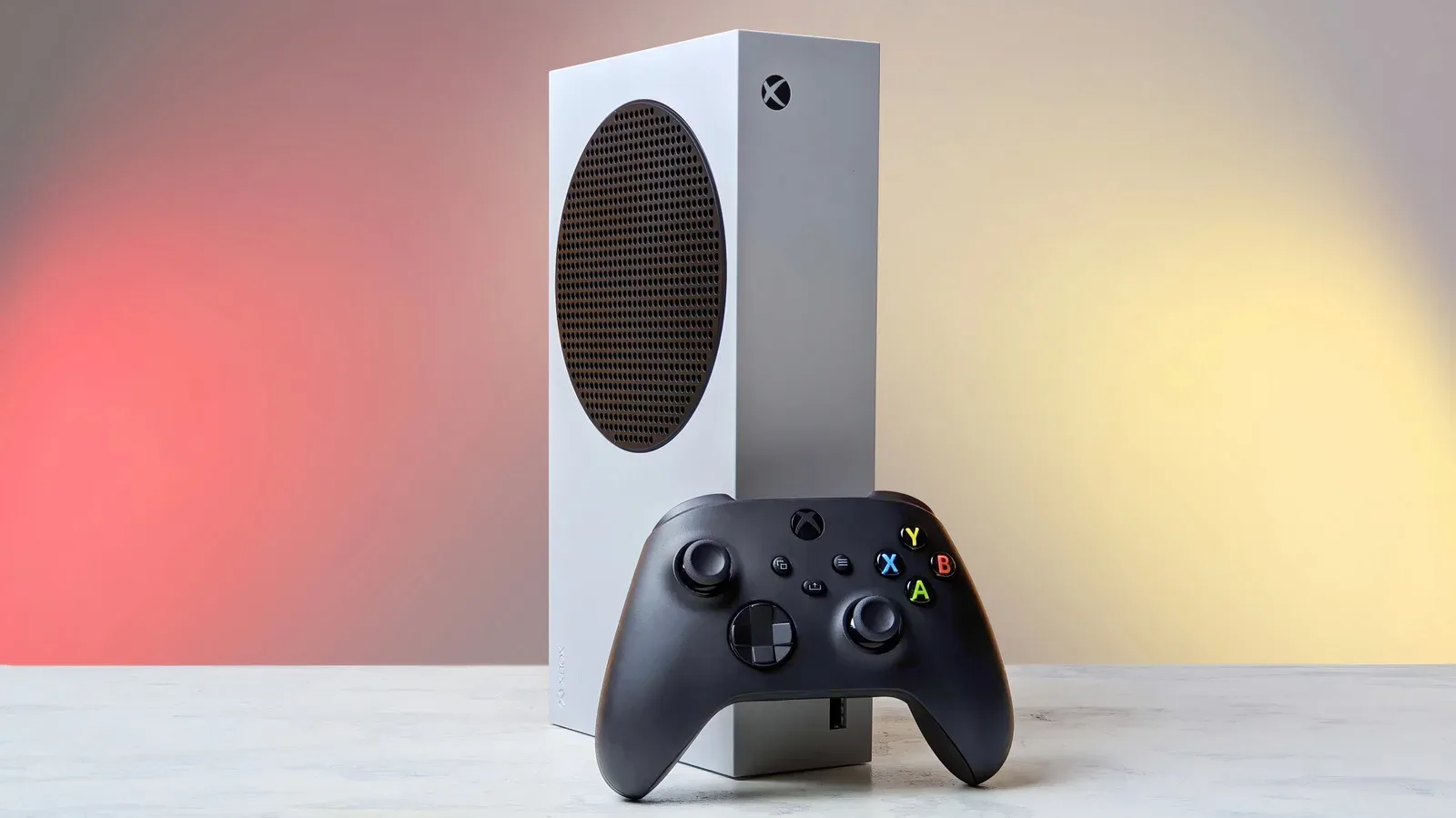
The Xbox Series S is the lower-cost route into the current Xbox generation, but its price gap with the Xbox Series X is not a temporary sale trick or a mystery hidden in the fine print. It is the result of two deliberately different hardware designs.
Both systems have risen in price since launch, a striking reversal of the traditional expectation that aging console hardware gets cheaper over time. Component pricing pressures have affected the broader console market, including price increases for PlayStation 5 and a higher Nintendo Switch 2 price in 2026. Even in that environment, the Series S starts at $500, while the least expensive Series X model costs $750. That $250 difference reflects meaningful compromises in storage, physical-media support, graphics capability and memory bandwidth.
Neither machine is simply “good” or “bad.” The more useful question is what a buyer actually needs from an Xbox: a compact, digital-first Game Pass machine that can still reach 120 frames per second in compatible games, or a more powerful 4K-focused console with greater storage and the option to use game discs.
The biggest difference: Series S is digital-only
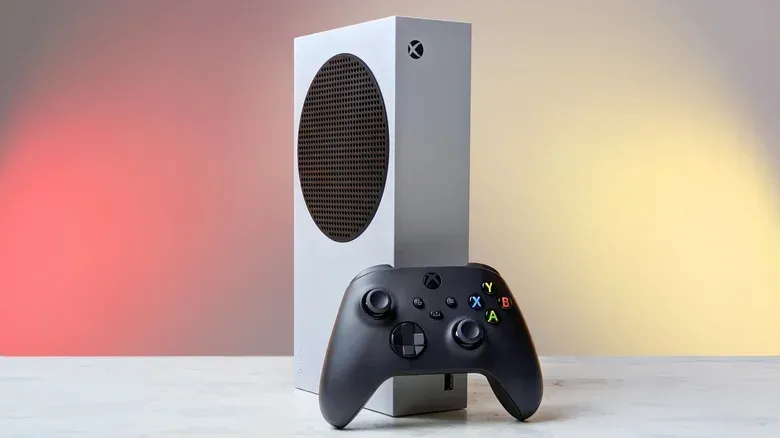
The immediately visible distinction is that Xbox Series S has no disc drive. Owners buy games digitally, redeem digital codes or access titles through services such as Game Pass. They cannot insert a disc to install or play a physical Xbox game.
That helps reduce the hardware cost, but the consequence is larger than the drive itself. Choosing Series S means committing to a digital library for that console. For people who already buy nearly everything digitally, that may barely register as a limitation. It is also a natural fit for someone whose main plan is to play through Game Pass.
For others, the absence of a drive changes the value calculation. Physical games can be found through disc-based sales, shared or kept as tangible copies. A Series X accommodates that preference. There is also an all-digital Series X option, which costs $50 less than its disc-equipped counterpart, but it retains the Series X-class internal hardware. Removing the drive does not turn it into a Series S.
That distinction is important: the disc drive is only one part of the Series S price advantage. The much larger reason is that Microsoft built it with a lower performance target and substantially leaner components.
Storage: smaller by default, expandable on both
The base Series S includes 512GB of storage. A 1TB Series S costs $100 more. Series X comes with 1TB of storage as standard. A 2TB Series X existed, but Microsoft discontinued that model in 2026.
Storage capacity matters especially on a digital-only console. The Series S buyer cannot use a disc to avoid building a digital game library; downloads are fundamental to the experience. Download time will depend on the connection and the size of each game, while network speed labels can be confusing: Mbps and MB/s measure download speeds differently. The practical point is simple: a smaller internal drive can require more active management of installed games.
Both console families can add storage with an expansion card that connects at the rear. That gives buyers a path to increase capacity later rather than treating the factory storage as permanent. It does not erase the difference in included capacity, however. A person deciding between the 512GB Series S and 1TB Series X should factor in the possibility of expanded storage, along with the $100 step up to the 1TB Series S.
Graphics power explains much of the remaining price gap
The Series X is designed to target 4K resolution and has 12 teraflops of processing power. The Series S has 4 teraflops and generally tops out at 1440p in games. Both can support 120 frames per second in compatible titles, but that shared headline does not mean they render every game at the same resolution or visual settings.
A teraflop is a rough measurement of the number of floating-point calculations a processor can perform. It is useful for illustrating the broad gap between these two Xbox models: 12 teraflops versus 4. But it is not a standalone score for game quality. A game’s actual result depends on its engine, settings, CPU work, memory and developer choices. The reliable takeaway here is not that Series X will always be three times better in every visible respect; it is that it has much more graphics throughput available for demanding work.
Resolution describes how many pixels are used to form the image. A 4K target involves more pixels than 1440p, which places a heavier demand on the graphics hardware. Series S can perform 4K upscaling, meaning it can output an image at 4K after processing a lower-resolution source. That is different from rendering a game natively at 4K. Buyers with a strong preference for native 4K should therefore look to Series X.
Frame rate is separate from resolution. It is the number of image frames shown per second. Higher frame rates can make movement look smoother and can be especially appealing in games where responsiveness and fast motion matter. Both systems being capable of 120 fps gives Series S an important capability, but it remains conditional: a game must support the mode, and the performance and image-quality choices may differ between machines.
Similar architecture, unequal configurations
Microsoft’s two systems share major architectural foundations. Each uses a custom AMD Zen 2 CPU and an AMD RDNA 2 GPU. That common base helps explain why they belong to the same Xbox generation and can support the same broad software ecosystem. The configurations are not equal, though.
The Series X CPU runs at a higher clock speed than the Series S CPU. A clock speed is the rate at which a processor operates; all else being equal, a higher clock can provide an advantage in speed. That is only one factor in game performance, but it contributes to Series X’s more capable overall design.
On the graphics side, Series X has 52 compute units, while Series S has 20. A compute unit, often shortened to CU, is a processing block within the GPU. More CUs do not translate into a single guaranteed visual outcome, but the 52-versus-20 split is a clear indicator of the Series X’s greater graphics resources.
The RAM allocation is also markedly different. Series X has 16GB of RAM. Of that, 10GB can run at 560GB per second, while the other 6GB runs at 336GB/s. Series S has 10GB total: 8GB operates at 224GB/s and the remaining 2GB at 56GB/s.
RAM, or random-access memory, is fast working memory used while software runs. Capacity affects how much data the system can keep readily available, while bandwidth describes how quickly that data can move. The quoted GB/s figures are bandwidth rates, not storage capacity. Series X has more RAM and considerably greater bandwidth, providing more headroom for complex graphics and other demanding workloads. Those differences help account for its higher price just as surely as the disc drive does.
Size is a real Series S advantage
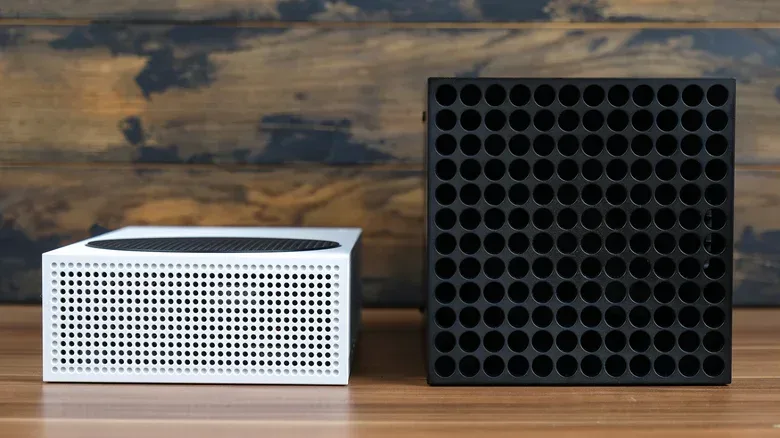
Lower cost is not the sole practical benefit of Series S. It is about 60% smaller than Series X. That may be a decisive advantage for a crowded entertainment center, a desk setup or any living space where the larger console is inconvenient.
Compactness should not be dismissed as a minor cosmetic feature. A console that comfortably fits where it needs to go is easier to integrate into daily use. Series S also reduces physical-media clutter by design, though whether that is a convenience or a drawback depends entirely on how a person prefers to buy games.
Who should choose Xbox Series S?
Series S is the sensible match for buyers who want a lower entry price, primarily purchase games digitally and do not consider native 4K a requirement. It is also well suited to someone who values its much smaller physical footprint and is comfortable selecting, downloading and managing a digital library.
- Choose Series S if Game Pass and digital purchases are central to your plans.
- Choose Series S if 1440p-class output and 4K upscaling are sufficient for your display and expectations.
- Choose Series S if compatible 120 fps support matters, but you do not need the highest available graphics capability in every game.
- Choose Series S if space is limited and its smaller chassis is a meaningful benefit.
- Plan around its storage tier, particularly if the base 512GB model is under consideration.
Its lower specification is a trade-off, not a disqualification. Many games are not equally demanding visually, and the value of Series X’s extra power will vary with the games played, the display in use and personal tolerance for differences in image quality and performance.
Who should choose Xbox Series X?
Series X is the better fit for a buyer who wants the strongest hardware in this Xbox generation. Its native 4K target, 12-teraflop graphics hardware, higher-clocked CPU, 16GB memory pool and greater memory bandwidth make it the model for people who want more performance headroom.
- Choose Series X if native 4K is a priority.
- Choose Series X if you prefer physical games, disc sales or maintaining a disc library.
- Choose Series X if 1TB of built-in storage is preferable to starting at 512GB.
- Choose Series X if you want the more capable configuration for graphically intensive games.
- Consider the all-digital Series X only if you want Series X hardware but do not need a disc drive; it is $50 cheaper than the disc-equipped version.
The price premium is substantial, particularly with the cheapest Series X at $750 compared with Series S starting at $500. The decision therefore should not be reduced to a specification race. It is a decision about whether the higher ceiling, physical-media flexibility and extra storage justify that difference for a particular household.
What about waiting for Project Helix?
There is a third option for buyers who are uneasy about buying a console late in its lifecycle: wait. Microsoft plans to send alpha Project Helix hardware to developers in 2027. That points to a final consumer release no earlier than at least another year after that, though there is no confirmed release timetable here and the eventual technical leap remains unknown.
Project Helix devices will almost certainly cost more than the current Series X or Series S models. Waiting may make sense for someone who is in no rush and specifically wants cutting-edge hardware, but it also means postponing access to the current Xbox generation. It is not a direct substitute for a buyer seeking the least expensive current Xbox now.
Ultimately, Series S is cheaper because it is built to be cheaper: no disc drive, less storage in its base configuration, a smaller GPU, lower CPU clock speed, less RAM and far lower memory bandwidth. Series X asks more money because it supplies more hardware. The right purchase comes down to which compromises are invisible in your routine and which would become annoying every time you play.