Xbox leadership has reportedly presented a cautiously upbeat internal picture after the latest fiscal quarter: the gaming business is said to be growing again, several upcoming games have made strong early impressions, and the company believes sentiment around the Xbox brand has improved year over year.
That message sits uneasily beside the other half of the same strategy. The ongoing Xbox “reset” still has further to run, with hundreds of additional jobs reportedly expected to be cut in the coming months. A recovery narrative may matter to Microsoft’s long-term platform plans, but it does not soften what continuing restructuring means for the people making those plans and games possible.
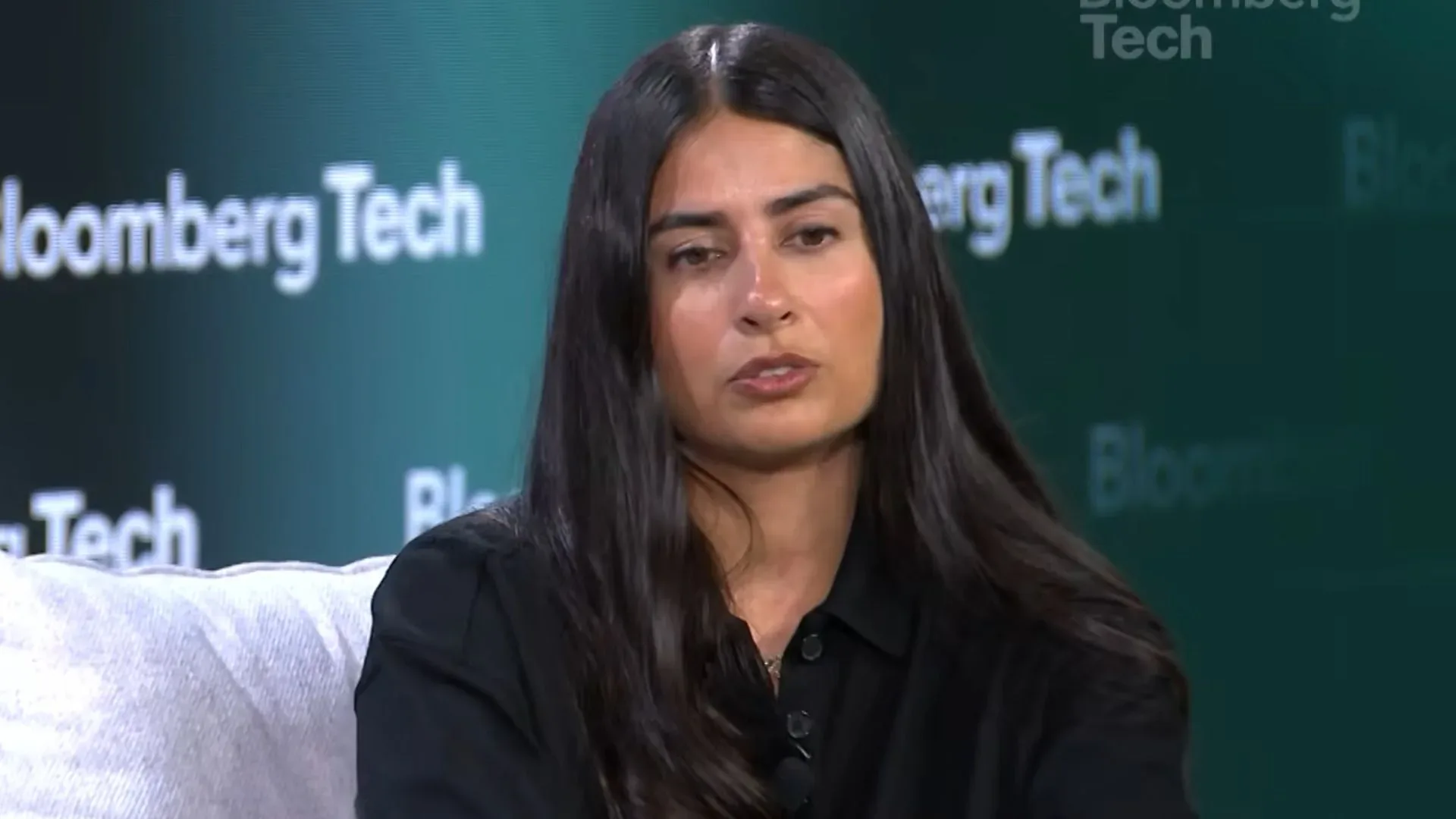
The reported town hall remarks from Xbox CEO Asha Sharma also provide a clearer, if still incomplete, look at where the business wants to go next: a more flexible Game Pass offering, a simpler development environment, closer links across devices and storefronts, and a Gen 10 hardware strategy called Project Helix that may extend beyond a single next-generation console.
Xbox says growth has resumed after a low point
Sharma reportedly told employees that the company had begun to return to growth after what she characterized as an all-time low. Her description was emphatic: the business was growing at more than two to three times its earlier level, with an expectation that momentum would continue.
The precise measure behind that comparison was not detailed. That is an important limitation. “Growth” can refer to different things in a platform business, including revenue, player engagement, subscriptions, hardware sales, game sales, margins, or performance against an internal baseline. Likewise, the time period represented by “what we were” was not specified. The comments therefore establish Xbox leadership’s direction of travel, not a fully transparent financial account.
Sharma also pointed to strong starts for Minecraft Dungeons 2, Gears of War: E-Day, and World of Warcraft: Forever. Those examples indicate where Xbox sees recent momentum in its portfolio: familiar series spanning Minecraft, Gears, and World of Warcraft. But “strong starts” is also not a disclosed performance metric. It signals confidence internally without telling players or investors exactly how launches were evaluated.
Another internal indicator cited was a 30 percent improvement in brand sentiment from a year earlier. Brand sentiment generally refers to how positively or negatively people feel and speak about a brand, as measured through research, surveys, online discussion, or a combination of methods. It is useful as a directional signal, particularly for a company trying to rebuild confidence. It is not the same as a sales figure, nor does it reveal which audiences changed their minds or why.
For Xbox fans, that distinction matters. Sentiment can improve because of anticipated games, perceived value, new device options, smoother services, or better communication. It can also coexist with anxiety about studio stability, changes to platform strategy, and layoffs. A higher sentiment figure does not resolve every concern around the broader reset.
Related coverage includes Xbox CEO Says the Company Is Returning to Growth Amid Continuing Reset.
A reset that is still only partway complete
The most sobering reported detail is that Xbox’s reorganization is not finished. Chief content officer Matt Booty said last month that the company was about 75 percent through the reset, while hundreds more staff reductions were still expected over the months ahead.
That makes the celebratory language surrounding growth necessarily conditional. The organization is trying to show that its investment choices and operational changes are producing results, while simultaneously continuing a process that will affect more employees. Those are not separate stories. The stated return to growth is being presented as an outcome of the same reset that remains painful and incomplete.
There is a practical consequence for game development, too. Xbox has major projects whose payoff is years away, including a Halo reboot under Activision. Long development horizons can make it difficult to judge a strategy from a single quarter or an internal sentiment measure. The eventual test will be whether the company can carry present momentum through the extended work required to deliver those larger bets.
Nothing in the reported comments provides a release timetable for that Halo project, specific details about its development, or a guarantee that the current structure will remain unchanged. It does show that Xbox is pursuing a plan with both near-term operational goals and a longer-term attempt to reshape the platform around its games, services, operating system, and hardware.
Project Helix is described as a family, not one machine
The clearest forward-looking hardware statement concerned Gen 10, the term Xbox is using for its next hardware generation. Sharma reportedly said the company was moving toward a “family of devices,” while also emphasizing that there would be a great console first.
That wording is meaningful because it rejects the premise that a single box needs to satisfy every kind of Xbox player. Some players use a dedicated television console; others play through a Windows gaming PC; others may want a system intended for portable use. The reported plan suggests Xbox wants these different forms to feel like connected parts of one ecosystem rather than disconnected products.
A family of devices is a strategy in which multiple hardware types are designed around shared services, accounts, software conventions, and a common user experience. It does not, by itself, confirm the number of upcoming devices, their specifications, launch dates, prices, or which ones Microsoft will manufacture. Those details remain unannounced.
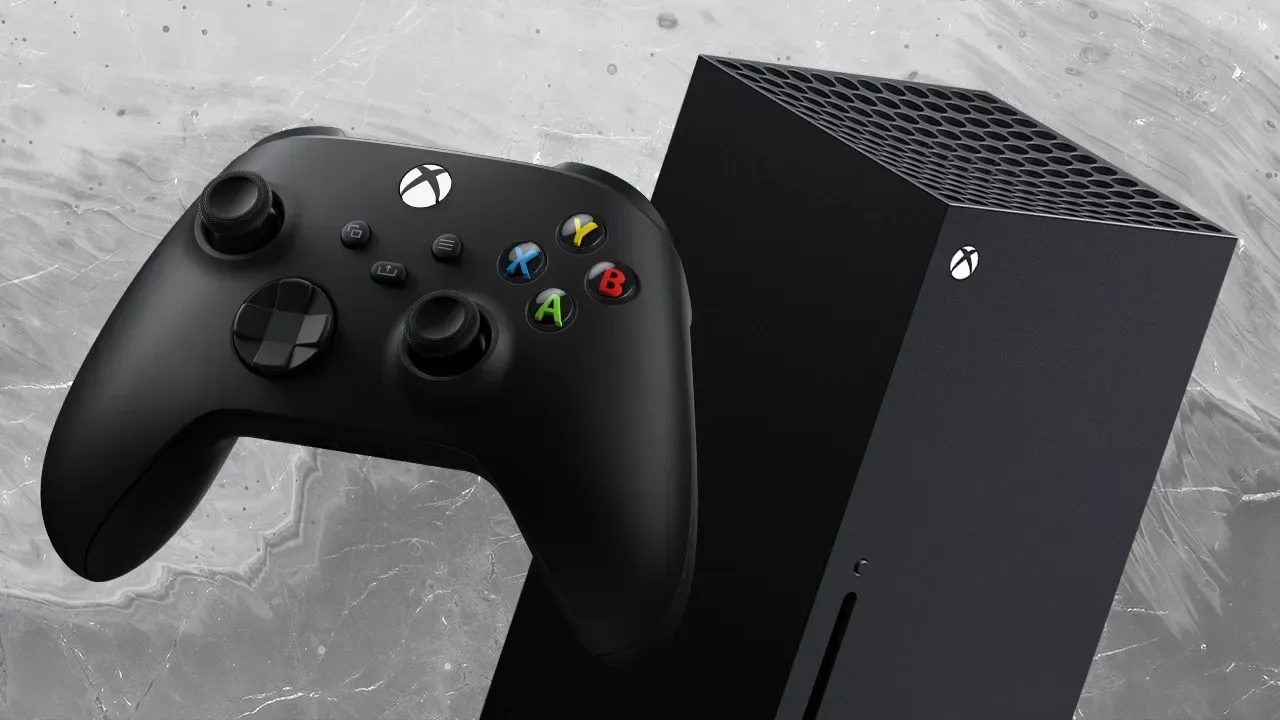
Sharma said some products would be best made directly by Xbox, while others could involve partners. The existing landscape offers a useful frame for what that could mean without settling the question: Xbox Series X/S consoles, Windows gaming PCs, and Asus’s third-party Xbox Ally X already represent different ways into the broader Xbox experience. Whether Project Helix formalizes that arrangement more tightly, adds new product categories, or does both is still unknown.
For more on the reported direction of the next-generation initiative, see the Project Helix report on Xbox’s proposed family of devices.
The operating system may be the connective tissue
Sharma also reportedly said the operating system was “starting to look really good.” An operating system is the foundational software that runs a device and coordinates its interface, apps, storage, account access, hardware functions, and other core behavior. In a multi-device gaming strategy, it can be just as important as the physical hardware because it determines how consistent the experience feels when players move between screens.
A unified Xbox operating-system approach could, in principle, make it easier for players to recognize their library, profile, subscriptions, and social features across console, PC, and portable hardware. That is analysis of the stated strategy rather than confirmation of specific features. The reported comments do not say exactly how compatible libraries will be, how purchasing will work, whether every device will run the same software, or what features will transfer between form factors.
The remaining uncertainty is substantial. “Family” can be an appealing promise, but it becomes meaningful only when compatibility rules, account access, performance expectations, and consumer choices are clear. A device strategy can be flexible without being confusing; Xbox’s challenge will be to demonstrate that the flexibility genuinely reduces friction rather than forcing players to decode several overlapping ways to play.
Play Anywhere, Disc-to-Digital, and a more flexible Game Pass
Xbox’s reported priorities also include Play Anywhere, Disc-to-Digital, making Xbox easier to develop for, and making Game Pass subscriptions more flexible. These are broad goals, and the town hall descriptions do not provide implementation details. Still, together they point to the same central idea: make the Xbox ecosystem easier to enter and easier to use across more than one device type.
Play Anywhere is presented as an initiative intended to reinforce Xbox’s cross-device proposition. The practical appeal of any such program is continuity: players want their purchases, access, and progress to make sense when they do not play on just one screen. The reported material does not establish which games or devices would be included, so it would be premature to treat it as a universal compatibility promise.
Disc-to-Digital is another initiative named without a full explanation. The label indicates an effort connected to physical discs and digital access, but no eligibility rules, ownership process, platform coverage, or consumer terms were provided. It should therefore be read as a stated direction, not a defined feature that players can yet rely on.
Game Pass flexibility is similarly a goal rather than a published overhaul. Subscription flexibility could concern how people access the service or which options are offered, but no plans were specified. Players should avoid assuming a particular tier, benefit, device entitlement, or price structure from the reported language alone.
The development side may be the least flashy but potentially the most consequential. Making Xbox easier to develop for could reduce friction for studios building games for the platform and its possible range of hardware. Yet “easier” can cover many areas: tools, technical requirements, distribution processes, testing needs, or support for different device types. The company has not said which changes it will prioritize.
Battle.net’s role could grow beyond a single crossover
Sharma reportedly singled out the arrival of The Witcher 3 on Battle.net. The mention suggests that Xbox sees value in curated collaborations on Blizzard’s PC launcher and that this may not be an isolated move.
Battle.net’s relevance here is strategic rather than merely promotional. If Xbox is attempting to connect more games, services, and devices, its PC storefronts and launchers become part of how it reaches players outside a traditional console purchase. A prominent third-party game on Battle.net can serve as an example of that broader reach.
However, one highlighted release is not a roadmap. There were no named future games, no stated frequency for similar collaborations, and no indication that every Xbox-owned property or major outside release will follow the same route. The takeaway is narrower: Xbox leadership has called attention to The Witcher 3 on Battle.net as a positive example while signaling interest in additional curated partnerships.
What players can reasonably take from the update
There are three grounded takeaways. First, Xbox leadership believes the business has moved from decline toward renewed growth, supported by internal performance and sentiment measures that have not been fully detailed publicly. Second, the restructuring associated with that recovery is still underway and will involve further layoffs, making any success story incomplete for the workforce. Third, the company’s hardware ambitions appear to extend beyond one Gen 10 console, with Project Helix framed as a console-led but partner-inclusive family of devices tied together by software and services.
Players have reason to watch for more detail on the operating system, exactly what Play Anywhere and Disc-to-Digital mean in practice, how Game Pass could change, and how much of the next hardware family Xbox plans to make itself. Until those details arrive, the strongest reading is not that every uncertainty has been solved. It is that Xbox is attempting a larger redefinition of what its platform is—and is claiming that its difficult reset has begun to fund that attempt with renewed momentum.