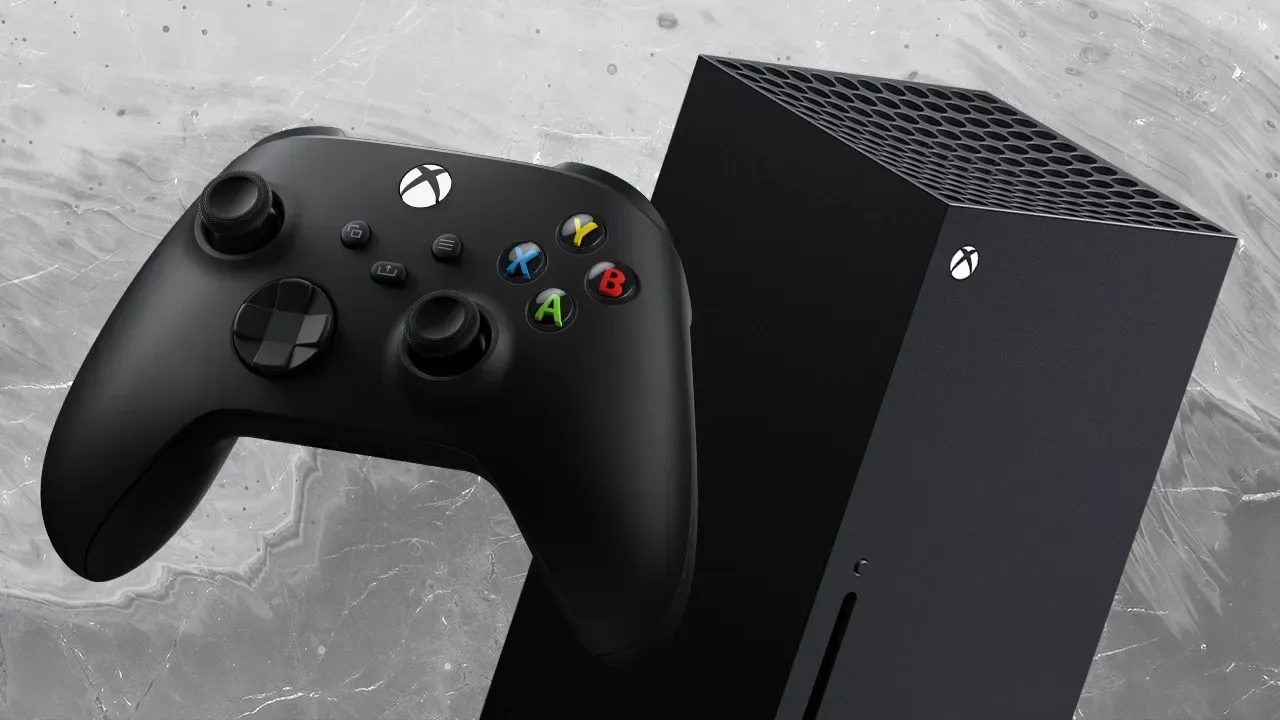
Xbox’s next-generation hardware may be less a single successor box and more a coordinated range of ways to play. A reported internal memo attributed to Xbox CEO Asha Sharma describes Project Helix as a “family of devices” for the company’s Gen-10 plans, rather than one machine intended to serve every player.
That wording matters because it frames the next Xbox strategy around different use cases: a traditional console for the television, portable hardware for people who play away from it, and potentially partner-built devices that can carry Xbox branding and software. It is an early picture rather than a product reveal. No final product lineup, launch timing, technical specifications, pricing, or individual device names have been confirmed in the material at hand.
Still, the reported memo offers a clearer statement of direction than a vague promise that “the next Xbox” is on the way. Sharma said the company will have a “great console first,” while also recognizing that many players are mobile. She also indicated that Xbox will manufacture some things itself and partner on others, with more details to come as the plans develop.
The practical takeaway is straightforward: a next-generation Xbox console appears to remain central to the plan, but it may be only one part of a wider hardware and software ecosystem.
A strategy that builds on Xbox’s existing split
The current Xbox generation already established a precedent for serving different players with separate hardware. Xbox Series X and Xbox Series S launched as two distinct consoles: one more powerful and one less expensive and less powerful. The reported Project Helix approach would take that idea further, moving from a two-console choice to a broader set of device categories.
That does not mean every possible form factor is guaranteed. It would be premature to declare that Xbox is making a laptop, a desktop PC, another handheld, or several of each. The memo’s central point is narrower: there is no longer an assumption that a single piece of hardware should fit everyone.
That logic is especially relevant now that Xbox has already worked with Asus on the ROG Xbox Ally X. The company’s recent handheld direction demonstrates what a partnership-led approach can look like: Xbox can contribute its gaming identity, software priorities, and broader PC ecosystem while a specialist manufacturer handles the physical device. The report also refers to Xbox Ally hardware alongside the Ally X, reinforcing how handheld play factors into the broader discussion.
Microsoft’s history of working with hardware makers through Windows makes the partner portion of this strategy less surprising than it might sound. The open question is what “Xbox” will mean across those devices. It could remain a console brand that also appears on selected PC products, or it could increasingly describe a shared gaming experience across hardware made by multiple companies. The reported memo alone does not settle that question.
The core console still appears to be the anchor
Amid discussion of mobility and partnerships, the clearest reported commitment is that a traditional console is still planned. That is important for players who value the predictable, couch-friendly nature of a dedicated console: standardized hardware, a controller-led interface, and an experience designed to launch games without the general-purpose friction often associated with PCs.
The next core system is expected to be connected to Xbox’s partnership with AMD, although exact responsibilities, technology, and a release window have not been detailed here. It is reasonable to view it as a likely successor to Xbox Series X, but that remains an interpretation rather than a confirmed product name or specification.
For Xbox, keeping a flagship console in the family would preserve a familiar center of gravity. It could also give the company a reference point for its software experience: a device expected to be simple and consistent, even as Xbox expands to more varied hardware. That consistency is arguably the key challenge. A family of devices is only more convenient than one box if players can move between them without feeling that every screen, store, account prompt, and game library follows different rules.
The operating system may be the real Project Helix battleground
Sharma’s reported comments specifically say that the operating system is “starting to look really good.” That may be the most consequential detail in the memo, because software navigation can determine whether a portable or PC-based Xbox device feels like a console or merely like a small Windows computer with gaming controls attached.
An operating system is the foundational software that manages a device and presents the environment in which applications run. For a gaming machine, it shapes fundamental tasks: turning the device on, signing in, browsing a library, buying or installing a game, adjusting settings, resuming play, and connecting a controller or display.
On a conventional console, those actions are generally designed as one unified experience. On handheld gaming PCs, the underlying Windows environment can create additional complexity. Windows 11 provides broad PC compatibility, but its traditional interface was not originally built around a small handheld screen, a thumbstick, and quick controller-only navigation. That can mean more layers between a player and a game.
Xbox’s Full Screen Experience has improved over the past year, but the reported analysis around Project Helix still identifies substantial room to improve. A full-screen gaming shell can make a Windows device feel more focused by putting a controller-friendly library and launcher at the front. However, the crucial distinction is between a better front end and a fully seamless platform. If routine tasks still frequently pull players back into desktop-style controls, settings pages, or inconsistent launchers, the console-like promise remains incomplete.
This is why comparisons with SteamOS come up in the wider handheld conversation. In this context, SteamOS represents the appeal of an interface designed around a gaming device’s purpose, rather than a general desktop environment adapted to fit it. Project Helix does not need to copy another platform to learn the underlying lesson: simplicity is itself a feature, especially on smaller devices.
What a console-grade experience would require
No detailed operating-system feature list has been revealed, so it would be wrong to claim Project Helix will deliver particular tools or behaviors. But the standard Xbox will need to meet is easy to describe. A player should be able to pick up a device, find owned games, understand where each title comes from, use the controls without workarounds, and return to play with minimal administrative effort.
- Controller-first navigation: core actions should make sense without needing a mouse, keyboard, or tiny touch targets.
- Clear library management: players need to know what they own, what is installed, and which service or storefront is involved.
- Reliable game launching: moving from the main interface into a game should not feel unpredictable across different devices.
- Device continuity: a family of hardware is more valuable when the player’s identity and library feel continuous across it.
Those are implications of the strategy, not confirmed specifications. But they explain why software polish cannot be treated as a secondary issue. If Xbox wants multiple hardware types to feel like one platform, the operating system is where that unity will be tested every day.
PC storefronts create opportunity—and friction
The reported memo also touches on Xbox PC and Battle.net, with the latter said to be close to Steam in user retention. User retention refers to a service’s ability to keep people returning and engaged over time. In a storefront or launcher, that can be influenced by a player’s established library, social connections, game habits, updates, and trust in the experience.
Battle.net is especially relevant because Xbox owns Blizzard. That relationship creates an obvious opportunity to expand how Xbox games are distributed on PC, but the opportunity comes with limits. Players already have expectations about where their games live and how their launchers behave. Adding more games to a storefront does not automatically make it a preferred destination.
There are already user-experience details to solve. The report notes that games added to Battle.net can appear automatically in a player’s favorites bar. That kind of behavior can seem minor, yet it illustrates a wider problem. A launcher is not only a catalog; it is a personal space shaped by the player’s organization and habits. Automatically changing that space can feel intrusive, even when the intention is to surface a newly available game.
The Witcher 3 Remastered has launched on Battle.net, showing that the service can host games outside Blizzard’s traditionally associated catalog. It is not, by itself, proof of a final Xbox storefront plan. Instead, it is a reminder that the company has a distribution channel it may wish to develop while being careful not to alienate the communities already using it.
Sharma reportedly said Xbox would handle those communities “the right way.” That is a meaningful aspiration, but it leaves implementation unanswered. The difficult work is balancing a broader Xbox PC presence with the established expectations of Blizzard players and the reality that many PC players already organize their gaming lives around other storefronts.
What Project Helix could change for players
If the reported direction becomes reality, Project Helix could make choosing an Xbox experience less about choosing one fixed box and more about choosing a preferred style of play. Someone who primarily plays at home could favor the core console. Someone who wants flexibility could look to a portable system. PC-focused players could encounter more Xbox integration through partner hardware and the company’s software ecosystem.
There is potential upside in that flexibility, but it also raises a consumer-facing question: will the choices be easy to understand? A “family of devices” can be welcoming if each product has a clear purpose. It can become confusing if similar names, different performance levels, or incompatible expectations blur together. Xbox’s existing Series X and Series S split shows the company has experience communicating hardware tiers, though an expanded PC and handheld strategy would add new layers.
The strongest version of this plan is not simply more devices carrying an Xbox label. It is a coherent experience in which the console remains straightforward, portable hardware is genuinely convenient, and PC-oriented options do not make users wrestle with the compromises of desktop software. The reported memo suggests Xbox understands that this software side is important; whether it can execute on that understanding is the question that will define Project Helix.
For a broader look at how platform holders weigh games, services, and hardware, see this discussion of PlayStation studios and the role of hardware.
For now, the responsible read is measured. Xbox appears to be planning beyond a one-console future, with a core machine, portable priorities, external hardware partners, and an operating-system push all in the mix. What players should not assume yet is the exact number of devices, their form factors, their power, or when any of them will arrive. Project Helix has a reported philosophy; the products themselves still need to be shown.