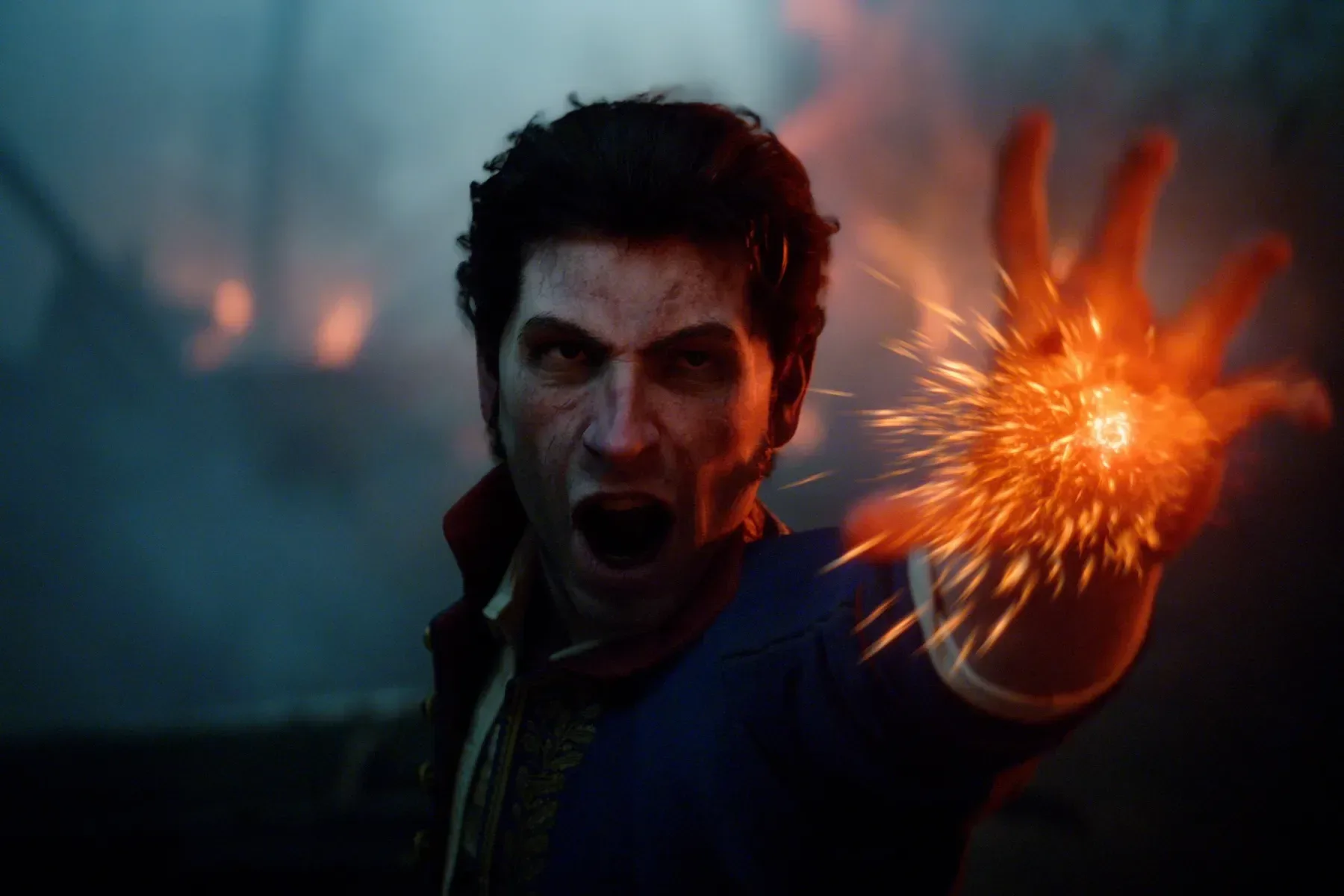
Valor Mortis arrives Tuesday as the debut release from Lyrical Games, and it is taking an unusual route into a very crowded action-RPG space. Developed by One More Level, the studio behind Ghostrunner, it is a first-person Soulslike set in a supernatural version of 19th-century Europe. Players control William Dowsett, an English soldier who joined Napoleon’s Grande Armée, died for its cause, and returns to consciousness on a battlefield carrying a plague that is both a source of corruption and a weapon.
The game launches on PlayStation 5, Xbox Series X|S, and PC through Steam for $39.99. It will also be available through Xbox Game Pass on its first day. That broad release puts a new intellectual property in front of audiences with very different ways of acquiring games: players can buy it on each listed platform, while Game Pass subscribers can access it as part of that service.
Its pitch is clear, even if its combination is rare: military-era weapons, supernatural abilities, body horror, and a combat structure built around observation, timing, and costly mistakes. The major question is whether a genre commonly experienced from behind the character can retain its necessary clarity when the player sees the world through the character’s eyes.
A Soulslike built around information
“Soulslike” is a broad label, but it generally signals action games in which close attention matters as much as aggression. Enemies communicate danger through their movements, distance matters, attacks create moments of vulnerability, and players are expected to learn from failure. The appeal is not simply that the games are difficult. It is that success is meant to come from recognizing a pattern, choosing the right response, and executing it under pressure.
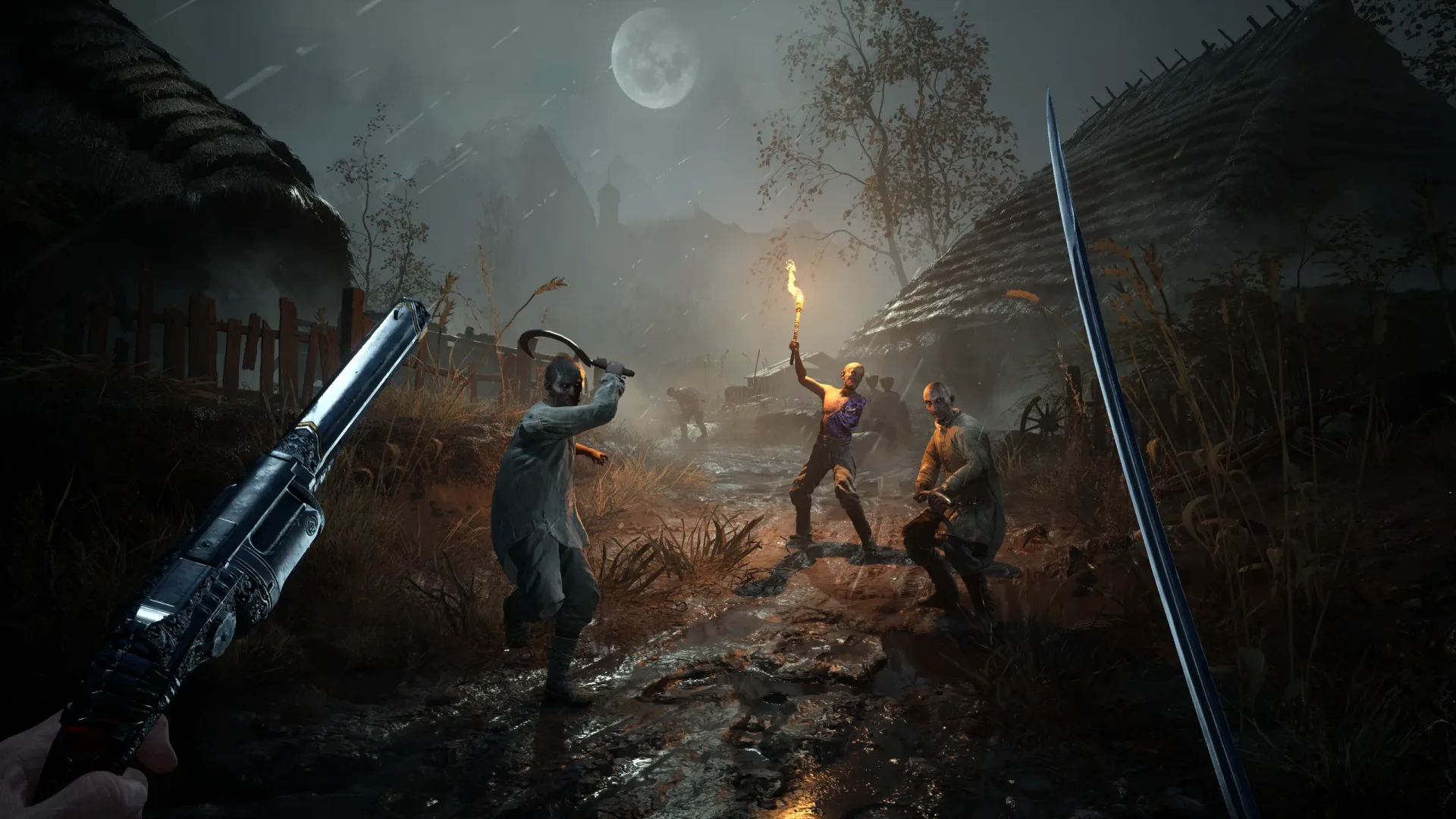
That framework creates a particular challenge for Valor Mortis. A third-person camera can show a character’s position relative to an opponent and keep an enemy’s entire body in view more easily. First-person perspective can make an incoming attack feel immediate, but it narrows the player’s view and removes that outside perspective. In a game where a badly timed dodge or block can be decisive, losing visual context could make encounters feel opaque rather than demanding.
One More Level’s solution has reportedly centered on several pieces of combat feedback: the parry window, lock-on behavior, audio signals, and hit feedback. A parry window is the brief timing interval in which a defensive input successfully deflects or counters an enemy strike. It is a small technical term with a large effect on how fair an action game feels. If the window is difficult to read, players may blame the game. If it is overly forgiving, the intended tension can disappear.
Lock-on is equally important here. It is a targeting system that keeps the player oriented toward a selected opponent, reducing the chance that the camera or aim drifts away at a critical moment. Audio cues can communicate danger outside the player’s immediate field of view, while hit feedback refers to the visual, sound, and controller-response signals that tell a player whether an attack landed, was blocked, or was parried. None of these systems alone solves first-person spatial awareness. Together, they are meant to rebuild the readable combat language that the camera angle makes harder to provide.
There is also a deliberate pacing distinction between the studio’s past work and this project. Ghostrunner is associated with speed, whereas Valor Mortis is intended to be slower and more methodical. That matters because a first-person perspective does not automatically make combat fast. Here, it appears to be used to make confrontations more intimate: the player is asked to assess an enemy’s reach and timing from inside William’s viewpoint, rather than from a safer visual distance.
William Dowsett’s resurrection is the story’s central fault line
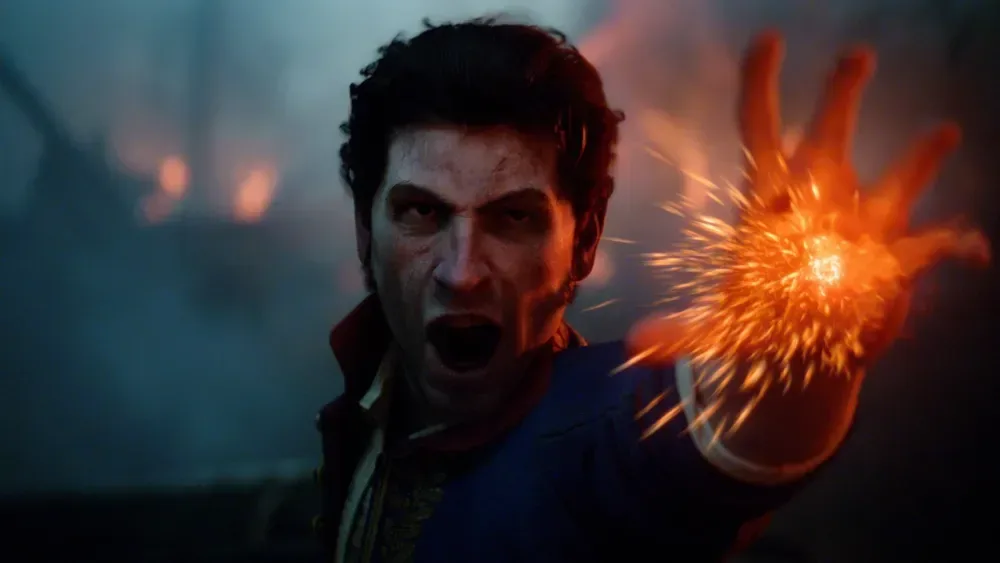
William begins as a young Englishman disillusioned with the monarchy. He volunteers for Napoleon because he believes in the ideal of a unified Europe, then dies in service of that belief. The story opens after his return, with a plague moving through him without completely transforming him. He is neither unaffected nor fully lost. That unstable state drives both the narrative and the game’s combat premise.
The corruption in William’s body grants him supernatural power, and it grows as he absorbs what he defeats. The setup therefore links progression to the story’s horror: becoming stronger is not presented as a cleanly heroic ascent, but as a deepening relationship with the same force that has altered him. The stated narrative tension is not just whether he can survive. It is whether he can determine whose cause he is serving, and how much of his original self remains by the end.
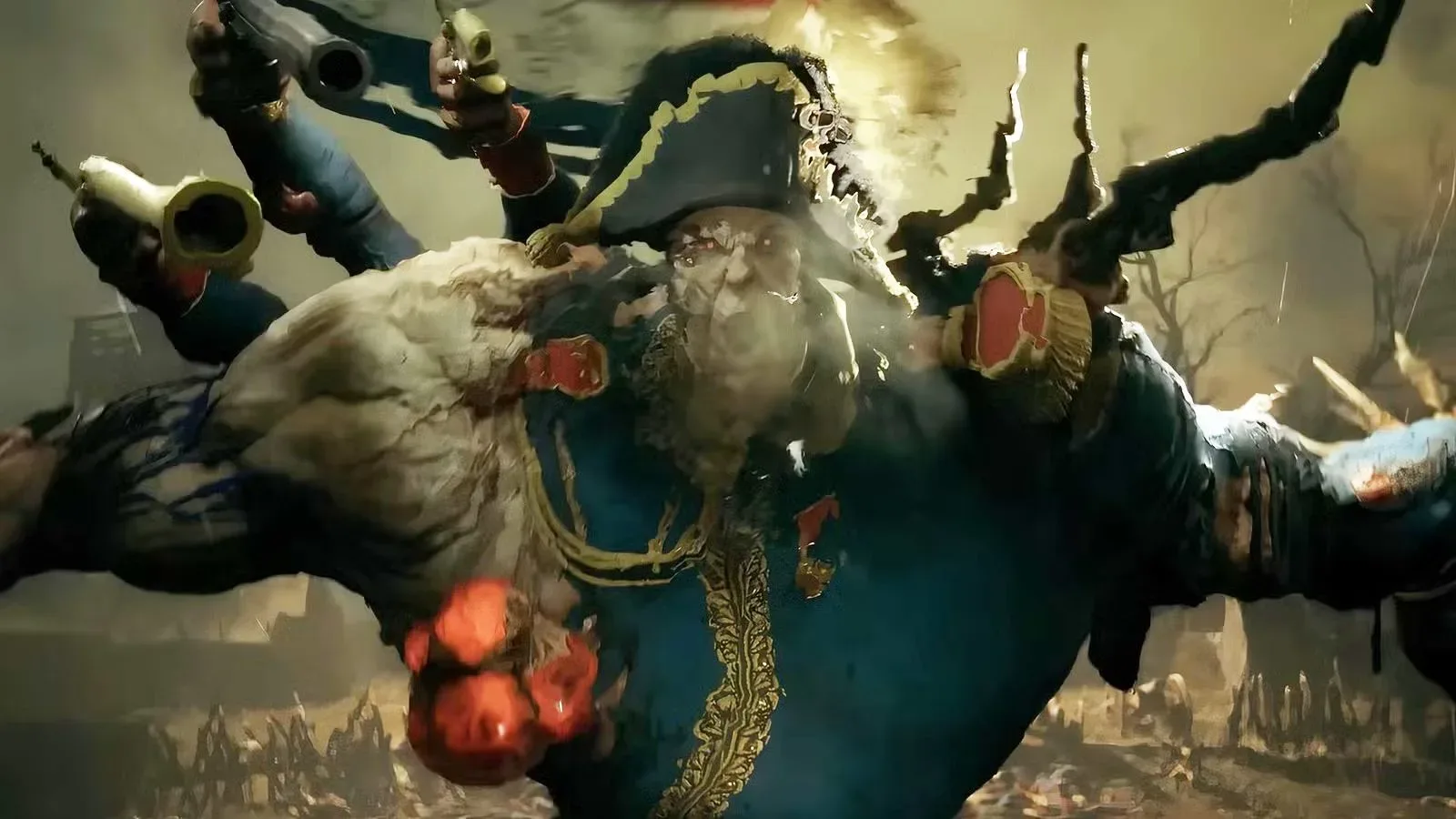
Napoleon Bonaparte is not merely a historical reference point in this reimagining. He is a presence in William’s mind, guiding him with a father-to-son quality. Vincent Cassel voices Napoleon, a role dependent on vocal authority rather than conventional on-screen performance. Jennifer English plays The Shrike, a significant figure in resistance to Napoleon’s war, while James Alexander voices William. A second voice eventually enters William’s head and draws him in another direction, creating a conflict of influence inside the protagonist as well as in the war outside him.
That construction gives the game an immediate personal lens for its alternate history. Napoleon, the resistance, the plague, and the wider conflict are filtered through a soldier whose original political conviction has already led to death. Rather than treating resurrection as a simple reset button, the premise makes it a continuation of unresolved allegiance.
Why the setting stands apart
Fantasy settings are familiar ground for Soulslikes, so Valor Mortis is distinguishing itself through the Napoleonic period and cosmic-horror-inflected plague imagery. The game uses a recognizable broad historical framework—Napoleon’s ambition, his armies, and a Europe shaped by war—then makes it strange through body horror and supernatural infection.
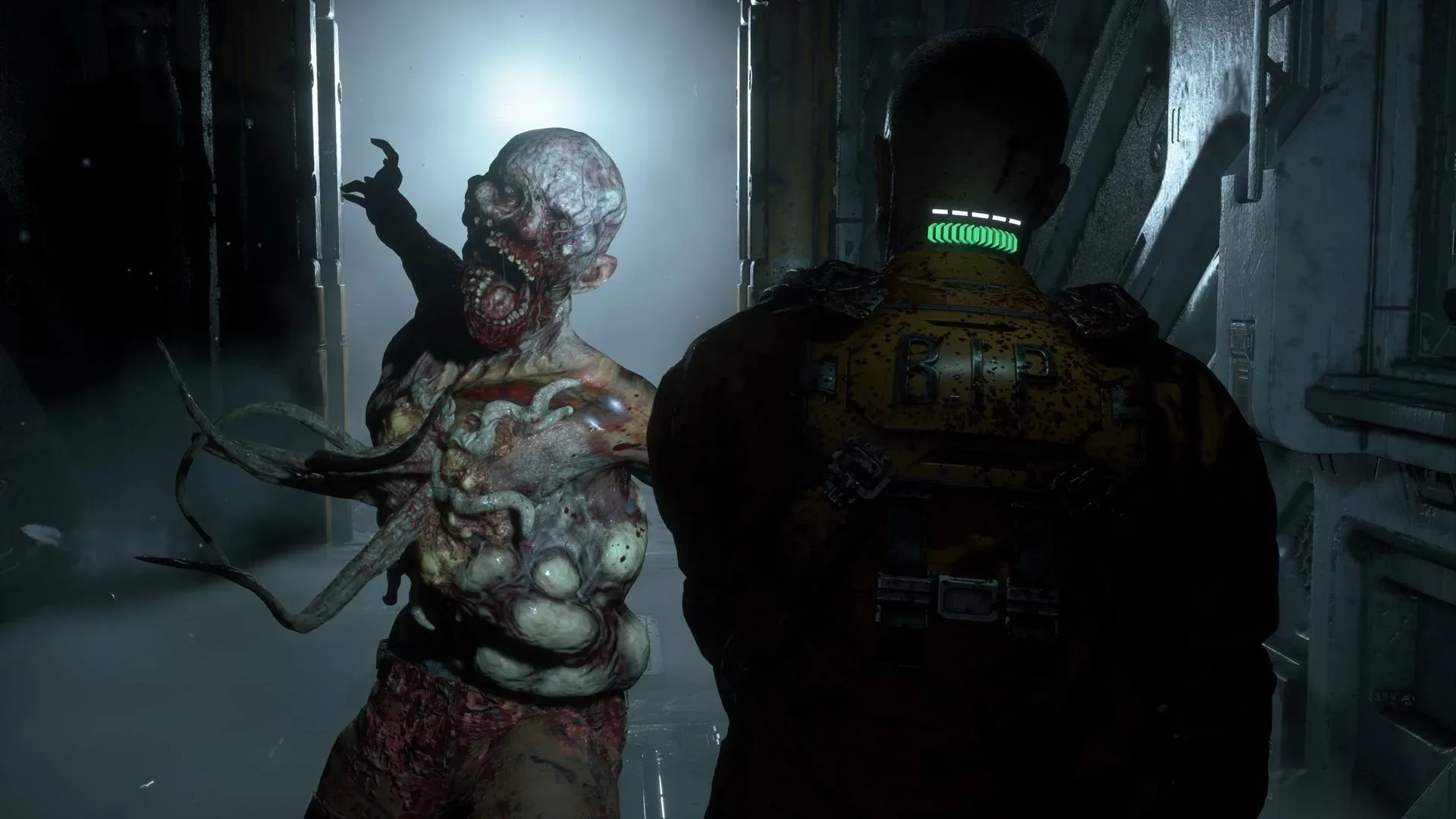
Body horror focuses on disturbing transformation, decay, or loss of control over the body. In this case, the plague is not decorative backdrop. It is inside William, changes what he can do, and becomes more potent as he defeats enemies. Cosmic horror is also an important descriptor: it points toward dread produced by forces that may exceed ordinary human understanding or control. The game’s central questions about sacrifice, power, and devotion to another person’s dream fit that atmosphere.
The result is not a conventional retelling of the Napoleonic Wars, nor does it claim to be. It is an alternate supernatural scenario that uses an iconic period as a foundation for horror. For players, the practical benefit of that choice is immediate differentiation. Instead of another unspecified medieval-fantasy landscape, the game has a defined visual and political frame: military conflict, a central historical figure, and an ideological promise of unity that has curdled into something horrific.
A first test for Lyrical Games’ publishing approach
Valor Mortis is the first of multiple games in the works from Lyrical Games, making it more than a standalone release for its publisher. The stated approach is to back mid-budget projects that put distinctive spins on established genres and to work closely with developers that have a clear specialty. One More Level’s experience with first-person action is central to why this project exists in its current form.
That is a more focused proposition than simply attaching a recognizable genre label to a new setting. The team is not only asking players to accept a historical-horror hybrid; it is attempting to make first-person play work in a combat style where enemy tells, spacing, and defensive precision are foundational. “Game feel”—the hard-to-quantify sense that movement, attacks, impacts, and responses behave satisfyingly—is especially consequential in that situation. A game can have a strong setting and a notable cast, but its premise relies on the moment-to-moment clarity of a parry and the reliability of a target lock.
For a useful comparison on development risk, industry discussion around releases that require extensive patching has underscored why launch condition matters, as explored in this report on post-launch patching and production pressure. That does not establish anything about Valor Mortis itself. It does, however, illustrate why an action game built on precise feedback will be judged heavily on how dependable its core systems feel at release.
Public feedback had a role before launch
One More Level conducted an early public playtest shortly after the game’s August 2025 announcement. That playtest had a substantial influence on later development. A Steam Next Fest demo followed closer to launch and provided further feedback, but the earlier test was described as particularly transformative to the project.
This is significant because player feedback can be unusually valuable for a first-person Soulslike. Developers can plan animations, sounds, lock-on rules, and timing values internally, but a public audience can reveal whether a telegraph actually reads under real play conditions. A telegraph is the signal that warns a player an enemy is about to act—such as a wind-up animation, sound, posture shift, or other recognizable cue. In a game based around reacting to telegraphs, feedback about visibility and timing goes directly to the heart of combat fairness.
The game’s development history therefore suggests that the team was actively testing the core problem rather than treating it as a purely stylistic gamble. It does not guarantee how every player will respond, but it explains why parry readability, audio design, and hit confirmation received so much attention.
What players should expect at launch
- Platforms: PlayStation 5, Xbox Series X|S, and PC via Steam.
- Price: $39.99 for purchase.
- Subscription access: Xbox Game Pass availability on day one.
- Perspective: First-person, rather than the third-person presentation more commonly associated with Soulslikes.
- Combat focus: Deliberate encounters emphasizing positioning, enemy tells, parries, lock-on, and feedback cues.
- Premise: A resurrected Grande Armée soldier uses Napoleonic weaponry and plague-born supernatural abilities in a horror version of 19th-century Europe.
- Principal voice cast: James Alexander as William Dowsett, Vincent Cassel as Napoleon, and Jennifer English as The Shrike.
Valor Mortis has a specific burden for a new property: it must make a strange setting legible while proving that its first-person combat can preserve the patience and precision players expect from the genre. Its strongest hook is that those two ambitions are connected. William’s limited viewpoint, his infected body, and the pressures of close-range combat all belong to the same attempt to make a Soulslike feel more immediate without abandoning the readability that makes its challenges satisfying.