Valor Mortis, the forthcoming Soulslike from the team behind Ghostrunner, will cost $40 when it arrives on October 13. That number is the news, but the reasoning is the more revealing part: the publisher and developers are treating price as a way to compete for attention in an unusually crowded release period, rather than simply as a reflection of a game’s perceived scale.
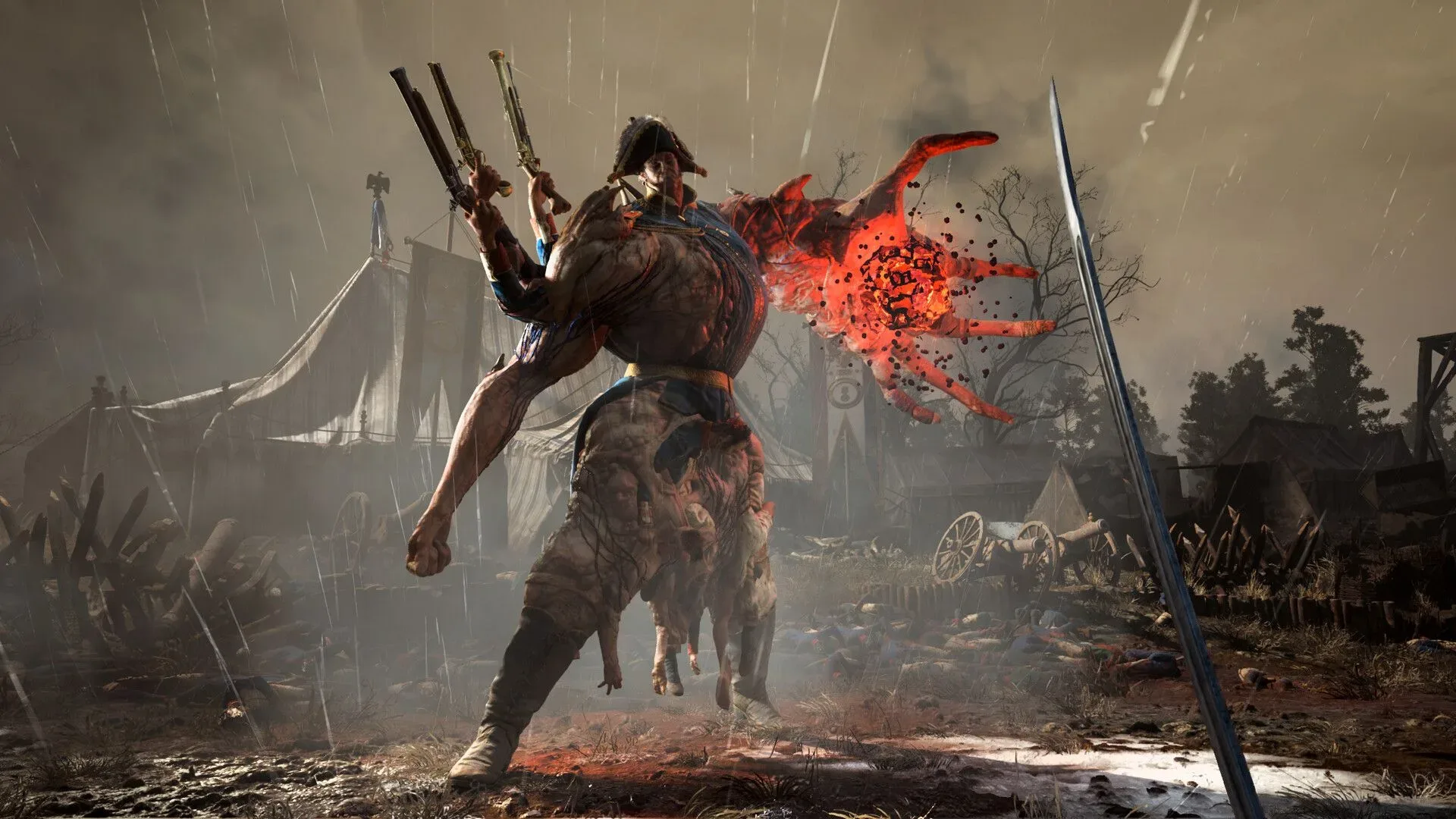
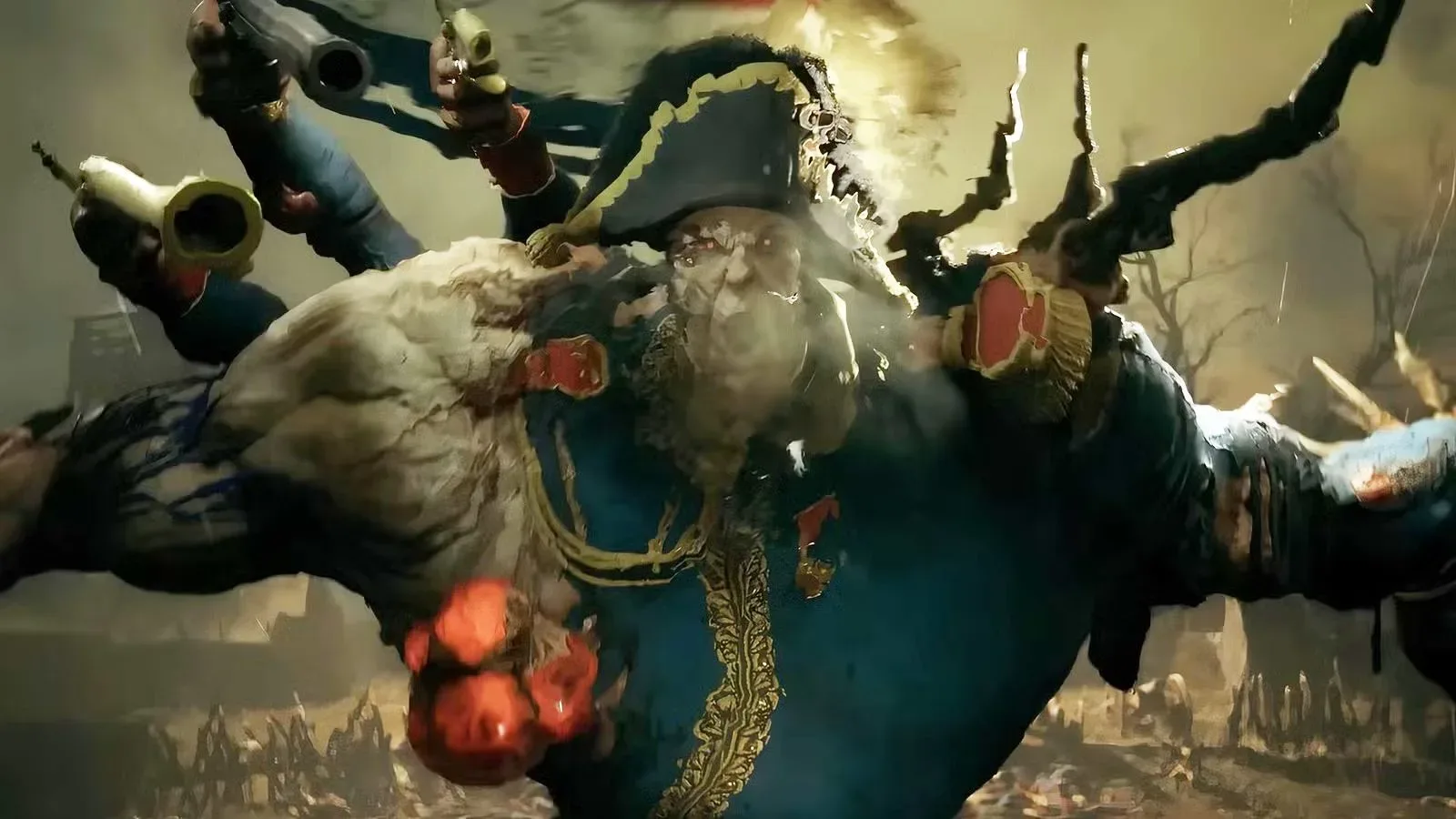
The game places players in the role of a former Napoleonic soldier wielding supernatural powers against battlefield horrors. Its creators say the story runs for roughly 20 hours and argue that its quality, visual fidelity, and playtime stand alongside games sold at a conventional premium price. Yet they have still elected to launch below that level because the fall schedule is dense and players have only so much money—and, importantly, only so much time—to spend.
That is a refreshingly direct acknowledgement of the decision facing buyers. A game does not merely compete against releases in its exact genre. It competes against unfinished games already sitting in someone’s library, a major release a player expects to absorb for weeks, subscription catalogs, social games friends are playing, and every other claim on leisure time. The $40 price is meant to position Valor Mortis as an additional purchase rather than a choice that displaces everything else.
A lower price without a smaller stated ambition
The studio’s message is not that Valor Mortis is a reduced project. It has said it spent substantial time debating the price and believes the game can go “toe-to-toe” with titles carrying a full-price label. The distinction matters because launch prices often become shorthand for production values, scope, and confidence, whether that shortcut is fair or not.
Blake Rochkind, head of publisher Lyrical Games, said the team worried that a lower price could communicate the wrong thing about the game. His explanation for ultimately accepting that risk is straightforward: the decision comes from confidence, not an attempt to apologize for the project.
There is no promise here that price determines quality, and players should not treat it that way. A $40 launch price cannot tell someone whether the combat feels satisfying, whether progression is well balanced, or whether a setting delivers on its premise. Those remain questions for the game itself. What the announced price does establish is a purchasing proposition: a 20-hour story-driven game with a novel historical-horror setup intends to ask for less upfront than many major new releases.
What “Soulslike” means in this context
Valor Mortis is being described as a Soulslike, a broad genre label generally used for action games built around demanding combat, careful timing, repeated encounters with dangerous foes, and learning through failure. The term signals an expected emphasis on challenge and deliberate play, but it is not a complete feature list. The available information identifies the game as a Soulslike and establishes its Napoleonic supernatural premise; it does not spell out the exact combat systems, progression structure, or penalty mechanics.
That restraint is worth keeping. Genre labels are useful for setting expectations, especially when a player wants a particular kind of challenge, but they can flatten what makes a game distinct. Here, the distinguishing idea is the combination of a former soldier from the Napoleonic era, supernatural abilities, and monsters haunting a battlefield. Whether that fusion meaningfully changes the familiar Soulslike formula is a question the game will need to answer when it launches.
Related coverage includes Valor Mortis Sets $40 Price as Ghostrunner Team Targets Crowded Fall Season.
Pricing for a packed calendar, not a vacuum
Rochkind characterized the fall as packed, mentioning the difficulty of finding clear air even when a release avoids the immediate vicinity of enormous games such as Grand Theft Auto 6 and a remake of The Legend of Zelda: Ocarina of Time. The key point is not merely that high-profile games exist. It is that a release calendar can remain intimidating in the spaces between its biggest entries.
For a smaller new release, being a few weeks away from a blockbuster may not resolve the problem. Players may have already put their money toward another game, reserved their free time for it, or chosen to wait for impressions before adding anything else. A game that asks to be played alongside those releases needs a different pitch from one that expects to be the season’s primary event.
That is where Lyrical Games’ “and game” language becomes useful. An “and game”, in this usage, is a title priced and positioned as something a player can add to their plans: Valor Mortis and another anticipated release, rather than Valor Mortis or that other release. It is a marketing concept, but it has practical implications. The publisher is making a calculated trade: a lower price per copy may reduce the barrier to early adoption and improve the odds that people try the game while attention is at its most scarce.
The strategy also recognizes a stubborn reality of game launches. Visibility is not guaranteed by an interesting concept, and a good game can still struggle to find an audience when buyers are overloaded with options. The team’s public argument is that accessible pricing can make a game easier to fit into an already crowded month.
Part of a broader spread in launch prices
Valor Mortis arrives amid more visible variation in game pricing. Mafia: The Old Country and Star Wars Zero Company were cited as recent examples that launched at $50 on Steam despite potentially fitting the $60 or $70 range associated with many premium releases. At the lower end, Mina the Hollower launched at $20 while comparable games with similar scope and budgets had moved closer to $30.
Those examples do not create a universal rule. Games differ in funding, development costs, commercial targets, audience size, and release plans. But together they demonstrate that the old assumption of one standard sticker price is less reliable than it once was. Launch pricing can now be used more openly as a point of differentiation.
The Steam marketplace intensifies that pressure. It contains an enormous range of inexpensive games, including breakout social hits such as Peak. Cheap does not automatically mean disposable, and premium-priced does not automatically mean essential. When players can choose from numerous lower-cost releases that still generate excitement, a new game’s initial price has to do more work than simply recoup an abstract idea of production scale.
For consumers, this widening spread can be beneficial because it creates more choices at more spending levels. It also asks for more discernment. A lower price can represent an intentional effort to reach an audience, a different scope of project, or both. The sensible response is not to equate any particular number with value by itself. Instead, potential players can weigh the price against the amount of time they expect to spend, their interest in the genre and setting, and the rest of their immediate backlog.
The 20-hour claim sets a concrete expectation
Of all the details shared with the price, the stated 20-hour story length is the most useful for buyers. It gives the $40 figure some context without reducing the conversation to a crude hourly calculation. A 20-hour game will not suit everyone, particularly people looking for an open-ended experience, but it offers a defined narrative commitment in a season when time itself is the scarce resource.
It also sharpens the publisher’s argument. If the game were asking players to choose it as a months-long destination, the “and game” position might be harder to sustain. A story of around 20 hours is still substantial, yet it is a more containable commitment than the huge games that can dominate an entire schedule. That does not mean a Soulslike will necessarily be finished in exactly 20 hours by every player; challenge, experimentation, and individual skill can all affect completion time. It means the team is presenting that figure as the intended scale of its story.
Players planning their October purchases should also note what has not been established in the information available so far. The announcement supplies the date, price, approximate story duration, genre, and premise. It does not provide platform details, editions, a roadmap, or a full mechanical breakdown. Those omissions are not negatives on their own; they are simply boundaries on what can be concluded today.
Attention may be the real battlefield
The commercial logic behind Valor Mortis is less about undercutting every rival and more about removing a point of hesitation. At $40, the publisher hopes a player interested in the premise will be more willing to take a chance without feeling they have made their one major purchase of the month. That is a sensible aspiration in a release period defined by large games and limited bandwidth.
It is also a reminder that price is one component of a launch, not a substitute for the game’s execution. The unusual premise has to intrigue players; the Soulslike action has to satisfy them; and the overall experience has to give them a reason to recommend it after they have played. Pricing may get more people to consider the proposition, but it cannot finish the job on its own.
Still, Valor Mortis is making its position unusually clear before release. Rather than insisting it must be the sole object of a player’s fall attention, it is asking to share that attention. That is a modest framing, but not necessarily a timid one. In a market overflowing with games, a title can be confident enough to say it belongs beside the season’s biggest attractions instead of pretending those attractions are not there.
For more on how PC releases attempt to build momentum before launch, see our coverage of Nivalis Nights reaching 1 million Steam wishlists ahead of its PC debut. Valor Mortis takes a different route: making its $40 price part of the reason to put it on the list in the first place.