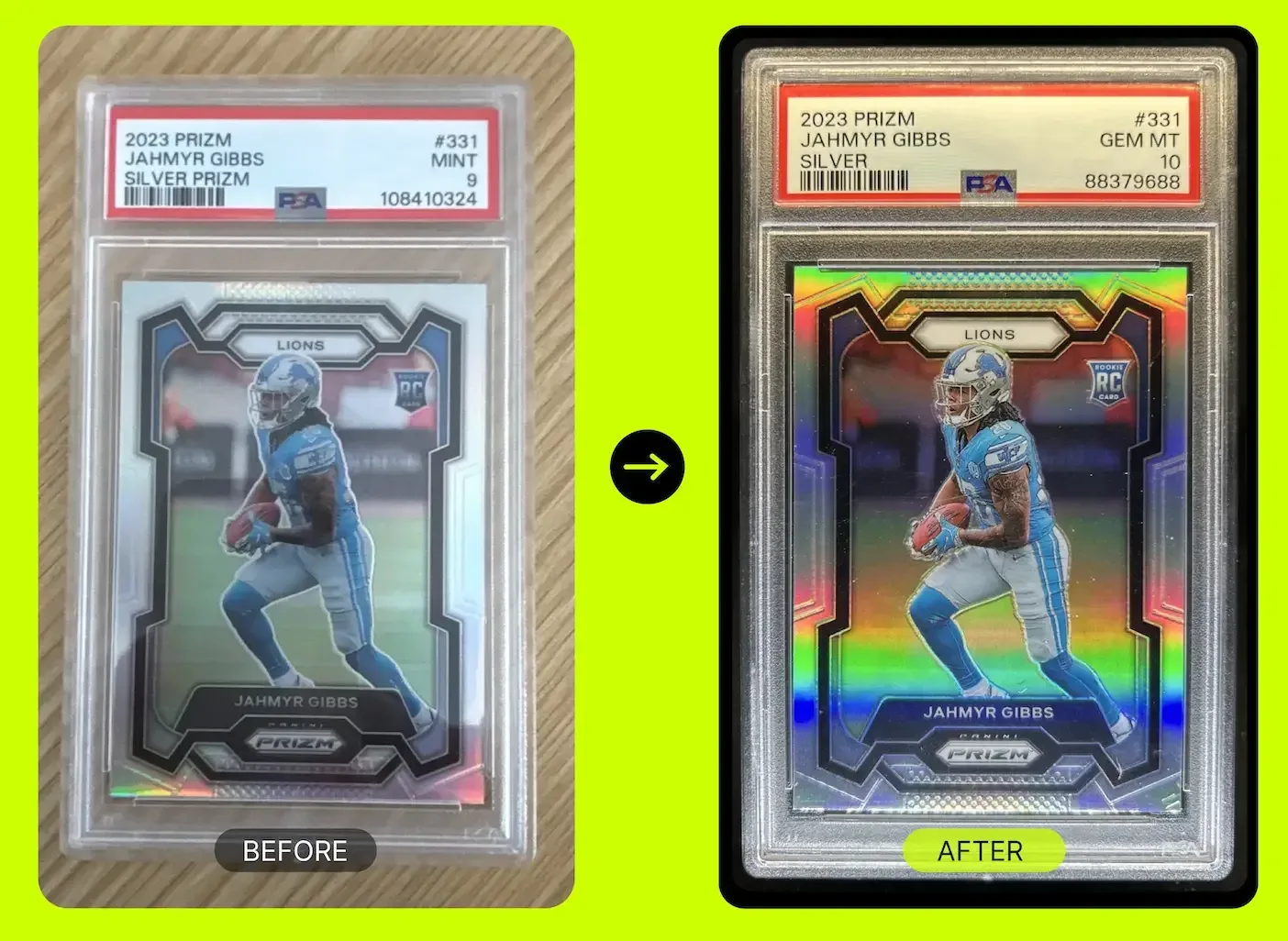
For a trading-card seller, taking the photo is rarely just taking the photo. A card that looks striking in person can become awkwardly dull under a phone camera, while foil surfaces create a second problem: glare. Shift a lamp to reveal a rainbow finish or a reflective pattern and the phone itself can appear in the image. Then comes the work after the shutter press—straightening the card, trimming excess background, moving files and writing a title that helps a buyer understand exactly what is being offered.
Heystack is pitching its Heystack One device and companion app as a more streamlined answer to that chain of tasks. The basic proposition is straightforward: place a card into a purpose-built imaging setup, capture it through the app, and let the software handle repeatable image preparation and listing-oriented data work. It is a workflow aimed less at the occasional collector photographing a favorite pull and more at sellers, consignors and shops processing substantial inventory.
The importance of that distinction is practical. A single imperfect image is an annoyance. Hundreds of imperfect images become an operational problem. When a business has to photograph, identify, title and publish a large volume of cards, small manual steps are multiplied across every item in the stack.
Reflective cards are a deceptively difficult photography job
Foil cards, holographic treatments, refractors and other reflective finishes are particularly challenging because their appearance changes with the light source and camera angle. A pattern may look muted from one position and vivid from another. Meanwhile, a direct reflection can obscure artwork, player imagery, text or surface condition.
Heystack says the Heystack One uses optimized lighting intended to capture a card’s color and refraction—the way light bends and reflects across a shiny surface—with greater consistency. In this context, consistency matters as much as visual flair. A seller needs an image that shows the card clearly and repeatably, not a one-off photo that required a lucky angle and a desk-lamp balancing act.
The company specifically points to finishes such as a Pokémon card swirl and a White Sparkle Prizm as examples of cards whose visual appeal can be difficult to communicate in a conventional phone picture. Those finishes are part of what a prospective buyer may want to inspect. A listing image that loses the effect entirely may undersell the card’s presentation; an image overwhelmed by glare can leave too much ambiguity.
That does not mean a product photo can settle every question about a card’s condition. Lighting and framing can help present a card, but a buyer and seller still need to look carefully at the images available and describe an item accurately. What an imaging workflow can do is reduce the routine friction involved in producing a clearer, more uniform set of photos.
The real pitch is the pipeline after the image
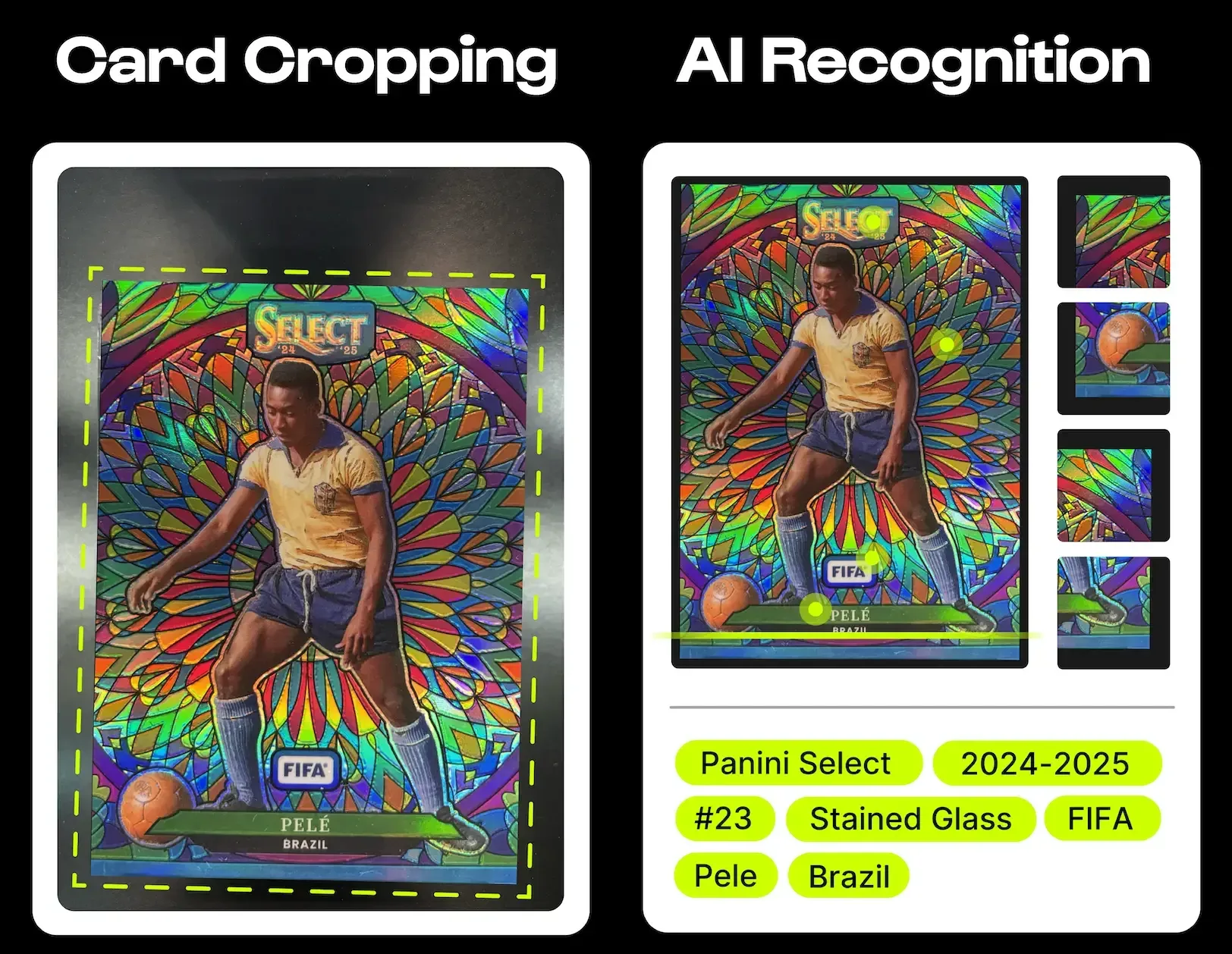
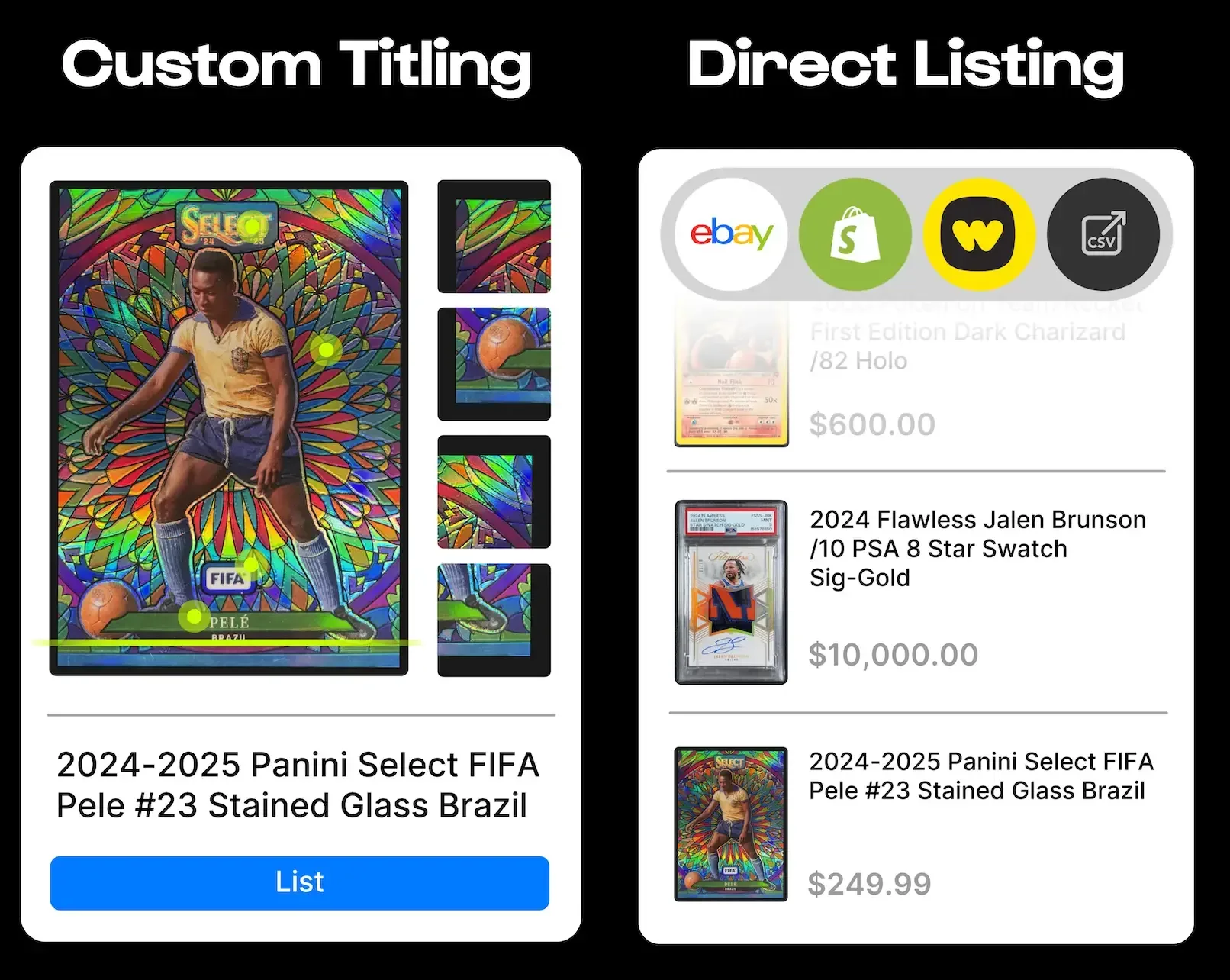
Heystack’s approach extends beyond photographing the card. Once an image is captured, the software is designed to automatically crop it, rotate it into the correct orientation and title it. The platform then supports one-click listing to eBay or Shopify. For marketplaces outside those direct options, Heystack offers downloadable CSV files.
A CSV, short for comma-separated values, is a simple structured text file commonly used to transfer spreadsheet-style information between systems. For a card business, that can mean a way to move listing details into another marketplace’s bulk-upload process rather than retyping the same information card by card. The usefulness of that feature will naturally depend on the requirements of the destination platform and how complete the exported information is, but the goal is clear: keep the captured card data usable beyond a single storefront.
Automatic cropping and rotation may sound mundane, yet they address one of the most repetitive parts of listing preparation. Cleanly aligned images make a storefront easier to browse, and removing manual adjustments can matter significantly when the same action must be repeated across a large submission or daily intake. Standardization also helps businesses establish a more recognizable catalog presentation instead of mixing photos taken under shifting light, against different backgrounds and at inconsistent angles.
Identification and titling may be the more consequential automation layer. A trading-card title is not merely a filename. It is the text that conveys the card’s identity to a prospective buyer and helps sellers organize inventory. The work can be tedious because a card’s useful identifying information may involve a set, subject, card number, parallel or other distinction. Heystack says its card-identification software addresses that bottleneck and presents a matching percentage as part of the process.
That percentage should be understood as a measure of software confidence, not a substitute for seller judgment. A stronger match indication may make review faster, while a weaker result is a signal that the item deserves closer scrutiny before it is published. In a category where versions and visual similarities can matter, a human check remains a sensible part of any automated workflow.
High-volume sellers have the most to gain from fewer handoffs
The major advantage promised by an integrated workflow is not simply a better-looking photo. It is the removal of handoffs between tasks and devices. Traditionally, a seller might take a phone image, transfer it to a computer, crop and straighten it, determine the item’s title, enter listing details and only then publish it. Each step is manageable on its own. Taken together, they can consume much of a day when the inventory is measured in stacks rather than singles.
MC Sports Cards, a consignment company, reported that its volume increased from roughly 500 listings per day to 1,500 per day after using Heystack. That is a company-reported result, not a universal benchmark; staffing, card mix, pre-existing workflows and review practices can all affect output. Still, it illustrates the kind of scale at which capturing and preparing a card in a single system becomes more than a convenience.
Blez similarly emphasized the usefulness of the matching percentage in Heystack’s identification process and described the tooling as central to the operation it has built. Midwest Collects characterized the system as a close-to-complete solution for simplifying the process from capture through sale preparation. These are positive user accounts, but they point toward the same underlying issue: card businesses can be constrained by processing throughput as much as by demand.
For consignors, faster processing can potentially shorten the time between receiving a card and making it ready to sell. For stores, it can make it easier to keep incoming inventory moving rather than building up an unphotographed backlog. For sellers who maintain their own sites as well as marketplace storefronts, the ability to prepare data for multiple destinations is especially relevant.
There is also a customer-facing side to consistency. Buyers scrolling through many listings benefit when images are centered, upright and easy to compare. Clear images cannot guarantee a sale or determine a card’s value, but they help reduce one basic obstacle: uncertainty about what the buyer is viewing. That becomes particularly meaningful with finishes whose appeal depends on light and surface treatment.
Automation can reduce repetition, not responsibility
Tools such as Heystack change the balance of work rather than eliminating it outright. Someone still needs to place and capture each card, verify identification where appropriate, confirm the title and review the listing information before it goes live. The benefit is that more of that person’s attention can be directed toward exceptions and quality control instead of routine cropping, file handling and repetitive data entry.
This is an important distinction for any seller considering workflow automation. The value of an automated image-and-listing system is usually highest when its standard output matches the seller’s normal process. A business that needs highly customized listings or unusual image sets may retain more manual steps. A business handling a repeatable flow of standard single-card listings may see a larger benefit because the work is more readily standardized.
The source material does not provide device pricing, subscription terms, image specifications, supported marketplaces beyond eBay and Shopify, or details on how the identification system handles every card category. Those questions remain worth resolving before treating any platform as a complete replacement for an existing process. Sellers should also consider how images, exports and marketplace fields fit their own inventory practices.
Even so, the problem Heystack is addressing is easy to recognize. Card sellers often have to choose between spending time chasing the ideal reflective-card photo and accepting an image that does not show the item at its best. By combining controlled imaging with automatic image preparation, identification support and export or listing tools, Heystack is attempting to make that choice less necessary.
That matters across a hobby where presentation and precise identification can be inseparable from the selling process. Whether the item is a modern parallel with a striking finish or a historic sports card such as the T206 Ty Cobb Red Background card that recently reached $153,750 at auction, a listing begins with making the object legible to the person on the other side of the screen. Heystack’s premise is that doing so should not require rebuilding the photo setup—and the listing—from scratch every time.