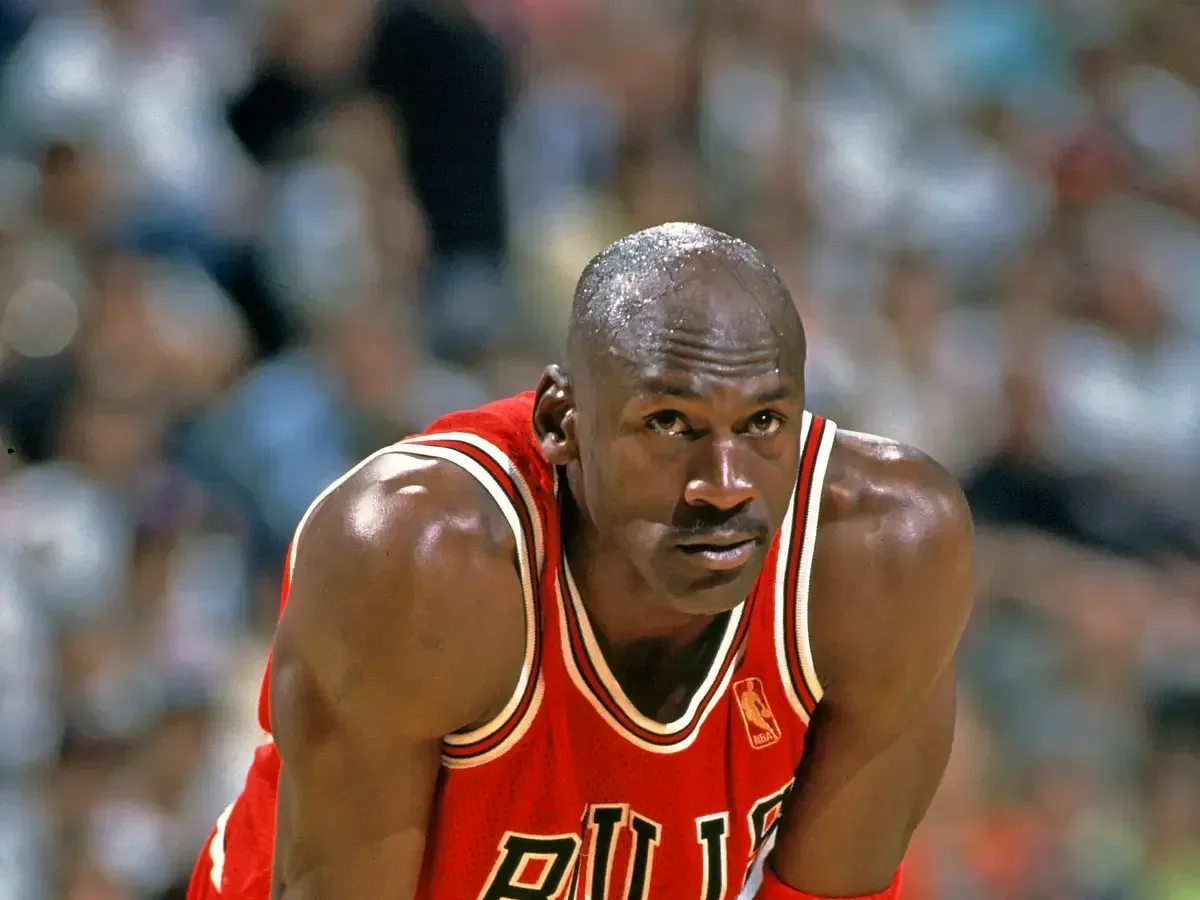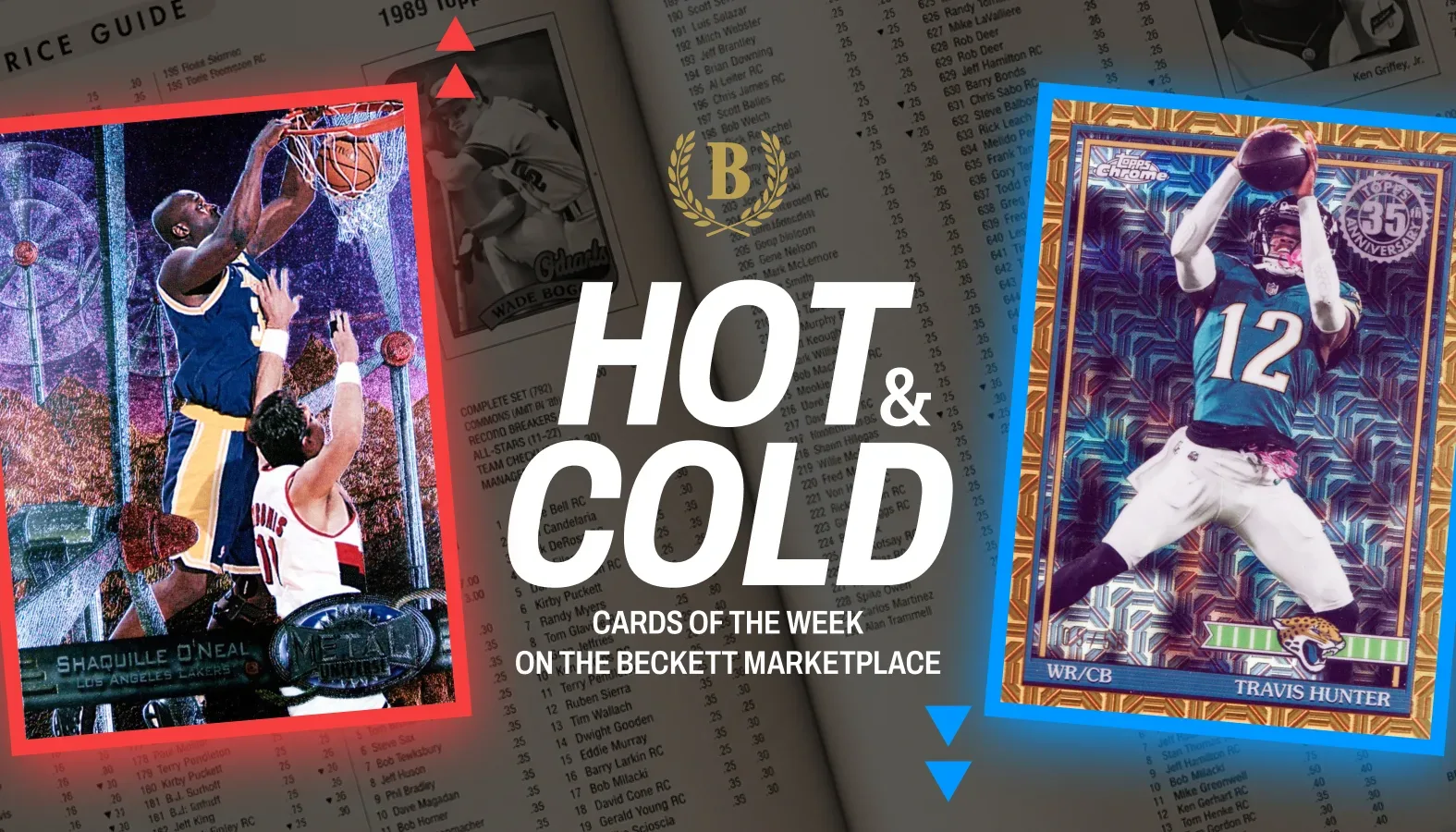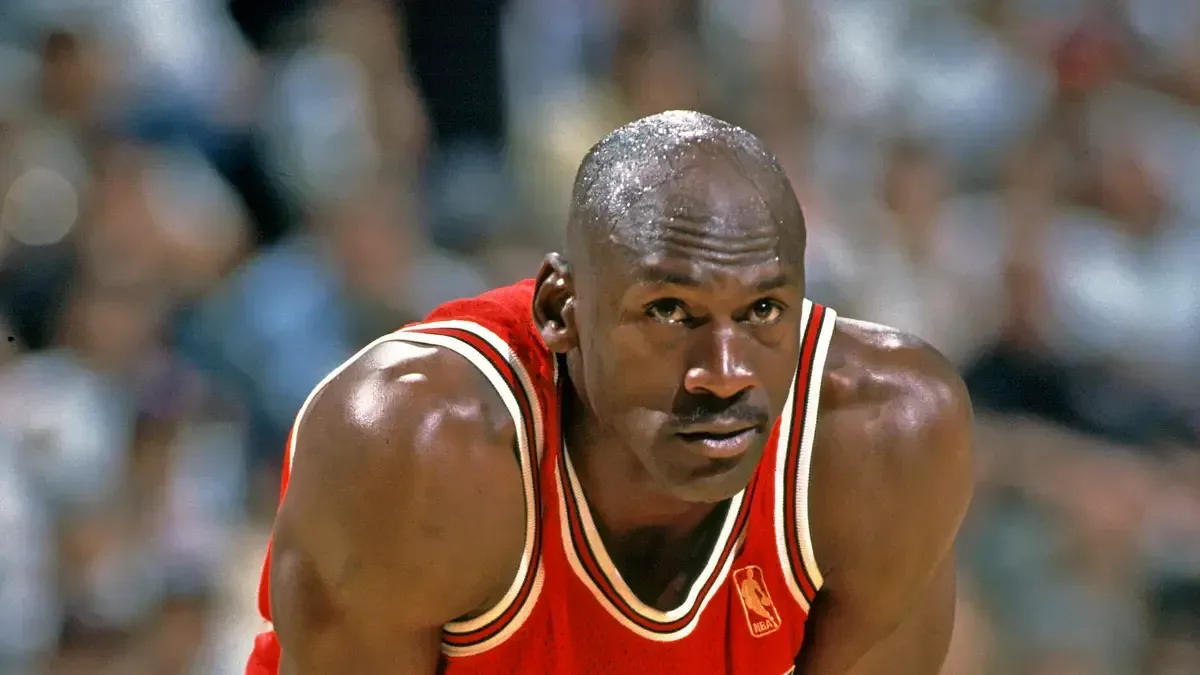
Michael Jordan was the most-searched athlete on eBay in August, with searches rising 20% from July. That is an emphatic result for a player long removed from the court, but the month’s activity was not confined to nostalgia. Shohei Ohtani followed Jordan in search traffic, Kobe Bryant rose 20%, Shaquille O’Neal jumped 170%, and Mavericks rookie Cooper Flagg ranked fourth overall.
Then there was the wild-card collectible: a Yankees George Costanza bobblehead. Searches for it climbed more than 700% month over month after the August 27 stadium giveaway. In a single month, the marketplace’s search data captured several distinct collector impulses: established icons, present-day dominance, rookie speculation, pop-culture scarcity and the immediate aftermarket created by a limited in-person promotion.
The important distinction is that searches signal attention, not necessarily a consensus on value. A collector may search to research a card, compare listings, follow an auction, or see what a promotional item is selling for. Completed sales, meanwhile, show what at least one buyer paid at a specific moment. August supplied striking examples of both—and a reminder that the two do not always move at the same speed.
Jordan’s enduring market has both depth and a ceiling
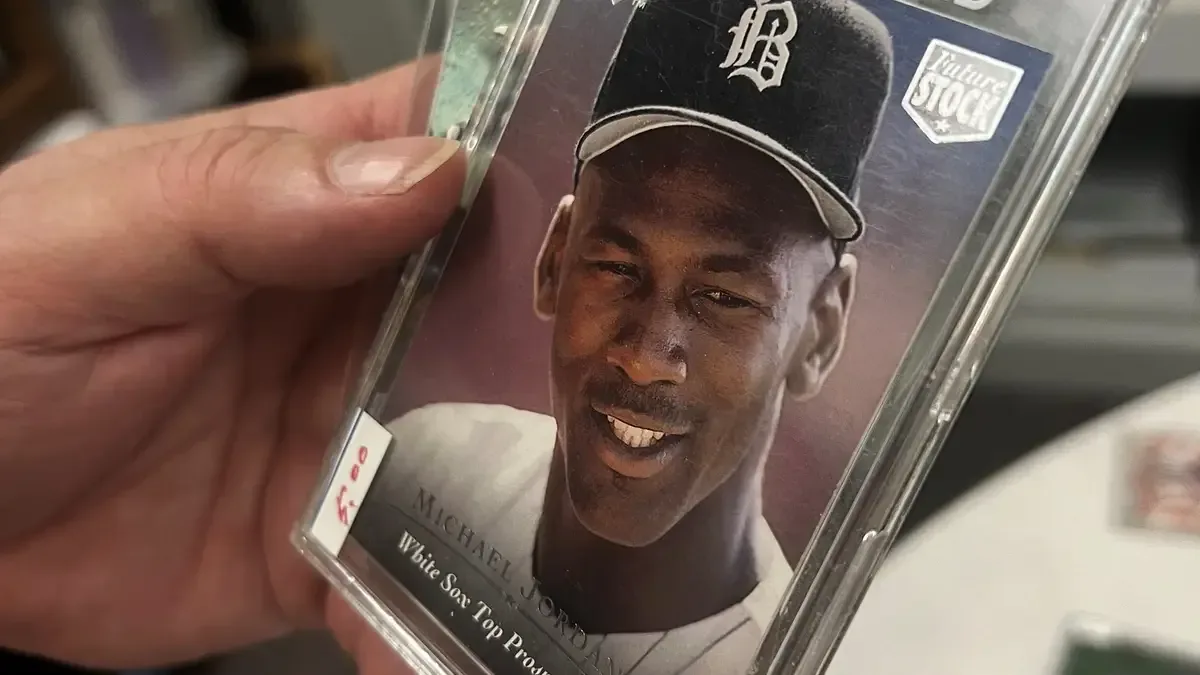
Jordan’s month had the kind of breadth that helps explain why a 20% search increase matters. Interest spanned singles, lots, sets and unopened product, known in the hobby as wax. The largest reported eBay transaction was a factory-sealed 1986-87 Fleer box, signed and inscribed by Jordan “Rookie Card Box 1/1,” which sold for $900,100.
A sealed box is not simply a stack of cards in this context. It is a distinct collectible with its own condition, authenticity and preservation questions, while its connection to one of the hobby’s defining rookie-card issues drives much of its appeal. The added Jordan signature and one-of-one inscription make that particular item far more specialized than an ordinary sealed box. Its price should therefore not be read as a direct price guide for loose 1986-87 Fleer cards or even other unopened boxes.
Jordan also had 22 eBay listings sell for more than $50,000 during the month, with five above $100,000. Two 1984 Star #101 rookies in MBA and PSA holders reached six figures. A 2000 Upper Deck Pros & Prospects jersey autograph, numbered to 23 and graded BGS 8.5, ended at $134,100 after 89 bids.
Those acronyms matter because they describe third-party grading holders, often called slabs. PSA, BGS and MBA are grading companies; the numerical grade is an assessment associated with a specific card’s condition. A slab can make identification and condition easier for buyers to evaluate, but the grade, grading company, card issue, serial number, autograph and memorabilia element all affect comparability. “Jordan card” is not a single market.
At the absolute high end, a 1997 Metal Universe Precious Metal Gems Jordan graded BGS 8 reportedly set a new public-sale high for a Jordan card at nearly $1.5 million in an Alt sale. Precious Metal Gems are a highly sought-after 1990s insert line, and the result is a useful illustration of why a famous athlete’s market contains vastly different tiers. A scarce, iconic insert in a high-grade slab has a very different buyer pool from a common base card, even though each bears the same player’s name.
The Card Ladder index for Jordan rose 13% in August. That figure adds another indicator of market direction, but collectors should avoid treating any index as a substitute for matching a specific card to genuinely comparable sales. A high-profile record can improve visibility across a player’s catalog without determining what every issue, grade or format will do next.
Ohtani blends modern relevance with high-end scarcity
Ohtani was second to Jordan in eBay athlete traffic and recorded an 11% August gain in his Card Ladder index. The numbers arrived despite a drop from his career-high power production and injuries that had kept him from pitching since early July. His collector appeal is built around a rare combination of current star power and the two-way profile that has made him one of the defining modern names in the hobby.
Four different slabbed, rookie-year Ohtani autographs sold for more than $50,000 on eBay during August. The leading example was a BGS 9.5 2018 Topps Heritage Real Ones Autograph, hand-numbered 63/69, at $105,200.
Hand-numbered means the card bears an individual serial notation written as part of its production, here 63 out of 69. That numbering does not by itself settle desirability—set, autograph, grade and player demand remain important—but it gives collectors a defined production limit. It also prevents a common mistake in headline-driven collecting: assuming every signed card from a player is interchangeable with the rare card that made the news.
Ohtani’s other August landmark was a 2025 Topps Dynasty Gold Logoman, graded PSA 9, that reached $1.14 million in a Fanatics Premier auction on August 28. It followed a $11 million public sale on July 30 for his 2025 Topps Chrome Dual Logoman Auto, described as the third-highest public sale of all time.
“Logoman” refers to a card featuring an NBA, MLB or other league-logo patch element depending on the product and sport; in premium modern cards, the specific patch and the card’s one-of-one or limited status can be central to its appeal. The Ohtani figures demonstrate the gulf between elite, ultra-scarce patch-autograph cards and more attainable Ohtani releases. They also show why collectors watching a postseason return should separate excitement around a player from the exact inventory being offered.
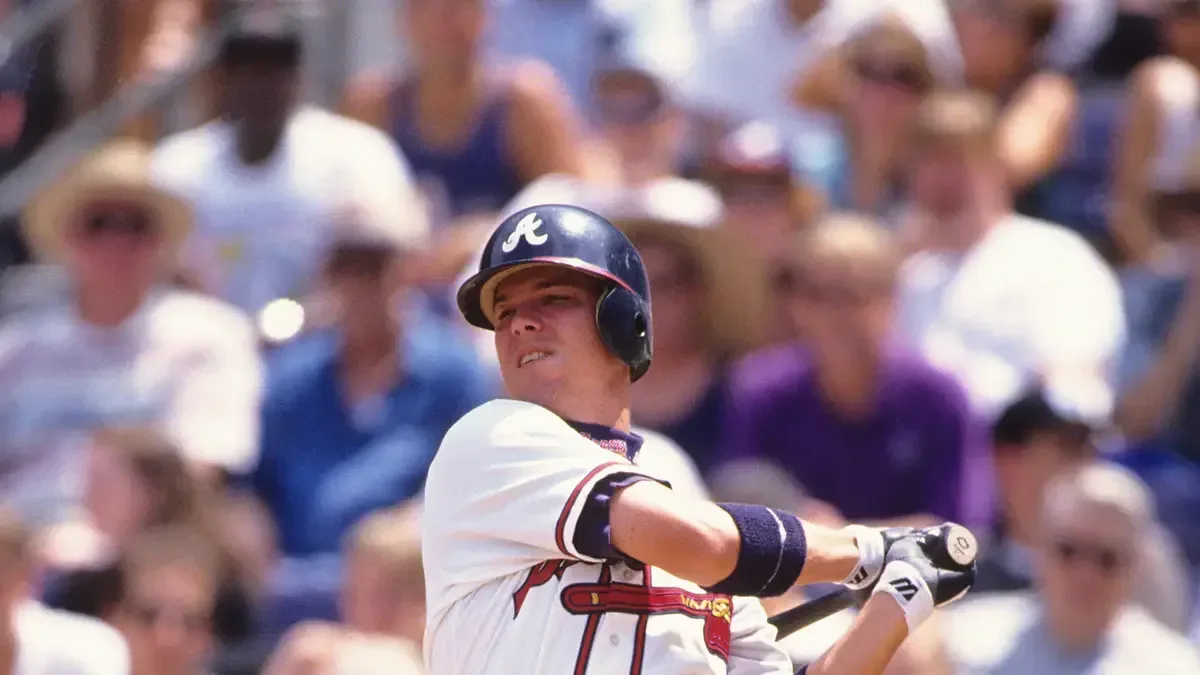
For collectors who want a more grounded comparison exercise, this look at five Chipper Jones cards from his early collecting run is a useful reminder that a player checklist can include very different entry points and collecting stories.
Kobe and Shaq show that attention can spread across an era
Bryant trailed only Jordan and Ohtani among the most-searched athletes in August, after a 20% increase in searches. One standout sale was a raw 1997 SkyBox Premium Rubies, numbered to 50, which brought $300,000 on August 26. Raw means the card was sold without a third-party grading holder.
The result was higher than the $226,500 paid for a PSA 8 copy two months earlier, as well as a $122,000 sale for another PSA 8 about a year before that. The sales are attention-grabbing, but they also underline why collectors must be careful with simple grade-based comparisons. A raw card and a graded card are not automatically like-for-like, and the documented sales concern different individual copies at different times. Centering, surface quality, eye appeal, provenance and auction timing can all influence the outcome.
O’Neal’s increase was even sharper. Searches surged 170%, placing him fifth among August’s most-popular athletes on eBay, while his Card Ladder index climbed 43.89%. Reported demand reached from high-end parallels into base cards and lower-end inserts. A parallel is a variation of a main card design, often distinguished by finish, color, scarcity or numbering. An insert is generally a card placed within a product separately from the core base set.
That cross-tier demand is notable because it suggests collectors were not focused only on a single trophy card. Still, a rise in searches does not guarantee that every Shaq card has equal liquidity or deserves the same valuation. The practical read is simpler: sellers and buyers alike have more reason to identify the exact year, set, variation, serial number and condition before relying on broad player-level headlines.
Rookie searches move fastest when the news cycle changes
Flagg posted the largest month-over-month search-volume increase among basketball players other than O’Neal, up 30%, and ranked fourth in total athlete searches. His high-end rookie parallels have already commanded major sums: three separate one-of-one Superfractors sold between $182,000 and $288,000 in August. A PSA 10 Topps Chrome Sapphire Gold Refractor autograph sold for $77,000.
A Superfractor is a one-of-one parallel, meaning only one copy exists within that stated version of the release. That scarcity helps explain why three different one-of-one cards can each command high prices without establishing a direct value for standard Flagg rookies. His one-of-one debut patch was also the subject of a multimillion-dollar bidding contest, signaling how quickly the top of a rookie market can become a separate arena from regular issues.
Baseball prospect George Lombard Jr. provided perhaps the clearest example of search traffic responding immediately to an on-field moment. After his August 4 major-league debut for the Yankees, in which his first big-league hit was a home run to left field, searches for the 21-year-old shortstop rose more than 840%. Nine 2024 Bowman autographs and parallels sold for at least $10,000 from his call-up through the end of the month. His 2026 Bowman Chrome Prospect Auto Superfractor, graded PSA 9, sold for $18,000.
For prospects, the key word is volatility: values and searches can change dramatically after a call-up, a debut, an injury or a stretch of performance. The Lombard figures describe a powerful burst of attention, not a promise that every prospect card will sustain a new level.
Football’s August search spikes were rooted in preseason anticipation. Searches for Tennessee wide receiver Carnell Tate autographs rose 410% from July despite no catches on six preseason targets. Cowboys first-round safety Caleb Downs jumped 380% before his strong regular-season debut. Jeremiyah Love rose 230% after limited preseason flashes before an ankle injury, while Raiders No. 1 pick Fernando Mendoza increased 210% with Kirk Cousins ahead of him on the depth chart. In each case, collectors were searching into uncertainty, which is often the defining condition of the rookie-card market.
George Costanza proves promotions can create a quick collectibles market
The Yankees’ third annual George Costanza bobblehead giveaway brought the month’s most comic search spike. The first 18,000 fans at the August 27 game received a figure depicting the fictional former assistant to the traveling secretary in a Yankees jacket and holding a calzone. Weather delays did not deter fans who waited for the promotion.
Listings appeared on eBay, including some from people who had not yet received their bobbleheads. Searches for “George Costanza bobblehead” increased more than 700% month over month. Multiple sales landed around $75, and the reported high was $115 in the days around the giveaway.
This is a different market from a serial-numbered autograph or a slabbed rookie card. The item’s scarcity was tied to a specific attendance promotion and a fixed first-18,000 distribution. Immediate demand was also fueled by a recognizable television reference, the Yankees connection and buyers who could not attend. Because listings emerged during the promotion window, early pricing may reflect urgency as much as any durable long-term collecting value.
For anyone considering a stadium-giveaway collectible, the useful questions are physical rather than speculative: Is the item complete? Is the original packaging included? Has it been handled or damaged? Is the listing for an item already in hand, or a promise to ship later? These checks do not predict the market, but they make a purchase decision clearer.
August’s search leaders ultimately show a marketplace operating on multiple clocks. Jordan’s results came from deep, established demand and rare-card milestones. Ohtani combined contemporary relevance with premium scarcity. Kobe and Shaq reflected continued enthusiasm for 1990s basketball. Flagg, Lombard and football rookies demonstrated how quickly the prospect cycle can turn. And Costanza showed that a limited giveaway can make a calzone-holding bobblehead the week’s most urgent search. The shared lesson is not that every spike should be chased; it is that the exact collectible behind the spike matters as much as the name on it.