At the top of the sports-collectibles market, a one-of-one is no longer simply a rare card serial number. Increasingly, it is a specific, documented moment: an athlete’s first game, a patch worn on that occasion, a signature, and a sales campaign built to make global bidders care about every layer at once.
The result is an auction-market arms race. Consignors with the most consequential cards and game-worn artifacts can weigh more than a house’s fees or minimum guarantee. They can look for an audience, a convincing presentation, a fast route to sale and confidence in the chain connecting athlete, game-used material, card, seller and buyer.
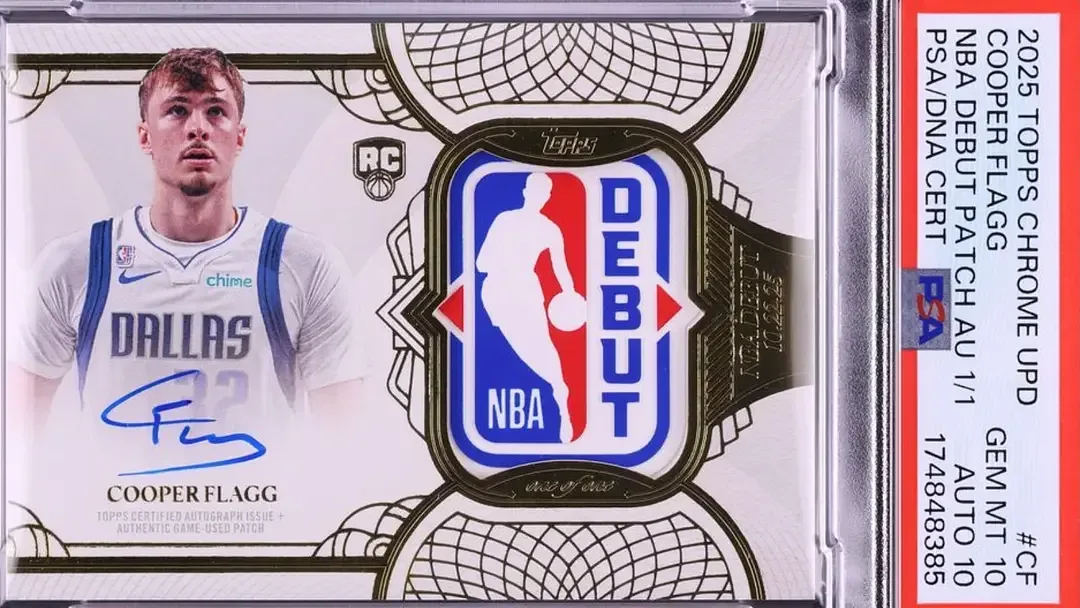
That shift is visible in a string of high-value results and upcoming offerings. The 2025-26 Topps Chrome Update NBA Rookie Debut Patch Autograph 1/1 for Cooper Flagg, containing a patch from his first NBA game, sold for $8.04 million through Fanatics Premier on September 25, 2026. In the same auction, Dylan Harper’s debut-patch card brought $2.88 million and Kon Knueppel’s reached $2.34 million.
Those figures are remarkable not merely as prices but as a sign of what sophisticated buyers are being asked to value: a scarce manufactured collectible tied to a narrowly defined event. Meanwhile, an Ohtani jersey with several overlapping claims to historical importance is being marketed internationally, and a Michael Jordan Finals jersey has already surpassed $10 million through a platform chosen for its approach to presentation. The auction itself has become part of the product.
What makes a modern sports grail?
Collectors have long treated photo-matched, game-worn jerseys as elite memorabilia. Photo matching is the process of comparing distinctive visual details on an item with images from use, helping connect the physical artifact to a particular game or moment. Trading cards later created another category of game-used grail through Logoman cards: cards incorporating an NBA, MLB or other league logo patch from equipment.
Debut Patch and Gold Logoman concepts push the appeal further toward singularity. A Debut Patch card is centered on material from a player’s first game, while a Logoman refers to a card featuring a league-logo patch. The Gold Logoman adds another deliberate scarcity and “first” narrative to the artifact. In each case, the object’s desirability comes from a combination of rarity, player appeal, the material itself and the exact occasion behind it.
That is meaningfully different from treating a rookie card as valuable only because it is an early-career issue or scarce print run. The Flagg result suggests that the market can assign enormous value to a player’s debut-linked artifact even before championships, MVPs or career records enter the equation. It does not mean every debut item will achieve comparable demand. Rather, it shows how a clearly defined event can become its own collectible asset when scarcity, provenance and presentation line up.
For hobbyists, this is a useful distinction. “One of one” describes supply, but it does not automatically explain significance. A stronger case typically layers several attributes together:
Related coverage includes Auction Houses Are Rewriting the Playbook for Grail Cards and Historic Sports Memorabilia.
- A precise event: a first game, a major Finals contest or a landmark international appearance.
- Direct material connection: a game-worn patch or jersey tied to that occasion.
- Documented provenance: evidence that supports what the item is and when it was used.
- Player and cultural relevance: an athlete with broad collector interest and a moment that travels beyond one local market.
- Presentation: a persuasive explanation of why those attributes matter together.
Grading can add another layer on the card side. Flagg’s card was described as PSA 10 for the card and Auto 10 for the autograph. Those are condition assessments, not proof of the patch’s game connection; the two ideas serve different functions. Condition tells buyers about the card and signature’s state, while provenance addresses the story and origin of the embedded memorabilia.
Why auction houses are changing the pitch
Traditional auction houses helped establish high-end memorabilia through catalogs, email lists and, later, social media. Those channels remain useful, but the latest competition is about a more immersive campaign that can reach bidders across markets and turn a single lot into an event.
Fanatics’ position around the Flagg, Harper and Knueppel cards illustrates the appeal of an integrated path. It manufactured the cards, sold the boxes from which they came and consigned the cards through its auction platform. For buyers and sellers, that can create a more continuous line of communication and a clearer trust proposition around an unusually complex product. It also creates speed: attention from the initial product release can potentially carry into the major sale rather than needing to be rebuilt from scratch.
Liquidity is the key financial term here. In collectibles, liquidity means the ability to find a willing buyer and complete a sale at a credible market price. A multimillion-dollar item is inherently harder to sell than a common card because the pool of potential buyers is smaller. A house with a substantial global audience, capable promotion and confidence from bidders may therefore be more attractive to a consignor even if the deal is not judged by fees alone.
That does not turn marketing into a replacement for substance. A glossy campaign cannot make an ordinary artifact historically unique. But when an artifact already has a compelling case, promotion helps surface that case to collectors who may be competing across sports, categories and countries for a limited amount of capital. The bid is not solely for fabric and cardboard; it is also for the confidence that the item’s story will remain legible to the next potential buyer.
The broader hobby has seen how narrative can change the heat around specific issues, variants and scarcity claims. Even outside sports, collectors carefully follow which limited releases gain traction, as seen in the recent market attention around Amazing Spider-Man #1000 variants. The sports market operates at a vastly different price tier in these cases, but the central lesson is familiar: scarcity needs context before it becomes lasting desirability.
Ohtani’s Tokyo Series jersey is a test of layered significance
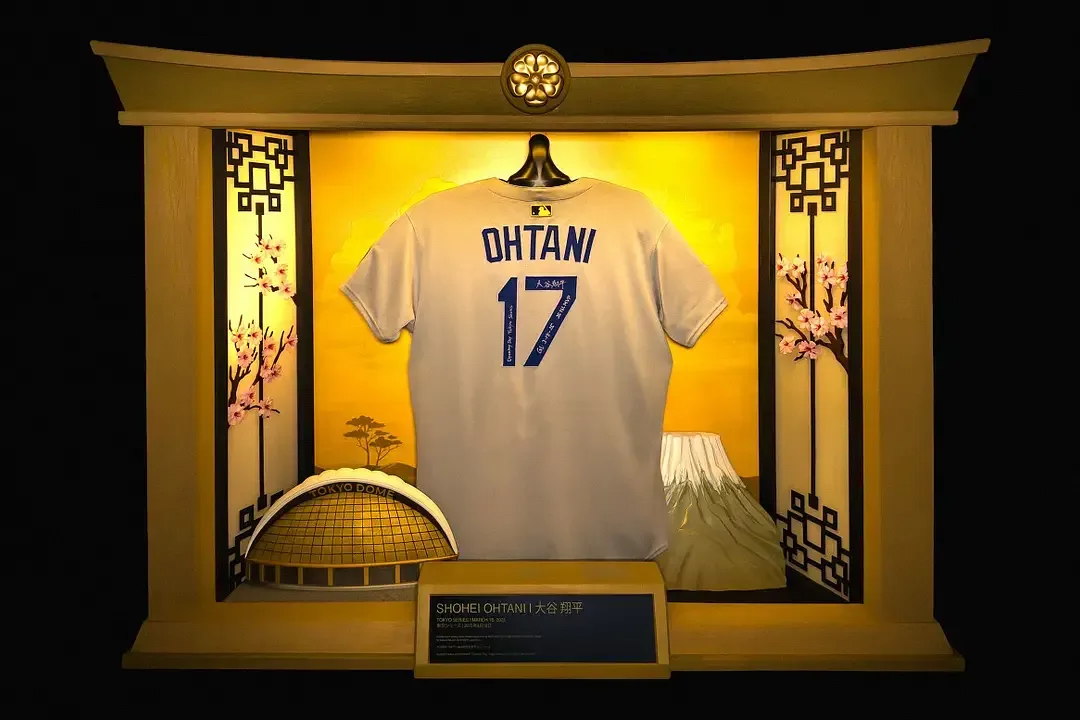
One forthcoming example is a signed Shohei Ohtani Dodgers road-gray jersey worn during the first MLB game played in Japan in the 2025 season. The offering carries several distinct points of significance. It was worn by Ohtani, came from an MLB game in Japan, marked the first MLB-game use of a Gold Logoman, and was signed by Ohtani in both English and Kanji.
Each feature is potentially meaningful by itself. Together, they create what might be called layered provenance: several verifiable reasons for collectors to treat one artifact as exceptional rather than relying on a single broad claim of rarity. The item is not just an Ohtani game-used jersey, and not just a Gold Logoman jersey. Its appeal depends on the convergence of player, venue, season-opening context, inaugural Gold Logoman use and dual-language signature.
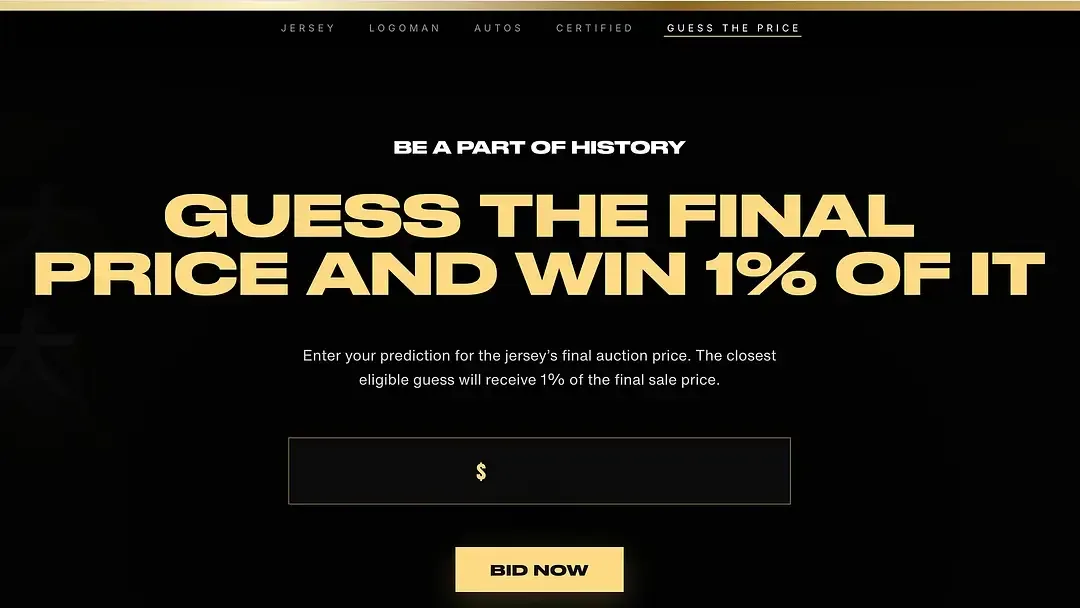
The Realest has paired the offering with a global marketing tour and a return of its “Guess the Price” contest ahead of an October 17 close. That approach makes practical sense for a category where the appropriate buyer may not be actively searching an auction catalog on a given week. Interactive promotion can widen awareness and invite people to reckon with the value proposition before bidding begins.
There is also an implicit comparison point in Ohtani’s market. His dual Logoman card previously sold for $11 million. That sale does not establish what the jersey will bring, and it would be a mistake to treat one high-profile comp as a price guarantee for another category. Cards and jerseys have different buyer bases, physical characteristics and supply histories. Still, the comparison explains why the jersey is being discussed in the same elite conversation: both are game-used Ohtani artifacts with powerful one-of-one narratives.
Jordan shows the value of treating memorabilia as culture
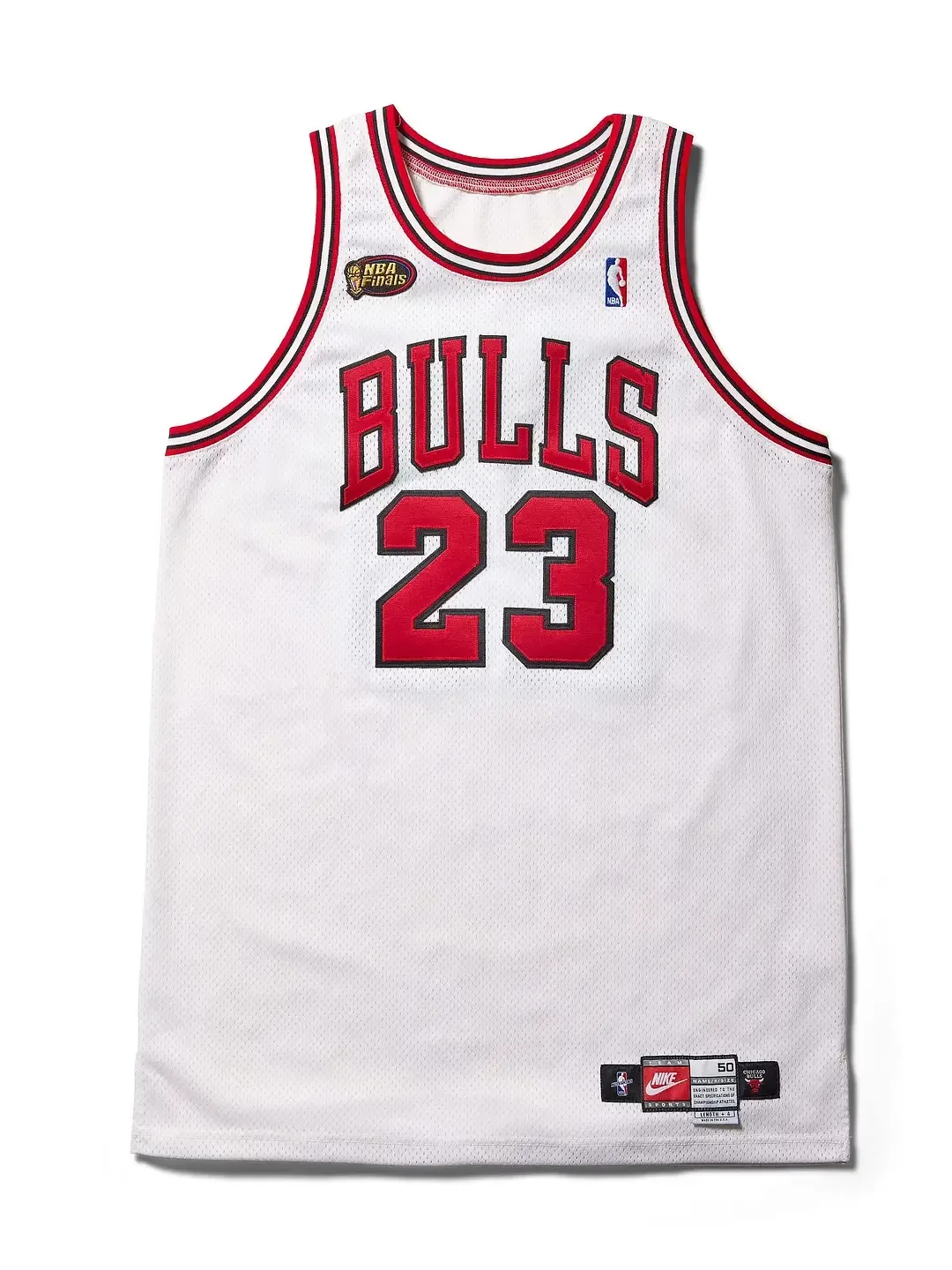
The case for presentation is perhaps clearest in the sale of Michael Jordan’s white Chicago Bulls jersey worn in Game 3 of the 1998 NBA Finals. The jersey sold for more than $10 million through JOOPITER, a record price for a Jordan jersey.
The consignor, collector Rob Gough, selected a platform associated with a nontraditional cultural presentation rather than relying solely on the old auction-house template. JOOPITER was founded by Pharrell Williams, and Gough praised its work in framing the jersey as history with connections among sports, culture and collecting.
That choice points to a major change in the consignment business. The winning platform may be the one that can make a case for why an object matters to art-minded collectors, sports fans, fashion-adjacent audiences and established memorabilia buyers simultaneously. This is not simply hype for hype’s sake. A 1998 NBA Finals Game 3 Jordan jersey comes with inherent importance. The job of the sale platform is to translate that importance across communities and make the lot feel commensurate with its place in basketball history.
What collectors should take from the headline sales
Million-dollar outcomes are attention-grabbing, but they should not be read as a blanket instruction to chase every numbered patch card or game-worn item. The market’s top results are highly selective. The strongest offerings described here have a specific moment, major player interest, unusually limited material and an auction strategy that brings those elements together.
Collectors evaluating modern game-used cards can ask practical questions before becoming absorbed by a “1/1” label:
- What exactly does the memorabilia connection say? Is it tied to a debut, a particular game or a broader player-worn designation?
- Is the event meaningful on its own, or is the appeal being built mainly from artificial scarcity?
- What independent documentation or product information supports the stated connection?
- What features are truly unique, and which are common across the product line?
- Are you valuing the item as a personal collection piece, an investment, or both?
The last question deserves unusual honesty. Auction records can inform a market, but no two grails are perfectly interchangeable. The buyer who loves a player’s debut, their home-country appearance or an iconic Finals game may value an artifact differently from an investor focused on future resale. A sound personal collection decision does not require predicting the next eight-figure sale.
For auction houses, the implication is equally straightforward: record consignments demand more than a listing page. As licenses expand across leagues and new game-linked products emerge, houses will be competing to supply credibility, an international bidder base and storytelling that gives collectors a reason to care now. The next grail may come from a moment that has not happened yet. But the platforms hoping to sell it are already building the playbook.