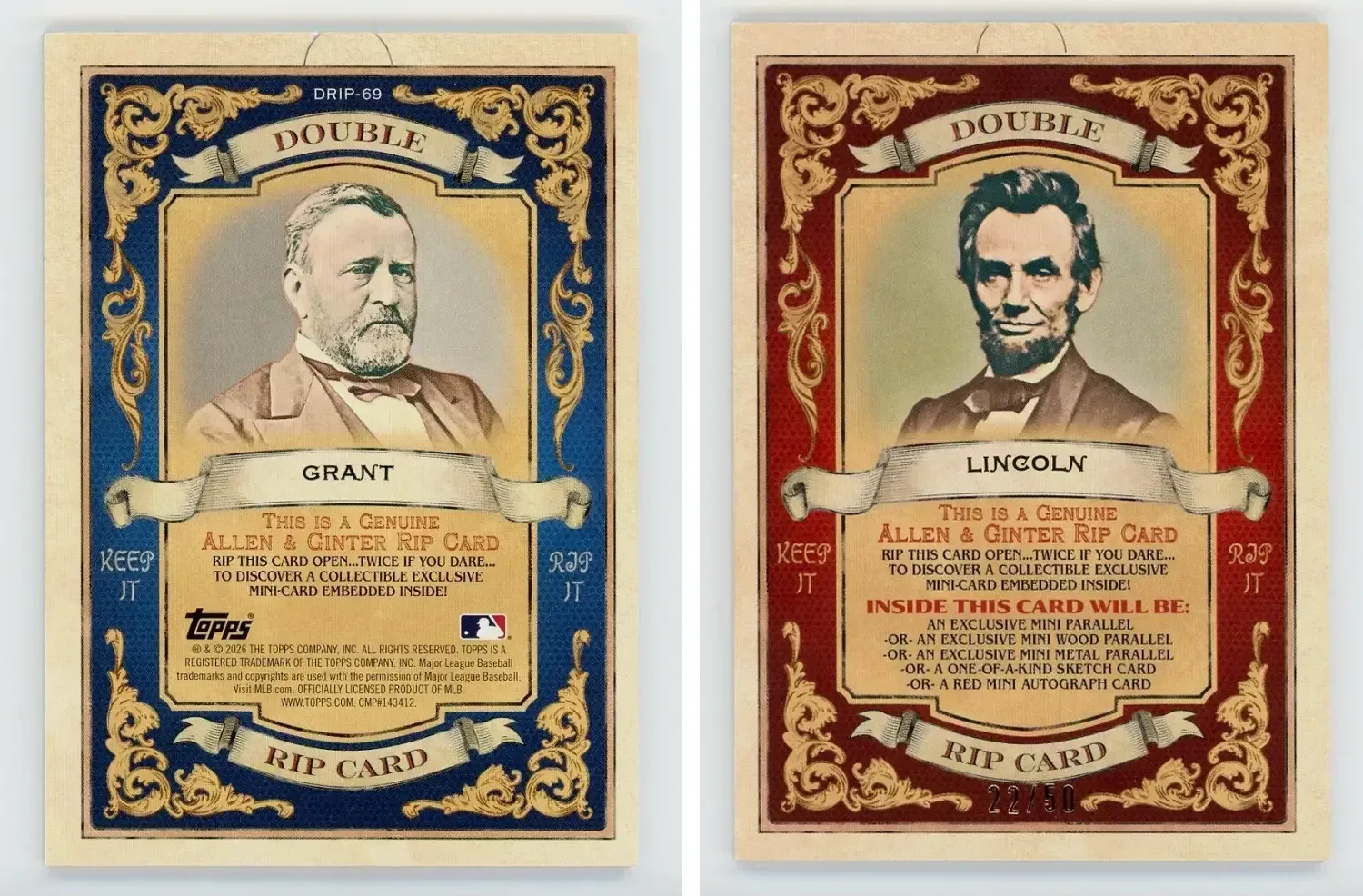
Baseball may be the foundation of Topps Allen & Ginter, but some of the most striking cards reported from the 2026 release have nothing to do with a batting average, a rookie season or a Hall of Fame case. Early pulls include music stars, actors, a comedian, a DJ and, most unexpectedly, an Abraham Lincoln autograph placed into a modern trading card.
Released on October 7, 2026 Topps Allen & Ginter continues the set’s familiar broad approach: baseball players and legends share space with entertainers, public figures and historical subjects. The formula is not merely a novelty tucked around the edges of a sports release. Its vintage-inspired look, miniature cards and unusual autograph formats make the non-baseball material a meaningful part of the chase.
That matters because collectors do not all approach a product with the same checklist priorities. A baseball-focused buyer may be searching for a particular player, while a music fan may care most about a signed card from a favorite artist. Allen & Ginter makes room for both pursuits in one product—and occasionally makes a pack-opening decision far more complicated than expected.
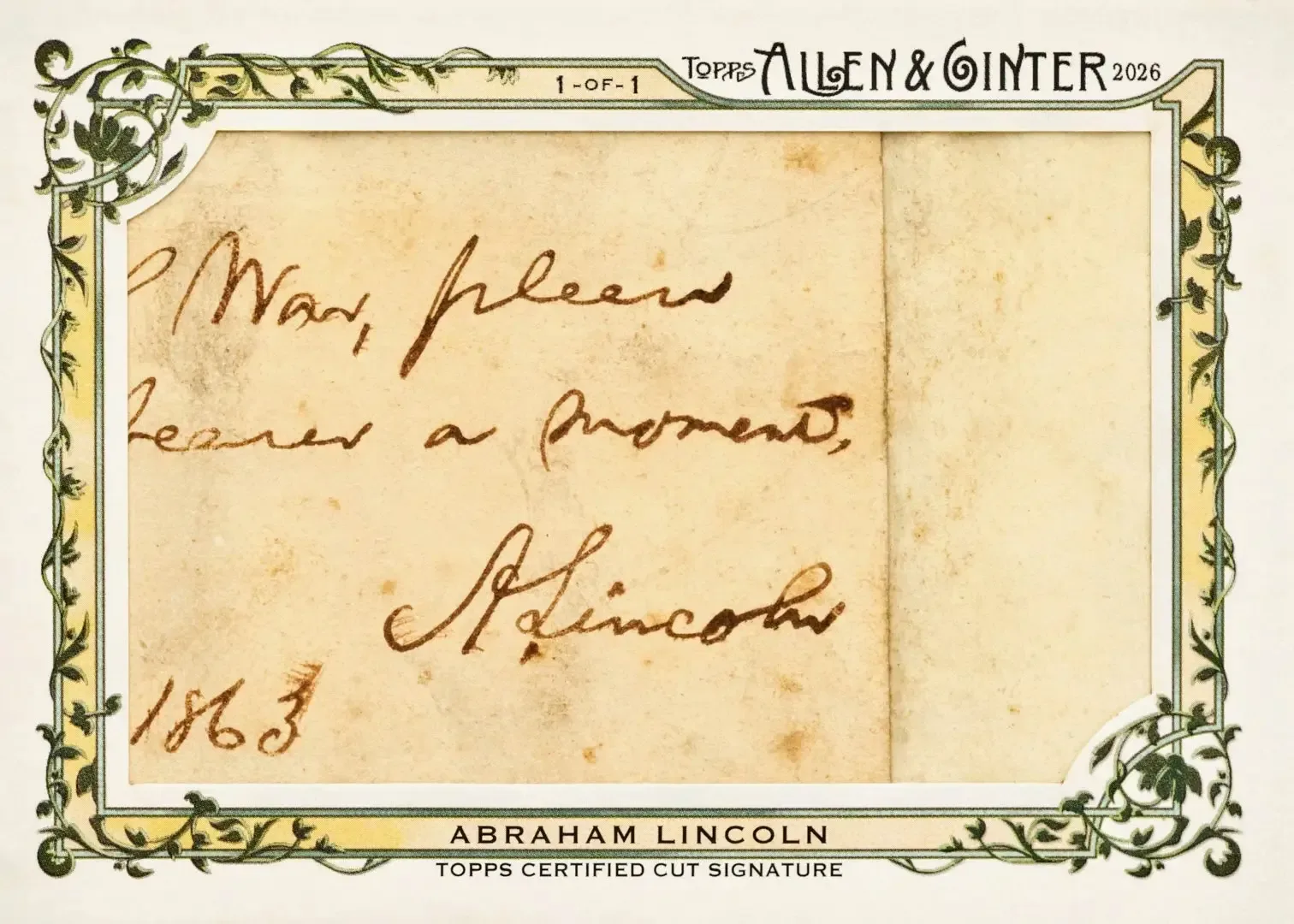
The standout: a one-of-one Abraham Lincoln cut signature
The most unusual early reveal is a one-of-one Abraham Lincoln cut signature. A cut signature is an autograph from an existing signed item that has been incorporated into a trading card. In this instance, the Lincoln signature is described as an authentic historical autograph placed in a contemporary card format.
Its appeal is easy to understand. Lincoln is a historical figure rather than a conventional modern signing subject, so the card sits at an intersection of autograph collecting, history and trading cards. It also demonstrates the unusual ceiling of a product whose name and core identity remain linked to baseball.
Lincoln appears elsewhere in the release as well. A Double Rip Card numbered to 50 pairs him with Ulysses S. Grant. The card format presents its own collector choice: preserve the numbered card as it is, or open it to reveal the miniature cards concealed within.
That tension is central to the idea of a Rip Card. The outside card is itself a collectible object, particularly when it carries a limited serial number and an appealing subject pairing. But its purpose also includes the possibility of a hidden mini-card chase. Once opened, it cannot return to its original intact state. The Lincoln-and-Grant pairing makes that choice especially pointed because the outer card is already a distinctive historical collectible before anyone considers what may be inside.
Music autographs bring several kinds of scarcity
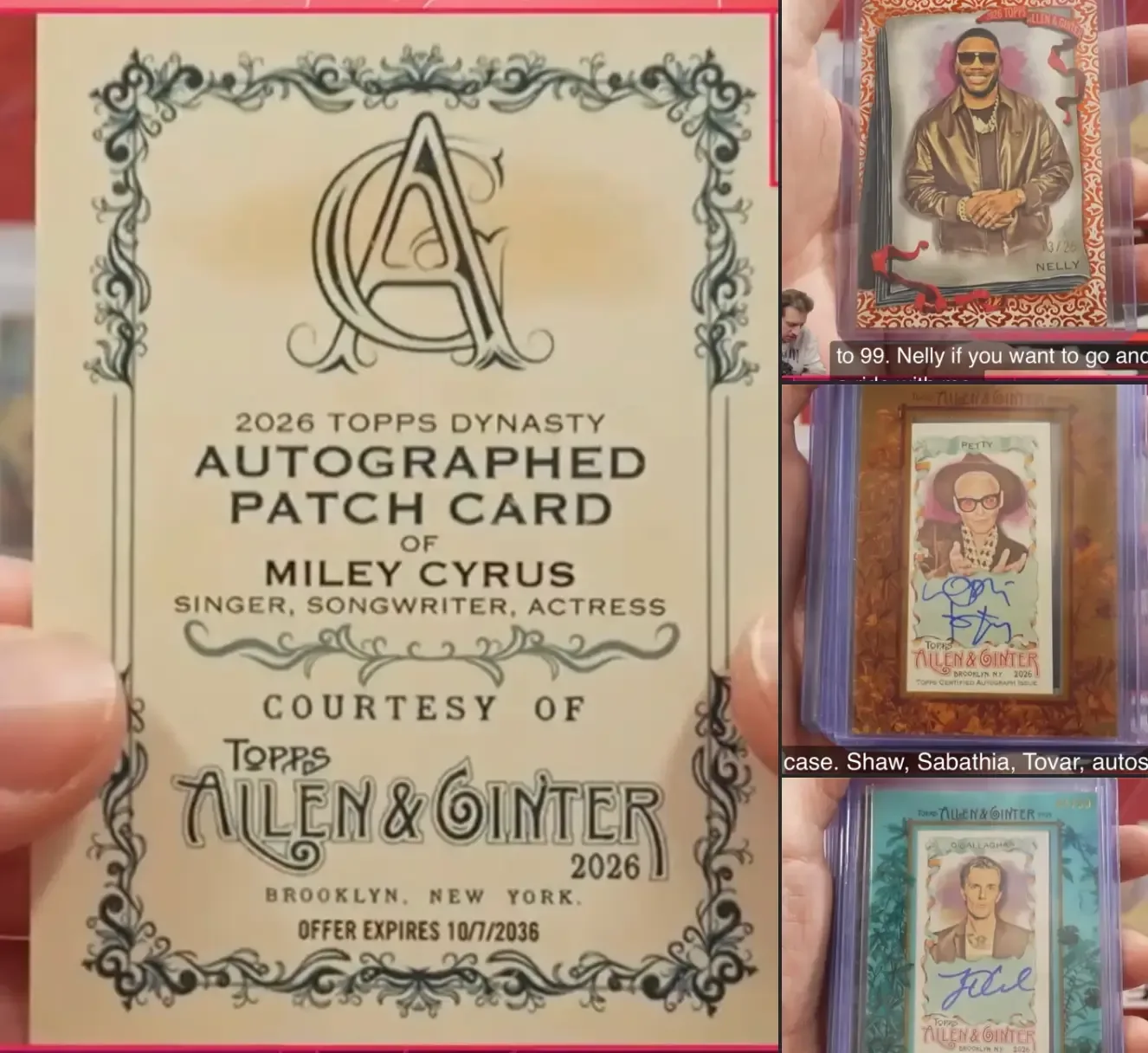
Miley Cyrus is among the major entertainment names represented in the 2026 lineup, and an Autographed Patch Card in the Topps Dynasty format has surfaced. An autographed patch card combines a signature with a fabric patch element, a premium-style treatment more often associated with high-end sports cards. Bringing that approach to Cyrus creates a card aimed at collectors whose interests may overlap between music memorabilia and modern card formats.
Related coverage includes 2026 Topps Allen & Ginter Non-Sports Hits Include Lincoln, Miley Cyrus and More.
Linkin Park’s Mike Shinoda has also appeared in an early pull through a Red Ink Autograph limited to 10 copies. The stated numbering is important: a card numbered to 10 has a fixed, very small production run, giving collectors a clear measure of that particular version’s scarcity.
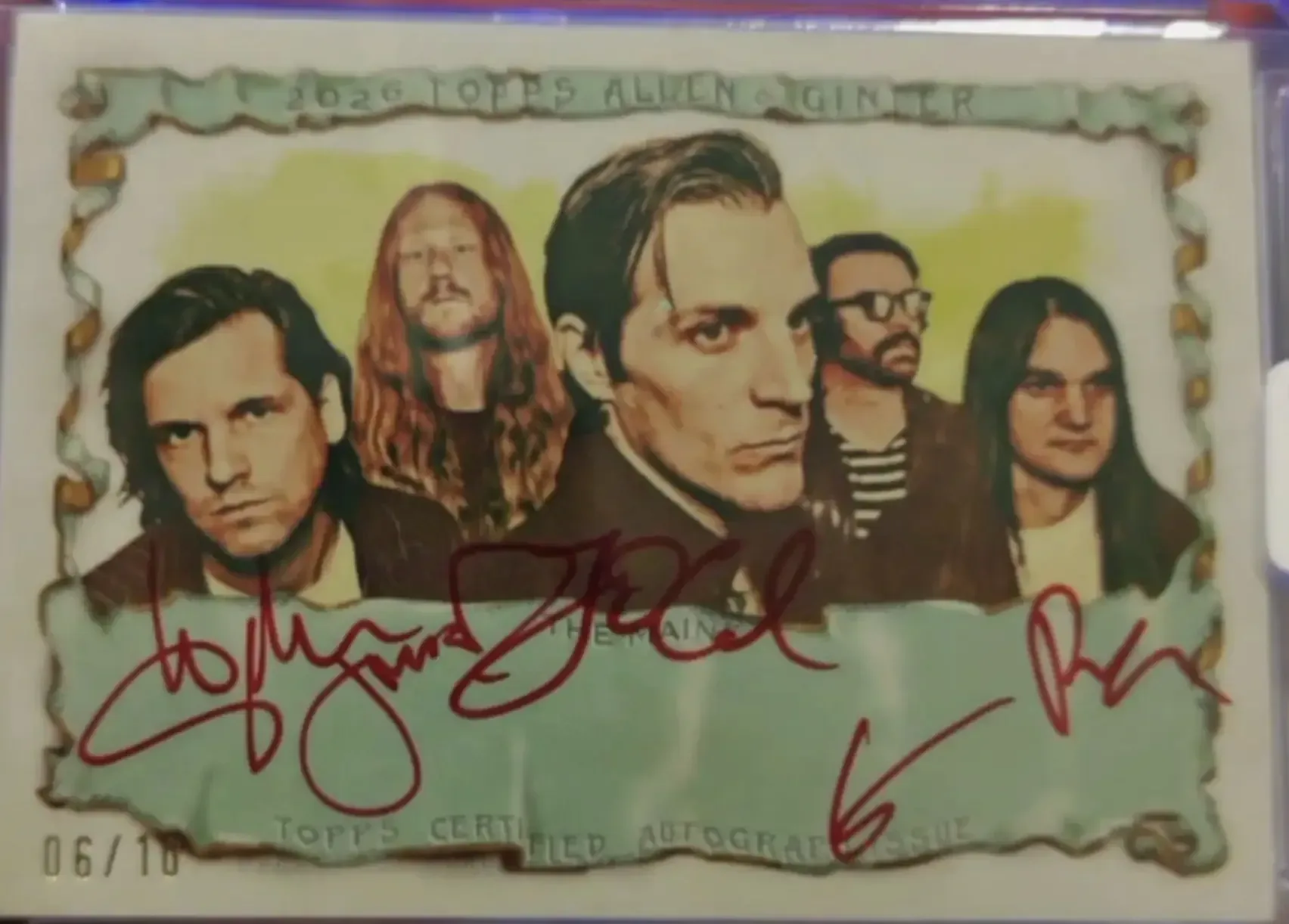
Alternative-rock fans have another unusually ambitious card to watch. The Maine has a quintuple autograph featuring signatures from all five members of the band. The Red Ink edition is numbered to 10, and one reported example was numbered 6/10. Multi-signature cards are notable because the focus shifts from one individual signer to the complete group represented on the card. For collectors interested in a band rather than a single member, that distinction can be the entire point.
Country music adds more early autographs to the mix. Tim McGraw has surfaced on a framed mini autograph numbered to 99, while framed mini autographs for Luke Combs have also been reported. A framed mini autograph is a small-format signed card presented with a frame-like border or structure. It differs visually and physically from a standard full-size autograph card, giving the signature a presentation that fits Allen & Ginter’s established affection for miniature formats.
These are not replacements for the signed albums, picks or posters that music collectors may traditionally pursue. They are a different kind of collectible: standardized in card size, tied to a broader numbered checklist, and often driven by parallels or limited versions. For someone who collects both music material and cards, that crossover is precisely the attraction.
Actors, comedy and dance music widen the checklist
The early non-sports reports do not stop at musicians. Anne Hathaway has appeared on an autograph numbered to 25, and Megan Fox has surfaced on a limited autograph numbered to 50. The lower serial numbers distinguish those specific cards from an ordinary unsigned base-card experience and give the entertainment portion of the release some of the same chase mechanics familiar to sports-card collectors.
Matt Rife is represented by a framed mini autograph numbered to 99. Rife’s presence broadens the subjects beyond screen performers and recording artists, making stand-up comedy part of the product’s autograph mix. The selection is a useful reminder that “non-sports” is not one genre. It is a catch-all label for many collecting interests that may otherwise rarely share a pack.
Steve Aoki adds another lane with a framed mini autograph numbered to 50. As a DJ and producer known for energetic performances and collaborations across genres, Aoki’s inclusion extends the release into dance music. Alongside Cyrus, Shinoda, The Maine, McGraw and Combs, his card helps make music one of the clearest themes among the early non-baseball finds.
Why the format changes the collecting conversation
A checklist with famous names is only one part of the story. Allen & Ginter uses several formats to give those names different collecting identities: cut signatures, serial-numbered autographs, red-ink versions, framed minis, autographed patches and cards that can be ripped open. That variety makes it inaccurate to treat every autograph as interchangeable.
- One-of-one: A card identified as the sole copy of that version.
- Numbered to 10, 25, 50 or 99: A stated cap on the copies made for that particular card version.
- Red Ink: A specific autograph variation represented here in editions limited to 10 copies.
- Framed mini: A small-format autograph with a distinctive framed presentation.
- Double Rip Card: A card designed to contain hidden miniature cards, creating a choice between preservation and opening.
For collectors, those differences have practical implications. Before pursuing a card, it helps to identify the exact format and serial number rather than relying only on the celebrity name. A Mike Shinoda Red Ink autograph numbered to 10 and a Tim McGraw framed mini numbered to 99 are both scarce signed cards, but they are not the same kind of item and do not offer the same presentation or stated supply.
The same principle applies to the Lincoln material. The one-of-one cut signature and the Lincoln-and-Grant Double Rip Card numbered to 50 may share a historical subject, yet they create radically different collecting propositions. One is a unique incorporated historical autograph; the other is a limited-numbered card that puts its owner in charge of whether to leave it intact or reveal its contents.
A baseball product with a deliberately wider audience
Baseball remains at the center of Allen & Ginter, including established players, Hall of Famers and rookies. But the early 2026 non-sports cards show why the brand occupies a distinct place among baseball releases. It can deliver a conventional sports-card chase while also putting a musician, actor, comic, DJ or president in the same collecting ecosystem.
That eclectic identity is increasingly meaningful in a hobby where individual collectors often move among several categories. Someone drawn in by a baseball checklist may become interested in a historical cut signature. A fan seeking a celebrity autograph may encounter the design language and limited-numbering conventions of sports cards. The set’s appeal comes from that collision of interests, not from pretending the subjects belong to one narrow lane.
Collectors have already shared several high-profile 2026 examples, but early pulls are best understood as a glimpse of the release rather than a complete map of every card’s availability or long-term standing. The verified details that matter now are the names, formats and stated numbering: a unique Lincoln cut signature; the Lincoln and Grant Double Rip Card /50; Cyrus in an autographed patch format; Shinoda and The Maine Red Ink cards /10; McGraw, Combs, Rife and Aoki framed minis; plus limited Hathaway and Fox autographs.
For a wider look at how modern licensed collectibles can bring separate fandoms together, see this report on the LEGO Ideas Marvel and Star Wars crossover challenge. Allen & Ginter reaches that cross-category territory through cards rather than bricks, but the underlying pull is similar: collectors are often motivated by more than one universe at a time.
In a single 2026 Allen & Ginter opening, the expected baseball search can therefore turn into something much stranger: a limited celebrity autograph, a miniature card behind a decision-heavy Rip Card, or a historical signature transformed into a one-of-one modern chase card. That unpredictability is not a distraction from the product’s identity. It is the identity.