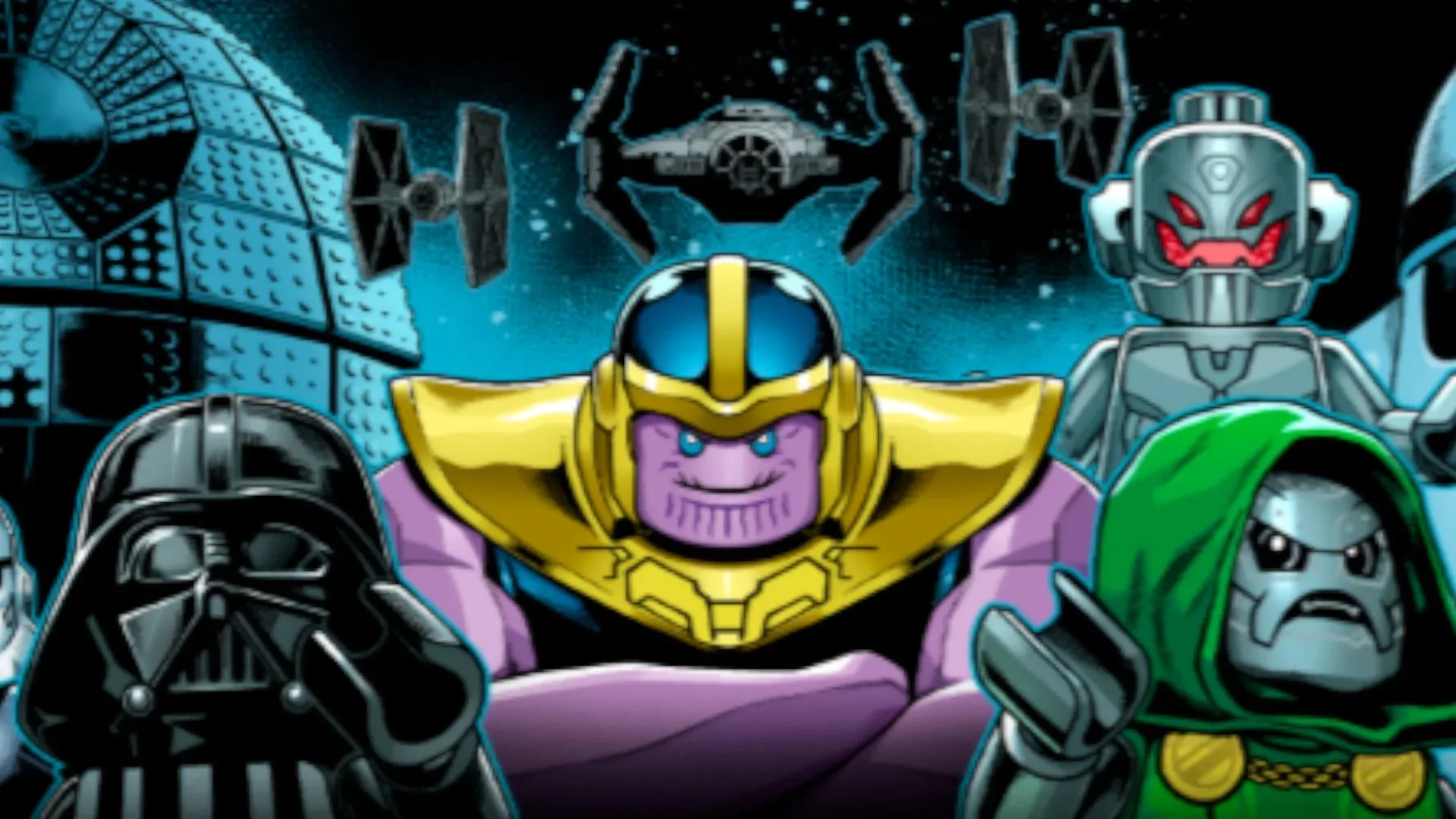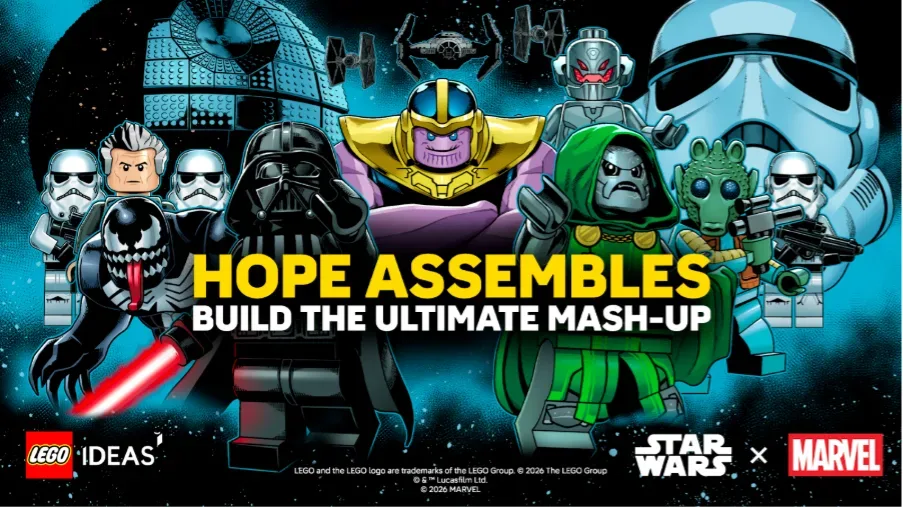
LEGO is asking builders to do something its licensed ranges have not previously asked of them: put Marvel and Star Wars in the same brick-built pitch. The newly announced LEGO Ideas challenge, revealed at New York Comic Con, invites fans to create crossover models that could ultimately be considered for development as an official LEGO product.
It is an unusually direct invitation to play with two huge fictional toolboxes at once. A submission might place heroes and villains from the franchises together, redesign a familiar vehicle through the lens of the other universe, or construct a new location where both settings meet. The important distinction is that this is a fan-design challenge with a possible product-development outcome, not confirmation that any particular crossover set is already scheduled for shelves.
What the Hope Assembles challenge is asking builders to make
The LEGO Ideas campaign is built around three submission categories:
- Vehicles: crossover takes on spacecraft, transports, or other machines.
- Characters: models that bring Marvel and Star Wars figures together.
- Scenes: original environments or story moments connecting the two worlds.
Those broad categories leave room for several scales of build. A character-focused entry could prioritize a clear visual concept; a vehicle may center on a new silhouette and the practical details that make it recognizably LEGO; and a scene could lean into environmental storytelling. None of those approaches is automatically more valid from the announcement alone. Builders will need to consult the campaign’s official rules for the actual eligibility and submission requirements rather than assume that every crossover idea is permitted.
Entries are open through the LEGO Ideas platform, while public fan voting is set to begin on Dec. 8. Grand-prize selections are planned for 2027. Winning concepts are eligible for development into official LEGO products. That wording matters: selection in a fan challenge and release as a retail set are different stages. Product development can involve redesign work, safety and play considerations, licensing approval, packaging, instructions and other factors not visible in a fan model.
Builders can find the campaign and its guidance at LEGO Ideas’ Hope Assembles page.
Why this particular crossover stands out
Marvel and Star Wars sit under the same corporate ownership, but that does not make a combined LEGO Ideas challenge routine. LEGO has worked with Star Wars since 1999, and Marvel has become another major licensed LEGO range, spanning smaller character-scale products and large collector-oriented builds. The two lines have therefore long coexisted in the LEGO catalogue while maintaining distinct settings, characters and visual languages.
The challenge is described as the first LEGO Ideas campaign to bring the franchises together. That makes the format as notable as the mash-up itself. LEGO Ideas is a platform associated with fan participation: people submit projects, audiences vote, and selected designs can enter a formal review and development process. Here, the company is not simply asking which existing fan build people like. It is specifically prompting builders to invent an intersection between two established franchises.
That changes the creative question. Instead of reproducing a well-known Star Wars ship or a Marvel location, entrants are being encouraged to decide how the design principles of one universe could alter the other. A vehicle idea, for example, would need more than a few swapped colors to make its premise communicate clearly. A scene needs to establish why the worlds have met. Character entries have the opportunity to focus on contrast: armor, insignia, silhouettes, accessories and scale can all help sell a crossover concept without requiring a sprawling build.
What “official set potential” does—and does not—mean
The phrase can be exciting for collectors, but it is worth keeping expectations precise. The campaign promises an opportunity for winning designs to be developed into official products, not a guarantee that a submitted model will arrive unchanged.
In practical terms, a polished fan submission is a proposal. An official release, if one proceeds, would be the result of a later adaptation process. The supplied information does not identify a release date, price, piece count, product number, final model design or which category might produce a retail set. Fans should be wary of treating striking concept art or a popular entry as a confirmed upcoming product before LEGO provides those details itself.
Fan voting is one stage, not the entire decision
Voting begins Dec. 8, providing the community a formal way to engage with submitted models. That gives the public a role in highlighting concepts that resonate, whether they appeal because of smart engineering, a strong visual joke, a convincing crossover narrative or sheer display presence.
But public enthusiasm and an eventual product decision should not be treated as identical things. The announcement says grand-prize selections will be announced in 2027 and that winning designs may be developed into products. It does not lay out a voting threshold, a precise judging formula, the number of finalists or a guaranteed production commitment. The sensible reading is that voting is an important part of the campaign timetable, while the eventual results remain subject to the process described in the official rules.
For participants, that makes clarity especially useful. A build should let viewers understand its crossover hook quickly. For voters, it means separating “this is a fun idea” from “this is a concept that could plausibly be adapted into a coherent LEGO product.” Both reactions may overlap, but they are not necessarily the same judgment.
A comic crossover is arriving on a parallel track
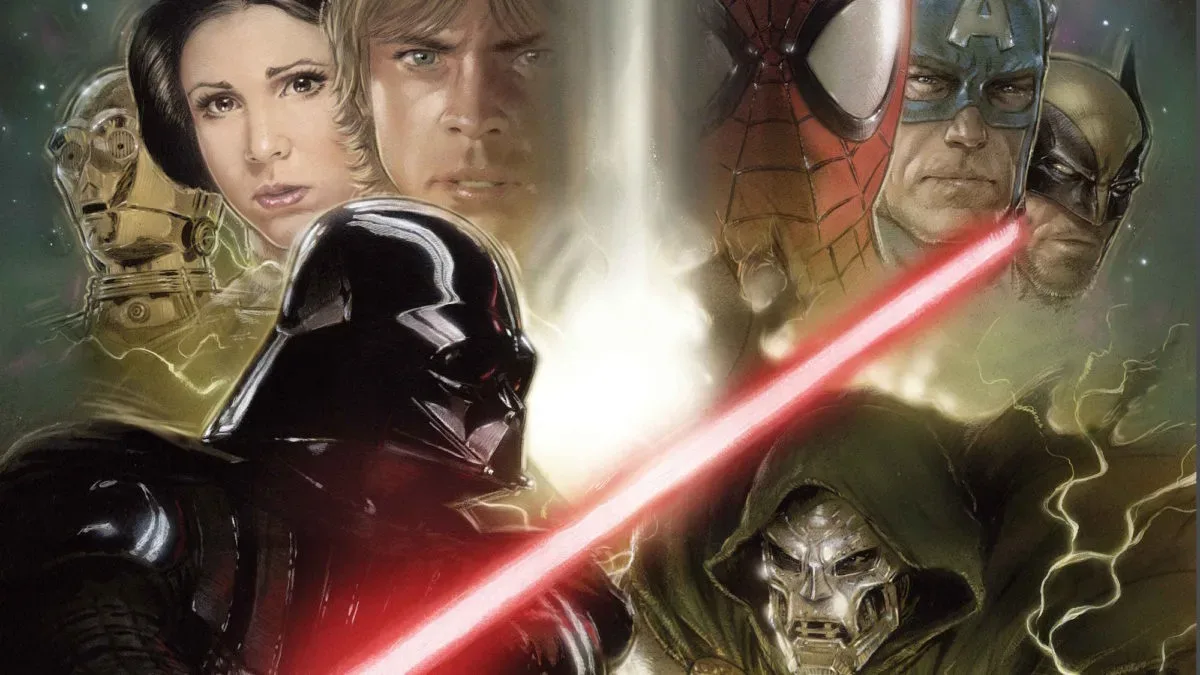
The brick-building challenge arrives alongside a broader Marvel and Star Wars crossover moment. Filmmaker, actor and Marvel Comics writer Kevin Smith is working on Star Wars/Marvel: Hope Assembles, a comic series planned to launch in January. It is described as the first official crossover between the two comic-book universes, with Star Wars approaching its 50th anniversary in 2027.
Smith announced the LEGO Ideas challenge and framed it as an extension of the same creative impulse behind the comic project. The two initiatives are connected by their shared crossover premise, but they are not the same product: one is a comics series and the other is a fan-submission campaign for brick-built concepts. Keeping that distinction intact will help followers track what has actually been announced in each space.
For more on the comic project’s expanded scope and its link to the LEGO initiative, see Marvel X Star Wars: Hope Assembles Grows to Six Issues as LEGO Ideas Opens Crossover Challenge.
How to approach an entry without overcomplicating it
The available categories give builders a useful starting point. The strongest fit may depend less on which franchise a person prefers and more on the kind of idea they can express most clearly.
- Choose one central premise. Start with a concise answer to what is being combined: a character encounter, a redesigned vehicle, or a shared location. A single readable premise is easier for voters to recognize than a build attempting to include every favorite hero, villain and ship at once.
- Use the category as a design constraint. A vehicle entry should foreground the vehicle; a character entry should make the character concept legible; a scene should provide a setting and a moment. This is not a restriction on imagination so much as a way to give the model a clear purpose.
- Think in visual signals. Color choices, distinctive shapes, accessories and architecture can communicate the crossover before someone reads a description. The challenge is to blend familiar cues into something that feels intentional rather than merely adjacent.
- Read the official guidelines before submitting. The announcement points entrants to the LEGO Ideas campaign for the rules. That is the appropriate place to verify practical requirements, deadlines and any limits that affect presentation or construction.
For collectors who do not plan to submit a model, the campaign still offers something to watch: a public run of imaginative unofficial concepts, followed by voting and 2027 prize selections. The campaign’s official-product language adds a genuine reason to follow the process, while its uncertainty is equally central. At this point, LEGO has opened a creative contest—not revealed a finished crossover set.
That distinction does not make the idea less interesting. It may actually be the appeal. Marvel and Star Wars have supplied LEGO with elaborate, collectible builds in their separate lines for years. This challenge hands the first design move to the community and asks what those worlds look like when the builders refuse to keep them in separate toy boxes.