It is only September, but the annual LEGO Advent Calendar scramble may be arriving earlier than usual. Much of the 2026 range has already received significant discounting at Amazon, an unusually early shift for products designed to be opened one tiny build at a time in December. Discounts alone do not prove that every calendar will vanish immediately, and they certainly do not rule out stronger deals later in the season. They do, however, make the usual wait-and-see approach a little more complicated.
LEGO Advent Calendars sit in a tricky part of the collecting world. They are seasonal, broadly giftable, and generally tied to enormous entertainment brands or a dependable holiday theme. Once December approaches, a calendar’s value is no longer only about its bricks, figures, or theme. It also becomes a deadline purchase. Nobody wants to give a 24-door festive countdown after the festive countdown has already begun, unless the recipient is exceptionally committed to celebrating Christmas in February.
That time pressure means stock can become scarce before the main holiday shopping rush is even fully underway. Recent patterns have seen these calendars disappear by Black Friday or during that late-November sales period. Early October promotions have often been a particularly useful window: prices can be reduced while selection is still relatively broad. With discounts turning up in mid-September for 2026, shoppers who have a specific set in mind may have less reason than usual to assume it will be waiting indefinitely.
Early discounts are a signal, not a prophecy
It is important not to turn a sale into a forecast carved in ABS plastic. A lower price now does not establish that the 2026 calendars will sell out by the end of September. Nor does it mean this is guaranteed to be the lowest price of the year. Retail pricing can move repeatedly through October and November, and inventory can vary from one seller to another.
Still, the calendars have a built-in expiry date that separates them from an ordinary LEGO set. A regular box can be bought and enjoyed at any point in the year. An Advent Calendar is at its most useful in the short run-up to December. When an especially popular version starts to run low, shoppers cannot simply decide to wait for a restock in January and expect the same practical value. The set might return somewhere, but the season will have moved on.
For collectors, parents, and gift buyers, the sensible question is not “Will there be a better discount somewhere?” It is “How much would I regret missing this exact theme?” The answer will differ sharply between someone who would be happy with any LEGO holiday calendar and someone determined to open a new Grogu, Doctor Doom, or Spider-Man surprise each morning in December.
Marvel could be one of the range’s fastest movers
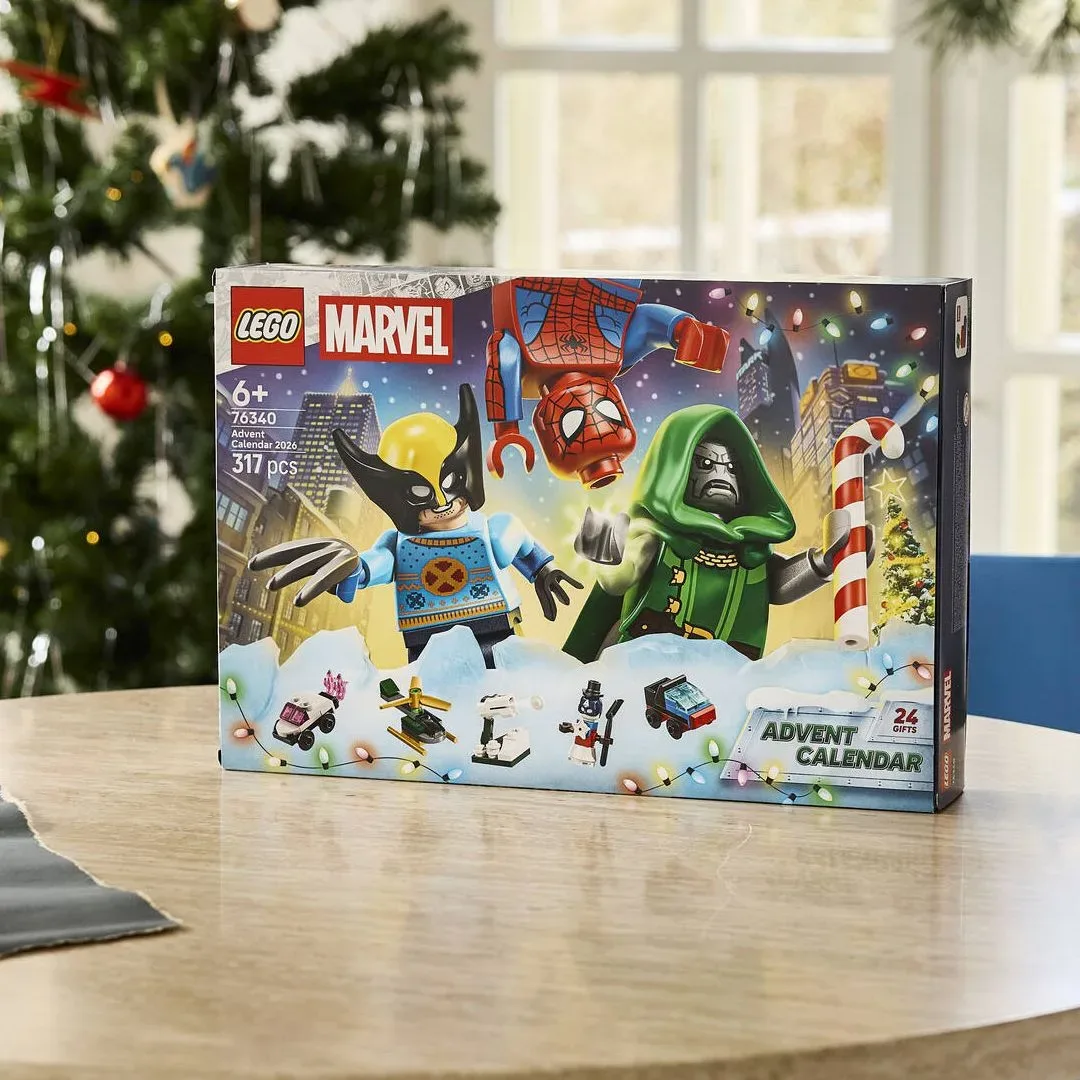
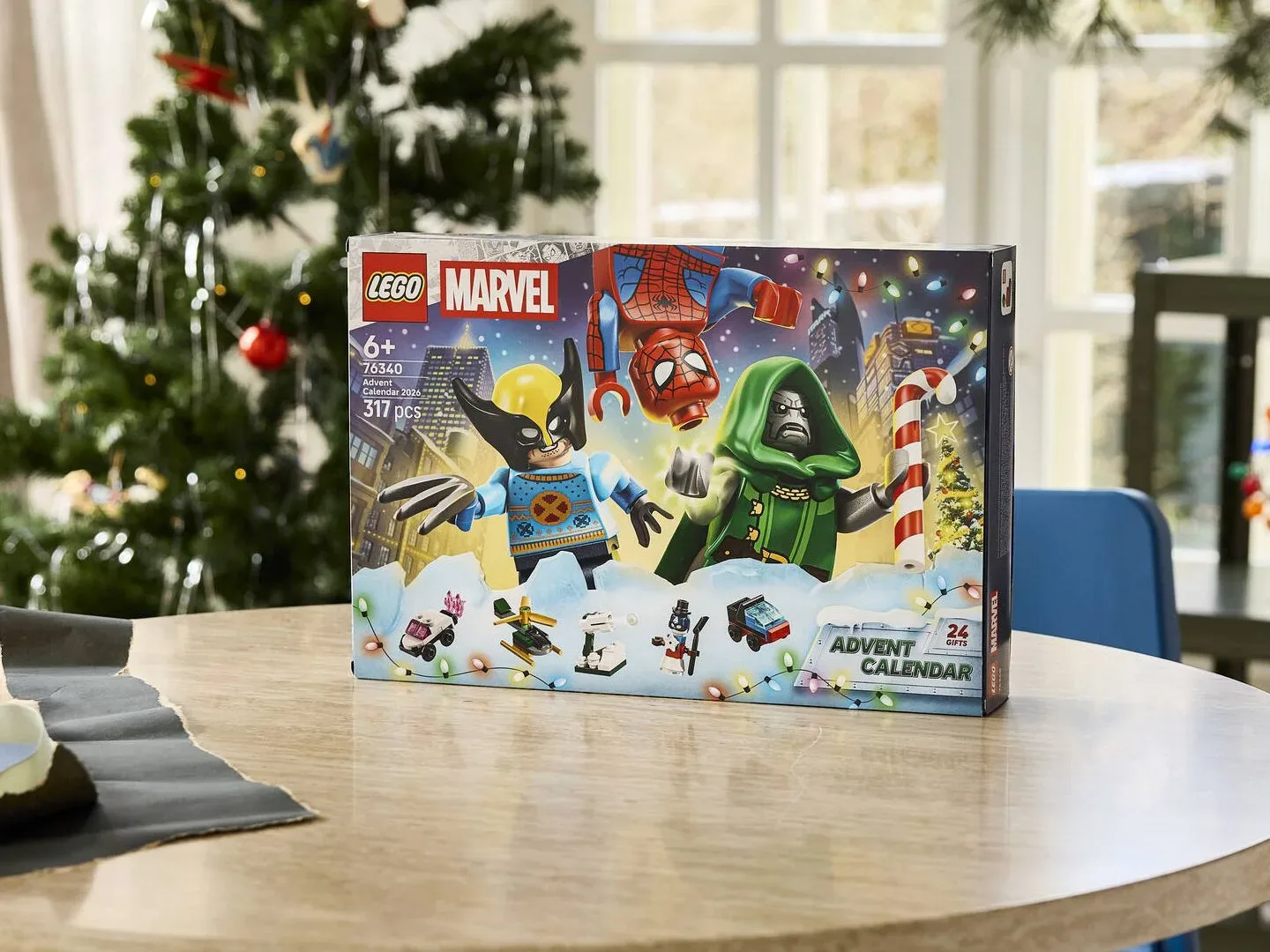
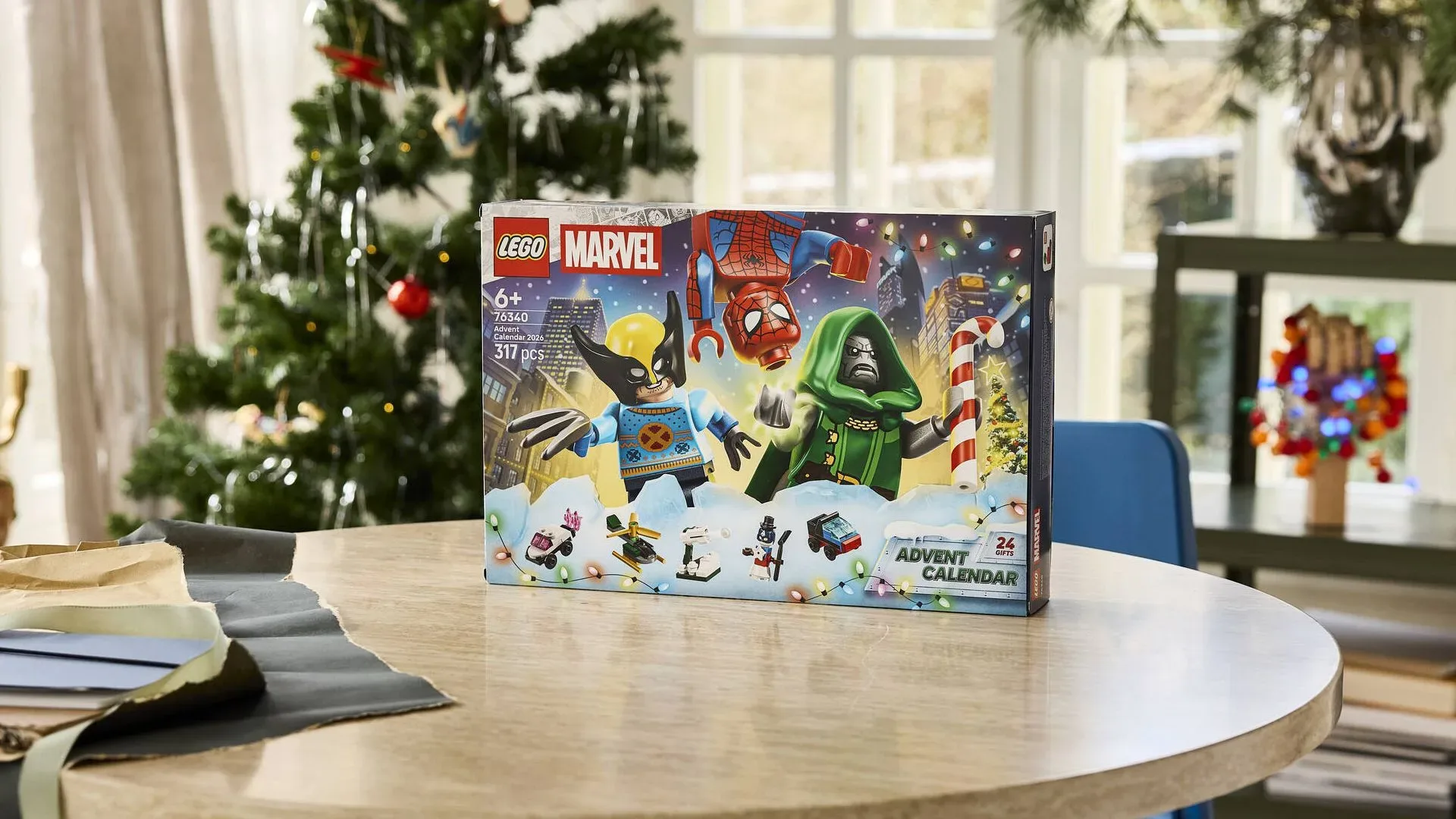
The 2026 LEGO Marvel Advent Calendar is positioned around characters with obvious fan appeal: Doctor Doom, Iron Man, Captain America, Wolverine, and Spider-Man are included, with festive styling part of the pitch. Doctor Doom’s presence gives the box an especially timely hook with Doomsday on the horizon, while the other characters bring the kind of multigenerational recognition that makes superhero merchandise easy to buy as a gift.
That combination matters. Advent Calendars are not simply miniature set assortments; they are also seasonal display pieces and daily rituals. A Marvel fan may want the calendar for its character selection, while a casual buyer may see recognisable heroes and decide it is the safest option for a child or a comic-book-loving adult. Festive costumes further distinguish the contents from the sort of standard minifigures a buyer might expect in other products.
Related coverage includes LEGO's 2026 Advent Calendars Are Already Discounted, Raising Early Sellout Concerns.
The calendar’s appeal also fits into the larger licensed-collectibles conversation. Major comic-book properties have a way of generating attention across toys, memorabilia, and screen speculation at the same time. For another example of how fan interest can grow around superhero clues and collecting culture, see our look at what The Batman Part II set signs may, and may not, reveal.
Star Wars has the familiar seasonal advantage
Star Wars calendars routinely occupy the top tier of LEGO’s holiday lineup, so the 2026 version is another candidate for early sellout concerns. This year’s set uses a Mandalorian theme and includes Grogu and the Mandalorian in holiday attire. That pairing is a straightforward draw: the characters are instantly identifiable, their relationship is central to the theme’s appeal, and the festive presentation makes them feel purpose-built for an Advent Calendar rather than merely repackaged.
There is a special kind of demand around Star Wars seasonal items. The franchise has enough reach to attract dedicated collectors, kids discovering the galaxy for the first time, and adults who want a small, cheerful desk display. A calendar serves all three audiences without requiring the space or budget of a large LEGO model. That does not confirm the Mandalorian calendar will be the first 2026 box to go, but it explains why buyers who specifically want it may be wary of delaying too long.
City and Friends offer a more traditional December route
Not every festive LEGO shopper is looking for capes, helmets, or a galaxy far, far away. The 2026 LEGO City Advent Calendar is the more conventional holiday choice, with Santa, Mrs. Claus, elves, and a snowman among its seasonal lineup. For families seeking a Christmas-focused countdown rather than a franchise tie-in, that formula remains easy to understand and easy to share.
The LEGO Friends calendar takes a different route, centering an icy setting populated by polar animals including penguins and seals. Its appeal is less about blockbuster recognition and more about a cheerful winter environment. That can make it a strong choice for someone who wants festive builds and cute characters without committing to a particular movie, comic, or television universe.
Both calendars also underline why the entire range should not be treated as a single buying decision. A household may be flexible between City and Friends, which makes waiting for a deeper promotion more comfortable. Someone buying for a Star Wars devotee, on the other hand, has fewer substitutes. The same applies to Marvel fans who want the specific Doctor Doom and superhero mix offered in this year’s box.
A practical way to decide whether to buy now
With early promotions already in play, a measured approach is more useful than panic buying. The goal is to protect the calendar that matters most without assuming every discounted product is a once-in-a-lifetime bargain.
- Prioritize the exact theme. If only one calendar will do, especially Marvel or Star Wars, an acceptable current discount may be worth taking.
- Separate a gift deadline from collector patience. A present needed for December has different stakes from a sealed item being bought for a shelf.
- Do not assume a seasonal item behaves like a standard set. Its usefulness is tied tightly to the calendar, even if individual contents remain enjoyable later.
- Keep alternatives in mind. City and Friends may provide a satisfying backup for buyers whose main goal is a LEGO December tradition.
- Avoid buying duplicates solely because a sale appeared. A discount is helpful only when it solves a real purchase need.
Downton Abbey shows LEGO’s broader nostalgia ambitions
The early Advent Calendar activity arrives alongside news of a considerably larger nostalgic LEGO release: a Downton Abbey set with 4,711 pieces and 13 minifigures has been revealed. It is a very different proposition from a 24-day countdown, but it reflects LEGO’s continued reach into established entertainment properties with audiences that value character detail and display presence.
For holiday shoppers, the contrast is useful. The Downton Abbey model is an ambitious, large-format project. Advent Calendars are compact, time-sensitive, and designed around daily surprises. Both can appeal to fans of a beloved property, but only one becomes much less relevant after the first day of December. That is why the 2026 calendars deserve attention now, even if the first snowflake is still a long way off.
There may yet be better deals later in the year, and no one can responsibly promise an imminent sellout across the full range. But early reductions have made one thing clear: the shopping season for these boxes has already begun. Buyers who know which 2026 LEGO Advent Calendar they want should weigh the current saving against the possibility that their preferred door-filled box becomes much harder to find when the rest of the world finally starts thinking about Christmas.
Shop the products
Check current price, model and availability at the retailer.