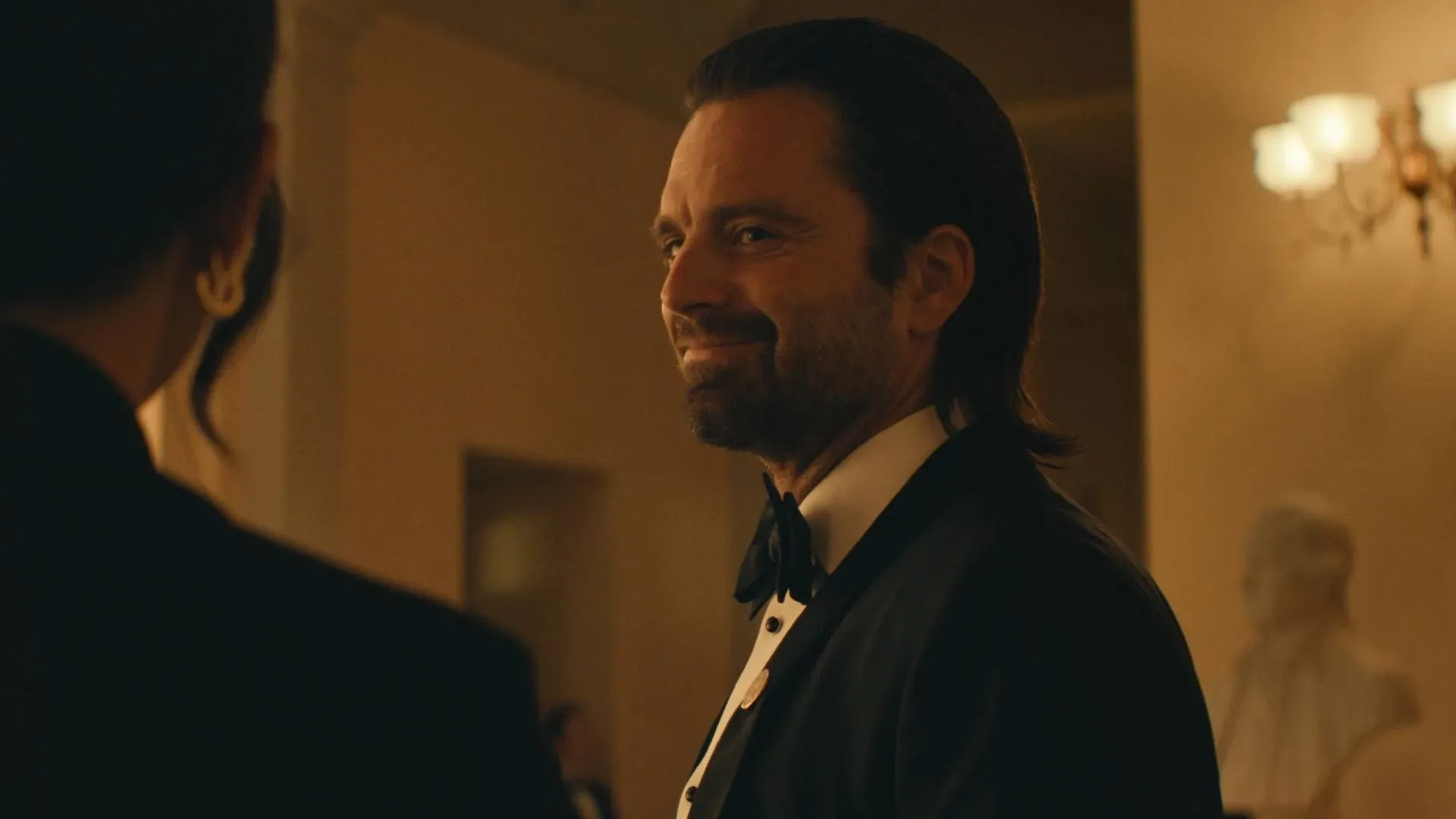
The streets of Gotham rarely do subtle, and the London set of The Batman Part II is apparently no exception. Footage and photos circulating from the sequel’s crowd scenes show Robert Pattinson’s Bruce Wayne moving through a mass of unhappy citizens, with protest placards doing a remarkable amount of potential storytelling in the background. Two of those signs appear to read “Court of Oligarchs” and “Court of Fouls,” phrases that have understandably set Batman fans’ detective boards glowing like the Bat-Signal.
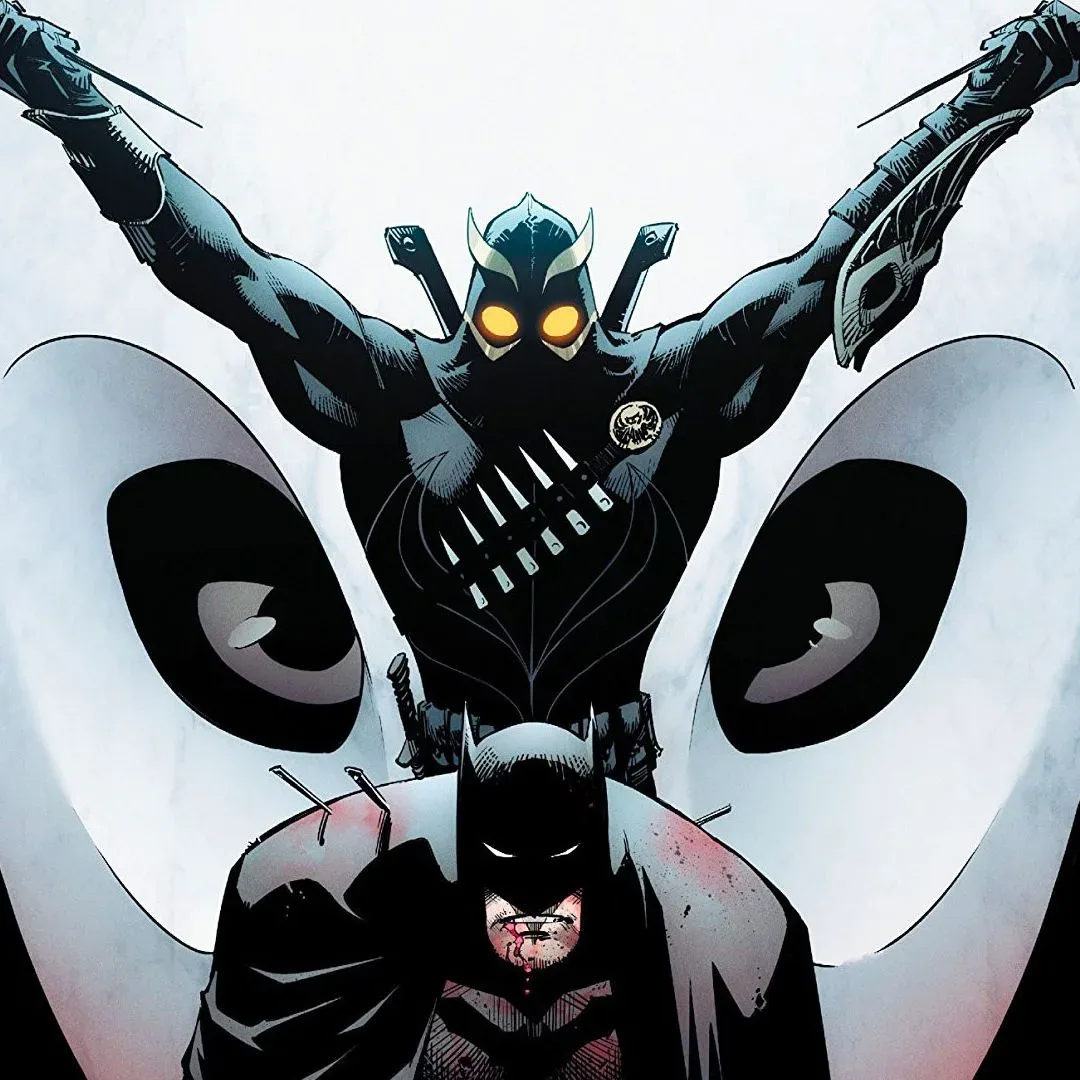
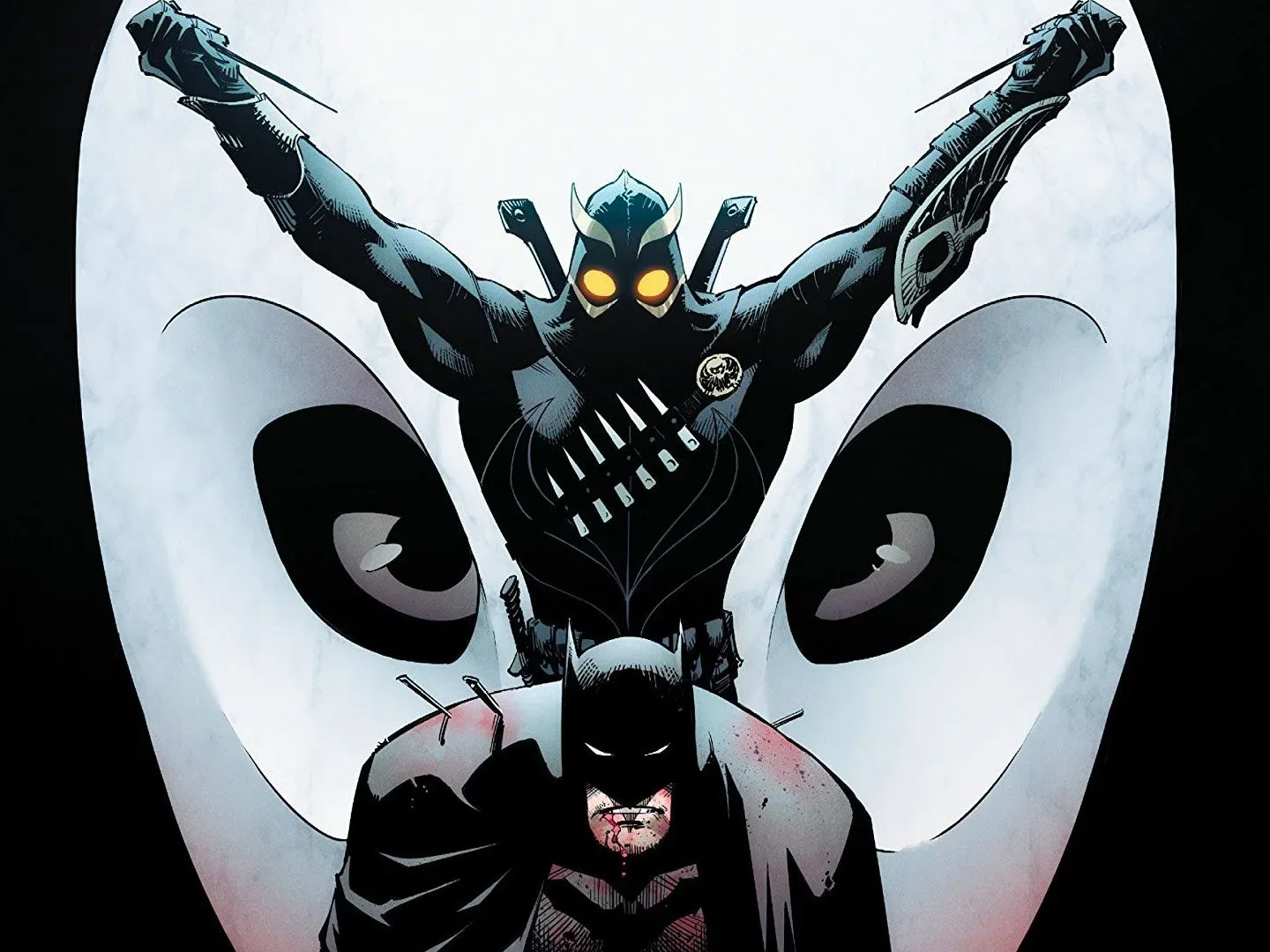
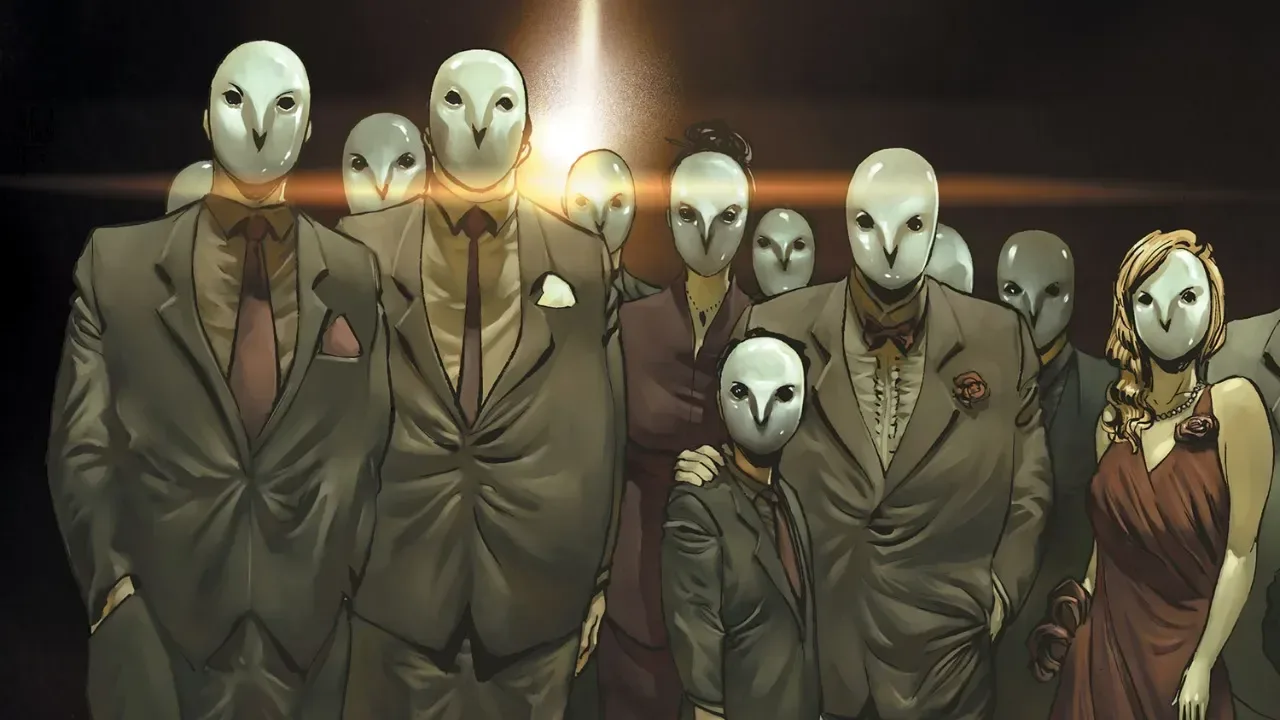
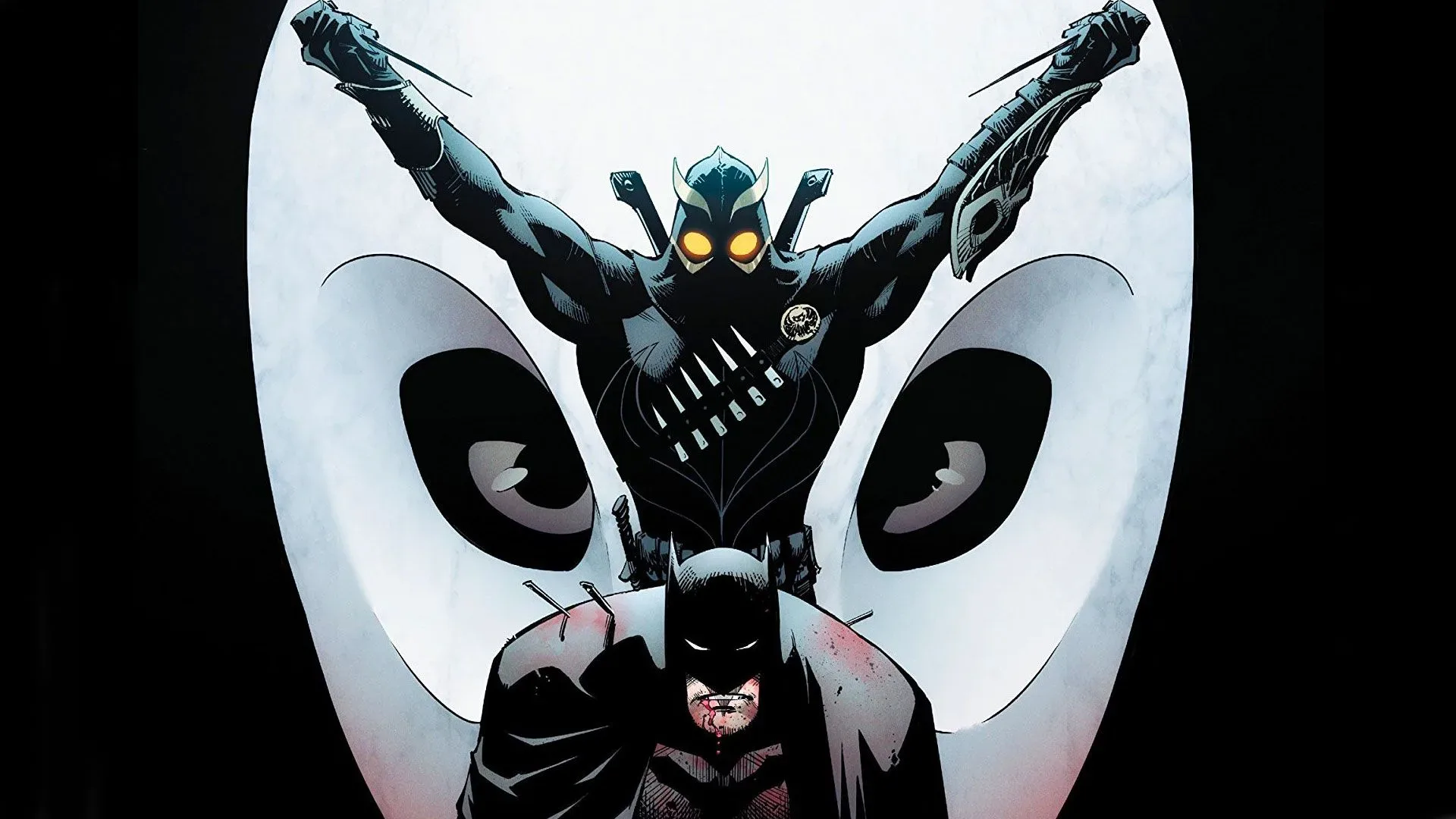
The immediate read is a possible allusion to the Court of Owls: the secretive Gotham institution introduced in DC Comics in 2012. It is an enticing possibility, particularly for a Batman world already invested in corruption, civic rot, inherited power, and the way a city can become sick from the people placed at its top. But it is important to keep the caveat stapled firmly to every cape here. Nothing in the circulating material confirms that the Court of Owls is in the film, that it is the main antagonist, or even that the signs are literal clues instead of carefully engineered set dressing.
Matt Reeves’ sequel is filming in London and is scheduled to reach theaters on February 18, 2028. Official details about the story and the roles played by its new additions remain under wraps. That secrecy has made every visible prop, mask, and background extra a potential clue—and every potential clue a possible trapdoor.
Why “Court of Oligarchs” immediately raises owl-shaped suspicions
The Court of Owls is one of the more natural comic-book concepts to transplant into Reeves’ grounded, detective-minded corner of Gotham. In the comics, the group operates as an old-money conspiracy that has influenced the city from behind a curtain of privilege and silence. Its members are tied to Gotham’s elite, while their feared operatives, the Talons, enforce the organization’s will with brutal efficiency.
That premise fits comfortably beside the first film’s depiction of Gotham as a place where institutional failure is not an abstract background issue. The 2022 movie placed Bruce Wayne in a city shaped by wealth, political decay, crime, and public fury. A secret society of powerful figures would not need to arrive as a disconnected supervillain gimmick; it could function as an escalation of themes that were already present.
The wording seen on the signs matters because “oligarchs” points directly at entrenched influence and wealth. “Court of Fouls,” meanwhile, sounds like either a mocking variation created by Gotham’s protesters or a deliberately oversized wink aimed at viewers who know the comic mythology. Either interpretation supplies atmosphere without proving the Court itself has appeared. The signs could show citizens accusing the wealthy of behaving like a hidden ruling class. They could also be part of a public narrative designed to make the audience ask exactly the question it is now asking.
In other words, Gotham might be protesting something called the Court—or merely using court-like language to describe an ugly social reality. Those are dramatically different possibilities.
A big-screen first would be a major milestone
If Reeves does bring the Court of Owls into The Batman Part II, it would mark the organization’s first live-action appearance in a Batman feature film. The Court has already been used in the Batman prequel television series Gotham, so the concept is not new to live-action audiences. A movie version, though, could introduce it at a much larger scale and through a particularly noir-influenced interpretation of the Caped Crusader.
The Court also offers a villain framework rather than a single costumed adversary. That is useful for a sequel interested in pressure from every direction. Instead of Batman facing only one obvious enemy, Bruce could be confronting an idea: that Gotham’s rot is older, more organized, and more deeply embedded than he had realized. Talons, if used, could add physical danger, but the Court’s real appeal is the possibility that Batman’s home city has always had owners he never knew existed.
That does not mean a Court storyline is automatically the answer. The group’s scale, history, and mythology can become enormous very quickly. Reeves’ first Batman film took a comparatively street-level approach to its central mystery, even while building toward citywide catastrophe. Whether a clandestine organization with generations of influence suits the sequel will depend on how much of the comic concept is retained, reshaped, or potentially held back for another chapter.
The Anarky-looking mask opens a second line of speculation
Another detail in the newly circulated set material has sparked talk of Anarky. One member of the crowd appears to wear a mask resembling the look associated with that Batman foe. As with the protest signs, the evidence is far from definitive. A masked protester can be a thematic visual, an Easter egg, a costume department flourish, or a genuine character introduction. Set photos do not provide enough context to settle which one it is.
Anarky is nonetheless an understandable name to surface around a scene filled with angry Gothamites. The character is commonly associated with anti-government politics and violent tactics, making him an obvious fit for imagery built around civil unrest and distrust of power. Pairing an anarchic figure, literal or symbolic, with references to an oligarchic court would create a clean thematic clash: street-level revolt against elite control.
That contrast could continue the first movie’s interest in class and public anger without requiring Anarky to become a principal villain. The character might be represented by a movement, a follower, or an anonymous person in the crowd. Alternatively, the resemblance may be coincidental enough that it never earns acknowledgement in the finished film. Batman productions have no shortage of masks, graffiti, and visual motifs, and fans are skilled at spotting familiar shapes in Gotham’s shadows.
Set photography is useful evidence, not a solved case
There is a particularly good reason to avoid treating visible production material as final narrative evidence: Reeves has previously used filming misdirection. During production on The Batman, public images captured Zoë Kravitz’s Selina Kyle going down steps with Carmine Falcone, played by John Turturro. When the completed film arrived, that apparent scene did not appear in the expected form; Falcone was instead accompanied by a different woman.
That example is a useful reminder that a camera filming an actor does not necessarily mean the footage is intended for the theatrical cut. Productions can shoot alternate versions, decoy action, incomplete moments, and material whose apparent meaning changes once editing, music, dialogue, and surrounding scenes are in place. A sign can be a hint, but it can also be bait for a crowd of amateur detectives armed with zoom tools and a heroic disregard for sleep.
There is also the basic issue of perspective. A few seconds of footage rarely identify who organized a protest, what the signs mean inside the story, where the sequence falls in the movie, or whether Bruce Wayne understands the danger around him. The signs could belong to a genuine villain plot, a public misunderstanding, a campaign against Gotham’s powerful, or an intentional layer of false information within the narrative.
A larger Gotham conspiracy would make thematic sense
Even with all the uncertainty, the Court of Owls theory has traction because it complements the foundation already established. The first film did not portray Gotham’s problems as the work of a single bad actor. Its city was burdened by systems that enabled exploitation and by citizens who had reasons to feel abandoned. A sequel that examines who profits from those systems would be a logical expansion rather than a radical detour.
That is why the Court and Anarky speculation has more weight than a random background reference might normally receive. Both names, in their own ways, connect to questions of authority, public resentment, inequality, and violent responses to civic failure. The Court represents power protected by secrecy; Anarky represents rebellion that can turn destructive. Bruce Wayne sits uncomfortably between those poles as both a wealthy heir and Batman, a vigilante trying to protect a city that may have every reason to distrust powerful men in masks.
The broader DC conversation is not short on fan theories either. A separate AAA fighting-game playtest has also fueled questions about whether Injustice 3 could be next, showing how quickly even limited information can put comic-book communities into prediction mode. Film set photos work much the same way, except every handwritten protest sign becomes a potential piece of evidence.
What is actually known about The Batman Part II
The firm points are still relatively few. Matt Reeves is directing the follow-up to 2022’s The Batman, Pattinson is back as Bruce Wayne, filming is underway in London, and the release date is February 18, 2028. Sebastian Stan, Scarlett Johansson, Bryan Tyree Henry, and Charles Dance are among the reported cast additions, but their characters have not been publicly identified in the material at hand.
Everything else suggested by the crowd sequence belongs in the theory column. The Court of Owls could be coming. Anarky could be present. Gotham’s protest signs could be previewing a conflict between regular citizens and privileged rulers. Or Reeves could be setting an elaborate snare for anyone convinced they have cracked the case before the detective in the cowl does.
For now, the sensible verdict is wonderfully Batman-like: compelling clues, no confession. The “Court of Oligarchs” and “Court of Fouls” signage is a strong enough nod to keep the Court of Owls discussion alive, while the masked figure gives Anarky watchers something to scrutinize. Until official story information arrives or the finished sequel reaches theaters, though, Gotham’s loudest evidence remains deliberately blurry.