Gotham has never exactly been a city that settles civic disagreements with a politely worded letter to the editor. New London set photos and video from The Batman: Part II suggest Matt Reeves’ next trip to the rain-soaked municipal misery factory will put Bruce Wayne directly in the path of public anger—and the images are already inspiring theories about the Court of Owls, Anarky, and the uncomfortable gap between Gotham’s richest resident and its most famous vigilante.
The material appears to show Robert Pattinson’s Bruce Wayne being led through a hostile crowd by Gotham City Police Department officers. The scene is reportedly being filmed outside the Gotham Bar Association. Bruce descends a staircase, makes his way past protestors and heads for a Bentley, where he is met by a stand-in for Alfred Pennyworth. Andy Serkis, who plays Alfred, is currently occupied in New Zealand directing and appearing in The Lord of the Rings: The Hunt for Gollum. Jeffrey Wright, returning as Jim Gordon, was also seen on set.
That is a solid amount of visible production information, but it is not a plot synopsis. Set photography catches a production in the middle of constructing a scene, not necessarily in the middle of explaining one. Placards can be flavor, misdirection, a major narrative clue, or all three at once. Still, the slogans seen among this particular crowd make it hard not to notice how sharply the scene is aimed at wealth, power and Gotham’s entrenched elite.
A protest aimed squarely at Gotham’s powerful
Several signs invoke an elite ruling class in blunt terms. Variations include “Court of Oligarchs,” “Court of Fouls,” “The Richer Get Richer,” “Eat the Rich,” “Re$i$t,” “Your Greed is Killin Us,” and “Oligarchs Gotta Go!” One placard carries the especially grim line, “One Day The Poor Will Have Nothing.” Taken together, the props paint a Gotham where ordinary residents see the system as serving an insulated and wealthy few.
That framework fits the tone established by Reeves’ first Batman film, where institutional decay and corruption were not simply colorful backdrops for a guy in a cape to punch through. They were central to the city’s crisis. The new scene appears positioned to extend that concern beyond crooked officials and into questions of class, influence and the people who profit while Gotham struggles.
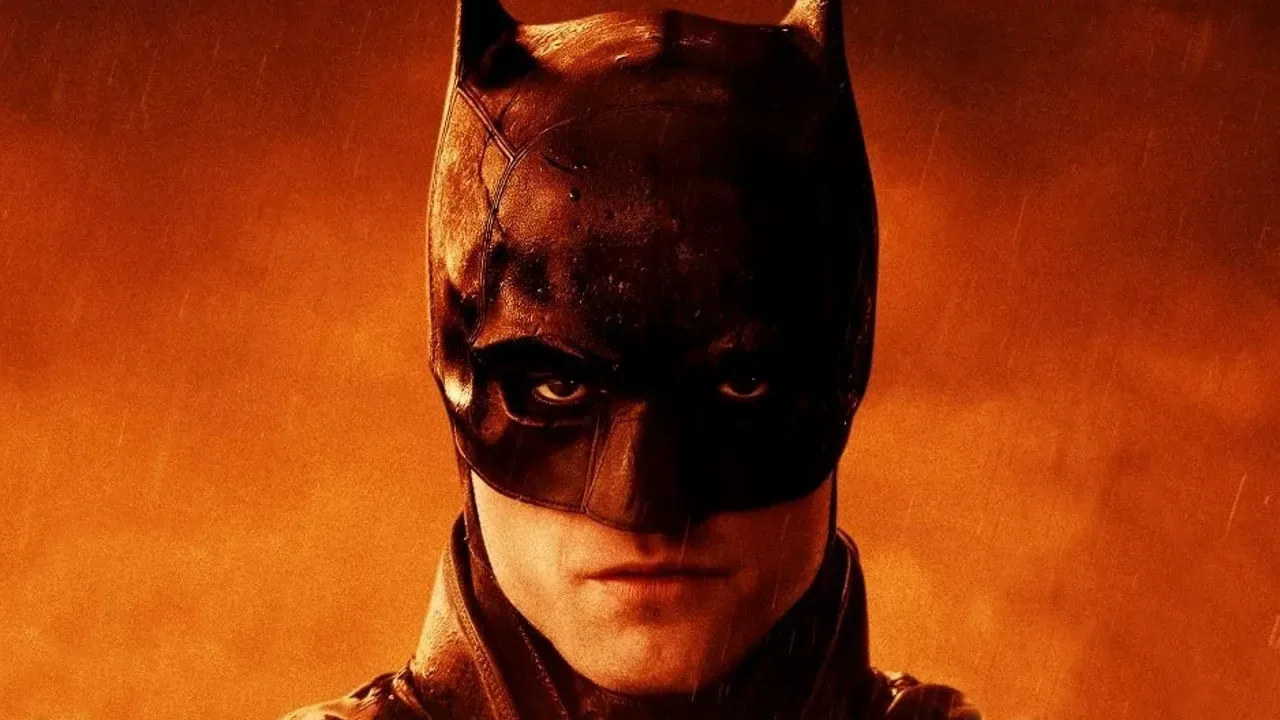
It also gives Bruce Wayne a wonderfully messy problem: the protesters seemingly regard him as part of the problem. They do not know he is Batman, after all. To the crowd, Bruce is Gotham’s preeminent billionaire, traveling in a Bentley and receiving a police escort. Batman, meanwhile, can be imagined as a symbol of somebody who operates outside the institutions that have failed them. One sign reportedly asks Batman to “Save Us,” while another uses Batman imagery alongside a threatening message aimed at an unnamed target.
That contradiction has always been tucked inside the character: Batman is funded by the fortune of the very man Gotham may have every reason to distrust. A story willing to make Bruce visibly accountable to public opinion has a lot to work with, especially when his nighttime identity may be receiving credit—or faith—that Bruce Wayne has not earned.
Why the Court of Owls theory keeps circling
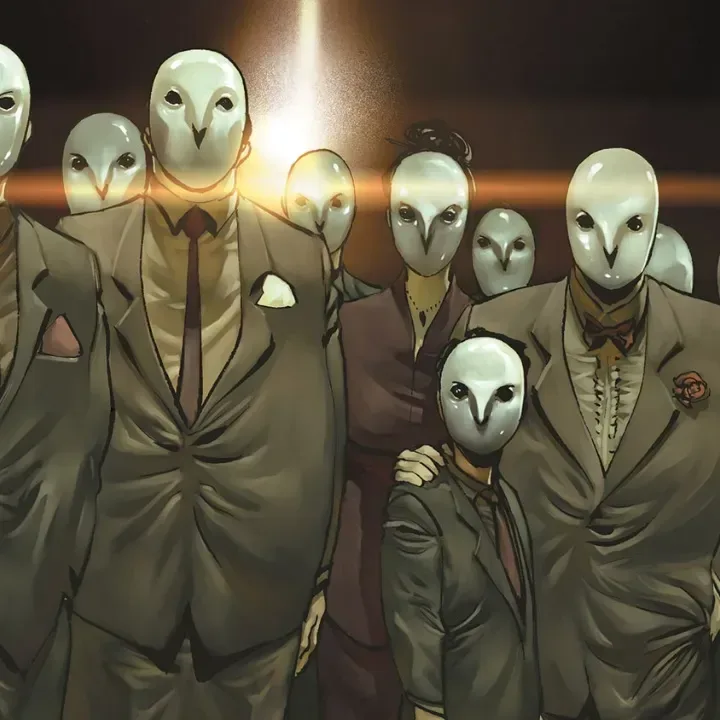
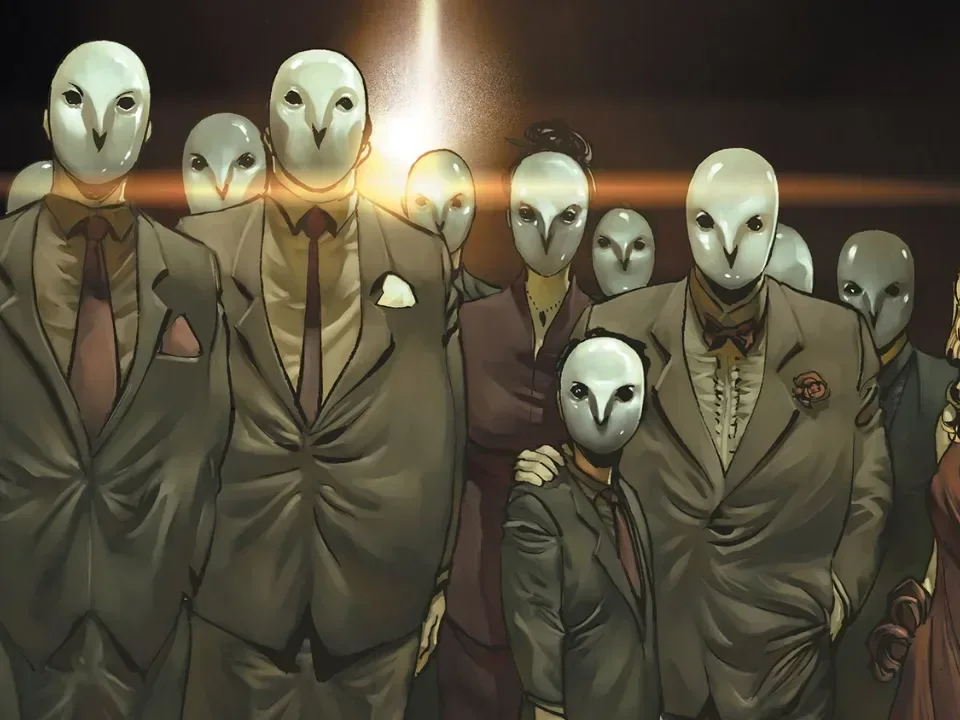
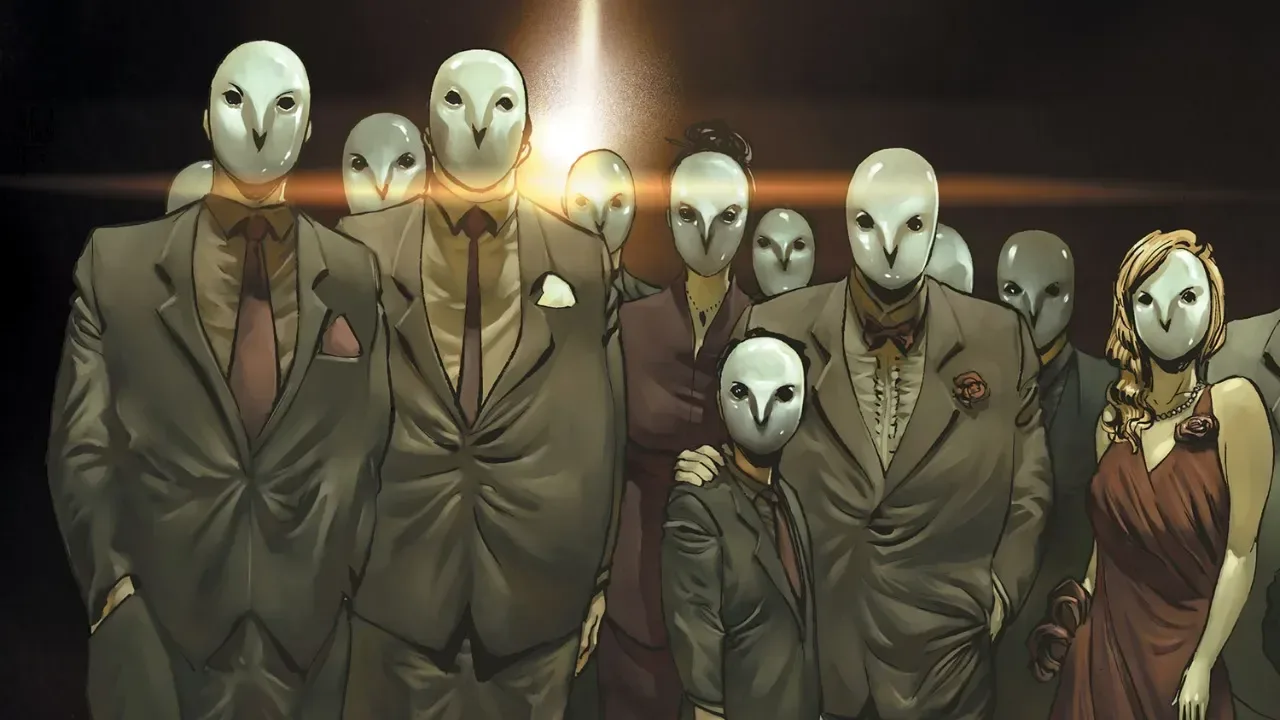
The repeated use of “Court” language is the obvious spark for Court of Owls speculation. In DC Comics, the Court of Owls is a secretive old-money organization that has operated behind Gotham’s public face, wielding influence over the city for generations. It is a natural fit for a version of Gotham defined by hidden rot, civic mythology and the suspicion that powerful people have been shaping outcomes long before anyone notices the strings.
Related coverage includes The Batman: Part II Set Footage Fuels Court of Owls and Anarky Speculation.
But the signs do not confirm the Court of Owls. “Court of Oligarchs” and “Court of Fouls” might be fictional protest language aimed at a visible collection of rich people, a legal institution, a corporate bloc, or a group entirely invented for the film. The choice of wording is suggestive, not dispositive. Movie audiences have learned this lesson after years of trying to solve entire franchises from the color of a background umbrella.
Even so, the Court remains a persuasive possibility because it would let The Batman: Part II turn a street-level outrage into a deeper mystery. If Gotham’s citizens believe they are fighting a present-day economic order, Batman could uncover a more ancient and organized system beneath it. That is a very Batman-shaped escalation: follow the paperwork, find a conspiracy, discover that the conspiracy somehow owns a bird-themed underground murder program.
The notion also aligns neatly with a Gotham where the wealthy are no longer merely distant benefactors or flawed civic leaders. They may become a category of suspect in their own right. Bruce’s personal status would make any such plot more complicated, not less. His name, inheritance and family legacy could be useful access points, liabilities, or both.
The white masks and the Anarky question
Another visual detail has attracted attention: some figures in the protest crowd wear white masks that obscure their faces. One masked person appears to have a white anarchy symbol on their clothing. That has prompted speculation about Anarky, a character with a substantially different relationship to Gotham’s power structure than the Court of Owls.
In the comics, Anarky is Lonnie Machin, one of Batman’s younger adversaries and a politically driven figure who directs violence at state and corporate systems while pursuing his own conception of social justice. Depending on the story, he has been an opponent, an antihero, or something hovering uneasily between the two. He has appeared in live action through Arrow and in animation through Beware the Batman, but has not previously appeared in a Batman feature film.
The connection remains extremely tentative. A masked extra with an anarchy symbol might indicate an organized Anarky movement. It might be a nod for fans. It might simply communicate that this is an angry protest in a fictional city where subtlety is often one missed billboard away from calling itself a conspiracy. No identified character, casting information or official material establishes that Anarky is in the movie.
Still, the idea is worth separating from the evidence because it illustrates why this scene has people talking. Anarky would bring an insurgent challenge to Gotham’s institutions; the Court of Owls would represent the possibility that those institutions were compromised at the highest level long ago. The two concepts could share thematic space without necessarily appearing together. If they did coexist, Bruce would be caught between an angry movement from below and a potentially hidden power structure above.
Reeves’ villain comment adds fuel, not confirmation
Reeves has said the principal villain of The Batman: Part II has not really been brought to the screen in a movie before. That statement naturally keeps the fan-theory machine running, especially since neither the Court of Owls nor Anarky has been used as a central Batman-film antagonist.
Yet the wording does not settle the matter. A filmmaker can refer to a character not previously realized in a particular way, a villain with a fresh interpretation, or an adversary whose role is more complicated than a simple one-name reveal. Nor does a protest scene automatically identify the movie’s main antagonist. Gotham contains plenty of people with motives, masks and unresolved zoning grievances.
For now, the most defensible reading is modest: the scene supports the possibility that wealth and systemic corruption matter greatly in the sequel. It makes the Court of Owls an understandable theory, and the masked imagery makes Anarky a plausible topic of discussion. Neither is confirmed by the footage alone.
What the scene says about Bruce Wayne
More than any potential character reveal, the standout element is Bruce’s position in the frame. This is not Batman stalking a criminal through a shadowy corridor. It is Bruce Wayne in public, physically protected by the police while people express rage toward the class he represents. That arrangement can make his dual identity more dramatically useful. Batman can intervene in Gotham’s emergencies, but Bruce is the person who must answer for Wayne money, Wayne history and Wayne influence.
That tension should be familiar to viewers of the first film, but the new set material suggests a chance to put it under even harsher pressure. If Gotham begins treating Batman as a beacon while viewing Bruce as an oligarch, the hero’s two lives stop complementing each other. They begin arguing in public, even if the public has no idea it is watching the same man on both sides.
There is also a practical cinematic appeal to the apparent staging. A crowd scene, a high-profile public building, police presence, media-ready protest signs and a waiting luxury car can communicate conflict before a character speaks. And as the recent look at why traditional IMAX film cameras are so loud on a movie set underscores, productions often have to make careful choices about how large-scale scenes are captured. Whatever cameras were used here, the imagery is designed to read clearly: Gotham’s social order is fraying, and Bruce Wayne is standing in the blast radius.
Until official story details arrive, viewers should keep the owl feathers and anarchy symbols pinned to the theory board with a sensible amount of skepticism. The footage offers compelling themes and recognizable comic-book echoes, but it does not provide a cast list for Gotham’s next nightmare. What it does show is arguably more interesting in the short term: a Batman sequel prepared to ask whether a city can trust its masked protector while resenting the wealthy man behind the mask.