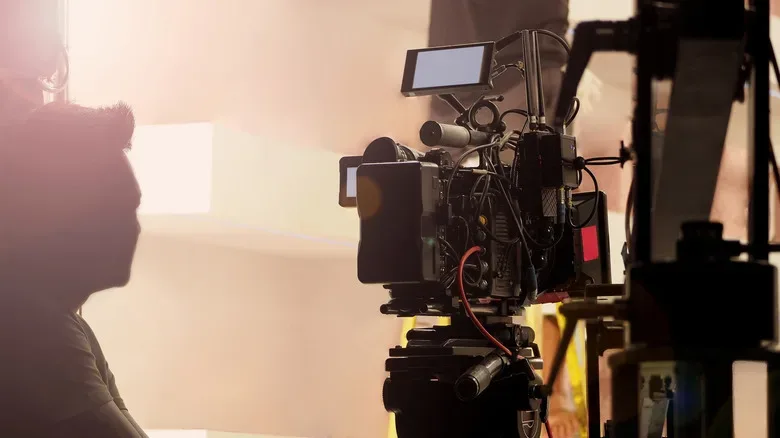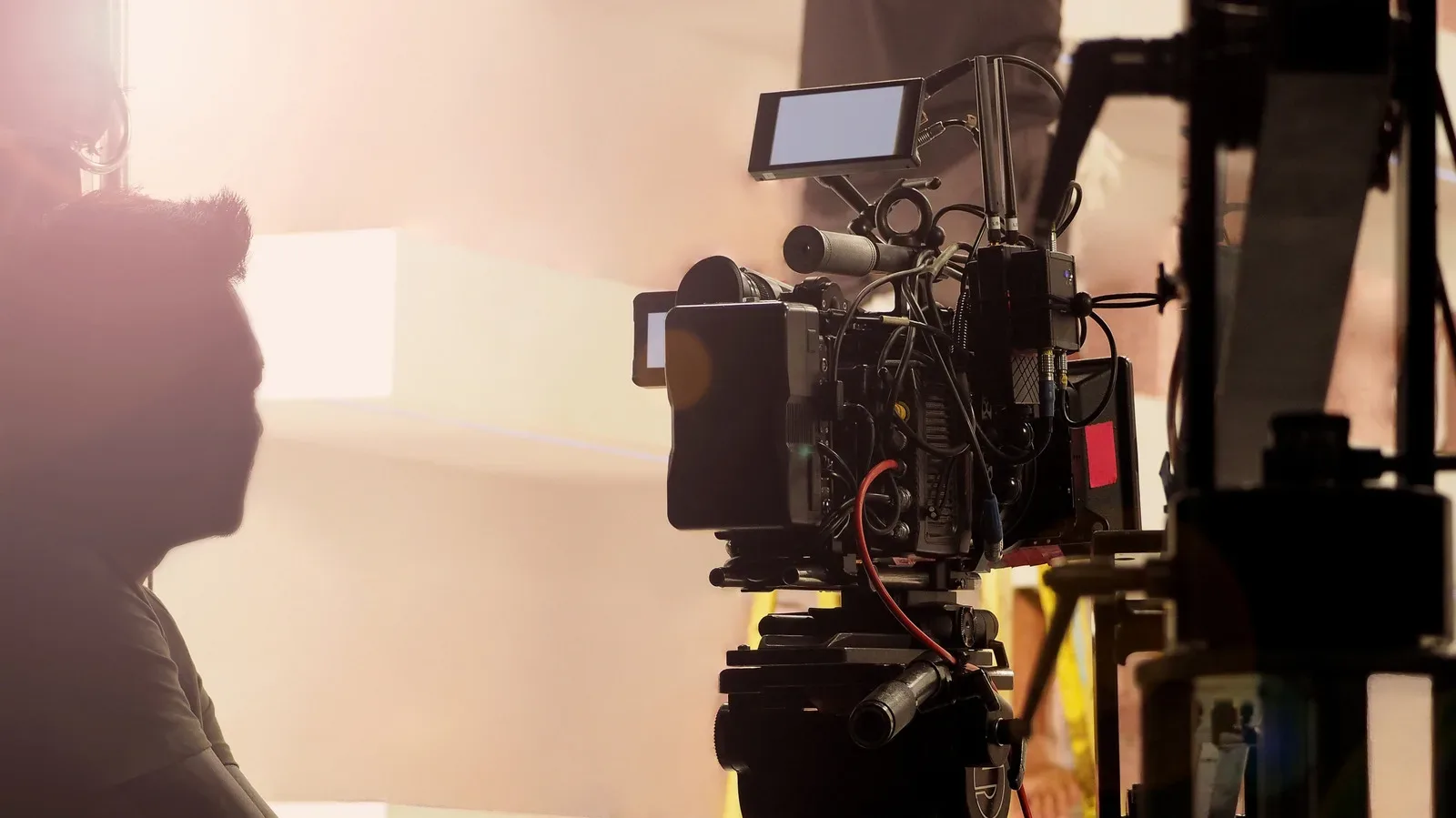
The enormous image of traditional IMAX photography comes with an equally enormous practical trade-off: the camera is loud. Not merely noticeable in a quiet room, either. A 15/70 IMAX film camera produces a sustained mechanical presence that can complicate dialogue scenes, change how a sequence is staged, and add another logistical challenge to a format that is already expensive, heavy, and demanding.
That sound is not a design accident or a simple matter of an old-fashioned machine needing oil. It comes from the work the camera must do. Traditional IMAX photography uses a very large strip of 65mm negative film, carried horizontally through the camera. It must be transported at speed, stopped precisely for each exposure, and held exceptionally flat while the image is recorded. Powerful mechanical movement and a running vacuum system are central to that process, and both contribute to the familiar rattle and high-pitched whine.
For movie fans, that makes IMAX cameras a fascinating example of physical media engineering: an image format capable of extraordinary scale, powered by a machine that does not politely disappear into the background.
15/70 describes a very big frame
The terminology can be confusing because shooting and projection use related but distinct descriptions. A traditional IMAX presentation is commonly called 15/70: each projected 70mm frame spans 15 perforations, or sprocket holes. During photography, the camera uses 65mm negative film, also running horizontally across 15 perforations per frame.
That horizontal layout is crucial. A conventional 65mm camera uses five perforations per frame, whereas IMAX uses 15. The resulting IMAX image area is roughly three times larger. Bigger film frames can preserve much more image information, but the camera must physically control far more material for every single frame it shoots.
Film photography is a rapid sequence of still images. At the standard cinematic speed of 24 frames per second, the camera advances the film, positions it, exposes it, then repeats the cycle 24 times every second. With 15 perforations assigned to each frame, a 15/70 IMAX system is dealing with 360 perforations every second.
- Film movement is approximately 5.6 feet per second.
- That works out to about 336 feet per minute.
- A 1,000-foot magazine lasts only around three minutes at 24 frames per second.
Those figures explain why an IMAX camera is not simply a standard motion-picture camera with a grander badge. It is a substantial transport system for a sizable, weighted roll of film. The motor needs the strength to keep that film moving accurately. The mechanisms that move the film, operate the shutter, and manage the magazine all create sound. Add the repeated stop-and-settle motion necessary to expose each frame cleanly, and mechanical noise is inevitable.
Flatness is just as important as speed
Moving a large film strip is one half of the equation. The other is maintaining the film’s position at the instant light passes through the lens.
Related coverage includes Why Traditional IMAX Film Cameras Make So Much Noise.
Film can retain a slight curl after spending time wound inside a magazine. On an image this large, even a modest bend can move a portion of the film out of the intended plane of focus. The result can compromise the photographed image. The camera therefore has to do more than deliver film to the gate: it has to ensure the frame lies flat where it is meant to be.
Traditional IMAX cameras address that issue with a vacuum plate behind the lens. Suction draws the film against the plate during exposure, helping it sit flat and stable. The vacuum does not propel the film through the camera; its job is accurate positioning during the moment an image is captured.
But creating that suction requires a pump and airflow while the camera is in operation. That produces the steadier, higher-frequency component of the IMAX sound: the unmistakable mechanical whine. Losing the suction risks film flatness problems, so it is not an optional flourish that can simply be switched off for a delicate line reading.
In short, the loudness comes from systems doing exactly what they were built to do. One system is hauling a great deal of film through a precision mechanism; another is actively holding that film flat enough to protect focus. The enormous visual result and the intrusive sound have the same root cause: precision at unusually large physical scale.
Why IMAX shooting is often associated with action
Because synchronized production sound can be difficult near a running IMAX film camera, the format is particularly compatible with sequences where the set is already loud or where dialogue is limited. Action, stunts, vehicles, wide exteriors, and spectacle-heavy moments are natural candidates.
No Time to Die, for example, used IMAX cameras primarily for action and stunt work with relatively little dialogue. That approach is less about a hard rule than a sensible production decision. Where the soundtrack is full of engines, impacts, wind, music, or effects, the camera’s mechanical voice is less disruptive than it would be in a close, hushed conversation.
Dialogue that cannot be cleanly retained can also be replaced later through automated dialogue replacement, generally called ADR. Actors record lines again in post-production so the final mix can use clean speech. ADR is a familiar filmmaking tool, but it adds planning and work; it is not a magical way to make a noisy camera irrelevant.
There are physical noise-reduction options as well. A barney is a soft padded cover that can reduce some camera sound. A blimp is a more rigid soundproof enclosure intended to isolate mechanical noise more aggressively. Both introduce compromises, especially bulk and weight. An older IMAX camera fitted with a blimp can weigh as much as 275 pounds, making it a poor match for a lone operator looking for spontaneous handheld mobility.
That is part of the format’s unusual character. IMAX film production can deliver exceptional imagery, but it rewards extensive preparation. The camera affects sound strategy, shot selection, crew needs, magazine changes, and how freely a production can move through a location.
Digital IMAX avoids this particular limitation
It is useful to separate traditional IMAX film from movies branded as Filmed for IMAX. A film can be designed for IMAX theaters without using 15/70 film cameras. Productions such as Mission Impossible: The Final Reckoning use IMAX-certified digital cameras and can include scenes composed for the expanded 1.90:1 aspect ratio. Since those capture systems are digital, they do not have the same film transport and vacuum-plate noise issue.
This is one reason digital capture dominates modern productions. It avoids the burden of transporting huge film magazines, reduces many physical workflow restrictions, and makes clean on-set audio much easier to manage. It does not mean a digital IMAX production and a 15/70 film production are identical; they are different paths to an IMAX theatrical experience.
The distinction is worth keeping in mind whenever “shot in IMAX” appears in a marketing campaign. It can refer to the giant-film workflow associated with classic IMAX, or to a digital workflow using approved cameras and IMAX-oriented framing. Both may be presented on IMAX screens, but only one involves the extraordinarily noisy mechanics of 15-perforation film flying through a camera.
A quieter system still carries serious weight
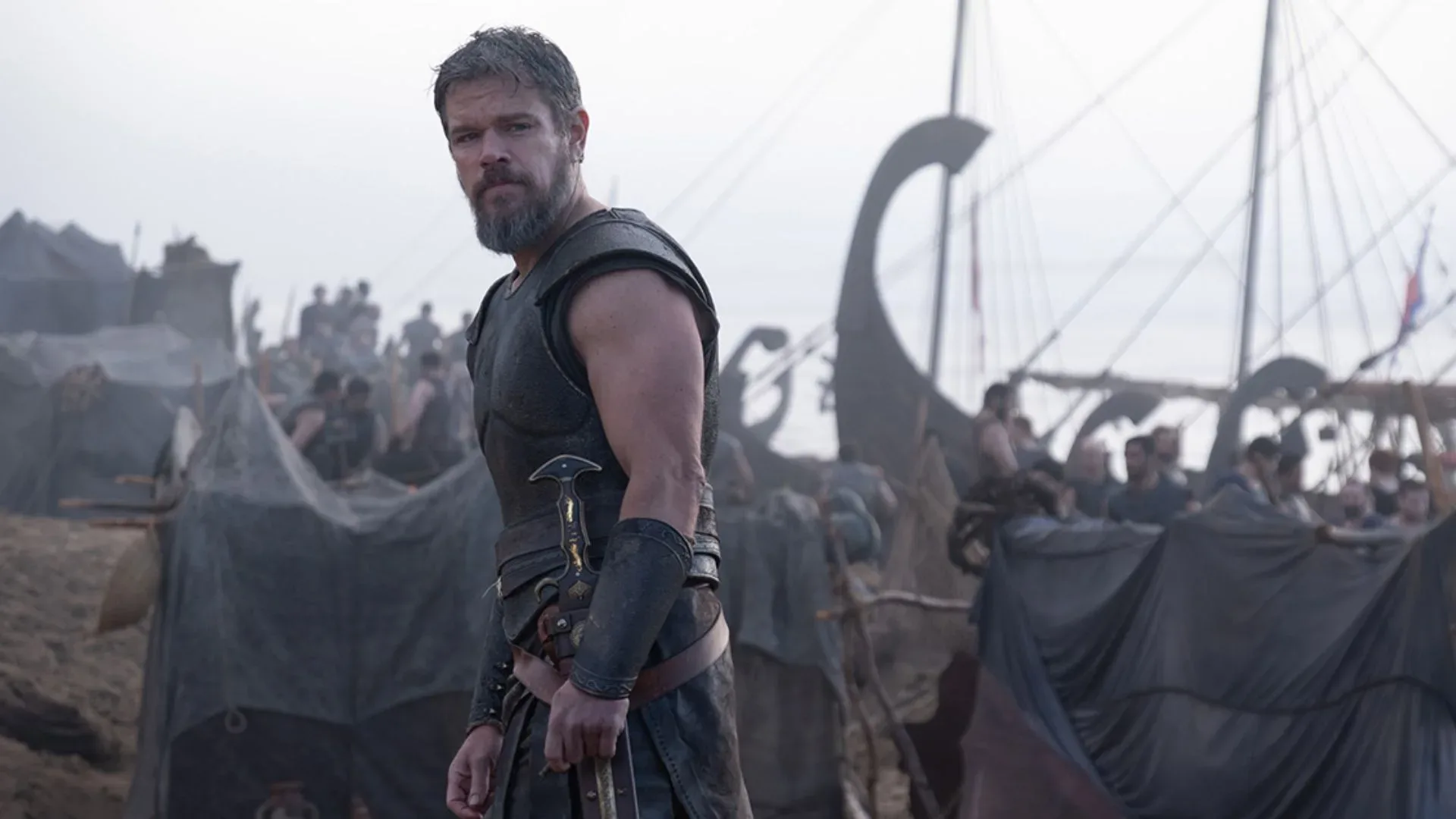
IMAX has pursued improvements rather than treating the old compromise as permanent. The company developed the smaller, quieter Keighley camera for Christopher Nolan’s The Odyssey. Its redesigned blimp is intended to allow synchronized dialogue recording, a significant quality-of-life improvement for filmmakers working with large-format film.
“Smaller” should be understood in the context of IMAX equipment, not as a promise of lightweight convenience. The complete Keighley system has been reported at more than 300 pounds. That illustrates how difficult the engineering problem remains. Reducing noise while preserving the demands of large-format film capture may improve a production’s options, but it does not turn the rig into an everyday compact camera.
For audiences, much of this work is invisible once the lights go down. The value of IMAX film is in the scale and detail of the image, not the sound of the machinery that made it. Yet that machinery helps explain why traditional IMAX remains a specialized choice rather than the default for every large theatrical release. It is a premium, labor-intensive format whose camera is as much industrial apparatus as filmmaking tool.
For more movie-world coverage beyond camera technology, see our look at the 2026 MacGuffin Awards winners, including films recognized for their technical artistry.