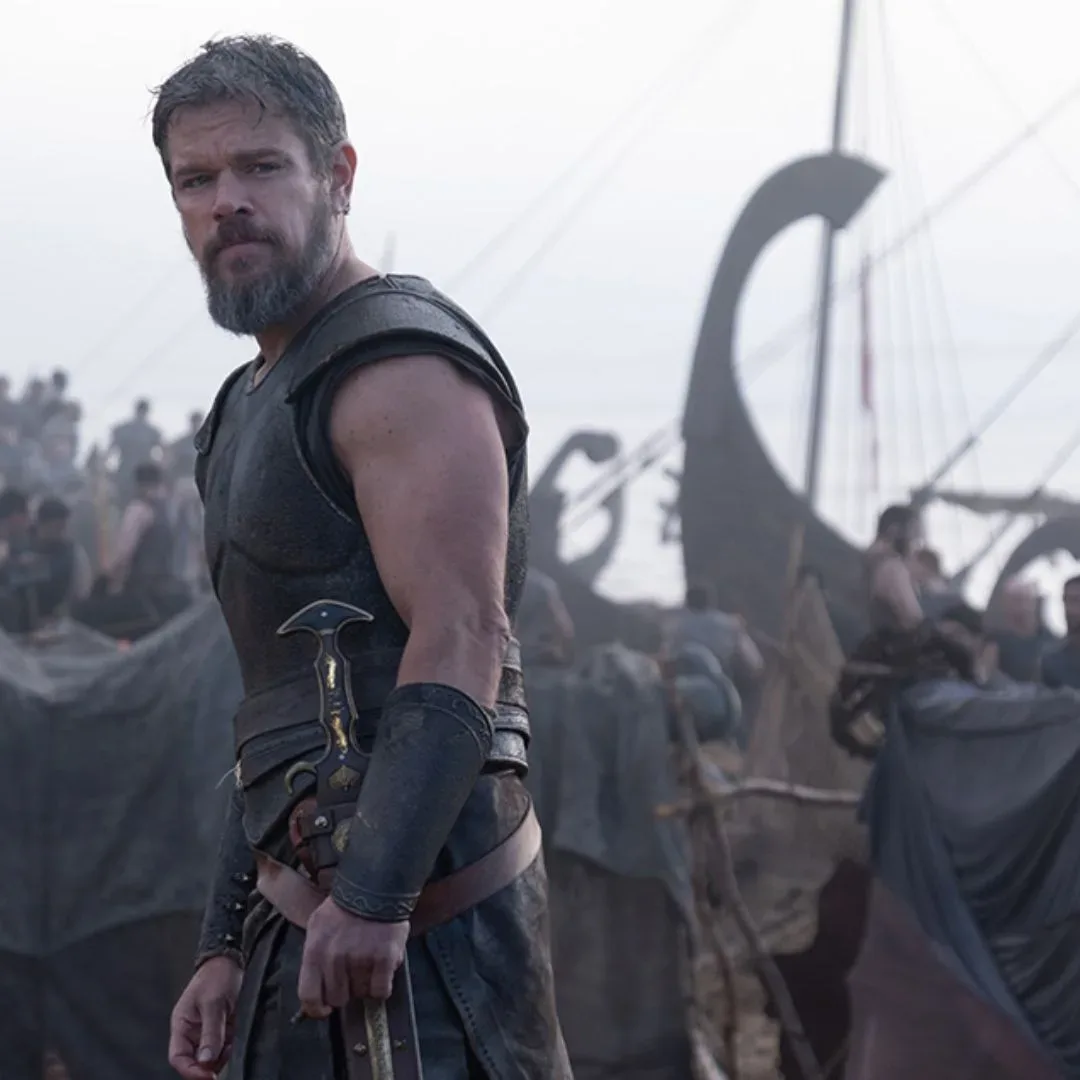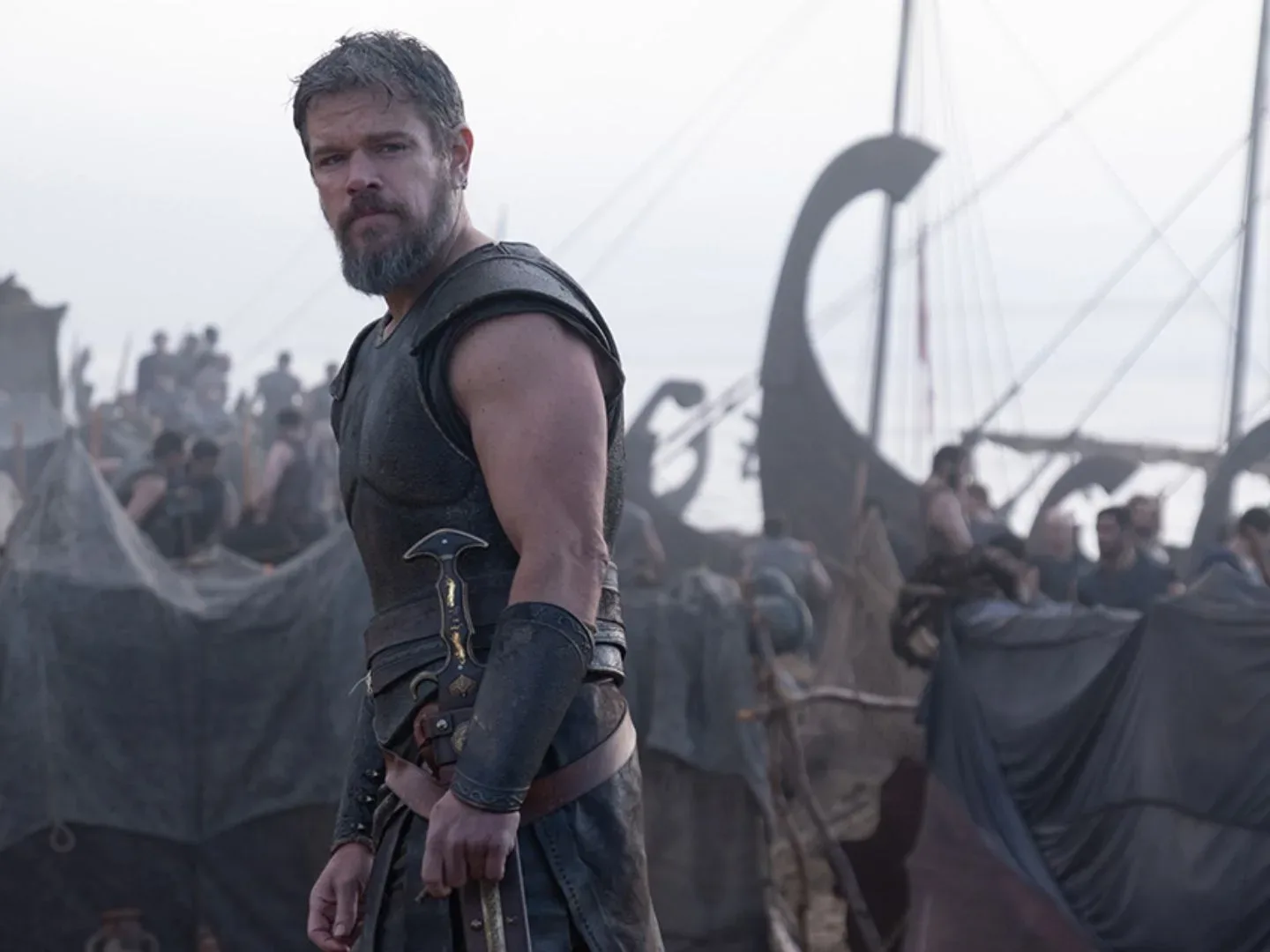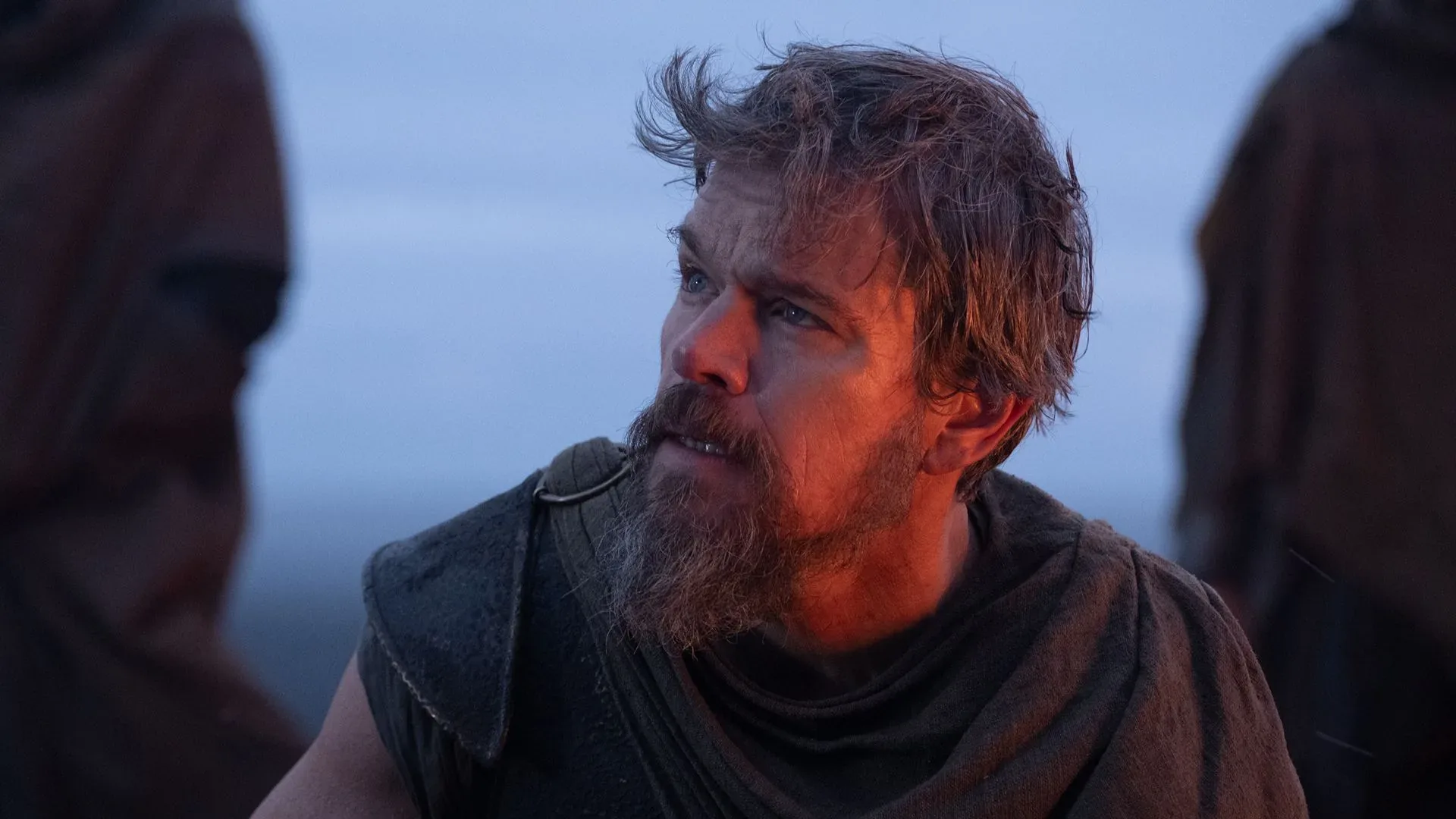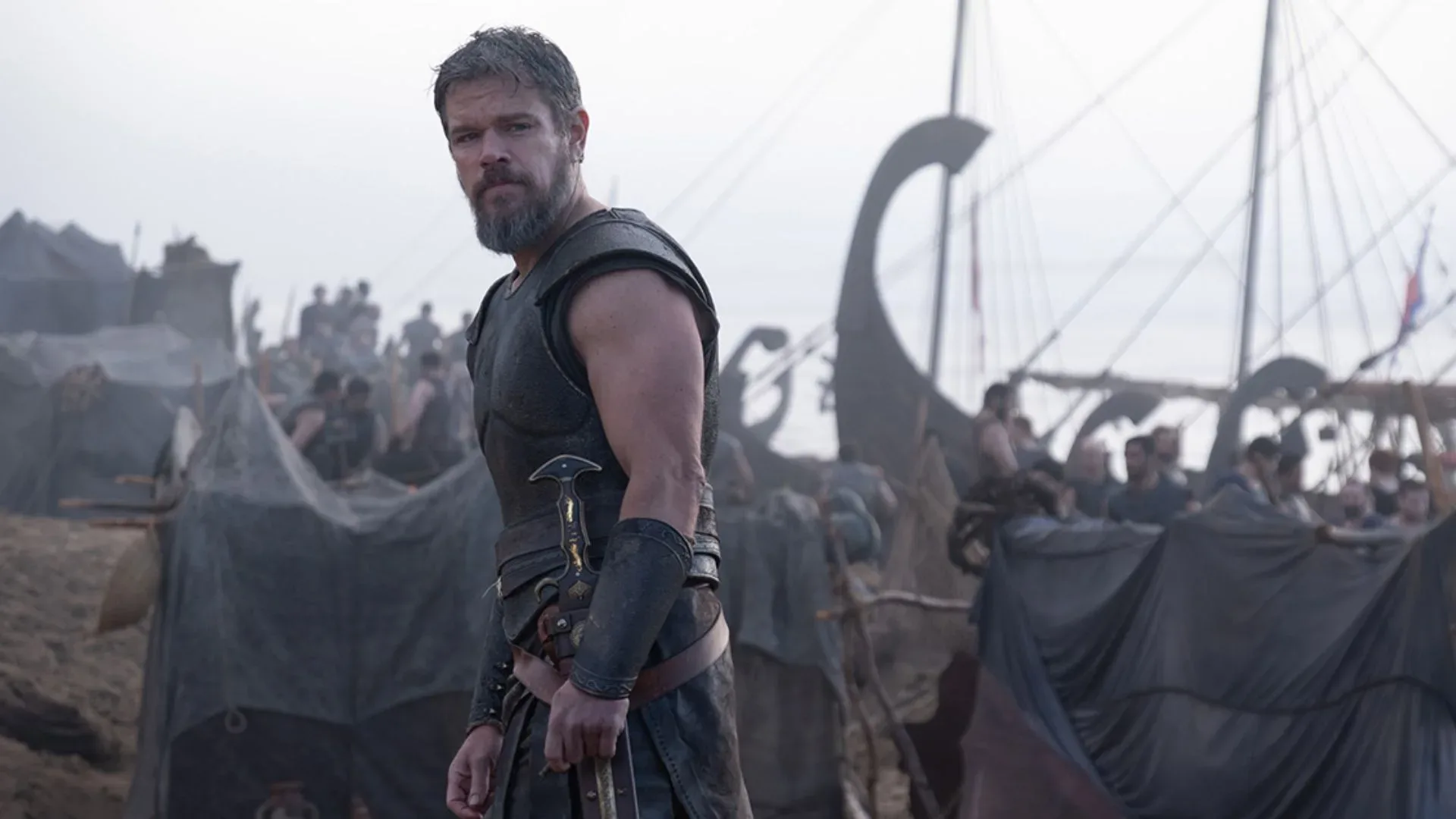
Christopher Nolan’s The Odyssey has been discussed as a large-scale adaptation made with an unusually physical, in-camera sensibility, and Guillermo del Toro has shared one particularly bracing detail from its production. In a conversation with Nolan after seeing the film, del Toro asked how a shot of Matt Damon’s Odysseus floating in a stormy sea had been created. Nolan’s answer, as del Toro recalled it, was wonderfully blunt: Damon was put into a real storm in the ocean.
Del Toro relayed the exchange during a Reddit AMA connected to the re-release of Pan’s Labyrinth, while answering a question about artificial intelligence and filmmaking. His point was not simply that one director favors difficult practical setups. It was part of a larger case for the unpredictable visual details that emerge when filmmakers, performers, cameras, weather, water, and physical materials meet in the same place.
That distinction matters when the image at hand is a human being at the mercy of a rough sea. A digital recreation can be controlled frame by frame. A practical sequence can carry details no one can entirely choreograph: shifting light, spray on a lens, unstable movement, or a camera reacting to the environment. Del Toro argued that these unplanned elements can be essential to why an image feels convincing.
A direct answer for a demanding image
The scene del Toro described involves Damon, who plays Odysseus, floating amid stormy ocean conditions. Del Toro said that he and Nolan had been speaking about practical effects and their shared appreciation for using maquettes or models. Looking at the sequence in The Odyssey, del Toro asked Nolan how it was done. Nolan’s response indicated that the production had achieved the moment without replacing Damon with a digital version of the actor or manufacturing the setting entirely through computer imagery.
It is an anecdote that fits Nolan’s established preference for capturing as much as possible physically, but it is still striking in its specificity. Water work is inherently difficult to photograph because the environment refuses to behave like a neat soundstage prop. Waves do not hit on cue, surfaces constantly reflect and distort light, and performers must remain legible within an image that is supposed to feel chaotic. The reported choice to put Damon in an actual stormy ocean puts those uncontrollable qualities at the center of the shot.
That does not mean the entire film rejects visual effects outright, nor does the account provide a complete technical breakdown of the sequence. It does, however, describe one key scene being approached through a real-world setup. For a story rooted in Homer’s epic of a journey home through hostile seas, that method has an obvious dramatic logic: the audience is seeing a performer contend with a tangible environment rather than a fully simulated one.
Del Toro’s case for the useful accident
Del Toro’s comments arose from a discussion about what can be lost when images become too manufactured. He suggested that a meaningful portion of a great image comes from accident rather than perfect planning. A droplet on the lens, an unexpected jolt in the camera, or another small interference from the real environment can introduce the kind of imperfection viewers instinctively recognize.
He connected that view to a memory from 1993 or 1994, when he and James Cameron were looking at Terminator 2. Del Toro recalled Cameron pointing out flares in the moment where Robert Patrick’s character breaks a car window with his arm. Cameron’s observation, in del Toro’s retelling, was that details resembling accidents can help an audience accept an image as real.
The idea is not that every rough edge is automatically valuable, or that digital tools have no place in modern filmmaking. Rather, del Toro was identifying an aesthetic quality that is hard to reduce to a technical checklist. Real materials and locations create resistance. They make filmmakers respond to conditions rather than dictate every aspect of them, and the final image can preserve evidence of that encounter.
That conversation lands at a moment when debates around AI-generated imagery, computer graphics, and practical filmmaking often get treated as an all-or-nothing contest. Del Toro’s comments point to a more precise concern: the risk of eliminating chance. The value of a physical shot is not merely that it was difficult to make. It is that the weather, machinery, performers, and camera can all contribute something that no one fully authored in advance.
That broader question reaches beyond the fantasy and epic-film space. It also intersects with the rapid evolution of AI tools in other fields, including research efforts such as NASA and IBM’s open lunar AI model. Film artists are still confronting a separate creative issue: how to use increasingly powerful technology without sanding away the texture, uncertainty, and human decisions that give individual images their identity.
The fall of Troy and a practical-scale ambition
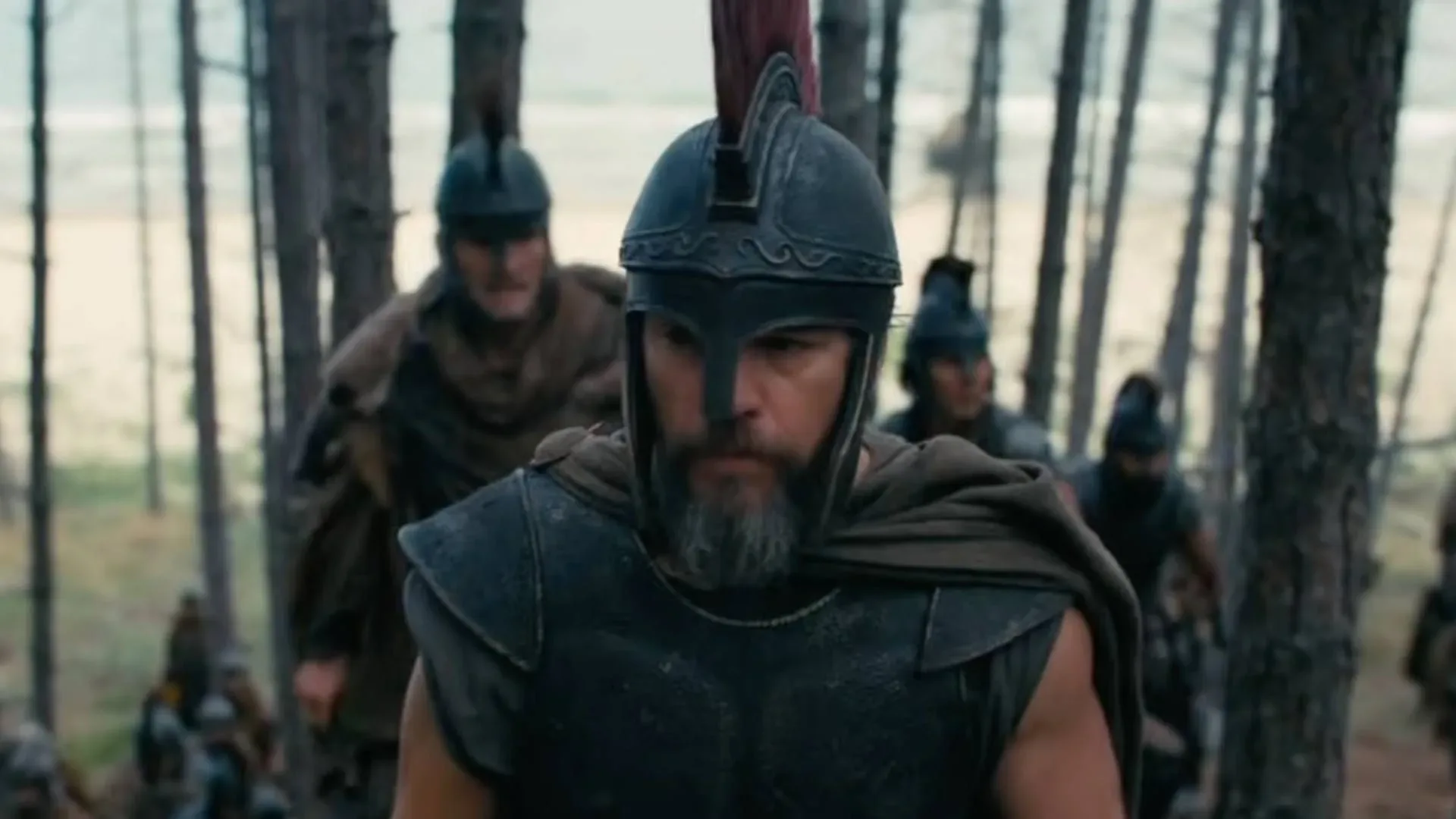
The storm sequence is not the only example associated with Nolan’s hands-on approach to The Odyssey. The film’s massive fall of Troy was reportedly filmed without a green screen. Together, that detail and del Toro’s story present a picture of a production willing to prioritize scale achieved in front of the camera.
For an adaptation of Homer, scale is not decorative. The story demands a world of armies, ships, gods, ruins, distance, and a protagonist pushed through extremes on the way back to Ithaca. A practical approach may not be the only means of communicating that grandeur, but it can give the audience a tangible point of contact. Dust, water, fire, structures, and crowds have weight before any later image work is considered.
There is also a performance dimension to that choice. Damon’s Odysseus is not only portrayed as surviving a legendary journey; in the scene described by del Toro, the actor is physically present in the kind of ocean setting the character is meant to endure. The account does not turn that into a claim about the totality of the performance or production process. Still, it helps explain why the image apparently prompted del Toro to ask how it had been made in the first place.
A blockbuster result for Homer’s voyage
The Odyssey remains in theaters and has already passed $1.6 billion worldwide at the box office. The R-rated film is now on course to become Universal’s highest-grossing release ever, potentially moving beyond Jurassic World. Its commercial performance is especially notable given the scale of the material: a classical epic adapted as a major modern theatrical event.
The film has also drawn strong critical attention, and its practical-minded production has become part of the conversation around that reception and its box-office run. Himesh Patel, Damon’s co-star, has expressed hope that Nolan’s limited use of CGI could influence the way Hollywood makes films going forward.
Whether that influence takes the form of more location work, more model construction, more in-camera action, or simply a greater willingness to let reality intrude on the frame remains to be seen. Del Toro’s recollection offers a concise example of the appeal: a filmmaker saw a difficult ocean image, asked for the trick, and learned that the “trick” was to put the lead actor in the storm.
For The Odyssey, a film about an exhausted hero struggling through the violence of the natural world, that plainspoken production choice feels unusually aligned with the story itself. The sea is not merely an effect around Odysseus. In the account del Toro shared, it was there with him.