IMAX has become a moviegoing shorthand for “the biggest possible version,” but the label covers considerably more than a giant screen and a louder trailer reel. The format changes the geometry of the picture, can alter what footage is visible, uses specialized projection systems and asks filmmakers to plan for unusually expansive frames long before anyone buys popcorn.
That distinction matters as large-format releases such as Christopher Nolan’s The Odyssey drive intense interest in 70mm presentations. A ticket marketed as IMAX can still mean different things from one venue to another, however. Digital xenon, single-laser, dual-laser and 15/70mm film installations do not offer identical screen shapes or projection capabilities. The useful question is not simply “Is this IMAX?” but “Which kind of IMAX is this theater equipped to show?”
IMAX changes the shape of the image
Most conventional cinema presentations use wide rectangular imagery. IMAX is notably taller. Its commonly cited digital presentation ratio is 1.90:1, while the full film-oriented IMAX ratio is 1.43:1. The smaller second number may look like a technical footnote, but it describes a much more vertically generous image. Rather than a narrow panoramic strip, the frame occupies more of a viewer’s upward and downward field of vision.
The effect is not just that the screen appears enormous. A movie designed to use the taller frame can reveal information that a standard composition does not: more architecture above a character, more terrain beneath them, or a larger sense of scale during a wide shot. That is why aspect-ratio changes within certain films are frequently a point of discussion among fans. On the right screen, the movie may be showing a larger portion of the captured scene, not merely enlarging the same cropped picture.
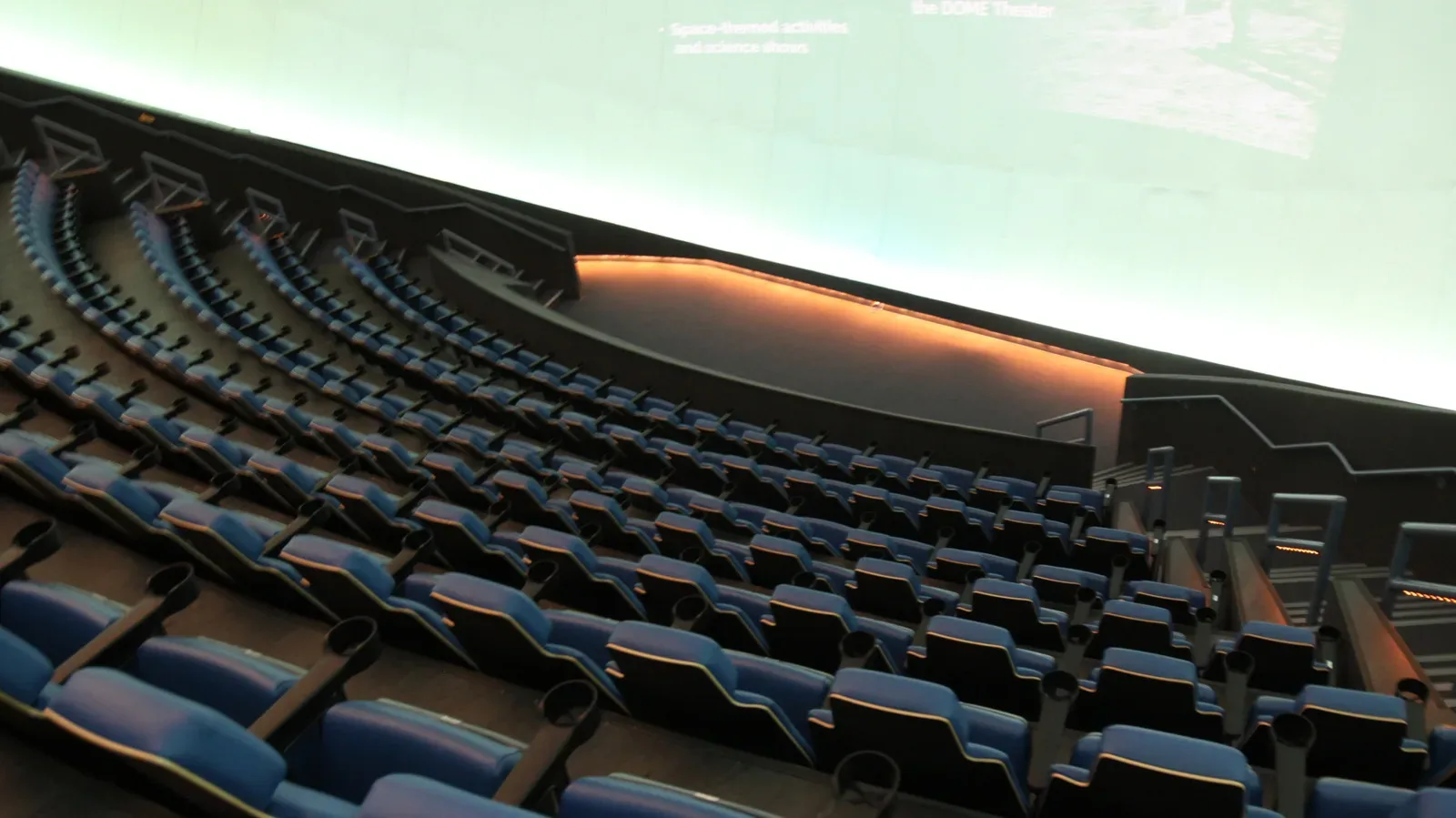
At the extreme end, a 70mm IMAX venue can have a screen roughly 59 feet high and 79 feet wide. Those dimensions are built around immersion. The image is intended to press beyond easy peripheral viewing, which is a different objective from simply installing the widest possible display.
“Filmed for IMAX” is not interchangeable with “shown in IMAX”
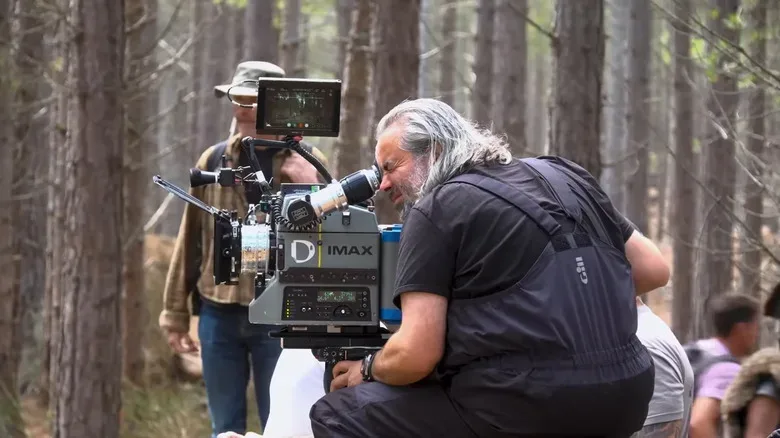
A release can be screened in IMAX without having been made specifically around the company’s cameras, post-production tools and presentation requirements. That does not make the screening meaningless; remastering and a purpose-built auditorium can still improve the theatrical result. But productions identified as Filmed for IMAX involve a deeper collaboration during production.
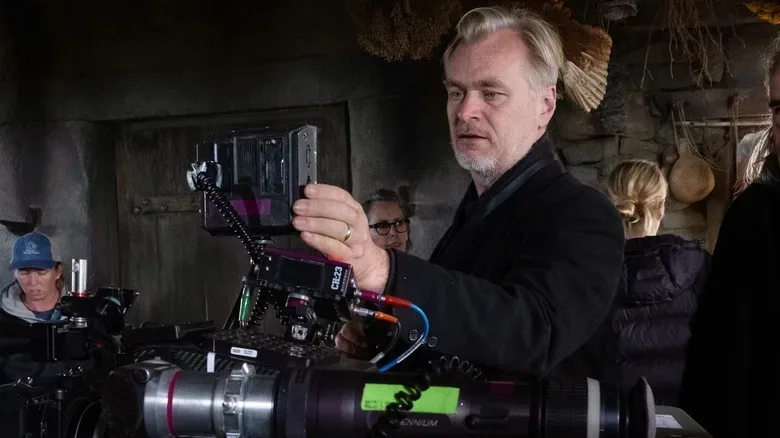
Using an expanded format affects choices on set. Directors and cinematographers have to account for the additional picture area when selecting lenses, positioning performers and composing backgrounds. Lighting must hold up across more visible real estate, and the sound design is considered for a more enveloping playback environment. The work is not equivalent to taking a finished widescreen image and uncovering extra pixels after the fact.
IMAX also supplies digital remastering tools intended to refine a film for giant-screen exhibition. The practical goal is consistency: a production may need to look considered both on a tall premium screen and in a conventional auditorium with a different shape. Nolan has characterized that planning challenge as a consequence of capturing so much visual information; filmmakers still need framing that succeeds across the formats audiences will encounter.
Related coverage includes Why IMAX Looks and Feels Different From a Standard Movie Theater.
The projection label makes a real difference
Not every IMAX auditorium has the hardware to deliver the same presentation. The most widespread category is digital IMAX, often installed in multiplexes operated by chains including AMC, Cinemark and Regal. Many of these systems use dual xenon-lamp projectors. They can present the 1.90:1 IMAX image and remain a significant step up in scale from a typical auditorium, but they do not reach the resolution or contrast potential associated with laser installations and film.
Laser venues are not one uniform thing either. A single-laser system is generally limited to the 1.90:1 frame, though it offers meaningful gains over xenon in brightness and contrast. The higher-end Laser GT setup uses two 4K laser projectors and can support the taller, floor-to-ceiling-style 1.43:1 presentation in appropriately equipped venues. It also aims for a broader color range and sharper image detail.
For a moviegoer, this means the word “laser” is helpful but incomplete. A laser-equipped IMAX theater may be excellent while still being incapable of showing the tallest version of a given film. Checking the individual venue’s listed system and screen format is the safer way to set expectations.
- Digital xenon: Commonly associated with 1.90:1 IMAX screens; an accessible large-format option.
- Single laser: Also generally 1.90:1, with stronger brightness and contrast than xenon.
- Laser GT: Dual 4K laser projection that can support 1.43:1 at qualifying locations.
- 15/70mm IMAX film: The rare large-format celluloid presentation associated with the largest IMAX image area.
Why 15/70mm film has a near-mythical status
Seventy-millimeter filmmaking predates IMAX; Stanley Kubrick’s 2001: A Space Odyssey is a well-known example of a film made on the broad-gauge medium. IMAX’s 15/70 format takes an especially oversized approach. The film moves horizontally through the projector rather than vertically, and each frame uses 15 perforations instead of the five commonly associated with conventional 70mm projection.
That produces a huge negative area. More physical image area can retain extraordinary fine detail when projected at immense scale, which is the foundation for IMAX’s claims of image clarity far beyond traditional 35mm exhibition. The company has described 15/70 prints as up to 10 times clearer than 35mm and as reaching an equivalent of 18,000 pixels per frame, although comparisons between film and digital pixel counts are inherently imperfect.
The machinery and logistics are equally outsized. Prints for The Odyssey reportedly run more than 10 miles in length, weigh about 500 pounds and travel through the projector at hundreds of miles per hour. Each 70mm print has reportedly cost around $80,000. This is a physical format built on remarkable scale, not a nostalgic gimmick that can be supplied as easily as a digital file.
There is an understandable appeal in that spectacle for people who collect and preserve media artifacts. It sits in the same broad culture of mechanical, screen-based entertainment as a lavish physical pinball table—such as the Fallout machine with its Vault 33 and V.A.T.S. details. In both cases, the format is part of the attraction: specialized hardware shapes the experience in a way that a smaller, more convenient version cannot fully duplicate.
Scarcity is a hardware and staffing problem
Demand for premium screenings does not mean every multiplex can install 15/70mm overnight. IMAX has around 1,800 screens worldwide, but only 32 theaters in North America and 41 globally were identified as supporting the 70mm format. They are concentrated in select metropolitan areas, leaving some viewers with drives of 500 miles or more if they want the rarest presentation.
The bottleneck is not just screen space. IMAX film projectors are enormous, specialized machines, and the company has not made a new film projector in roughly 50 years. As exhibition moved aggressively toward digital projection, the expertise, parts and documentation required to reproduce and maintain those older systems became increasingly difficult to find. Existing units have instead been refurbished to meet renewed interest.
Operation is specialized work as well. Only about 90 people were reportedly able to run the rare projectors. IMAX has added 11 70mm theaters since 2023, but each expansion depends on finding usable equipment, upgrading a suitable location and ensuring there are trained people to keep the system running reliably.
Why premium formats are attracting more attention
The theatrical marketplace has made the format conversation more visible. Total ticket sales in 2025 were reported at $8.9 billion, below the pre-pandemic $11.4 billion high, while IMAX recorded its best year, with sales up about 40% year over year. In 2026, premium-format releases including Spider-Man: Brand New Day and The Odyssey have helped put the U.S. box office on a pace for its strongest year since 2019, even as theaters are said to be selling roughly two-thirds as many tickets.
The pattern suggests fewer trips can make individual trips feel more deliberate. If admission and concessions already represent a substantial outing, audiences may be more willing to reserve that occasion for a visually ambitious movie in a premium room. Upcoming interest in Dune: Part 3, which is set for a December premiere, fits that behavior.
For anyone deciding whether to seek out IMAX, the simplest approach is to match the format to the film and the local theater. An effects-heavy production shot with expanded sequences may justify traveling to a Laser GT or 15/70 venue for viewers who care about the full frame. A nearby 1.90:1 digital or single-laser screen can still provide an imposing image and upgraded presentation. The ticket is not automatically buying one universal format; it is buying into a specific combination of screen, projector, sound system and the creative choices made for that release.