The question sounds as straightforward as movie trivia gets: where is the biggest IMAX theater in the world? The answer is considerably less tidy than a single pin on a map. It depends on whether “biggest” means total screen area, the tallest screen, the widest screen, or the largest venue built for IMAX’s towering 1.43:1 presentation. It also depends on whether a viewer considers laser projection an equal participant in the conversation alongside 15/70mm film.
That may sound like the sort of detail that makes casual audiences reach for the popcorn and back slowly away, but it has practical consequences. A film composed for a taller IMAX frame can reveal materially more image in a 1.43:1 auditorium than in a 1.90:1 venue. A massive screen can be spectacular while still showing a different version of the frame from a theater equipped for the giant-format film system. For fans planning a once-in-a-lifetime viewing, the distinction is not just collector-grade label scrutiny. It changes what appears on screen.
The renewed interest in premium exhibition arrives as major films keep turning theatrical format into part of the event. Christopher Nolan’s The Odyssey has helped fuel attention toward the most imposing screens, while demand for IMAX presentations of Dune: Part 3 has already made format research feel useful rather than purely academic. Moviegoers following the business side of big-screen releases have also seen how individual stars and franchises can shape the theatrical conversation, as in the recent box-office discussion around Tom Holland and Spider-Man: Brand New Day.
Leonberg holds the largest-screen record by area
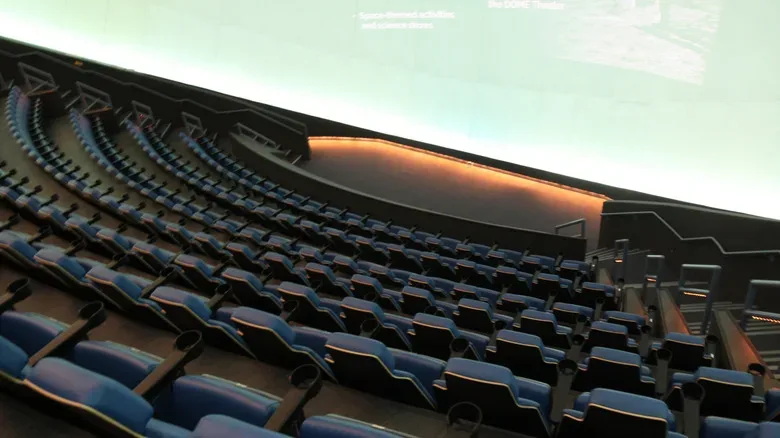
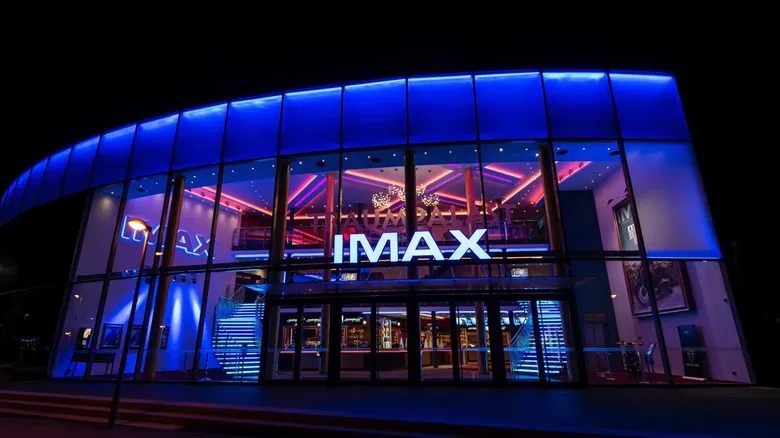
For raw surface area, the leading answer is the IMAX theater at Traumpalast Leonberg in Baden-Württemberg, Germany. Its screen measures about 127 feet wide and 69 feet high, producing an area of roughly 8,770 square feet. Guinness World Records recognized it in 2023 as the world’s largest movie-theater screen.
Those numbers are difficult to diminish. The screen is wider than a Boeing 737 is long, a comparison that effectively conveys why the auditorium has become a bucket-list destination for format-minded movie fans. If the contest is strictly about the largest physical canvas in a cinema, Leonberg has an exceptionally strong claim—and the record recognition gives that claim an official foundation.
Yet this is where the asterisk arrives, carrying a very large flashlight. Leonberg’s IMAX presentation is associated with digital projection rather than the 15/70mm film format that many enthusiasts view as the apex of IMAX exhibition. The theater is still IMAX, and its dimensions are still extraordinary. But a segment of the audience uses “largest true IMAX” to mean something more specific: the largest screen capable of presenting the 1.43:1 image associated with IMAX 70mm film.
Why aspect ratio reshapes the argument
Aspect ratio describes the proportional relationship between width and height. A 1.90:1 screen is wide, but its image is not as tall relative to its width as a 1.43:1 screen. The latter has a squarer shape, which is why it can look dramatically more vertical when a movie is made to take advantage of it.
Digital IMAX locations commonly use either dual-xenon projection or laser projection systems and generally operate at a 1.90:1 aspect ratio. That is substantially larger and taller than a standard multiplex screen, and it can be a major upgrade for the right movie. It should not be treated as though it is indistinguishable from a conventional auditorium simply because it is digital.
Still, the enthusiast debate persists because 15/70mm IMAX uses a separate large-format film presentation and supports the taller 1.43:1 frame. The nickname “LieMAX,” used by some purists for digital locations, reflects frustration with marketing that can make several materially different setups seem identical to ticket buyers. It is a loaded term, and it is hardly a helpful way to describe every digital IMAX screen. But the complaint points to a real issue: the IMAX logo alone does not tell audiences the screen size, projector type, or maximum aspect ratio at a particular theater.
IMAX has said its 70mm format can be ten times sharper than traditional 35mm prints. Beyond the numerical claim, what loyal film-format viewers are chasing is a combination of scale, detail, brightness, and vertical image area. That makes the “world’s largest” contest less like measuring one rectangle and more like sorting different classes in the same championship.
Melbourne’s claim to the giant 1.43:1 crown
For people whose definition requires the large 1.43:1 format, IMAX Melbourne is the name most often placed at the top. Its screen is approximately 105 feet wide by 75 feet high. It is promoted as the largest IMAX screen in the Southern Hemisphere and is widely regarded as the biggest screen in the world for this taller IMAX presentation.
Its dimensions explain the distinction. Leonberg is wider and has greater overall area, but Melbourne is notably taller. That height matters most for films that include scenes framed for 1.43:1 IMAX. In those sequences, an auditorium designed around the tall format can offer more of the intended image than a 1.90:1 screen, even where the latter is enormous.
Calling Melbourne the unequivocal largest IMAX theater would skip over Leonberg’s legitimate surface-area record. Calling Leonberg the answer without qualification would skip over the format distinction that sends committed viewers across oceans. The more accurate phrasing is that Melbourne has a compelling claim as the largest 1.43:1 IMAX screen, while Leonberg is the record-holder for the largest movie-theater screen by area.
The U.S. contenders are close, but not identical
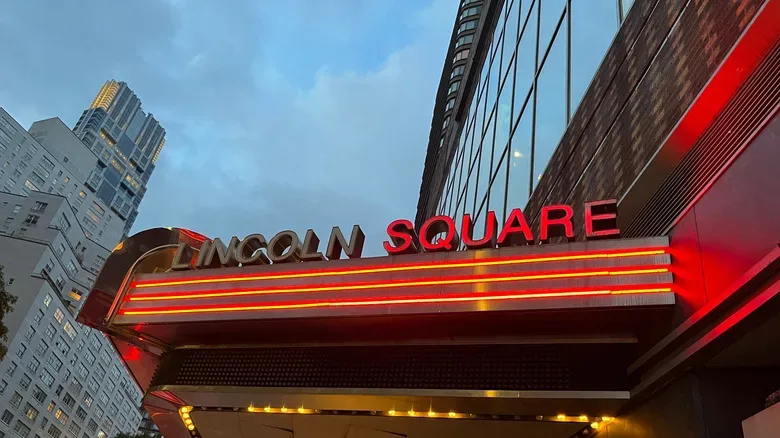
American viewers have several venues worth separating rather than bundling into a vague “big IMAX” category. AMC Lincoln Square in New York City is among the country’s premier destinations for large-format IMAX screenings. Its screen measures about 101 feet wide and 75.6 feet tall, placing it close to Melbourne in headline dimensions. For an audience looking for an especially large 1.43:1-capable destination in the United States, it belongs near the top of the list.
On the West Coast, AMC Metreon 16 in San Francisco is another venue that can enter the conversation about America’s most formidable IMAX options. Any traveler considering either theater should check the specific engagement rather than assuming every title is presented in the same format. A theater’s hardware capabilities and a film’s available versions are separate questions; a giant-format title may not necessarily be supplied as a 15/70mm film print for every eligible location.
Royal Cinemas in Pooler, Georgia, offers a different kind of superlative. Its IMAX screen is about 101 feet wide and 76.2 feet tall, making it the tallest screen in the United States. It uses dual 4K laser projection and shares the 1.43:1 aspect ratio associated with the celebrated film-based presentations. In pure height, it edges beyond Lincoln Square’s roughly 75.6-foot measurement.
Whether Pooler should be crowned America’s foremost IMAX screen therefore returns to the central philosophical fork in the road. Viewers who prioritize a 1.43:1 screen and enormous dimensions have a strong case for it. Those who specifically want 15/70mm film will make their decision differently. Neither approach is irrational; they are simply answering different versions of the same question.
A practical way to choose an IMAX screening
Instead of asking only whether a nearby theater is “IMAX,” audiences can narrow the search with a few more useful questions:
- What is the screen’s size? Width and height both matter. A wider screen is not automatically a taller-frame experience.
- Which aspect ratio can the auditorium show? The critical comparison here is usually 1.90:1 versus 1.43:1.
- What projector is installed? Digital xenon, laser, dual 4K laser, and 15/70mm film are not interchangeable descriptions.
- What format is the movie actually playing in? A venue may possess certain capabilities without using every one of them for every release.
- What matters most for the trip? The biggest physical screen, a taller image, laser presentation, or a rare 15/70mm film print can each lead to a different destination.
So, the short version is not really short. Traumpalast Leonberg in Germany owns the strongest claim to the biggest cinema screen by total area: about 127 by 69 feet and roughly 8,770 square feet. IMAX Melbourne makes the leading claim for the largest 1.43:1 IMAX screen, at approximately 105 by 75 feet. AMC Lincoln Square is a towering New York contender at about 101 by 75.6 feet, while Royal Cinemas Pooler has the tallest U.S. screen at around 101 by 76.2 feet with dual 4K laser projection. The answer is less a single champion than a carefully labeled display case of very big winners.