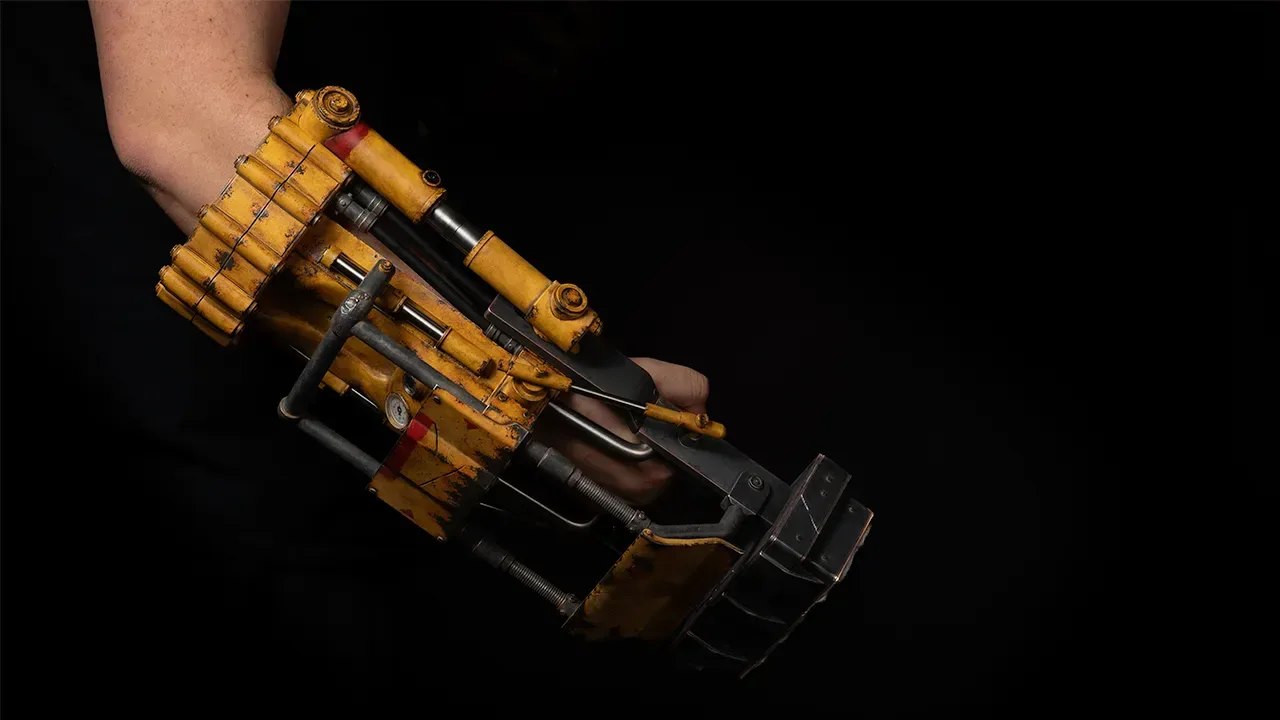
The wasteland is getting smaller, louder and considerably more dependent on gravity. Stern Pinball has revealed a Fallout machine built around Bethesda’s post-apocalyptic universe, placing a vault dweller’s journey inside the familiar, gleaming geometry of a full-size pinball cabinet. Instead of choosing dialogue options or hoarding adhesive for a settlement, players will be sending a silver ball toward ghouls, raiders and one extremely unfriendly Deathclaw.
The timing makes sense. Fallout is a video-game giant with decades of lore, while its television adaptation has introduced its peculiar blend of retro-futurism, irradiated horror and absurdist comedy to a broader audience. Stern’s machine appears to use both sides of that identity: its presentation largely draws from the live-action series, while gameplay elements also reach back to Fallout 4. In other words, it is a crossover between a vault, an arcade and the part of the apocalypse where someone has decided bottle caps are a reasonable currency.
The Fallout machine follows Stern’s Pokémon release from earlier in 2026, another notable move toward gaming properties for the manufacturer. It will arrive in the company’s customary three configurations: Pro, Premium and Limited Edition. The lowest-priced version begins at $7,299 USD, a figure that may cause even the most seasoned wasteland scavenger to look under the sofa for additional Nuka-Cola caps.
A miniature wasteland with physical hazards
Pinball works best when a theme is more than artwork on the side of a cabinet. A great table turns characters, places and ideas into mechanical objectives: ramps become routes, bumpers become trouble, and a well-placed toy becomes an irresistible target for a ball moving far too quickly to respect anyone’s plans. Fallout has plenty of raw material for that treatment, and this table leans into recognizable objects from its world.
Among the advertised playfield features is a sculpted Deathclaw, because any Fallout tribute without one would feel like an alarming amount of confidence. The table also includes a spinning Nuka-Cola cap, a moving Vault 33 door, a working PIP-Boy feature and a Fat Man launcher used to attack targets on an upper playfield. These are not merely decorative references; they are designed as physical parts of the game’s layout and objectives.
The Vault 33 connection points directly toward the television adaptation, which stars Ella Purnell and Walton Goggins. The machine’s material is said to focus heavily on the show’s first two seasons. Johnny Pemberton, who plays Thaddeus in the series, recorded original voice clips for the table. That distinction matters in pinball, where sound packages carry much of the personality between shots, modes and multiball chaos. A cabinet can have a beautiful sculpt, but it is the right sound at the right moment that persuades a player they have just survived a catastrophe rather than merely hit a ramp.
At the same time, the game is not treating Fallout solely as a television license. The V.A.T.S. system is among the elements that appear to have been adapted from Fallout 4. That is an especially natural fit for pinball. V.A.T.S. has always been about identifying targets and assigning a tactical priority to them; a pinball version can turn that logic into shot selection, target progression and the eternal player dilemma of whether to take the safe shot or fire at the dangerous one because it has a flashing light.
RPG DNA meets pinball rules
Fallout’s role-playing foundation gives the machine more to work with than a simple monster-of-the-week layout. A vault dweller beginning in relative safety and stepping into the irradiated outside world provides a clear narrative framework for modes and progression. Raiders, ghouls and Deathclaws provide a handy escalation ladder. The PIP-Boy and V.A.T.S. give the design team interface language that can translate into gameplay. Even the franchise’s love of dubious technology is practically begging to become a lock, launcher or moving toy.
Related coverage includes Stern Pinball Brings Fallout’s Wasteland to Pro, Premium and Limited Edition Tables.
George Gomez, Stern Pinball’s vice president and the creator of Spy Hunter, has indicated that Bethesda’s Todd Howard provided input on the project. That involvement suggests the machine was developed with attention to the property’s wider identity rather than simply extracting a collection of recognizable symbols. Stern’s 2025 Dungeons & Dragons table similarly drew from the role-playing game’s foundations, and Fallout is another property where systems, characters and world-building matter just as much as the headline monster on the cabinet art.
Keith Elwin designed the Fallout machine. His recent work includes Stern tables based on Jurassic Park, Jaws and King Kong, and his previous Iron Maiden design made particularly memorable use of a prominent back-area shot. Fallout’s layout includes a Vault-themed rear shot that looks positioned to become one of its defining destinations. For collectors, that kind of signature geometry can be as important as a license: it gives a table a visual identity that remains clear even when someone is watching from the side of a crowded arcade.
Why a Fallout pinball table stands out
Video games and pinball have spent decades as neighbors in arcades, bars and game rooms, yet full-scale pinball adaptations of gaming properties remain comparatively uncommon. The two mediums share flashing lights, score-chasing and the capacity to make a player immediately ask for one more attempt. But they operate differently enough that a video-game license needs more than nostalgia to make the jump successfully. The trick is converting an interactive digital world into a physical board where every decision is filtered through flippers and ball control.
Stern’s recent Pokémon machine and Jersey Jack Pinball’s Sonic the Hedgehog table demonstrate a more visible interest in game-derived themes. Fallout takes a distinct route within that trend. Pokémon and Sonic bring instantly readable characters and bright iconography; Fallout brings moral ambiguity, debris, vault technology and mutants that look like they would object to being represented by a plastic sculpture. That tonal difference could help the table appeal to collectors who want a game room centerpiece with a little more radioactive rust around the edges.
There is also an overlap between Fallout’s fiction and pinball collecting that is hard to ignore. Fallout’s world is packed with artifacts: lunchboxes, old terminals, advertising mascots, weapons, junk and machines whose original purpose has become fuzzier with every passing century. Pinball cabinets are physical artifacts too, built from wood, metal, plastics, lighting and an alarming number of mechanisms that demand respect. A Fallout table is therefore not just licensed memorabilia; it is a real, complicated machine pretending it escaped from a fictional, even more complicated machine-filled wasteland.
Three editions, one very real collector decision
As with other Stern releases, the Pro, Premium and Limited Edition models will have differences in features and pricing. The provided details do not lay out every distinction between those configurations, so prospective buyers should avoid assuming that every listed playfield element appears in precisely the same form on every model. What is clear is that Fallout is being positioned as a major multi-tier release rather than a single cabinet.
That structure is familiar territory for modern pinball collectors. The Pro version is the entry point, although “entry” becomes a relative term at $7,299 USD. Premium and Limited Edition options offer alternate routes for buyers who value enhanced features, edition-specific presentation or the appeal of owning a scarcer variant. For anyone tracking the market, the right question is not simply which cabinet is rarest. It is also which theme, layout and configuration they will be happy to live with long after the launch excitement has faded and the first inevitable rules debate has begun.
For people attending PAX West during the event weekend, the Fallout machine is available to play there. That offers a useful chance to see how its physical features, upper playfield action and audio package come together before treating glossy promotional images as the entire story. Pinball is an unusually tactile collectible: photos can show the armor, but only a real ball can reveal whether the armor has any rhythm.
Fallout’s arrival is ultimately a noteworthy collision of two durable gaming traditions. One began in digital vaults, branching quests and a blasted America full of strange survivors. The other asks players to keep a steel ball alive for just a few seconds longer. Stern’s new cabinet puts them together with Vault 33, V.A.T.S., a Fat Man launcher and a Deathclaw standing between the player and a respectable score. In the wasteland, nobody can hear you tilt. They can, however, definitely hear the drain.
For more ways gaming hardware and physical setups can shape a play space, see our guide on remapping seldom-used keyboard keys for a faster Windows and gaming setup.