Possible plot and costume spoilers for The Batman: Part II follow.
Gotham’s most observant citizens have apparently received a new assignment: zoom in, adjust contrast, argue about leather sheen, and decide whether Bruce Wayne has been browsing the Batman: Arkham wardrobe catalog. Newly surfaced set photos from Glasgow, where director Matt Reeves is filming The Batman: Part II, offer a look at an updated Batsuit worn by Robert Pattinson’s stunt double, Rick English. The imagery has prompted comparisons to the suits seen in the Arkham video games, though the available photos are hardly a final costume turntable.
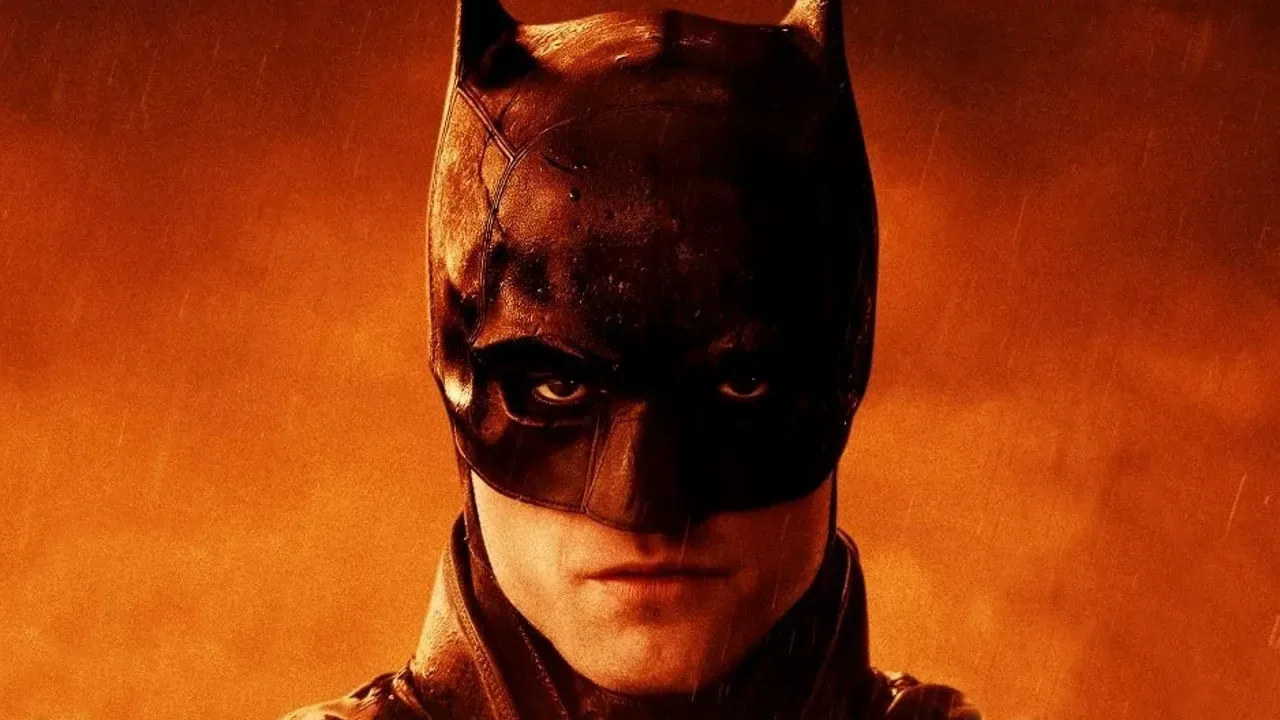
The visible changes are small enough to invite forensic-level fan debate but distinct enough to make the conversation understandable. The armor appears darker and glossier than the gear in 2022’s The Batman. The cowl also seems to have slightly longer ears. Most conspicuous is a mustard-colored utility belt, a color choice that instantly carries Batman history with it even before anyone starts reaching for a screenshot comparison folder.
There is an important cape-sized caveat: outdoor production photography can distort color, texture and contrast. Some observers do not see a notably darker or shinier suit at all, arguing that the apparent change could be a consequence of Glasgow lighting, camera exposure, weather, distance, or all of the above joining forces like a very boring supervillain team-up. Until a finished image, trailer, or official costume reveal exists, the exact finish of the armor remains uncertain.
A familiar silhouette with a potentially sharper edge
The first film’s suit was deliberately practical-looking: reinforced, pieced together, and rooted in a Batman who was still early in his career. It looked less like pristine superhero couture and more like equipment assembled by a brilliant, sleep-deprived man with access to a workshop and an intense commitment to brooding. If the Glasgow images accurately represent a revised sequel design, the new version seems to preserve that basic grounded direction rather than replacing it with a radically different comic-book silhouette.
That continuity matters. The longer cowl ears and the darker-looking finish, if intentional, would be adjustments rather than a total redesign. The utility belt is the element likely to attract the loudest response because it breaks up the suit’s darker body armor with a warmer, more traditional Batman-adjacent color. Mustard is not exactly stealth mode’s first pick, but Batman’s belt has long been one of the character’s visual signatures. It is where the silhouette says, “I am an urban nightmare,” while the accessories quietly add, “and I planned ahead.”
Arkham comparisons make sense in broad aesthetic terms. The video-game series made a major impression with heavily armored suits, pronounced cowls and designs that balanced comic-book iconography with tactical detail. But a resemblance in a few visual traits does not establish that Reeves’ team is directly adapting a particular Arkham outfit. At this stage, “Arkham-style” is a useful shorthand for fans describing the apparent blend of armor, darker material and bolder cowl proportions—not proof of a one-to-one costume reference.
That distinction is especially worth keeping in mind because Batman’s visual language has been remixed for decades. Dark armor, pointed ears and a colored utility belt are not exclusive to any one game, film, comic, animation era, or collectible shelf. The interesting question is not whether every component originated with Arkham, but how these pieces may function within the specific, rain-soaked world established by the 2022 movie.
The chase appears to be doing most of the talking
The set images suggest that the suit discussion is only one part of a larger action sequence. The production is filming what appears to be a substantial police chase involving the Batmobile. In some photos, Batman is bloodied, takes control of a Gotham City Police motorcycle, and makes an escape by riding it off the hood of a GCPD vehicle. That is an admirably direct solution to transportation trouble: if your custom muscle-car tank is having a bad evening, acquire two wheels and keep the plot moving.
The Batmobile itself reportedly looks worse for wear following barrel rolls. If the images represent consecutive beats in the same sequence, that damage provides a plausible reason for Batman to abandon the car and switch to the police motorcycle. Still, set photography does not reveal the scene’s final order, context, edits, dialogue, music, or whether any shots will survive into the finished film. A production can film fragments in an order that bears little resemblance to how viewers eventually encounter them.
What the glimpses do communicate is scale. A damaged Batmobile, police vehicles, a motorcycle stunt and a bloodied Batman point toward a physical, high-impact chase rather than an entirely clean getaway. That would fit the tactile action sensibility of The Batman, which treated vehicles and impacts with a sense of weight. The sequel could certainly take the machinery in new directions, but the current material suggests that Gotham traffic laws remain mostly a suggestion.
Why a stunt-double sighting changes what the photos can tell us
Rick English appearing in costume is useful context for reading the images carefully. A stunt performer is central to the execution of action scenes, but a photo of a stunt double cannot settle every question about the final hero costume. Productions can use alternate versions of outfits for stunt work, adjust materials for safety and movement, or alter how a suit reads through post-production color grading. The photos can indicate what was being filmed on location; they cannot serve as a definitive catalog entry for every final costume detail.
That does not make the photos uninteresting. Quite the opposite: action-unit imagery often reveals the mechanical realities that polished promotional stills hide. A suit designed for movement must work around a performer on a motorcycle, around stunt protection, and around the aggressive motion demanded by a chase. Any apparent costume refinement may therefore have a practical purpose alongside its visual one.
Batman’s games and movies keep borrowing a shared visual vocabulary
The Arkham discussion is also a reminder that Batman is unusually adaptable across media. Games have room to turn gear upgrades into progression systems, letting players see armor evolve as abilities and challenges expand. Movies operate differently, but a sequel’s adjusted costume can similarly signal a character who has learned, changed, or simply found a more effective way to survive Gotham’s extremely unfriendly commute.
Reeves’ film continuity is its own thing, and the current set photos do not confirm a game adaptation, crossover, or direct Arkham connection. Yet it is entirely natural for viewers to use game imagery as a reference point when a live-action suit takes on more armored or stylized traits. The Arkham games helped define how many players imagine a contemporary tactical Batman, just as films, comics and animation have each left their own marks on the cape-and-cowl blueprint.
Superhero designs are often at their best when they communicate character before a line of dialogue arrives. A more battered, darker-looking Batman in the middle of a police pursuit tells audiences something immediate: this is not a ceremonial appearance. Whether the final suit proves to be shinier, merely differently lit, or somewhere between those interpretations, the production images place it in a rough-and-ready situation rather than on a pristine display stand.
For a wider snapshot of how another major comic-book movie story has recently commanded attention, see Joking Joystick’s coverage of Spider-Man: Brand New Day’s record domestic run.
What remains unknown about The Batman: Part II
There is still plenty these photos cannot answer. They do not identify why the GCPD is pursuing Batman, what circumstances leave him bloodied, who else is involved in the chase, or whether the scene occurs at a pivotal moment in the story. They do not confirm the precise nature of the suit update, either. Lighting alone may explain at least part of the perceived material change, and the finished film’s grading will be the version that counts.
The images also should not be treated as a complete picture of the sequel’s action design. A spectacular chase may be a centerpiece, or it may be one sequence among many. Likewise, a visibly damaged Batmobile does not tell viewers how long the vehicle is sidelined, how it got into that condition, or what happens after Batman takes the motorcycle. Production stills are tantalizing by design, but context is their natural enemy.
For now, the most grounded reading is straightforward. Glasgow filming has yielded apparent evidence of a Batman action sequence featuring a police pursuit, a compromised Batmobile, a GCPD motorcycle escape and a suit that may have been refined since the 2022 film. The longer-looking ears and mustard belt are the clearest visible talking points; the darker, glossier armor is more debatable. That uncertainty will not stop the Arkham comparisons, naturally. Batman fans have never seen a cowl detail too small to investigate, and Gotham’s newest wardrobe case is officially open.